Yokogawa
RFQ Ready
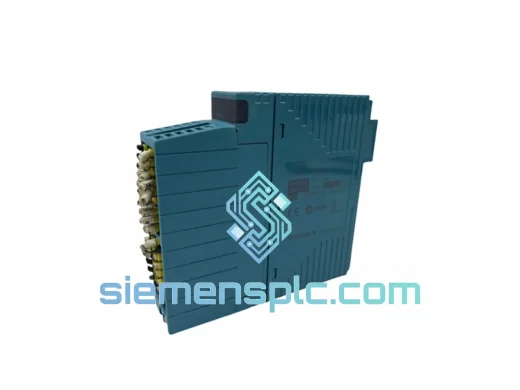
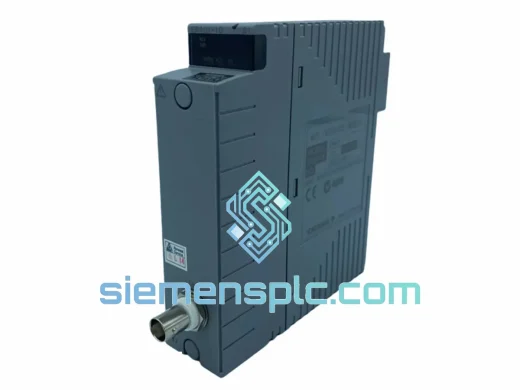
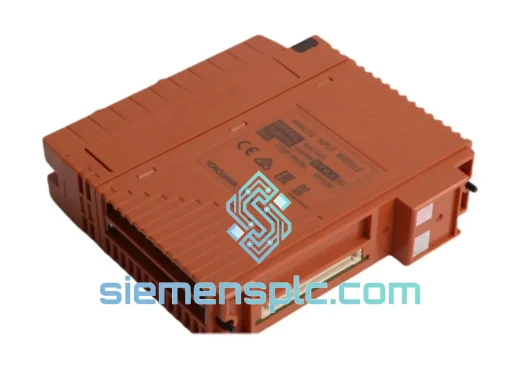
Yokogawa SAI143-H63/PRP S3 DCS Analog Input Module
CENTUM VP
Origin JP
DCS Analog Input Module
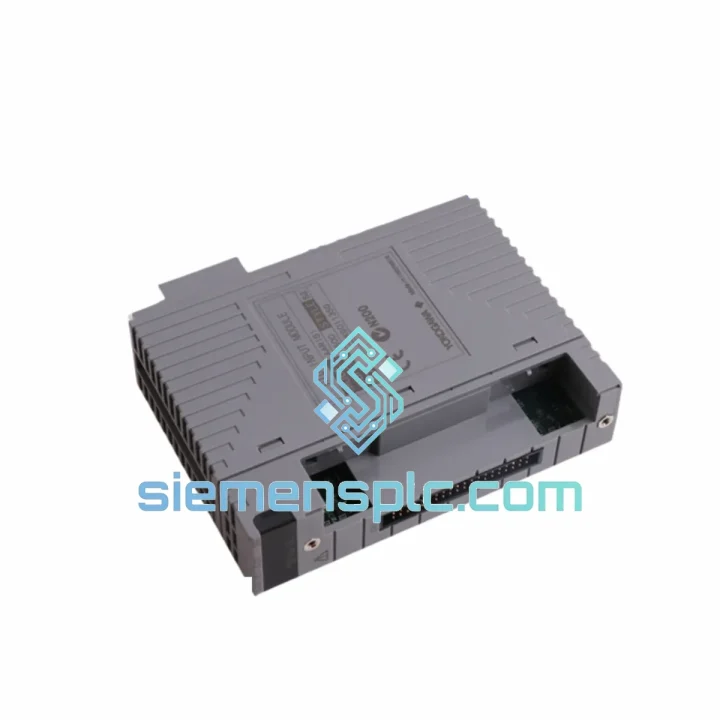
Request verified availability, condition, replacement risk review, packing options and courier lead time for AAR181-S00.
Click Request Quote and the part number is inserted into the inquiry form automatically.
Core fields for model confirmation and RFQ routing. Detailed product narrative remains below.
Within a YOKOGAWA CENTUM VP or CS 3000 distributed control system, the analog input tier is the boundary where continuous physical process variables — pressure, flow, temperature, level — are converted into discrete numerical representations that the control domain can act upon. The AAR181-S00 S2 occupies this boundary for eight independent field loops simultaneously. Its function is not passive signal routing; it is active signal conditioning, analog-to-digital conversion, isolation enforcement, and diagnostic reporting, all executed within a single backplane-mounted module that draws less than 3.5 W from the I/O nest power rail.
The S2 hardware designation identifies the second major production revision of the AAR181-S00 base design. This revision updated the optical isolation barrier components to extend mean time between failures under sustained industrial thermal cycling, revised the ADC reference circuit to reduce long-term drift, and expanded the on-module diagnostic register map to expose additional fault conditions to the CENTUM VP controller without requiring custom application function blocks. Compatibility was maintained with CENTUM VP R4.01 and later, and with CENTUM CS 3000 R3.x nests, making the S2 a direct field replacement for earlier AAR181 variants without engineering station reconfiguration.
In a refinery, chemical plant, or power generation facility, a single control loop failure — caused by a ground fault on one field cable coupling noise into adjacent channels — can force a process unit into a safe-state shutdown. The AAR181-S00 S2 addresses this failure mode at the hardware level through per-channel optical isolation, ensuring that an electrical fault on any one of the eight field loops remains contained within that channel’s front-end circuitry and cannot propagate to the backplane bus or to adjacent channels. This is the foundational design principle from which all other performance characteristics derive.
Real-time Stock & RFQ: [email protected] | WhatsApp: +86 18359268345
| Parameter | Specification |
|---|---|
| Part Number | AAR181-S00 S2 |
| Manufacturer | YOKOGAWA Electric Corporation |
| Module Function | Analog Input (AI) — current and voltage |
| Compatible Platform | CENTUM VP (R4.01 and above); CENTUM CS 3000 (R3.x) |
| Input Channels | 8, each individually isolated |
| Input Signal Types | 4–20 mA DC; 1–5 V DC (jumper-selectable per channel) |
| ADC Resolution | 16-bit successive-approximation with hardware oversampling |
| Measurement Accuracy | ±0.1% of full scale at 23 °C reference temperature |
| Temperature Drift Coefficient | ±0.01% FS per °C across operating range |
| Channel Scan Cycle | Hardware-synchronized: 125 ms / 250 ms / 500 ms (controller-dependent) |
| Channel-to-Channel Isolation Voltage | 500 V DC (optical barrier, continuous) |
| Channel-to-Backplane Isolation Voltage | 500 V DC |
| Input Impedance (current mode) | 250 Ω ± 0.1% (HART-compatible window) |
| Overrange Tolerance | Up to 21.6 mA continuous without damage or calibration shift |
| Backplane Bus Interface | YOKOGAWA V-net / ER high-speed backplane bus |
| Module Power Consumption | ≤ 3.5 W (24 V DC via backplane rail) |
| Operating Temperature Range | 0 °C to +55 °C |
| Storage Temperature Range | −25 °C to +70 °C |
| Relative Humidity | 5% to 95% RH, non-condensing |
| EMC Test Standards | IEC 61000-4-2 (ESD), IEC 61000-4-3 (RF), IEC 61000-4-4 (EFT), IEC 61000-4-6 (CS) |
| Safety Certifications | CE Mark; UL Listed (confirm against current revision datasheet) |
| Mounting Interface | YOKOGAWA standard I/O nest backplane slot |
| Module Dimensions (W × H × D) | Approx. 28.4 mm × 227 mm × 230 mm |
| Module Weight | Approx. 0.45 kg |
| Country of Origin | Japan |
| Warranty Period | 12 months from confirmed shipment date |
The isolation architecture of the AAR181-S00 S2 uses discrete photocoupler arrays assigned one per channel, rather than a shared transformer-based isolation scheme. In a shared-barrier design, a high-energy transient on one channel can capacitively couple through the transformer core and appear as a common-mode disturbance on all channels sharing that barrier. The per-channel photocoupler approach eliminates this coupling path: each channel’s analog front-end operates with its own floating ground reference, and the digitized output crosses the isolation barrier as a serial bit stream. The only electrical path between the field side and the backplane side of any channel is the optical link — a unidirectional, galvanically isolated data path with no shared impedance to adjacent channels.
The 16-bit successive-approximation ADC operates at an internal oversampling rate higher than the output scan rate. The hardware averaging filter applied before the output register reduces broadband noise and provides inherent rejection of 50 Hz and 60 Hz power-line interference without consuming controller CPU cycles for software filtering. The practical consequence is that the process variable value delivered to the CENTUM VP control function block carries approximately 14 bits of noise-free resolution under typical industrial conditions — equivalent to a minimum detectable current change of approximately 0.98 µA on a 4–20 mA span, or roughly 0.006% of full scale.
The PCB layout routes all high-impedance analog signal traces on a dedicated inner layer, sandwiched between ground planes on both adjacent layers. This stripline geometry reduces the effective antenna area of the analog traces and provides a low-impedance return path for any induced currents, preventing them from appearing as measurement offsets. Ferrite bead filters at the field terminal entry points attenuate conducted RF interference in the 150 kHz to 80 MHz band before it reaches the ADC input stage. The backplane connector interface uses π-type LC filter networks on each signal pin to prevent V-net bus switching transients from coupling into the analog measurement domain.
The S2 firmware revision expanded the self-diagnostic register set to include: internal reference voltage deviation monitoring, per-channel open-circuit detection (triggered when input current falls below 3.6 mA), ADC linearity verification against an internal precision calibration source, and backplane communication watchdog status. All diagnostic results are mapped to the module’s I/O status word, which the CENTUM VP controller reads on every scan cycle and can route directly to the alarm management system without custom application logic. This diagnostic transparency reduces the mean time to identify and isolate a field instrument fault.
Each AAR181-S00 S2 unit shipped from our Xiamen, China operations center is sourced through verified industrial distribution channels with documented manufacturer traceability. Pre-shipment inspection protocol covers four stages: visual examination of PCB surface condition and connector pin integrity; label and serial number authenticity cross-referenced against YOKOGAWA production records; powered functional verification confirming that all eight channels respond within specification to a 4–20 mA reference signal applied at the field terminals; and packaging integrity check prior to final sealing.
Modules are individually sealed in anti-static ESD shielding bags, cushioned in die-cut foam inserts within inner cartons, and placed in double-wall corrugated outer packaging rated for IATA air freight handling conditions. Export documentation — commercial invoice, packing list, certificate of origin, and material safety data sheet where applicable — is prepared to meet customs clearance requirements in the European Union, North America, Southeast Asia, the Middle East, and Australia. The applicable HS Code for this product category is 8537.10 in most jurisdictions; buyers should confirm local import classification with their licensed customs broker prior to order placement.
In-stock units are dispatched from Xiamen within 1–3 business days of order confirmation. International air freight to primary industrial logistics hubs — Rotterdam, Houston, Singapore, Dubai, Sydney — achieves typical door-to-door delivery in 5–8 business days. Sea freight consolidation is available for multi-unit procurement where project lead time permits. All shipments are covered by a 12-month warranty against manufacturing defects from the confirmed shipment date. Units with confirmed factory defects are replaced at no charge; return freight is covered for qualifying order quantities.
Email: [email protected]
WhatsApp: +86 18359268345
Web: siemensplc.com
Location: Xiamen, China
© 2026 siemensplc.com. All rights reserved.
We check the full part number, brand, series and visible nameplate information before quotation.
Sales confirms stock path, condition option, quantity and realistic lead time for export dispatch.
DHL, FedEx, UPS or buyer courier arrangements can be reviewed with packing requirements.
Similar brand or category products for fast comparison and multi-item RFQ lists.