Yokogawa
RFQ Ready
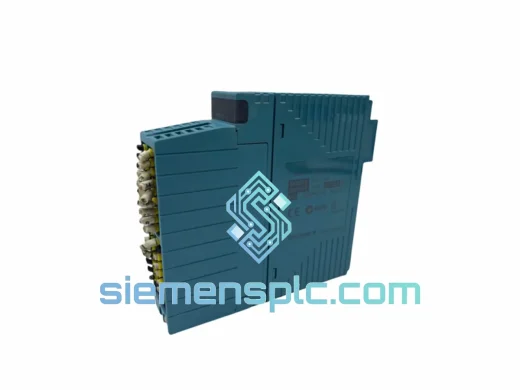
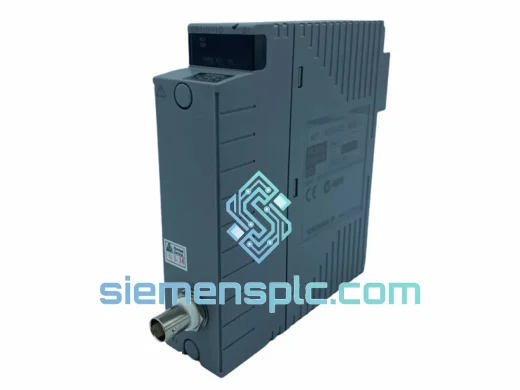
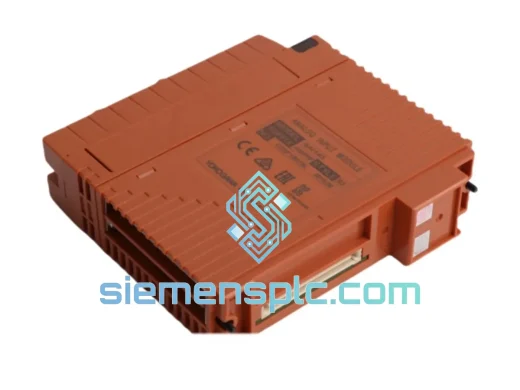
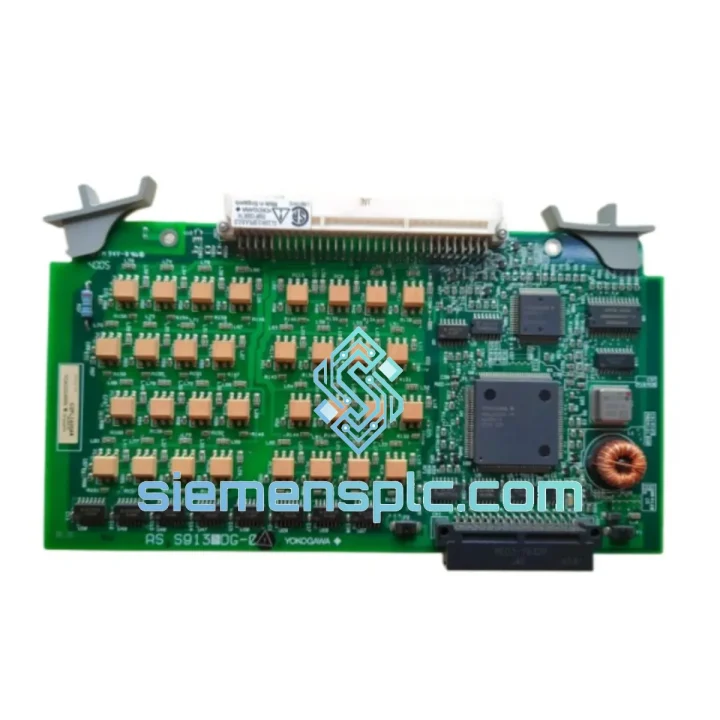
Yokogawa SAI143-H63/PRP S3 DCS Analog Input Module
CENTUM VP
Origin JP
DCS Analog Input Module
Request verified availability, condition, replacement risk review, packing options and courier lead time for ADM12 S4.
Click Request Quote and the part number is inserted into the inquiry form automatically.
Core fields for model confirmation and RFQ routing. Detailed product narrative remains below.
The ADM12 S4 is a relay-type discrete output I/O card designed for integration within YOKOGAWA’s CENTUM VP and CENTUM CS 3000 Distributed Control System platforms. It occupies a single slot in a CENTUM-standard I/O nest and delivers 12 independent dry-contact output channels to the field, each capable of driving solenoid valves, motor starter coils, alarm annunciators, and pilot relays without requiring external signal conditioning. The S4 suffix designates a specific hardware revision within the ADM12 family, distinguishing it by relay contact rating, isolation class, and firmware compatibility — parameters that must be matched precisely to the node unit generation and I/O assignment drawing before procurement.
In a CENTUM VP control loop, the ADM12 S4 sits at the terminal boundary between the Field Control Station (FCS) backplane and the physical process. The FCS executes function block logic — typically DO (Discrete Output) or SEQCST (Sequential Control) blocks — and writes Boolean state values across the V-net/ER internal bus to the card’s output registers. The card then energizes or de-energizes the corresponding relay coil within one bus scan cycle, translating digital logic into a galvanically isolated contact closure that the field device interprets as a command signal. This architecture keeps the control-side electronics fully separated from field-side voltage levels, which is the foundational requirement for mixed-voltage plant environments.
Real-time Stock & RFQ: [email protected] | WhatsApp: +86 18359268345
| Manufacturer | YOKOGAWA Electric Corporation |
| Part Number | ADM12 S4 |
| Module Category | Contact (Relay) Discrete Output I/O Card |
| Compatible Platform | CENTUM VP, CENTUM CS 3000 |
| Output Channels | 12 points per card |
| Output Contact Type | Dry contact (Form A / SPST-NO relay) |
| Contact Rating | Refer to YOKOGAWA ADM12 S4 hardware manual (IM 33J01B30-01EN) for rated voltage and current |
| Channel Isolation | Galvanic isolation — channel-to-channel and channel-to-backplane bus |
| Internal Bus Interface | V-net / ER bus (CENTUM proprietary backplane) |
| Mounting Form Factor | CENTUM-standard I/O nest slot (node unit compatible) |
| Hot-Swap Support | Online card replacement in redundant node configurations |
| Self-Diagnostics | Continuous online self-test; fault annunciation via CENTUM VP HMI |
| Operating Temperature | 0 °C to +60 °C |
| Storage Temperature | −20 °C to +70 °C |
| Relative Humidity | 5 % to 95 % RH, non-condensing |
| Approximate Weight | 100 g (card only, without terminal board) |
| Country of Origin | Japan |
| Warranty | 12 months functional warranty from dispatch date |
The ADM12 S4’s internal architecture is organized around three functional layers: the bus interface logic, the output drive stage, and the relay contact array.
At the bus interface layer, the card decodes slot-addressed write transactions from the V-net/ER backplane. The V-net protocol operates as a deterministic token-passing bus, meaning the FCS can guarantee a bounded worst-case latency for each output update — a property that distinguishes CENTUM’s internal bus from Ethernet-based fieldbus alternatives where collision-domain jitter can introduce non-deterministic delays. The ADM12 S4 latches the received output register state and holds it stable between bus cycles, preventing relay chatter during momentary bus arbitration events.
The output drive stage uses optocoupler-based isolation between the bus-side logic and the relay coil driver circuit. This two-stage isolation topology — first optical, then magnetic (relay) — provides a high common-mode rejection ratio (CMRR) and suppresses conducted transients originating from inductive field loads. When a solenoid valve de-energizes, the collapsing magnetic field generates a voltage spike that can reach several hundred volts in microseconds; the relay contact absorbs this event at the field side without coupling energy back into the card’s logic circuitry.
The relay array itself uses sealed miniature relays with bifurcated contacts. Bifurcated contacts maintain two parallel current paths per contact, so a thin oxide film on one path does not interrupt the circuit — a design choice that directly addresses the low-current dry-circuit reliability problem common in alarm and interlock applications where contacts may remain open for extended periods between test cycles.
EMC performance is achieved through a combination of ground-plane partitioning on the PCB, ferrite bead filtering on the bus interface lines, and the inherent isolation provided by the relay barrier. The card meets the EMC requirements applicable to the CENTUM VP system under CE marking, covering both radiated emissions and conducted immunity per IEC 61000-4 series test levels appropriate for industrial environments.
Each ADM12 S4 unit dispatched from our Xiamen, China facility undergoes a structured pre-shipment inspection protocol. Physical inspection covers label authenticity, connector pin integrity, PCB surface condition, and hardware revision marking against the declared part number. Functional verification confirms that the unit powers up correctly and that all 12 output channels respond to command signals within specification. Units that do not pass inspection are quarantined and not offered for sale.
Stock is sourced through verified industrial distribution channels with documented supply chain traceability. Batch records and supplier documentation are available upon request for regulated industries including pharmaceutical manufacturing, offshore oil and gas, and nuclear auxiliary systems where material traceability is a compliance requirement.
All units are packaged in anti-static ESD shielding bags and placed in foam-lined export cartons rated for international air freight handling. For DHL Express shipments, typical transit time from Xiamen to major industrial hubs is 3–5 business days to Europe, 4–6 business days to North America, and 2–4 business days to Southeast Asia and the Middle East. Sea freight consolidation is available for bulk orders where lead time permits. Full export documentation — commercial invoice, packing list, and certificate of origin — is included with every shipment. A 12-month functional warranty applies from the dispatch date.
Email: [email protected]
WhatsApp: +86 18359268345
Web: siemensplc.com
Location: Xiamen, China
© 2026. All rights reserved.
We check the full part number, brand, series and visible nameplate information before quotation.
Sales confirms stock path, condition option, quantity and realistic lead time for export dispatch.
DHL, FedEx, UPS or buyer courier arrangements can be reviewed with packing requirements.
Similar brand or category products for fast comparison and multi-item RFQ lists.