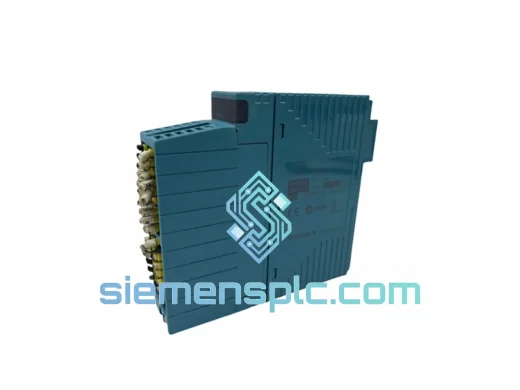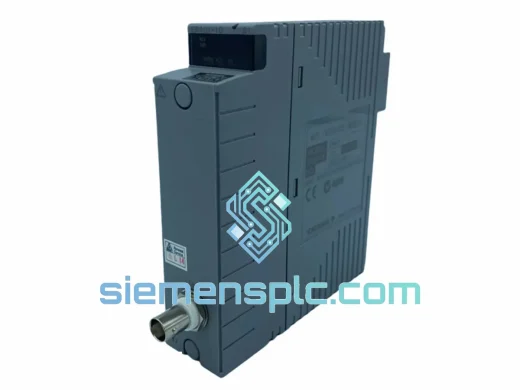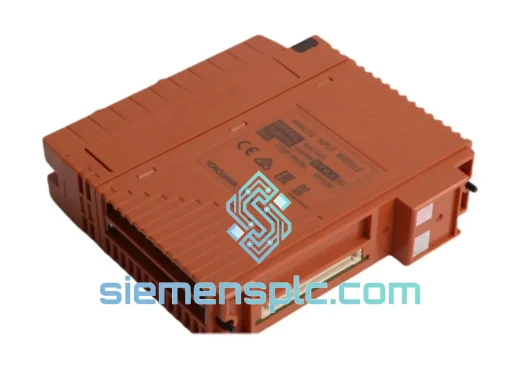
Yokogawa
RFQ Ready
Yokogawa SAI143-H63/PRP S3 DCS Analog Input Module
CENTUM VP
Origin JP
DCS Analog Input Module
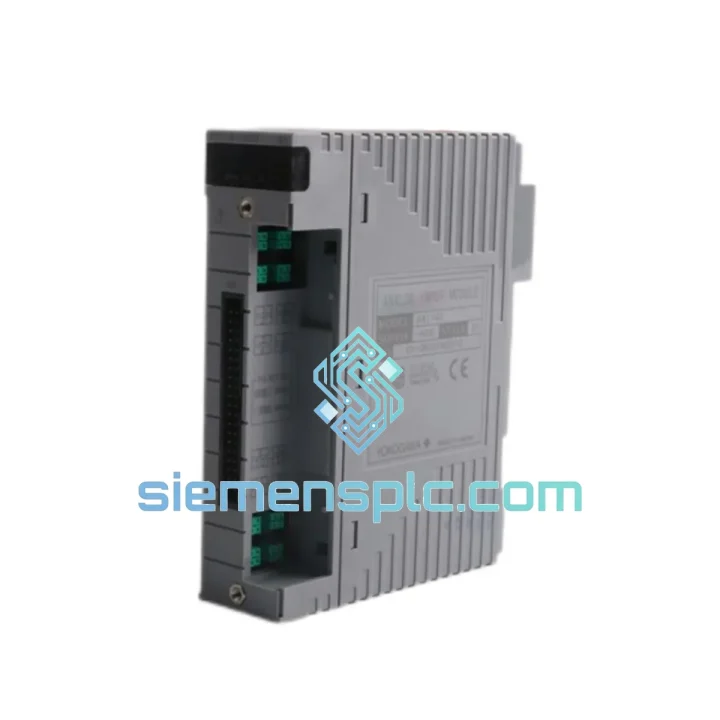
Request verified availability, condition, replacement risk review, packing options and courier lead time for ADV159-P01.
Click Request Quote and the part number is inserted into the inquiry form automatically.
Core fields for model confirmation and RFQ routing. Detailed product narrative remains below.
The ADV159-P01 occupies a well-defined position in Yokogawa’s CENTUM platform I/O hierarchy: it is the primary high-density discrete interface between field instrumentation and the Field Control Station (FCS). Each module delivers 32 independently configurable digital channels — assignable as inputs or outputs at the engineering workstation level — within a single I/O nest slot. In a typical refinery or petrochemical control loop, this module handles valve position feedback, motor run/stop commands, ESD interlock status, and pump permissive logic simultaneously, all within a single scan cycle synchronized to the FCS execution period. The deterministic nature of this synchronization is not incidental; it is a deliberate architectural constraint that ensures digital state changes propagate to the control algorithm within a bounded, predictable time window, eliminating the jitter that would otherwise compromise sequence-of-events logging and interlock response time calculations.
At the signal boundary, the ADV159-P01 accepts 24 VDC discrete signals from field devices — limit switches, proximity sensors, relay contacts, solenoid valve feedback — and presents their logical state to the FCS via the V-net/ER backplane bus. Output channels drive transistor-based switching loads, supporting both sink and source configurations depending on the field wiring topology. The module’s internal architecture enforces strict channel-to-bus optical isolation, meaning field-side ground faults, transient surges, or common-mode noise events cannot propagate into the control network backplane. This isolation boundary is rated to withstand the electrical environment of heavy industrial facilities, where ground potential differences between field junction boxes and control room panels routinely reach tens of volts.
📦 Real-time Stock & RFQ: [email protected] | WhatsApp: +86 18359268345
| Parameter | Specification |
|---|---|
| Part Number | ADV159-P01 |
| Manufacturer | Yokogawa Electric Corporation |
| Compatible Platform | CENTUM VP (R4.x–R6.x), CENTUM CS 3000 |
| Module Function | 32-Channel Digital Input / Output (DI/DO) |
| Channel Configuration | Configurable per channel via CENTUM VP Builder (DI or DO) |
| Input Signal Voltage | 24 VDC nominal (field-side) |
| Output Type | Transistor output (sink/source selectable) |
| Backplane Bus Interface | Yokogawa V-net / ER Bus |
| Channel Isolation | Optical isolation, channel-to-bus |
| Scan Synchronization | Synchronous with FCS control execution cycle |
| Redundancy Support | Yes — compatible with dual-redundant FCS configurations |
| Operating Temperature | 0°C to +55°C |
| Storage Temperature | −20°C to +70°C |
| Relative Humidity | 5% to 95% RH, non-condensing |
| Power Consumption | ≤ 5 W (typical operating) |
| Module Weight | Approx. 320 g |
| Form Factor | Single-slot I/O nest card (ANB10S or equivalent nest) |
| Certifications | CE, UL (refer to GS 33J60B10-01EN for region-specific approvals) |
| Warranty | 12 months from date of shipment |
| Country of Origin | Japan |
The ADV159-P01’s internal signal path begins at the terminal block, where field wiring lands on screw-clamp terminals rated for 0.5–2.5 mm² conductors. Each channel’s input circuit includes a series current-limiting resistor and a transient voltage suppressor (TVS) diode, providing the first layer of protection against inductive kickback from relay coils and solenoid valves in the field. The conditioned signal then drives the anode of an optocoupler — a phototransistor-based device with a typical current transfer ratio (CTR) selected for stable operation across the full operating temperature range of 0°C to 55°C. This optocoupler stage is the primary isolation barrier, with a creepage and clearance distance designed to meet IEC 60664-1 requirements for the pollution degree 2 environment typical of industrial control panels.
On the bus side of the optocoupler, the digital state is latched into a parallel register bank. The FCS reads this register bank synchronously at each control cycle boundary — not asynchronously on demand — which is the mechanism that guarantees bounded input latency. For output channels, the FCS writes the commanded state to an output register, which drives the gate of a transistor output stage. The transistor is protected by a flyback diode for inductive loads and a thermal shutdown circuit that disables the output if junction temperature exceeds the safe operating limit, preventing cascading failures in high-ambient-temperature marshalling cabinets.
The module’s EMC design follows Yokogawa’s standard practice of ground-plane partitioning: the field-side circuitry and the bus-side circuitry share no common ground reference on the PCB. The isolation barrier is reinforced by a physical slot in the PCB substrate beneath the optocoupler, increasing the effective creepage path. The backplane connector uses a keyed, gold-plated contact system that maintains low contact resistance (<10 mΩ) over the module’s service life, preventing intermittent bus communication faults that are otherwise difficult to diagnose in installed systems.
Every ADV159-P01 unit dispatched from our Xiamen, China facility is a genuine Yokogawa OEM component. Units are sourced through verified industrial supply channels — authorized distributors, decommissioned plant MRO stock with documented service history, and certified surplus dealers — and each undergoes a structured pre-shipment inspection protocol. This includes visual examination of the PCB surface, connector pin integrity, label legibility, and revision marking cross-reference against Yokogawa’s published hardware revision history. Serial numbers are logged and retained for traceability. Functional test reports are available upon request for select inventory lots.
Packaging follows anti-static handling standards: each module is placed in an ESD-protective bag, cushioned with foam inserts rated for the module’s weight class, and enclosed in a double-wall corrugated carton. For international shipments, we provide full export documentation including commercial invoice, packing list, and certificate of origin. Customs HS code classification is provided to facilitate smooth clearance in major import markets including the EU, USA, Southeast Asia, and the Middle East.
Logistics partners include DHL Express, FedEx International Priority, and SF Express International, with typical transit times of 3–7 business days to major industrial hubs. Expedited same-day dispatch is available for orders confirmed before 14:00 CST. All shipments are fully insured and tracked from dispatch to delivery confirmation. A 12-month warranty covers manufacturing defects and verified functional failures under normal operating conditions.
📧 Email: [email protected]
📱 WhatsApp: +86 18359268345
🌐 Web: siemensplc.com
📍 Location: Xiamen, China
© 2026 siemensplc.com. All rights reserved.
We check the full part number, brand, series and visible nameplate information before quotation.
Sales confirms stock path, condition option, quantity and realistic lead time for export dispatch.
DHL, FedEx, UPS or buyer courier arrangements can be reviewed with packing requirements.
Similar brand or category products for fast comparison and multi-item RFQ lists.