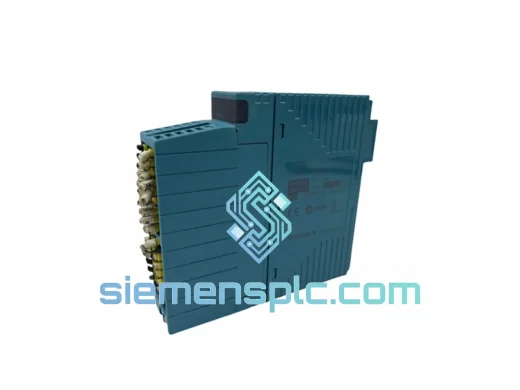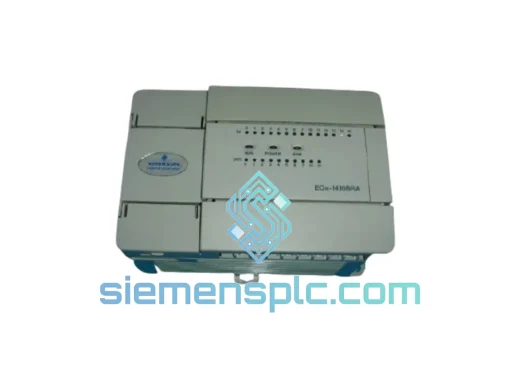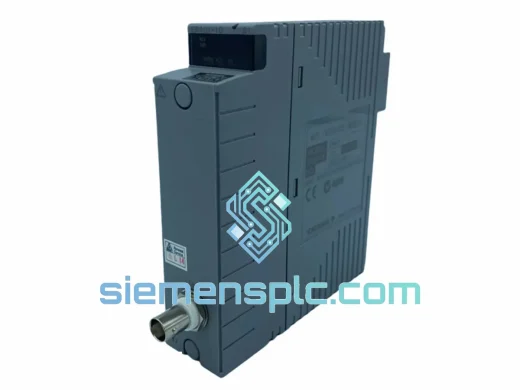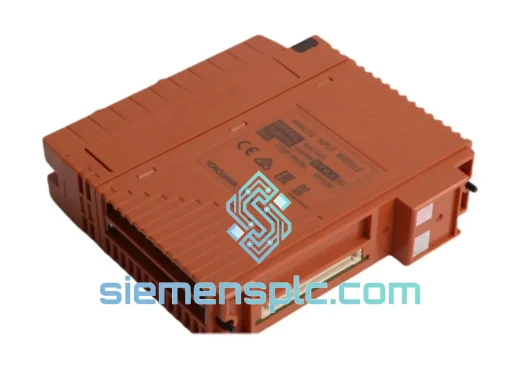
Yokogawa
RFQ Ready
Yokogawa SAI143-H63/PRP S3 DCS Analog Input Module
CENTUM VP
Origin JP
DCS Analog Input Module
Request verified availability, condition, replacement risk review, packing options and courier lead time for AET4D.
Click Request Quote and the part number is inserted into the inquiry form automatically.
Core fields for model confirmation and RFQ routing. Detailed product narrative remains below.
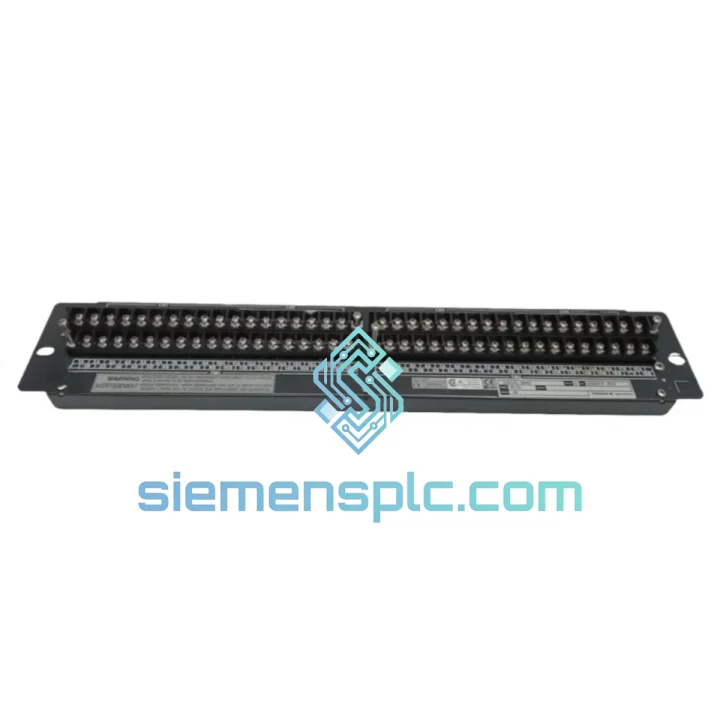
The AET4D is a relay-type terminal board manufactured by YOKOGAWA Electric Corporation, engineered specifically for deployment within CENTUM VP and CS 3000 Distributed Control System architectures. Its primary function is to serve as the galvanically isolated interface between the DCS I/O subsystem and field-level actuators, solenoid valves, and discrete alarm circuits. In process industries where control loop integrity directly governs plant safety and throughput, the AET4D occupies a structurally critical position: it absorbs field-side transients, prevents ground-loop interference from propagating into the DCS backplane, and provides the mechanical relay contact switching that many field devices require for reliable discrete output operation.
Unlike solid-state output modules that rely on triac or transistor switching, the AET4D uses electromechanical relay contacts. This design choice is deliberate. Relay contacts present a true galvanic break — zero leakage current in the open state — which is mandatory for applications involving intrinsically safe barriers, solenoid valve coils with high inrush characteristics, or legacy field instruments that cannot tolerate residual off-state current. The AET4D therefore extends the operational envelope of CENTUM VP and CS 3000 I/O cards into field environments that solid-state outputs cannot reliably serve.
Procurement engineers replacing aging terminal boards in brownfield DCS installations will find the AET4D to be a direct form-fit-function replacement. No field wiring modifications, no I/O card reconfiguration, and no software parameter changes are required. The board mounts in the standard YOKOGAWA terminal board slot adjacent to the I/O module rack, and field cable terminations connect to the same screw-terminal positions as the original factory installation.
Real-time Stock & RFQ: [email protected] | WhatsApp: +86 18359268345
| Parameter | Specification |
|---|---|
| Part Number / SKU | AET4D |
| Manufacturer | YOKOGAWA Electric Corporation |
| Compatible Platform | CENTUM VP, CENTUM CS 3000 |
| Module Classification | Relay Terminal Board (Discrete Output Interface) |
| Output Mechanism | Electromechanical relay contact |
| Isolation Type | Galvanic (relay coil / contact separation) |
| Form Factor | DIN-rail compatible, rack-adjacent terminal board |
| Field Wiring Interface | Screw-clamp terminals |
| Country of Origin | Japan |
| Unit Weight | Approx. 1,300 g |
| Condition Available | New OEM / Tested Surplus (specify at inquiry) |
| Warranty | 12 months functional warranty from shipment date |
The AET4D’s hardware architecture reflects YOKOGAWA’s design philosophy for process-critical I/O: deterministic switching behavior, field-side fault containment, and long-term mechanical reliability under continuous industrial duty.
Relay Contact Architecture: The board employs multi-pole relay assemblies where each relay coil is driven by the corresponding DCS I/O card output channel. The coil-to-contact isolation barrier provides a minimum dielectric withstand that prevents field-side voltage spikes — common in inductive load switching — from coupling back into the I/O card’s signal circuitry. This is particularly relevant in environments where solenoid valve coils generate back-EMF transients of several hundred volts during de-energization.
EMC Design Considerations: The PCB layout routes relay coil drive lines away from contact output traces, minimizing inductive crosstalk between channels. Suppression components across relay coils clamp back-EMF within the board itself, reducing radiated emissions that could affect adjacent I/O modules in the same rack. The terminal board’s metal housing provides a Faraday shield effect against externally coupled RF interference, which is significant in plants with variable-frequency drives or high-power switching equipment operating nearby.
Mechanical Relay Endurance: Electromechanical relays on the AET4D are rated for high electrical cycle counts under resistive load conditions. In typical DCS discrete output applications — valve open/close commands, pump start/stop sequences — switching frequency is low (often less than 10 operations per hour), meaning the relay’s mechanical endurance far exceeds the expected service interval of the DCS system itself. This makes the AET4D a long-life component that rarely requires replacement except in cases of field-side wiring faults that cause sustained overcurrent through the contacts.
Backplane Signal Integrity: The AET4D does not participate in the CENTUM VP backplane communication bus. Its interface to the I/O card is purely electrical — coil drive signals from the I/O card’s output transistors energize the relay coils. This passive architecture means the terminal board introduces no latency, no protocol overhead, and no firmware dependency. Output switching time is governed solely by relay coil energization time, typically in the low-millisecond range, which is well within the scan cycle requirements of CENTUM VP field control stations.
Every YOKOGAWA AET4D unit dispatched from our Xiamen, China facility undergoes a structured pre-shipment verification process. Visual inspection confirms part number label integrity, revision marking, and absence of physical damage. Relay continuity and coil resistance are verified against YOKOGAWA factory specifications. Units sourced from authorized distribution channels carry full manufacturer traceability; surplus units are cross-referenced against YOKOGAWA factory serial number records where available.
Packaging follows anti-static and mechanical protection standards: each board is sealed in an ESD-protective bag, cushioned within a foam-lined corrugated carton, and labeled with part number, quantity, and shipment reference. Export documentation — commercial invoice, packing list, and customs declaration — is prepared in compliance with destination country import requirements. Certificate of conformance is available upon request for quality-system documentation purposes.
Logistics from Xiamen covers all major global destinations via DHL Express, FedEx International Priority, and UPS Worldwide. Standard transit times to Europe and North America are 3–5 business days; Southeast Asia and Middle East destinations typically receive shipments within 2–3 business days. For urgent plant maintenance requirements, same-day dispatch is available for orders confirmed before 14:00 CST. All shipments are fully insured and tracked from dispatch to delivery confirmation.
Email: [email protected]
WhatsApp: +86 18359268345
Web: siemensplc.com
Location: Xiamen, China
© 2026 siemensplc.com. All rights reserved.
We check the full part number, brand, series and visible nameplate information before quotation.
Sales confirms stock path, condition option, quantity and realistic lead time for export dispatch.
DHL, FedEx, UPS or buyer courier arrangements can be reviewed with packing requirements.
Similar brand or category products for fast comparison and multi-item RFQ lists.