Yokogawa
RFQ Ready
Yokogawa SAI143-H63/PRP S3 DCS Analog Input Module
CENTUM VP
Origin JP
DCS Analog Input Module
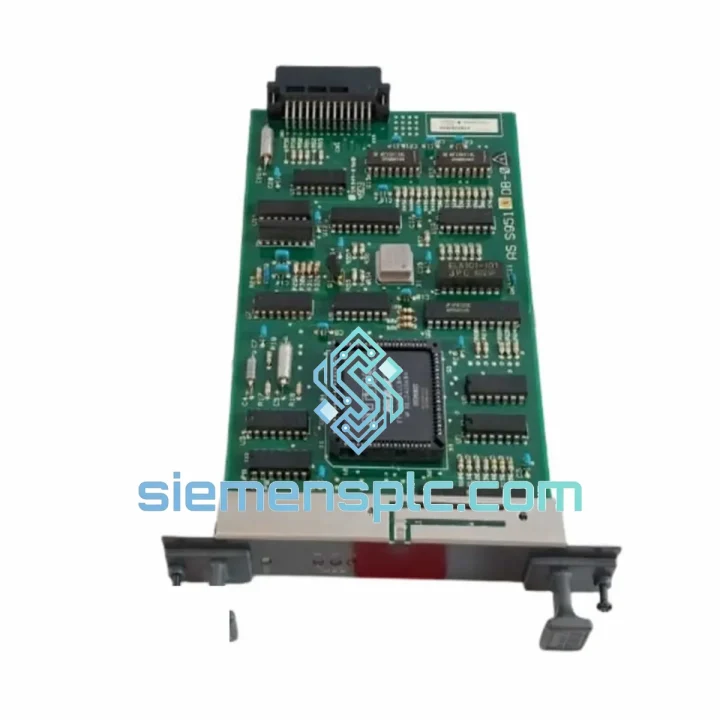
Request verified availability, condition, replacement risk review, packing options and courier lead time for AIP171.
Click Request Quote and the part number is inserted into the inquiry form automatically.
Core fields for model confirmation and RFQ routing. Detailed product narrative remains below.
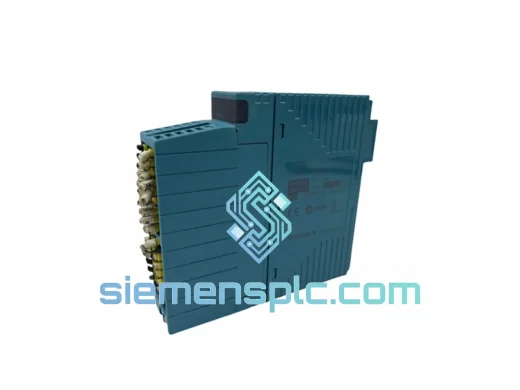
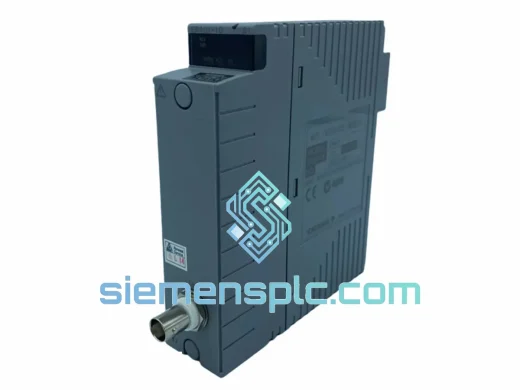
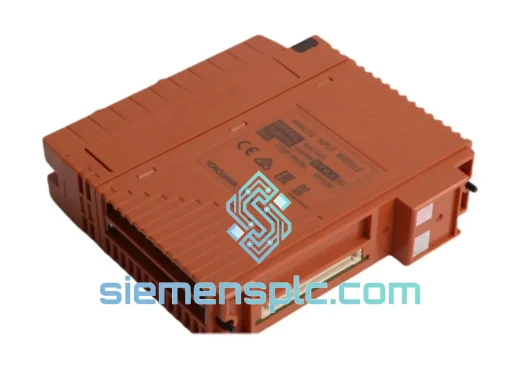
The AIP171 is a dedicated analog input interface module developed by YOKOGAWA Electric Corporation for integration within the CENTUM CS and CENTUM VP Distributed Control System (DCS) platforms. Its primary function is to serve as the signal conditioning and analog-to-digital conversion boundary between field-mounted instrumentation and the Field Control Station (FCS) processor. In continuous-process industries — refining, petrochemical, power generation, and specialty chemicals — the integrity of this boundary directly determines the accuracy of closed-loop control, the reliability of safety interlock logic, and the fidelity of historian data used for process optimization.
The AIP171 occupies a standard slot within the CENTUM I/O nest, accepting 4–20 mA current loop signals and 1–5 V DC voltage inputs from field transmitters. Each channel undergoes galvanic isolation before digitization, protecting the DCS backplane from field-side ground loops, common-mode transients, and induced noise from adjacent power cabling. The digitized values are transmitted to the FCS controller via the internal ESB (Extended Serial Backplane) bus, where they are made available to function block logic, alarm management, and the V-net/IP supervisory network in real time.
📩 Real-time Stock & RFQ: [email protected] | WhatsApp: +86 18359268345
| Parameter | Specification |
|---|---|
| Part Number | AIP171 |
| Manufacturer | YOKOGAWA Electric Corporation |
| Module Category | Analog Input Interface Module |
| Compatible Platform | CENTUM CS / CENTUM VP DCS (FCS I/O nest) |
| Input Signal Types | 4–20 mA DC current loop; 1–5 V DC voltage |
| A/D Resolution | 16-bit |
| Measurement Accuracy | ±0.1% of full scale (typical, at 25°C) |
| Channel Isolation | Galvanic isolation, channel-to-channel and channel-to-bus |
| Isolation Voltage | 500 V DC (channel-to-bus, per YOKOGAWA I/O specification) |
| Operating Temperature | 0°C to +55°C |
| Storage Temperature | −25°C to +70°C |
| Relative Humidity | 5% to 95% RH, non-condensing |
| Power Supply | Supplied via CENTUM I/O nest backplane bus |
| Module Weight | Approx. 300 g |
| Mounting Method | CENTUM CS/VP I/O nest slot (hot-swap capable) |
| Diagnostic Functions | Open-wire detection, out-of-range alarming, module self-test |
| Certifications | CE, UL (per YOKOGAWA CENTUM platform certification) |
| Warranty | 12 months against manufacturing defects |
The AIP171’s internal architecture reflects YOKOGAWA’s design philosophy of deterministic signal integrity across the full analog chain. At the field terminal interface, each input channel passes through a passive RC filter network that attenuates high-frequency noise components — particularly 50/60 Hz mains-coupled interference common in industrial cable trays — before the signal reaches the isolation barrier. This pre-filter stage is critical in environments where signal cables run parallel to motor drive output cables or high-current bus bars.
The galvanic isolation stage employs transformer-coupled or optocoupler-based isolation (depending on channel configuration), achieving a channel-to-bus isolation voltage of 500 V DC. This architecture eliminates ground loop currents that would otherwise introduce a DC offset error into the measured signal — a failure mode that is particularly problematic in large-scale plants where field instruments and the DCS cabinet may be grounded at different potential points separated by tens of meters of cable.
Post-isolation, the conditioned analog signal is presented to a 16-bit successive-approximation register (SAR) ADC. At 16-bit resolution, the module resolves the 4–20 mA span into 65,536 discrete steps, yielding a theoretical LSB step size of approximately 0.244 µA — well below the ±0.1% full-scale accuracy specification. The ADC sampling is synchronized to the FCS scan cycle, ensuring that all channels within a single I/O nest are sampled within a defined time window, which is essential for multi-variable control loops where phase coherence between measured variables affects controller stability.
The ESB backplane interface logic handles packetized data transfer to the FCS processor. The AIP171 implements a watchdog register that the FCS polls at each scan cycle; if the module fails to respond within the defined timeout window, the FCS flags the module as faulted and transitions affected control loops to their configured fallback state (hold last value or preset safe output). This fail-safe handshake is a fundamental element of YOKOGAWA’s approach to process safety without requiring a separate safety-rated I/O layer for non-SIL applications.
EMC compliance is achieved through a combination of the pre-filter network, the isolation barrier, and the module’s metal housing, which provides shielding against radiated emissions. The module meets IEC 61000-4 series immunity requirements, including ESD (IEC 61000-4-2), radiated RF immunity (IEC 61000-4-3), and fast transient/burst immunity (IEC 61000-4-4), making it suitable for installation in cabinets located in close proximity to variable-frequency drives and high-voltage switchgear.
Every AIP171 unit supplied by siemensplc.com is sourced through verified industrial distribution channels with full supply chain traceability. Modules are inspected prior to shipment: part number label verification, physical condition assessment, and where applicable, functional power-on testing. A certificate of conformance (CoC) and inspection report are available upon request for quality-critical procurement processes.
Counterfeit mitigation is applied at the sourcing stage. All units are cross-referenced against YOKOGAWA OEM packaging standards, label typography, and PCB revision markings. Any unit that does not pass visual authentication is rejected before entering inventory.
Logistics operations are managed from Xiamen, China — a major export hub with direct access to DHL Express, FedEx International Priority, and UPS Worldwide Expedited services. Standard export documentation is prepared for every shipment: commercial invoice, packing list, and certificate of origin. For customers in regions requiring import permits or specific HS code declarations for industrial automation components, our logistics team provides pre-shipment documentation support to minimize customs clearance delays.
Typical dispatch lead time for in-stock units is 1–3 business days from order confirmation. Air freight transit times to major industrial hubs: Europe 3–5 days, North America 4–6 days, Southeast Asia 2–3 days, Middle East 4–5 days. Sea freight consolidation is available for volume orders where lead time permits.
All shipments carry a 12-month warranty against manufacturing defects. Warranty claims are processed with a target replacement dispatch of 5 business days from fault confirmation.
📧 Email: [email protected]
💬 WhatsApp: +86 18359268345
🌐 Web: siemensplc.com
📍 Location: Xiamen, China
© 2026 siemensplc.com. All rights reserved.
We check the full part number, brand, series and visible nameplate information before quotation.
Sales confirms stock path, condition option, quantity and realistic lead time for export dispatch.
DHL, FedEx, UPS or buyer courier arrangements can be reviewed with packing requirements.
Similar brand or category products for fast comparison and multi-item RFQ lists.