Yokogawa
In Stock OK
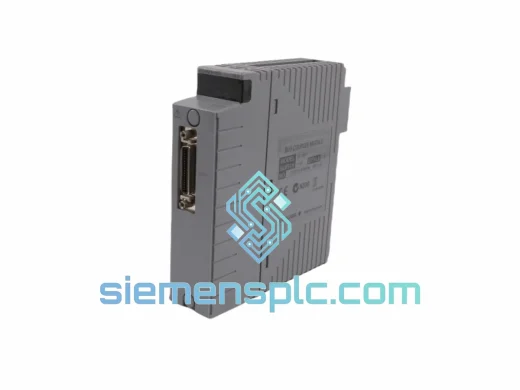
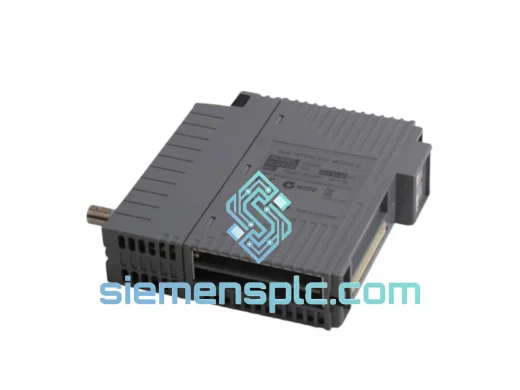
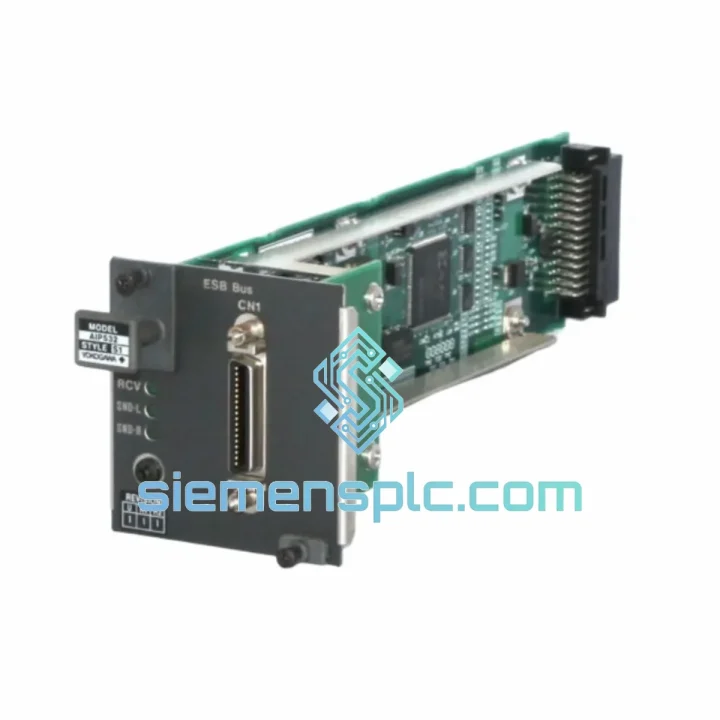
YOKOGAWA AIP532 S1 DCS Bus Coupler Module
Request verified availability, condition, replacement risk review, packing options and courier lead time for AIP532 S1.
BrandYokogawa
Part NumberAIP532 S1
ConditionAvailability Check
Lead TimeRFQ Confirmation
DocumentsDatasheet / photos by RFQ
ShippingExport packing available
Auto-filled RFQ
AIP532 S1
Click Request Quote and the part number is inserted into the inquiry form automatically.
- Reply by email: [email protected]
- WhatsApp / Tel: +86 18359268345
- Mon-Sat 9:00-18:00 GMT+8
Procurement Data
Key Product Information
Core fields for model confirmation and RFQ routing. Detailed product narrative remains below.
- Brand
- Yokogawa
- Primary Part Number
- AIP532 S1
- Product Type
- DCS Bus Coupler Module
- Series / Family
- CENTUM VP
- Manufacturer
- YOKOGAWA Electric Corporation
- Country of Origin
- JP
- Catalog Category
- DCS & Safety Modules
- Operating Temp.
- 0°C to +55°C
Model confirmed for inquiry
AIP532 S1
Send quantity, destination and urgency. The RFQ form keeps this part number attached.
Request Quote
Product Overview
YOKOGAWA AIP532 S1 ESB Bus Coupler — Stop the Clock on Your Downtime
Every minute your CENTUM DCS is offline, the losses compound. A failed ESB Bus Coupler like the AIP532 S1 can cascade into a full I/O station blackout — no process data, no control, no production. We stock this module in Xiamen and ship globally via DHL/FedEx express. From your purchase order to a tracking number: under 24 hours.
URGENT REQUIREMENT? Contact: [email protected] | WhatsApp: +86 18359268345
Quick Technical Datasheet
| Parameter | Specification |
|---|---|
| Manufacturer | YOKOGAWA Electric Corporation |
| Part Number | AIP532 S1 |
| Module Function | ESB (Extended Serial Bus) Bus Coupler |
| Compatible Platforms | CENTUM VP, CENTUM CS 3000, CENTUM CS 1000 |
| Bus Type | ESB — YOKOGAWA proprietary high-speed serial bus |
| Mounting | Backplane slot, I/O unit nest |
| Operating Temperature | 0°C to +55°C |
| Storage Temperature | -20°C to +70°C |
| Relative Humidity | 5% – 95% RH, non-condensing |
| Power Source | Backplane-supplied (no external wiring) |
| Weight | Approx. 200 g |
| Origin | Japan |
| Stock Status | ✔ Ready to Ship — Xiamen Warehouse |
Troubleshooting & Replacement Tips
The AIP532 S1 sits at the heart of your ESB segment. When it fails, the symptoms are rarely subtle — you lose entire I/O node visibility in the CENTUM engineering station, and the HIS alarm list floods with “ESB Communication Error” or “Node Disconnected” faults. Here is the field-proven replacement sequence:
Step 1 — Confirm the fault is the coupler, not the cable. Before pulling the module, check both ESB cable connectors for corrosion or mechanical damage. Swap the cable first if you have a spare — it takes 90 seconds and rules out the cheapest failure mode.
Step 2 — Check the LED status on the existing AIP532 S1. A solid red RUN LED with no green COM activity indicates the module has lost bus synchronization. Intermittent flashing on COM with no data transfer points to a firmware mismatch or address conflict rather than a hardware failure — verify before ordering a replacement.
Step 3 — Note the node address before removal. The AIP532 S1 uses rotary DIP switches on the front face to set the ESB node address. Photograph or record the switch positions before extraction. Installing the replacement at the wrong address will cause an immediate address conflict and the new module will not communicate.
Step 4 — Power-down sequence. Unless your I/O station is configured for hot-swap (redundant coupler pair), de-energize the I/O unit nest before extraction. Pulling a live single-coupler node risks corrupting the ESB segment and triggering faults on adjacent nodes.
Step 5 — Firmware revision check. After seating the replacement, confirm the firmware revision displayed in the CENTUM VP System View matches the revision expected for your system build. A major firmware mismatch (e.g., R3.xx vs. R5.xx) requires a firmware update via the engineering station before the node will go online. Contact YOKOGAWA technical support or your system integrator if a firmware update is needed.
Step 6 — ESB segment re-initialization. After the replacement module powers up and the node address is confirmed, perform an ESB segment scan from the CENTUM VP engineering station. The new AIP532 S1 should appear within 30–60 seconds. If it does not, recheck the rotary switch settings and cable seating.
Common fault codes associated with AIP532 S1 failure:
- ESB-E01 / ESB-E02 — Bus communication timeout; coupler not responding to master poll
- IOM-F11 — I/O module communication failure cascading from lost coupler link
- SYS-W04 — Node address duplication detected on ESB segment
- PWR-E03 — Backplane power fault; verify nest power supply before condemning the coupler
Reliability in Harsh Conditions
Process plants are not server rooms. The AIP532 S1 is engineered to operate continuously in environments that would destroy consumer-grade electronics within weeks. YOKOGAWA subjects this module to the following qualification tests as part of its industrial-grade design standard:
Vibration resistance — Sinusoidal vibration testing per IEC 60068-2-6, covering the 10–150 Hz frequency range at acceleration levels representative of pump skids, compressor decks, and rotating machinery foundations. The module’s backplane connector and internal PCB assemblies are designed to maintain electrical continuity under sustained mechanical excitation.
Thermal cycling — Repeated temperature excursions from cold startup (0°C) to full operating load at 55°C ambient stress-test solder joints, connector contacts, and electrolytic capacitors — the components most likely to fail prematurely in thermally dynamic environments. The AIP532 S1’s component selection and PCB layout account for differential thermal expansion across its operating range.
Humidity and condensation protection — Conformal coating on the PCB assembly provides a barrier against moisture ingress in high-humidity environments such as coastal refineries, tropical chemical plants, and outdoor marshalling cabinets. The module is rated to 95% RH non-condensing; for condensing environments, ensure the enclosure meets IP54 or better.
EMI/EMC immunity — Compliance with IEC 61000-4 series immunity tests (ESD, radiated immunity, conducted immunity, surge) ensures the module maintains data integrity in electrically noisy plant environments where VFDs, large contactors, and high-current bus bars generate significant electromagnetic interference.
Long-term component reliability — YOKOGAWA’s design philosophy targets a 10-year mean time between failures (MTBF) for CENTUM I/O modules under rated operating conditions. Replacement units sourced through our channel are inspected for OEM authenticity and stored in climate-controlled, ESD-protected conditions to preserve this reliability baseline.
Global Express Logistics
Our Xiamen warehouse is positioned for rapid export to every major industrial region. Here is exactly how your order moves from our shelf to your plant gate:
Order confirmation → same-day pick and pack. Orders confirmed before 14:00 CST are picked, inspected, and packed the same business day. ESD-safe inner packaging, moisture barrier bag, and rigid outer carton protect the module during transit.
Export documentation. Commercial invoice, packing list, and certificate of origin are prepared in parallel with packing. For orders requiring an export license or end-user declaration, our logistics team contacts you within 2 hours of order confirmation to collect the necessary information — no surprises at customs.
Carrier selection. We ship via DHL Express Worldwide and FedEx International Priority as primary carriers. Both services offer door-to-door tracking and customs clearance. Transit times from Xiamen:
- Southeast Asia: 1–2 business days
- Middle East & India: 2–3 business days
- Europe: 2–4 business days
- North America: 3–5 business days
- South America & Africa: 4–7 business days
Tracking and handoff. A tracking number is emailed within 4 hours of carrier pickup. For plant shutdown emergencies, we provide the carrier AWB number by WhatsApp the moment the shipment is tendered — no waiting for automated emails.
Import duties and taxes. We declare accurate commercial values on all shipments. HS Code 8537.10 applies to most CENTUM module exports. If your plant’s procurement team requires a specific HS code or valuation method for import clearance, advise us at the time of order.
Contact Information
Email: [email protected]
WhatsApp: +86 18359268345
Web: siemensplc.com
© 2026. All rights reserved.
Ready to quote
[email protected]
Send This Part Number to Sales
RFQ workflow
Quality workflow ->
Confirmation Process
01Model confirmation
We check the full part number, brand, series and visible nameplate information before quotation.
02Availability reply
Sales confirms stock path, condition option, quantity and realistic lead time for export dispatch.
03Packing & courier
DHL, FedEx, UPS or buyer courier arrangements can be reviewed with packing requirements.
Continue sourcing
Browse full catalog ->
Related Automation Parts
Similar brand or category products for fast comparison and multi-item RFQ lists.