Yokogawa
RFQ Ready
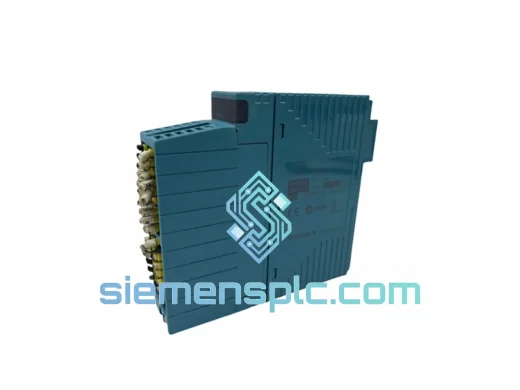
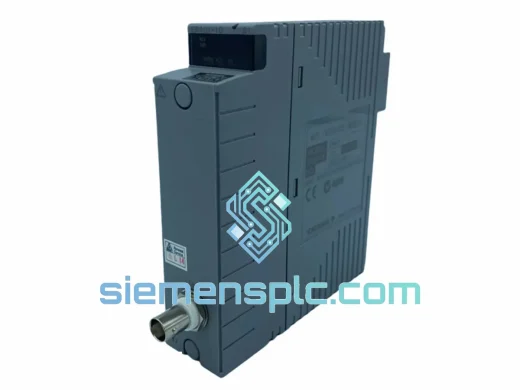
Yokogawa SAI143-H63/PRP S3 DCS Analog Input Module
CENTUM VP
Origin JP
DCS Analog Input Module
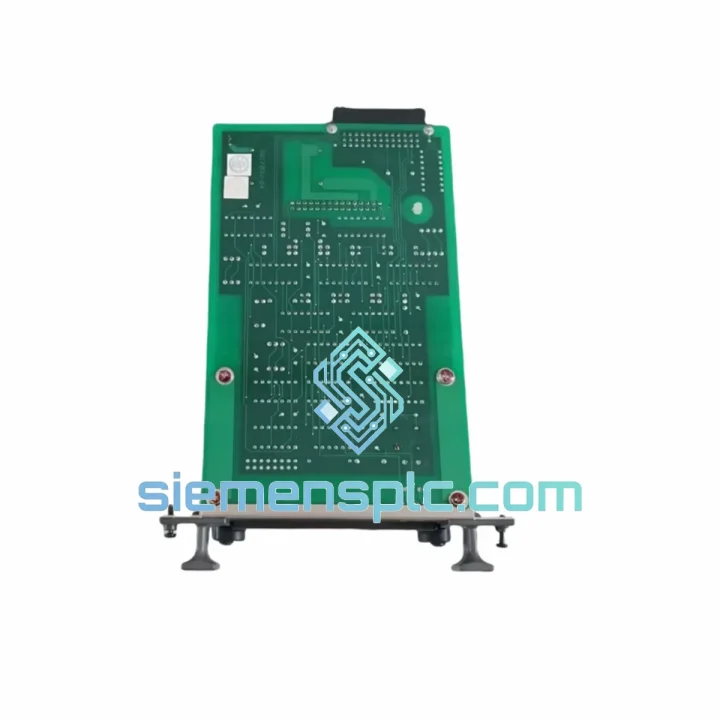
Request verified availability, condition, replacement risk review, packing options and courier lead time for AIP571.
Click Request Quote and the part number is inserted into the inquiry form automatically.
Core fields for model confirmation and RFQ routing. Detailed product narrative remains below.
The YOKOGAWA AIP571 occupies a structurally critical position within the CENTUM VP and CS 3000 DCS architecture: it is the hardware node that arbitrates all data traffic between the Remote I/O (RIO) field station nest and the V-net/RIO bus backbone. Without a correctly functioning AIP571, the field control station loses visibility of every analog and digital I/O card seated in that nest. Understanding its internal logic is therefore prerequisite to any maintenance, expansion, or migration decision on a YOKOGAWA-based process control system.
At the physical layer, the AIP571 interfaces directly with the ANB10D, ANB10S, and ANR10D I/O nest backplanes via a 96-pin DIN connector. The module draws operating power from the nest bus — nominally 5 VDC for logic and 24 VDC for field-side isolation rails — eliminating the need for an external power feed and simplifying cabinet wiring. The onboard DC/DC converter maintains ±2% regulation across the full operating temperature range of 0 °C to 55 °C, ensuring stable logic supply even in thermally demanding enclosures.
The RIO bus itself operates at a fixed baud rate defined by the CENTUM VP system clock, with the AIP571 acting as a bus slave that responds to polling frames issued by the Field Control Station (FCS). Each polling cycle, the module serializes the I/O data from all cards in the nest into a single RIO frame and transmits it upstream. The deterministic, token-based nature of this protocol guarantees a bounded scan time — a property that is non-negotiable in closed-loop control applications such as boiler drum level control or distillation column pressure regulation.
Optically isolated signal paths separate the RIO bus transceiver circuitry from the nest backplane logic. This galvanic barrier suppresses common-mode noise injected by long cable runs between the marshalling cabinet and the field control station — a frequent source of intermittent communication faults in older installations where cable shielding has degraded. The isolation withstand voltage is rated at 500 V AC (1 minute), consistent with IEC 61010-1 requirements for measurement and control equipment in industrial environments.
Diagnostics are embedded at the firmware level. The AIP571 continuously monitors its own RIO bus receive signal quality, nest backplane voltage rails, and internal temperature. Any parameter that drifts outside the defined envelope triggers a hardware fault flag that propagates to the FCS alarm summary within one scan cycle. This self-reporting mechanism reduces mean time to diagnose (MTTD) during unplanned shutdowns, because maintenance engineers can isolate the fault to the module level without oscilloscope measurements on the bus.
For plants operating CENTUM VP in redundant FCS configurations, the AIP571 supports dual-bus arbitration. Both the primary and secondary FCS nodes poll the module simultaneously; the AIP571 responds to the active master and suppresses duplicate acknowledgements to the standby node. On FCS switchover — which YOKOGAWA specifies at under 1 second — the module seamlessly transfers bus mastership without dropping a scan cycle, preserving loop integrity during controller failover events.
The module’s firmware is stored in non-volatile flash memory and is field-upgradeable via the CENTUM VP Builder engineering workstation. Firmware revisions are distributed through YOKOGAWA’s official software update channel and are tied to specific CENTUM VP revision levels. Running mismatched firmware between the AIP571 and the FCS is a documented root cause of intermittent communication timeouts; always verify compatibility matrices in YOKOGAWA Technical Information TI 33J01A10-01E before applying updates.
Real-time Stock & RFQ: [email protected] | WhatsApp: +86 18359268345
| Parameter | Specification |
|---|---|
| Manufacturer | YOKOGAWA Electric Corporation |
| Model / SKU | AIP571 |
| Series | CENTUM VP / CS 3000 RIO Series |
| Module Function | Remote I/O Bus Interface (RIO Slave) |
| Bus Protocol | YOKOGAWA proprietary RIO bus (token-poll, deterministic) |
| Backplane Connector | 96-pin DIN, direct nest insertion |
| Logic Supply Voltage | 5 VDC ± 2% (from nest backplane) |
| Field-side Isolation Rail | 24 VDC (from nest backplane) |
| Isolation Withstand Voltage | 500 V AC, 1 min (IEC 61010-1) |
| Operating Temperature | 0 °C to +55 °C |
| Storage Temperature | −25 °C to +70 °C |
| Relative Humidity | 5% to 95% RH, non-condensing |
| Compatible Nests | ANB10D, ANB10S, ANR10D |
| Compatible FCS | KFCS, FFCS, SFCS, LFCS2 |
| Compatible DCS Revisions | CENTUM VP R3–R6, CENTUM CS 3000 |
| Redundancy Support | Dual-bus arbitration (primary / standby FCS) |
| Firmware Storage | Non-volatile flash, field-upgradeable via VP Builder |
| Diagnostic Reporting | Hardware fault flag, propagated within 1 scan cycle |
| Weight | Approx. 420 g |
| Compliance | CE, UL, IEC 61010-1 |
| Country of Origin | Japan |
| Warranty | 12 months from date of shipment |
The AIP571’s EMC design follows a layered shielding strategy. The PCB ground plane is segmented into a digital domain (RIO bus transceiver, microcontroller) and an analog domain (nest backplane interface), with a single-point star ground at the chassis mounting screw. This topology prevents high-frequency switching noise from the digital transceiver from coupling into the lower-frequency analog backplane signals — a common failure mode in modules that use a shared continuous ground plane.
The RIO bus transceiver uses differential signaling with a characteristic impedance of 120 Ω, matched to the shielded twisted-pair cable specified in YOKOGAWA’s installation standard. Termination resistors are integrated on the module and are automatically switched in or out based on the module’s position in the bus topology (end-of-line vs. mid-bus), eliminating the manual termination jumper errors that cause reflections and data corruption on long cable runs.
The onboard microcontroller executes a real-time operating system with a fixed interrupt latency of less than 100 µs for RIO bus frame processing. This determinism is achieved by dedicating a hardware timer interrupt exclusively to bus polling response, preventing lower-priority tasks (diagnostics, self-test) from delaying the bus acknowledgement. The result is a consistent scan contribution that does not vary with diagnostic load — a property that simplifies loop tuning calculations for fast-response control loops.
Redundancy arbitration logic is implemented in a dedicated CPLD (Complex Programmable Logic Device) rather than in firmware. This hardware-based approach ensures that FCS switchover detection and bus mastership transfer occur within a single clock cycle, independent of the microcontroller’s task scheduler state. The CPLD monitors the heartbeat signal from both FCS nodes and asserts the switchover flag within 10 ms of detecting primary FCS loss — well within the sub-1-second switchover specification.
Every AIP571 unit supplied by siemensplc.com is sourced as genuine YOKOGAWA manufacture. Each module undergoes a structured incoming inspection protocol: visual examination of the PCB, connector pins, and label integrity; verification of the serial number against YOKOGAWA’s manufacturing records; and a powered functional test confirming RIO bus communication handshake and diagnostic self-test completion. Units that do not pass all three stages are quarantined and not offered for sale.
Packaging follows anti-static and shock-absorption standards appropriate for sensitive industrial electronics: conductive foam insert, ESD bag, and double-wall corrugated outer carton. Each shipment includes a packing list, inspection report, and — on request — a certificate of conformance. The 12-month warranty covers defects in materials and workmanship from the date of shipment; warranty claims are processed with a target response time of 48 hours.
Logistics operations are based in Xiamen, China, a major port city with direct sea freight connections to Rotterdam, Los Angeles, Singapore, and Dubai, and daily air freight consolidations to all major international hubs. Standard international shipments are dispatched within 1–3 business days of order confirmation. Express air freight (DHL, FedEx, UPS) is available for urgent requirements, with typical transit times of 3–5 business days to Europe and North America. Export documentation — commercial invoice, packing list, certificate of origin, and HS Code 8537.10 classification — is prepared as standard for all international orders. Customs clearance support is available on request for destinations with complex import regulations.
Email: [email protected]
WhatsApp: +86 18359268345
Web: siemensplc.com
Location: Xiamen, China
© 2026 siemensplc.com. All rights reserved.
We check the full part number, brand, series and visible nameplate information before quotation.
Sales confirms stock path, condition option, quantity and realistic lead time for export dispatch.
DHL, FedEx, UPS or buyer courier arrangements can be reviewed with packing requirements.
Similar brand or category products for fast comparison and multi-item RFQ lists.