Yokogawa
RFQ Ready
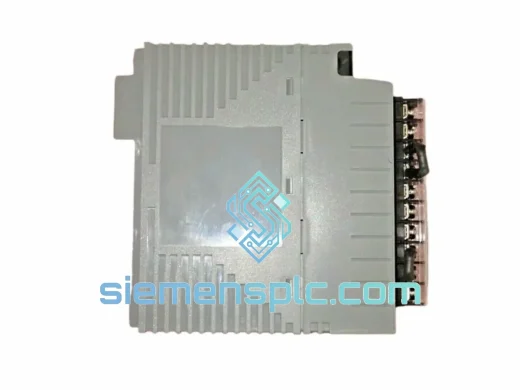
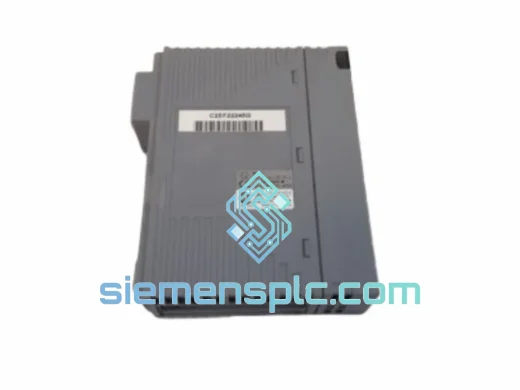
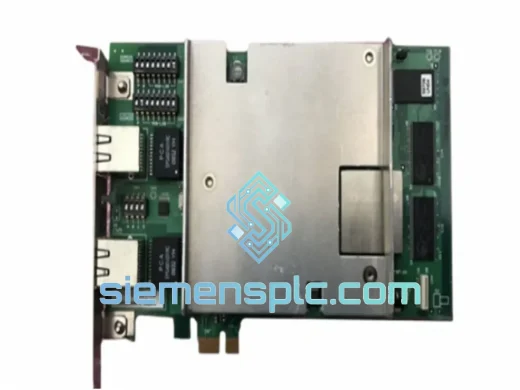
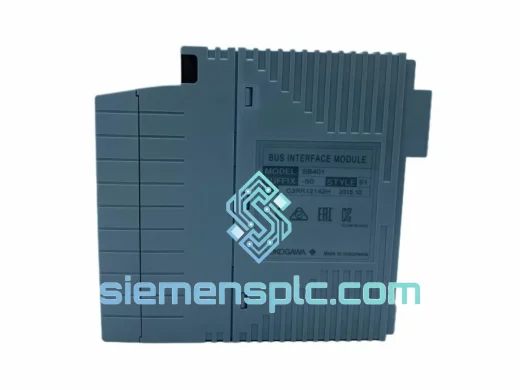
Yokogawa SB401-50 Serial Bus Interface Module – CENTUM VP
CENTUM VP
Origin JP
Serial Bus Interface Module
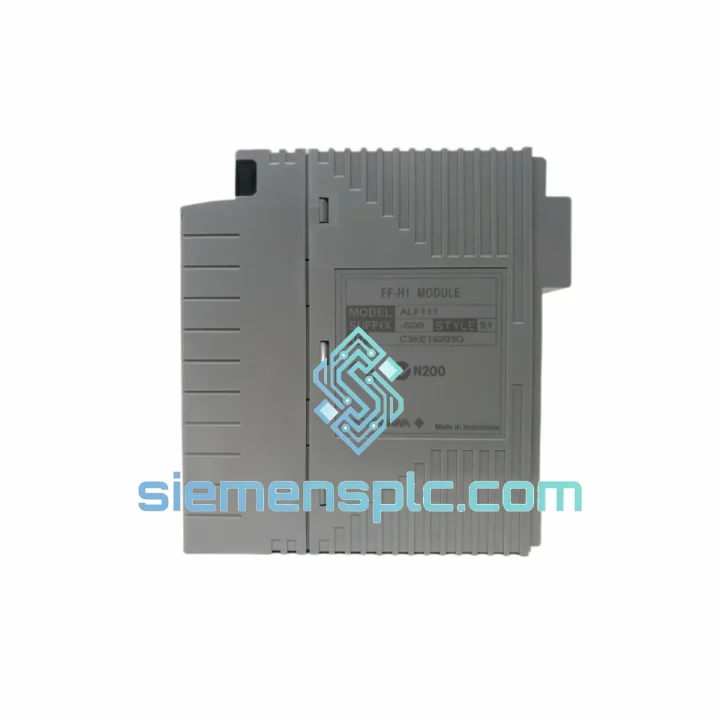
Request verified availability, condition, replacement risk review, packing options and courier lead time for ALF111-S00.
Click Request Quote and the part number is inserted into the inquiry form automatically.
Core fields for model confirmation and RFQ routing. Detailed product narrative remains below.
The YOKOGAWA ALF111-S00 is a single-segment Foundation Fieldbus H1 (FF-H1) communication interface module engineered for deployment within YOKOGAWA’s CENTUM VP and ProSafe-RS distributed control system platforms. Operating at the IEC 61158-defined physical layer signaling rate of 31.25 kbit/s, this module bridges the high-speed backplane bus of the Field Control Station (FCS) with the deterministic, multi-drop FF-H1 field segment — enabling direct digital communication with Foundation Fieldbus-certified transmitters, positioners, and actuators without intermediate signal conversion hardware.
Unlike analog 4–20 mA I/O modules that require dedicated marshalling cabinets and individual signal conditioning per channel, the ALF111-S00 consolidates up to 16 field devices onto a single twisted-pair segment. This architectural shift reduces field wiring density, eliminates analog-to-digital conversion error accumulation, and transfers process variable computation — including PID execution — directly to the field device level via the FF function block model. The result is a measurable reduction in scan cycle latency for closed-loop control and a significant increase in per-device diagnostic resolution.
In CENTUM VP installations, the ALF111-S00 mounts directly into the I/O node chassis and communicates with the FCS processor via the Vnet/IP or ESB (Enhanced System Bus) backplane, depending on the generation of the control station. The module handles all FF-H1 link scheduling, including the Link Active Scheduler (LAS) function, which governs the deterministic token-passing protocol across the segment. This ensures that compelled data (CD) — the cyclic process variable exchange — is transmitted within defined macrocycle windows, maintaining real-time control loop integrity even under high device-count configurations.
The ALF111-S00 is suited for process industries where field device intelligence, loop-level redundancy, and diagnostic transparency are engineering requirements rather than optional features. Typical deployment environments include oil and gas separation trains, refinery distillation column control, chemical reactor temperature and pressure loops, and pharmaceutical batch process automation — all contexts where the FF-H1 protocol’s deterministic scheduling and device-level self-diagnostics provide measurable operational value over conventional analog I/O.
Real-time Stock & RFQ: [email protected] | WhatsApp: +86 18359268345
| Manufacturer | YOKOGAWA Electric Corporation |
| Part Number / SKU | ALF111-S00 |
| Module Function | Foundation Fieldbus H1 (FF-H1) Communication Interface |
| Compatible Platform | CENTUM VP, ProSafe-RS (YOKOGAWA DCS/SIS) |
| Communication Protocol | Foundation Fieldbus H1 — IEC 61158 / IEC 61784 |
| Signaling Rate | 31.25 kbit/s (Manchester-encoded, voltage-mode) |
| Segments per Module | 1 (single FF-H1 segment) |
| Max Field Devices per Segment | Up to 16 devices (topology and power budget dependent) |
| Link Active Scheduler (LAS) | Integrated — module acts as primary LAS |
| Backplane Interface | ESB (Enhanced System Bus) / Vnet/IP node I/O bus |
| Power Supply | Supplied via I/O chassis backplane (no external PSU required) |
| Operating Temperature | 0°C to +55°C |
| Storage Temperature | −25°C to +70°C |
| Relative Humidity | 5% to 95% RH, non-condensing |
| EMC Compliance | IEC 61000-4 series (ESD, EFT, surge, conducted/radiated immunity) |
| Safety / Regulatory | CE Marking, RoHS 2011/65/EU, IEC 61158, IEC 61784 |
| ESD Protection | IEC 61340-5-1 compliant handling and packaging |
| Approximate Weight | 300 g |
| Country of Origin | Japan |
| Warranty | 12 months from date of dispatch |
The ALF111-S00’s internal architecture is organized around three functional layers: the backplane interface logic, the FF-H1 protocol engine, and the physical layer driver circuit.
Backplane Interface Logic: The module interfaces with the CENTUM VP I/O node chassis via the ESB backplane, which operates at a significantly higher throughput than the FF-H1 field segment. An internal FIFO buffer and DMA-style data transfer mechanism decouple the backplane polling cycle from the FF-H1 macrocycle timing, preventing backplane latency jitter from propagating into the field segment’s deterministic schedule. This isolation is critical in multi-module chassis configurations where backplane arbitration contention could otherwise introduce timing variance into the LAS token-passing sequence.
FF-H1 Protocol Engine and LAS Function: The module’s embedded protocol engine implements the full Data Link Layer (DLL) specification of IEC 61158, including the Link Active Scheduler algorithm. As the primary LAS, the ALF111-S00 maintains the Live List — a registry of all active devices on the segment — and issues Compelled Data (CD) tokens to each device in a fixed macrocycle sequence. The macrocycle period is configurable via CENTUM VP’s engineering environment (CENTUM VP Builder), allowing the control engineer to balance scan rate against the number of scheduled function block executions per cycle. Unscheduled bandwidth within the macrocycle is allocated for acyclic communication — alarm reports, parameter writes, and diagnostic reads — using a token-passing mechanism that prevents any single device from monopolizing the bus.
Physical Layer Driver and EMC Design: The FF-H1 physical layer driver conforms to the IEC 61158-2 voltage-mode signaling specification, producing a ±10 mV differential signal superimposed on the 9–32 VDC segment power rail. The driver circuit incorporates transformer-coupled isolation between the digital protocol engine and the field segment conductor pair, providing galvanic isolation that attenuates common-mode noise — a critical requirement in industrial environments where field cables may run parallel to high-voltage power conductors or variable-frequency drive (VFD) output cables. The isolation barrier also limits the propagation of ground loop currents, which are a primary source of signal integrity degradation in long-run fieldbus installations.
Segment Power and Intrinsic Safety Compatibility: The ALF111-S00 does not include an integrated segment power conditioner; segment power is supplied externally via a dedicated FF-H1 power supply and conditioner, which is consistent with YOKOGAWA’s modular system design philosophy. This separation allows the segment power supply to be independently sized for the device count and cable length, and permits the use of certified intrinsically safe (IS) barriers for Zone 0/1 hazardous area installations without modifying the module itself.
Every YOKOGAWA ALF111-S00 unit supplied through siemensplc.com is a genuine OEM component sourced through verified industrial supply channels. Each module undergoes a structured pre-dispatch inspection covering physical integrity assessment (PCB condition, connector pin alignment, housing and label verification), supply chain traceability cross-referencing against manufacturer date codes and part markings, and where applicable, functional bench verification of backplane communication response and FF-H1 bus initialization. Units are packaged in IEC 61340-5-1 compliant anti-static materials with a condition report and available datasheet documentation.
Logistics operations are managed from Xiamen, China, with established export documentation workflows covering commercial invoices, packing lists, and certificates of origin as standard. International shipments are dispatched via DHL Express, FedEx International Priority, and UPS Worldwide, with in-stock units typically cleared for dispatch within 1–3 business days of order confirmation. Bulk and project-scale orders are supported with volume pricing and dedicated logistics coordination. All export processing complies with applicable trade control regulations.
A 12-month warranty is provided from the date of dispatch, covering functional defects under normal operating conditions. Dead-on-arrival (DOA) claims are processed within 7 days of receipt with photographic documentation. Replacement or credit is issued upon verification.
Email: [email protected]
WhatsApp: +86 18359268345
Web: siemensplc.com
Location: Xiamen, China
© 2026 siemensplc.com. All rights reserved.
We check the full part number, brand, series and visible nameplate information before quotation.
Sales confirms stock path, condition option, quantity and realistic lead time for export dispatch.
DHL, FedEx, UPS or buyer courier arrangements can be reviewed with packing requirements.
Similar brand or category products for fast comparison and multi-item RFQ lists.