Yokogawa
RFQ Ready
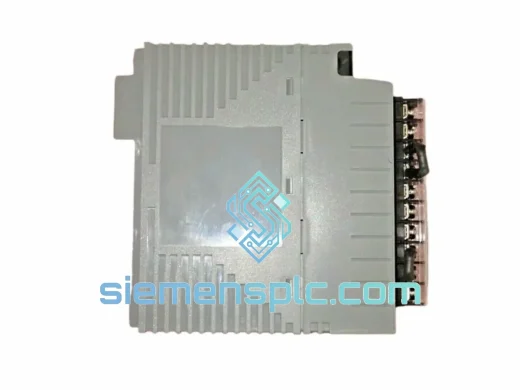
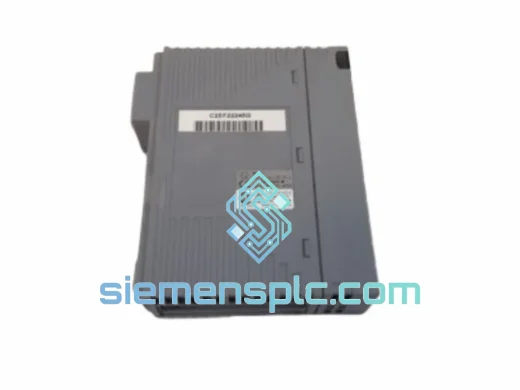
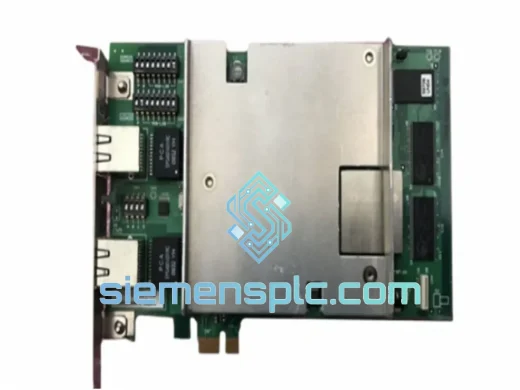
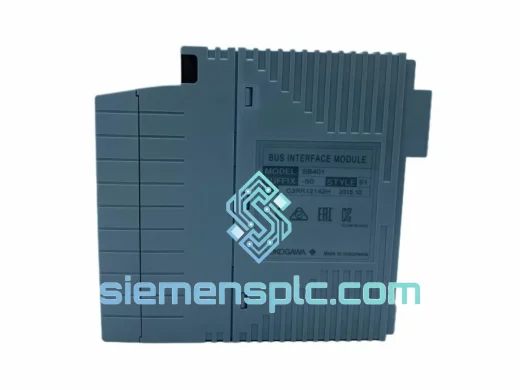
Yokogawa SB401-50 Serial Bus Interface Module – CENTUM VP
CENTUM VP
Origin JP
Serial Bus Interface Module
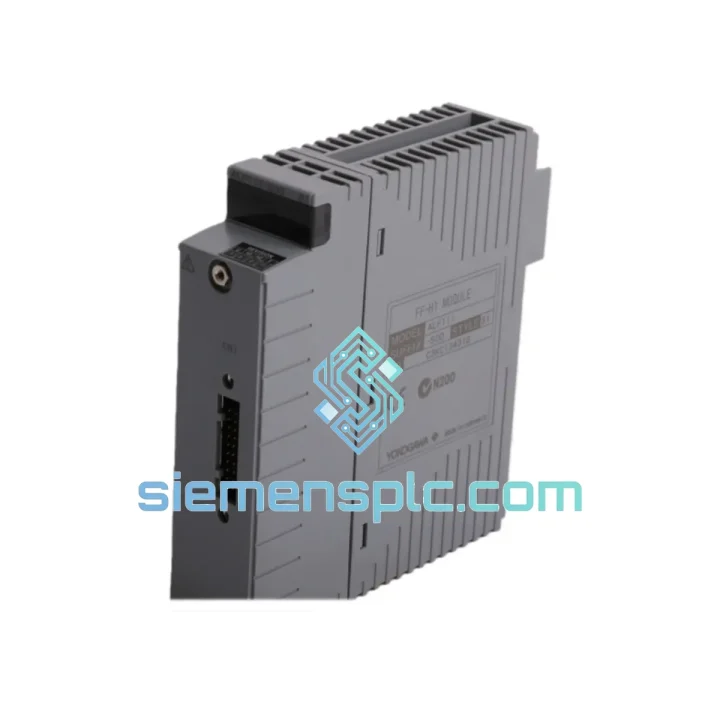
Request verified availability, condition, replacement risk review, packing options and courier lead time for ALF111-S50.
Click Request Quote and the part number is inserted into the inquiry form automatically.
Core fields for model confirmation and RFQ routing. Detailed product narrative remains below.
The ALF111-S50 is Yokogawa’s dedicated FOUNDATION Fieldbus H1 (FF-H1) communication interface module, designed for direct slot-insertion into CENTUM VP and CS 3000 distributed control system node units. Its core function within a process control loop is to serve as the physical and logical bridge between the DCS controller domain and the FF-H1 fieldbus segment — managing bus power delivery, Link Active Scheduler (LAS) arbitration, and cyclic/acyclic data exchange with up to 16 field devices per segment. The “-S50” suffix designates the integrated 50 mA bus power conditioner variant, which eliminates the need for an external power supply unit on the fieldbus trunk, reducing panel footprint and simplifying segment commissioning.
In a CENTUM VP architecture, the ALF111-S50 occupies a standard I/O slot within the Node Unit (NU) or Field Control Unit (FCU). Communication toward the controller side traverses the high-speed V-net/IP or ESB backplane bus, where the DCS function blocks — PID, AO, AI — exchange process values and setpoints with the module at deterministic scan intervals. On the field side, the module drives the 31.25 kbps H1 segment, supplying conditioned bus power (9–32 VDC, ≤50 mA) to the trunk and managing the LAS token-passing protocol that governs which device transmits at any given moment. This architecture ensures that control loop execution is not subject to Ethernet-layer jitter or collision-domain latency — a critical requirement in continuous process industries where loop scan times must remain within ±1 ms of the configured cycle.
The module supports both scheduled (cyclic) and unscheduled (acyclic) communication. Cyclic traffic carries process variable (PV), setpoint (SP), and output (OUT) data between field devices and DCS function blocks at fixed intervals defined in the Link Schedule. Acyclic traffic handles device parameterization, diagnostics reads, and alarm notifications — all without interrupting the cyclic control loop. This dual-channel communication model is fundamental to the FF-H1 standard (IEC 61158 Type 1) and is what distinguishes FOUNDATION Fieldbus from simpler HART or Modbus implementations in terms of control-in-the-field capability.
For hazardous area installations, the ALF111-S50 is compatible with certified intrinsic safety (IS) barriers and Zener barriers, supporting entity parameter matching for Zone 0, Zone 1, and Division 1 classified areas. The module’s bus power output characteristics are defined to remain within the entity parameters of standard IS barriers, allowing the fieldbus segment to extend into Ex-rated process areas without requiring a separate Ex-certified power conditioner.
Real-time Stock & RFQ: [email protected] | WhatsApp: +86 18359268345
| Parameter | Specification |
|---|---|
| Part Number / SKU | ALF111-S50 |
| Manufacturer | Yokogawa Electric Corporation |
| Platform Compatibility | CENTUM VP (R4.x–R6.x), CENTUM CS 3000 |
| Communication Protocol | FOUNDATION Fieldbus H1 (IEC 61158 Type 1) |
| Transmission Speed | 31.25 kbps |
| Fieldbus Segments per Module | 1 |
| Max Field Devices per Segment | Up to 16 (topology and cable length dependent) |
| Bus Power Output (S50 variant) | Integrated conditioner, ≤50 mA, 9–32 VDC |
| Backplane Interface | V-net/IP or ESB (CENTUM VP node unit slot) |
| Redundancy | Dual-module redundancy supported (adjacent slot pair) |
| IS Barrier Compatibility | Zener and galvanic IS barriers (entity parameter matched) |
| Operating Temperature | 0 °C to +60 °C |
| Storage Temperature | −20 °C to +70 °C |
| Relative Humidity | 5% to 95% RH, non-condensing |
| Module Weight | Approx. 300 g |
| Mounting | DCS I/O nest / node unit slot (tool-free insertion) |
| Compliance Standards | IEC 61158, IEC 61784, CE, UL/cUL |
| Country of Origin | Japan |
| Warranty | 12 months from date of shipment |
The ALF111-S50’s internal architecture is structured around three functional layers: the backplane interface logic, the LAS arbitration engine, and the bus power conditioning circuit.
Backplane Interface Logic: The module communicates with the CENTUM VP controller via the ESB (Enhanced Serial Bus) or V-net/IP backplane. Data transfer across this interface is memory-mapped and interrupt-driven, with the module presenting its segment data as a structured I/O image to the DCS function block engine. This eliminates polling overhead and ensures that PV updates from field devices are available to the controller within one scan cycle after the FF-H1 cyclic window closes.
LAS Arbitration Engine: The Link Active Scheduler embedded in the module firmware manages the token-passing protocol that governs FF-H1 bus access. The LAS maintains a Link Schedule — a time-ordered list of Compel Data (CD) tokens issued to each field device at configured intervals. Devices not in the schedule may request bus access via Pass Token (PT) frames during unscheduled windows. The ALF111-S50’s LAS implementation supports both Basic and Advanced LAS modes, with configurable macrocycle lengths down to 250 ms for fast-loop applications.
Bus Power Conditioning Circuit (S50): The integrated 50 mA power conditioner uses a high-impedance, low-noise linear regulation topology. A series inductor-capacitor (LC) filter on the bus output presents high impedance to the 31.25 kbps signal frequencies while providing a stable DC supply to field devices. This design prevents the power supply from loading the signal and maintains signal integrity across the full 1,900 m trunk length specified in IEC 61158. The conditioner also incorporates short-circuit protection and current limiting to prevent a faulted field device from collapsing the segment bus voltage.
EMC Design: The module’s PCB layout employs ground plane segmentation to isolate the high-frequency backplane interface from the low-frequency fieldbus side. Opto-isolation between the backplane logic and the H1 driver circuit provides galvanic separation, suppressing common-mode noise induced by long cable runs in industrial environments. The H1 driver conforms to the IEC 61158-2 physical layer specification, with Manchester-encoded signal output and a defined slew rate to minimize radiated emissions on the fieldbus cable.
Redundancy Arbitration: In dual-module redundancy mode, the primary ALF111-S50 holds the LAS role and actively drives the segment. The standby module monitors the bus in passive mode. Switchover is triggered by a watchdog timeout or a backplane health signal from the CENTUM VP controller. Switchover time is typically under 100 ms, which is within the tolerance of most FF-H1 field devices’ watchdog timers, preventing spurious output changes during failover.
Every ALF111-S50 unit supplied by siemensplc.com is sourced through verified industrial automation distribution channels with full traceability to Yokogawa’s manufacturing origin in Japan. Prior to dispatch, each module undergoes a structured pre-shipment inspection protocol: visual examination of the PCB and connector pins, label and date-code verification against Yokogawa’s part numbering convention, and a functional power-on check where applicable. Original Yokogawa packaging and documentation are preserved to maintain the integrity of the supply chain record.
For regulated industries — pharmaceutical, nuclear, and offshore oil & gas — certificates of conformity and material traceability documentation are available upon request at the time of order placement. All units are stored in ESD-controlled, climate-regulated warehouse conditions in Xiamen, China, consistent with Yokogawa’s recommended storage parameters (−20 °C to +70 °C, 5–95% RH non-condensing).
Logistics from Xiamen are executed via DHL Express, FedEx International Priority, and UPS Worldwide Expedited, with typical transit times of 3–5 business days to major industrial hubs in Europe, the Middle East, Southeast Asia, and the Americas. Full export documentation — commercial invoice, packing list, certificate of origin, and HS code classification — is prepared for every international shipment to facilitate customs clearance without delay. For time-critical plant shutdowns or turnaround projects, same-day dispatch is available for in-stock units when orders are confirmed before 14:00 CST.
A 12-month warranty from the date of shipment covers manufacturing defects and functional failures under normal operating conditions. Warranty claims are processed with a target response time of 48 hours, and replacement units are dispatched from Xiamen stock where available.
Email: [email protected]
WhatsApp: +86 18359268345
Web: siemensplc.com
Location: Xiamen, China
© 2026 siemensplc.com. All rights reserved.
We check the full part number, brand, series and visible nameplate information before quotation.
Sales confirms stock path, condition option, quantity and realistic lead time for export dispatch.
DHL, FedEx, UPS or buyer courier arrangements can be reviewed with packing requirements.
Similar brand or category products for fast comparison and multi-item RFQ lists.