Yokogawa
RFQ Ready
Yokogawa SAI143-H63/PRP S3 DCS Analog Input Module
CENTUM VP
Origin JP
DCS Analog Input Module
Request verified availability, condition, replacement risk review, packing options and courier lead time for AMM52 S4.
Click Request Quote and the part number is inserted into the inquiry form automatically.
Core fields for model confirmation and RFQ routing. Detailed product narrative remains below.
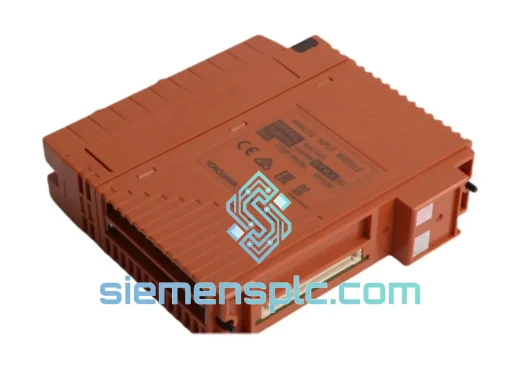
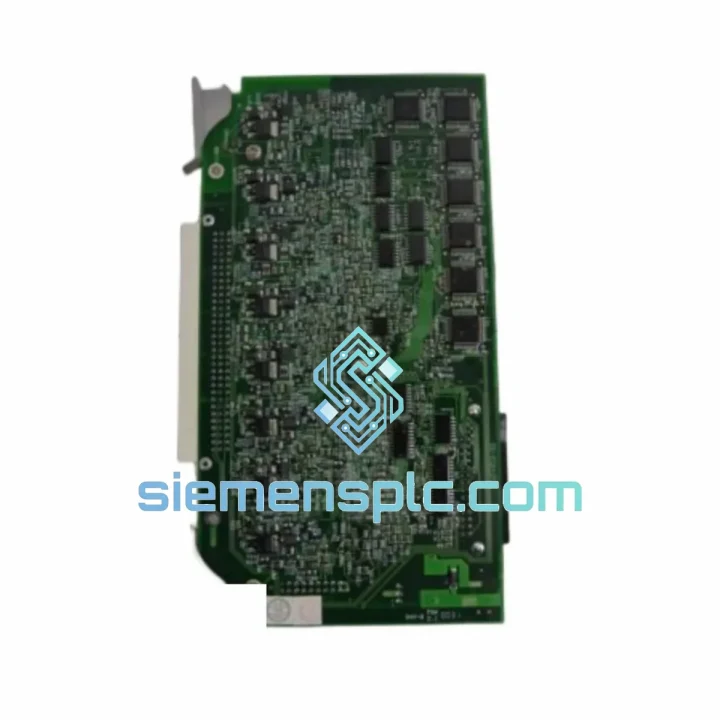
The AMM52 S4 is a multi-channel analog input I/O board engineered for YOKOGAWA’s CENTUM VP and CS 3000 Distributed Control System platforms. It occupies a standard I/O slot within the Field Control Station (FCS) I/O unit, accepting 4–20 mA DC signals from field transmitters and delivering digitised process values to the FCS CPU via the internal I/O bus. Its architecture is built around three functional layers: front-end signal conditioning, galvanic isolation, and high-resolution analog-to-digital conversion — each layer independently optimised to maintain measurement integrity under the electromagnetic and thermal stress conditions typical of heavy-process industries.
In a CENTUM VP or CS 3000 control loop, the AMM52 S4 sits at the boundary between the physical process and the digital control domain. Every milliamp of transmitter current that enters the terminal block is conditioned, isolated, converted, and timestamped before it reaches the FCS function block execution engine. The accuracy and latency of that conversion directly determine the quality of PID output, cascade setpoint tracking, and alarm response. A degraded or failed analog input board does not merely lose a measurement — it corrupts the entire control loop’s observability.
📦 Real-time Stock & RFQ: [email protected] | WhatsApp: +86 18359268345
| Part Number | AMM52 S4 |
| Manufacturer | YOKOGAWA Electric Corporation |
| Module Classification | Analog Input I/O Board (Multi-Channel) |
| Compatible Platform | CENTUM VP (R5 / R6), CENTUM CS 3000 (R3) |
| Input Signal Type | 4–20 mA DC (2-wire / 4-wire transmitter compatible) |
| A/D Conversion Resolution | 16-bit (65,536 counts across full span) |
| Measurement Accuracy | ±0.1% of full scale (at 25 °C reference) |
| Channel Isolation | Optical isolation, channel-to-channel and channel-to-backplane |
| Internal Bus Interface | YOKOGAWA FCS I/O backplane bus (proprietary parallel bus) |
| Power Source | Backplane-supplied (no external PSU required) |
| Operating Temperature | 0 °C to +55 °C |
| Storage Temperature | −25 °C to +70 °C |
| Relative Humidity | 5% to 95% RH, non-condensing |
| Form Factor | Plug-in PCB, FCS I/O unit slot |
| Weight | 260 g |
| Certifications | CE, UL (per YOKOGAWA CENTUM platform certification) |
| Warranty | 12 months from date of shipment |
| Origin | Japan (YOKOGAWA OEM) |
The AMM52 S4’s signal path begins at the I/O terminal block, where the 4–20 mA loop current passes through a precision burden resistor to generate a proportional voltage. This voltage enters a differential amplifier stage with common-mode rejection ratio (CMRR) exceeding 80 dB, suppressing ground-referenced noise injected by long cable runs in industrial conduit environments. The amplified signal then crosses an optocoupler isolation barrier — a discrete photoemitter/photodetector pair per channel — that provides galvanic separation rated to withstand transient voltages consistent with IEC 61000-4-5 surge immunity requirements. This isolation stage is the primary EMC defence mechanism: it breaks the conductive path between field wiring and the FCS backplane, preventing surge energy from propagating into the CPU module’s logic domain.
Post-isolation, the signal enters a successive-approximation register (SAR) ADC operating at 16-bit resolution. The SAR architecture was selected over delta-sigma for this application because it delivers deterministic conversion time — a fixed number of clock cycles per sample regardless of input amplitude — which is essential for synchronised multi-channel scanning in a real-time control system. The digitised value is latched into a dual-port SRAM buffer accessible by both the ADC logic and the backplane bus interface controller. The bus interface controller arbitrates access to the backplane, transmitting channel data to the FCS CPU in a time-multiplexed frame aligned to the FCS scan cycle. This architecture ensures that analog input data arrives at the function block execution engine with bounded, predictable latency — a prerequisite for stable PID control at fast scan rates.
The PCB layout follows YOKOGAWA’s internal EMC design rules: analog and digital ground planes are separated and joined at a single star point beneath the isolation barrier; decoupling capacitors are placed within 2 mm of each IC power pin; signal traces are routed away from clock lines and power switching nodes. The result is a board that maintains its specified accuracy in environments where radiated emissions from variable-frequency drives and high-current contactors would degrade lesser designs.
Every AMM52 S4 unit supplied by siemensplc.com is sourced as genuine YOKOGAWA OEM hardware. Units are inspected upon receipt: PCB surface condition, component seating, connector pin integrity, and revision label authenticity are verified against YOKOGAWA’s published part marking standards. Boards showing evidence of rework, counterfeit markings, or physical damage are rejected and not listed for sale. Accepted units are stored in anti-static bags within humidity-controlled racking at our Xiamen, China facility, with humidity indicator cards included in each shipment package to confirm storage integrity during transit.
Shipments originate from Xiamen, China — a major international freight hub with direct DHL Express, FedEx International Priority, and UPS Worldwide Express connections to North America, Europe, Southeast Asia, the Middle East, and Australia. Standard international express transit time is 3–5 business days to most destinations. For time-critical plant maintenance scenarios, same-day dispatch is available for orders confirmed before 14:00 CST. All shipments include a commercial invoice, packing list, and certificate of conformance. Export documentation for customs clearance (HS code 8537.10) is prepared as standard. A 12-month warranty covers manufacturing defects and DOA conditions; warranty claims are processed via RMA with pre-paid return freight on confirmed defective units.
Email: [email protected]
WhatsApp: +86 18359268345
Web: siemensplc.com
Location: Xiamen, China
© 2026 siemensplc.com. All rights reserved.
We check the full part number, brand, series and visible nameplate information before quotation.
Sales confirms stock path, condition option, quantity and realistic lead time for export dispatch.
DHL, FedEx, UPS or buyer courier arrangements can be reviewed with packing requirements.
Similar brand or category products for fast comparison and multi-item RFQ lists.