Yokogawa
In Stock OK
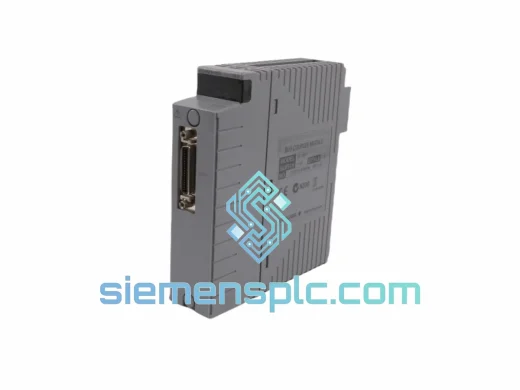
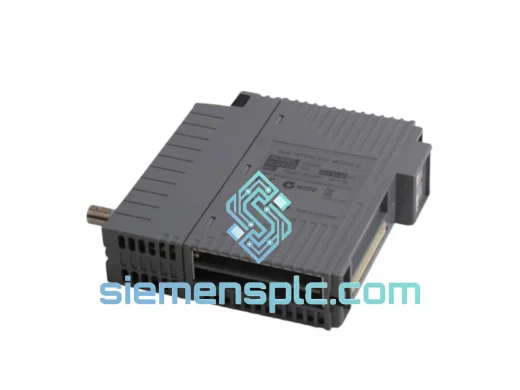
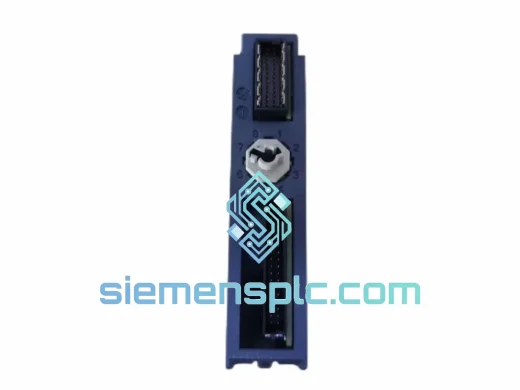
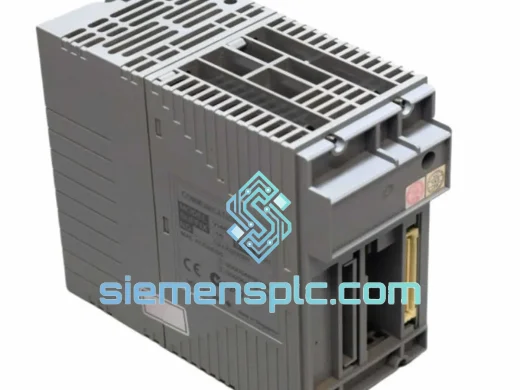
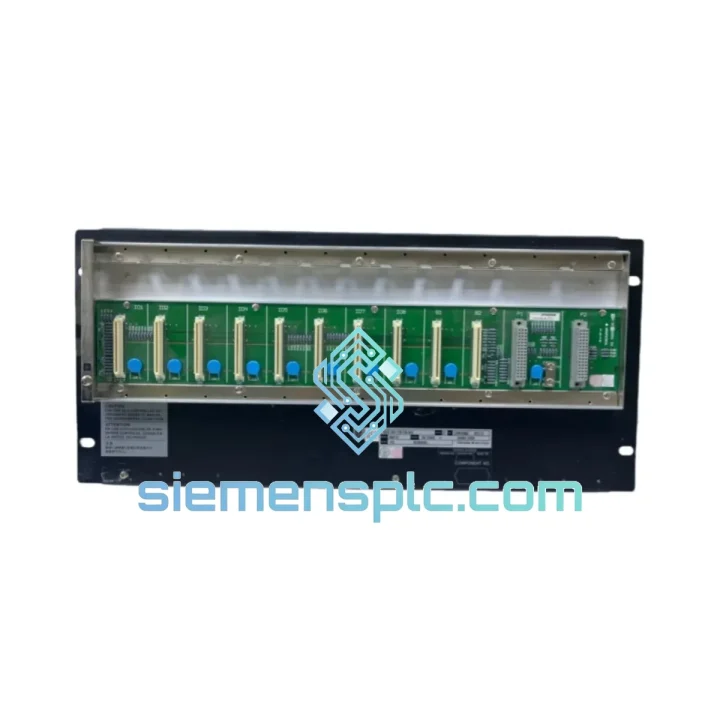
Yokogawa ANB10D-415/CU2N/NDEL DCS Bus Node Module – CENTUM CS/VP
Request verified availability, condition, replacement risk review, packing options and courier lead time for ANB10D-415/CU2N/NDEL.
BrandYokogawa
Part NumberANB10D-415/CU2N/NDEL
ConditionAvailability Check
Lead TimeRFQ Confirmation
DocumentsDatasheet / photos by RFQ
ShippingExport packing available
Auto-filled RFQ
ANB10D-415/CU2N/NDEL
Click Request Quote and the part number is inserted into the inquiry form automatically.
- Reply by email: [email protected]
- WhatsApp / Tel: +86 18359268345
- Mon-Sat 9:00-18:00 GMT+8
Procurement Data
Key Product Information
Core fields for model confirmation and RFQ routing. Detailed product narrative remains below.
- Brand
- Yokogawa
- Primary Part Number
- ANB10D-415/CU2N/NDEL
- Product Type
- DCS Bus Node Module
- Product Family
- Other series
- Manufacturer
- Yokogawa Electric Corporation
- Country of Origin
- JP
- Catalog Category
- DCS & Safety Modules
- Operating Temp.
- 0 °C to +55 °C (storage: −25 °C to +70 °C)
- Warranty
- 12 months functional warranty from date of shipment
Model confirmed for inquiry
ANB10D-415/CU2N/NDEL
Send quantity, destination and urgency. The RFQ form keeps this part number attached.
Request Quote
Product Overview
ANB10D-415/CU2N/NDEL: ESB Bus Node Unit for Yokogawa CENTUM CS/VP Distributed Control Systems
The Yokogawa ANB10D-415/CU2N/NDEL is a factory-configured Enhanced Serial Bus (ESB) node unit engineered for deployment within CENTUM CS and CENTUM VP field control station (FCS) chassis. Its function is unambiguous: it serves as the physical arbitration and signal-routing node between the FCS processor backplane and the downstream I/O subsystem, maintaining deterministic, cycle-synchronous data exchange across the ESB topology. In process-critical environments — refining, LNG, pharmaceutical batch, and power generation — this module is the structural element that sustains loop integrity when field I/O counts scale beyond the base FCS capacity.
The part number encodes a precise hardware and configuration identity. ANB10D designates the D-series hardware revision of the ANB10 node family, incorporating updated bus arbitration logic and improved EMC shielding over earlier A/B/C revisions. The suffix 415 defines the slot address and bus segment assignment within the FCS chassis. CU2N specifies the dual-redundant communication unit variant, enabling active/standby bus failover without process interruption. NDEL is a factory option deletion flag, confirming that specific optional hardware not required for this configuration has been omitted at the manufacturing stage — a detail that matters for slot compatibility verification in existing CENTUM projects.
Real-time Stock & RFQ: [email protected] | WhatsApp: +86 18359268345
Technical Parameters
| Manufacturer | Yokogawa Electric Corporation |
| Full Part Number / SKU | ANB10D-415/CU2N/NDEL |
| Module Classification | ESB Bus Node Unit (Enhanced Serial Bus) |
| Hardware Revision | ANB10D (D-series) |
| Configuration Suffix | 415 / CU2N / NDEL |
| Communication Unit Variant | CU2N (Dual-Redundant) |
| Platform Compatibility | CENTUM CS, CENTUM VP (all firmware generations) |
| Bus Architecture | Enhanced Serial Bus (ESB), deterministic token-passing protocol |
| Redundancy Mode | Active/Standby dual-bus with automatic failover (<1 scan cycle switchover) |
| Backplane Interface | FCS internal high-speed parallel backplane |
| Downstream I/O Support | AI, AO, DI, DO, and pulse I/O modules via ESB segment |
| Operating Temperature | 0 °C to +55 °C (storage: −25 °C to +70 °C) |
| Relative Humidity | 5% to 95% RH, non-condensing |
| Power Consumption | Supplied via FCS backplane (no external power rail required) |
| EMC Compliance | IEC 61000-4 series (ESD, EFT, surge, conducted/radiated immunity) |
| Weight | 2,480 g |
| Country of Origin | Japan |
| Warranty | 12 months functional warranty from date of shipment |
Hardware Logical Analysis
The ANB10D-415/CU2N/NDEL operates at the intersection of two distinct bus domains: the FCS internal backplane, which runs at parallel-bus speeds synchronized to the FCS scan cycle, and the ESB, which is a serial, token-passing field bus with deterministic latency characteristics. The node unit’s core function is protocol translation and arbitration between these two domains without introducing jitter that would violate the real-time guarantees of the control loop.
Dual-Bus Redundancy (CU2N): The CU2N communication unit implements a hardware-level active/standby architecture across two independent ESB physical paths. Bus health is monitored continuously via frame-level CRC checking and timeout detection. On detection of a primary bus fault — whether a cable break, connector degradation, or transceiver failure — the node switches to the standby bus within a single FCS scan cycle. This switchover is transparent to the FCS processor; no process variable is lost and no alarm is generated at the application layer, preserving loop continuity in SIL-rated and high-availability installations.
EMC Design (D-Series Improvement): The D-series hardware revision introduced enhanced ground plane isolation on the PCB and improved ferrite filtering on the ESB transceiver lines. This directly addresses conducted emissions and susceptibility in environments with variable-frequency drives (VFDs), large motor starters, and high-current switching loads operating in proximity to the control cabinet. The result is measurable improvement in IEC 61000-4-4 (EFT) and IEC 61000-4-5 (surge) immunity margins compared to earlier ANB10A/B revisions.
Slot Address Encoding (415 Suffix): The 415 configuration suffix is not a field-programmable parameter — it is factory-burned into the module’s non-volatile configuration memory at the time of manufacture. This encoding defines the node’s logical address on the ESB segment and its physical slot assignment within the FCS chassis. Substituting a module with a different address suffix without corresponding FCS project reconfiguration will result in a bus address conflict and I/O communication failure. Engineers performing emergency replacements must verify this suffix against the existing module label and the CENTUM project’s hardware configuration file (HCF).
NDEL Option Flag: The NDEL designation confirms factory deletion of optional hardware components not specified in this configuration order. This is a standard Yokogawa manufacturing practice for configuring modules to exact project specifications, reducing unnecessary component population and ensuring slot-level compatibility with the target FCS chassis layout.
System Integration Benefits
- Zero-configuration drop-in replacement: The factory-encoded part number (ANB10D-415/CU2N/NDEL) matches the FCS hardware configuration file exactly, eliminating the need for any project download or bus reconfiguration during emergency swap-out.
- Deterministic scan-cycle alignment: The ESB node synchronizes its downstream I/O polling to the FCS scan cycle clock, ensuring that all field values presented to the control application are temporally consistent within a single scan — a prerequisite for cascade and ratio control loops.
- Transparent bus redundancy: CU2N dual-bus failover operates below the FCS application layer. Process engineers and operators see no alarm, no value freeze, and no loop disturbance during a bus switchover event.
- Scalable I/O expansion: Each ANB10D node unit extends the FCS I/O capacity by one ESB segment, supporting additional AI/AO/DI/DO modules without modifying the FCS processor or its backplane configuration.
- Diagnostic transparency: The module reports bus health status, CRC error counts, and redundancy state to the CENTUM system diagnostic display, enabling maintenance engineers to identify degrading bus segments before they cause a process fault.
- Reduced commissioning risk: Factory-configured suffix parameters eliminate field address-setting errors that are a common source of commissioning delays in DCS I/O expansion projects.
- Compatibility across CENTUM generations: The ANB10D hardware series maintains backward and forward compatibility across CENTUM CS and CENTUM VP firmware generations, protecting the investment in existing FCS chassis infrastructure during phased system upgrades.
- ESD-hardened field interface: The ESB transceiver circuitry incorporates TVS diode protection on all bus lines, providing robustness against electrostatic discharge events during module insertion and extraction in live-chassis maintenance scenarios.
- Minimal mean time to repair (MTTR): The module’s hot-swap-compatible mechanical design (subject to FCS chassis type) and exact part number match reduce the time from fault detection to restored I/O communication to under 15 minutes in a prepared maintenance scenario.
- Supports SIL-rated loop architectures: The deterministic, CRC-verified ESB communication path is compatible with safety instrumented system (SIS) co-located architectures where process control and safety I/O share the same FCS chassis infrastructure under defined separation rules.
Quality Assurance & Global Logistics
Every ANB10D-415/CU2N/NDEL unit offered through siemensplc.com is sourced as genuine Yokogawa original hardware. Units are inspected against the following protocol before dispatch:
- Visual inspection: PCB surface, connector pins, housing integrity, and original Yokogawa part number label verification.
- Power-on functional test: module initialization, bus communication handshake, and redundancy switchover verification.
- ESD-safe packaging: anti-static bag, foam cushioning, and outer carton rated for international air freight handling.
- Documentation package: commercial invoice, packing list, and test record included with each shipment for customs clearance and incoming QC.
Logistics are managed from our warehouse in Xiamen, China. Standard international express (DHL / FedEx / UPS) delivers to most destinations within 3–7 business days. Air freight and sea freight options are available for bulk orders. Export documentation is prepared in compliance with Chinese customs regulations and destination country import requirements. A 12-month functional warranty covers all units from the date of shipment; DOA units are replaced or credited without dispute.
Contact Information
Email: [email protected]
WhatsApp: +86 18359268345
Web: siemensplc.com
Location: Xiamen, China
© 2026 siemensplc.com. All rights reserved.
Ready to quote
[email protected]
Send This Part Number to Sales
RFQ workflow
Quality workflow ->
Confirmation Process
01Model confirmation
We check the full part number, brand, series and visible nameplate information before quotation.
02Availability reply
Sales confirms stock path, condition option, quantity and realistic lead time for export dispatch.
03Packing & courier
DHL, FedEx, UPS or buyer courier arrangements can be reviewed with packing requirements.
Continue sourcing
Browse full catalog ->
Related Automation Parts
Similar brand or category products for fast comparison and multi-item RFQ lists.