Yokogawa
RFQ Ready
Yokogawa S2CP471-01 S1 DCS Processor Module
CENTUM CS3000
Origin JP
DCS Processor Module
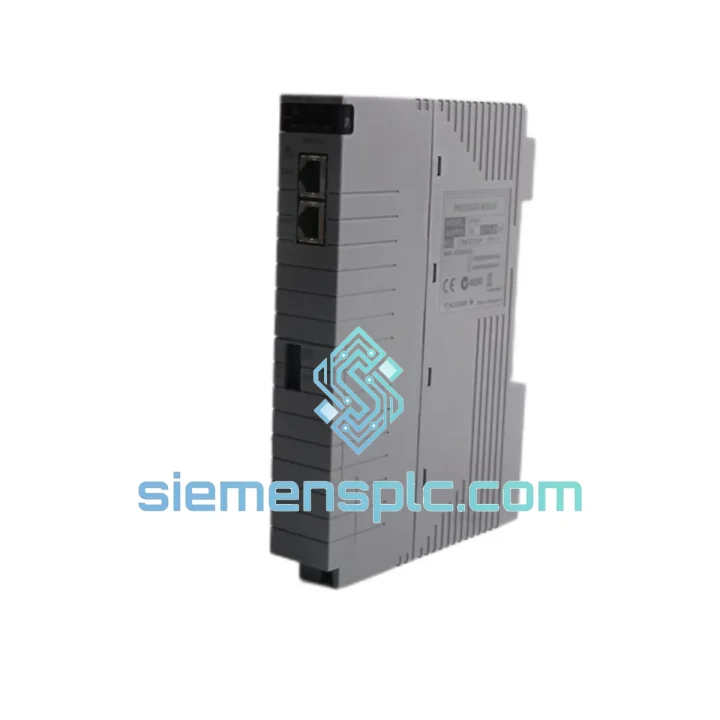
Request verified availability, condition, replacement risk review, packing options and courier lead time for CP401-10.
Click Request Quote and the part number is inserted into the inquiry form automatically.
Core fields for model confirmation and RFQ routing. Detailed product narrative remains below.
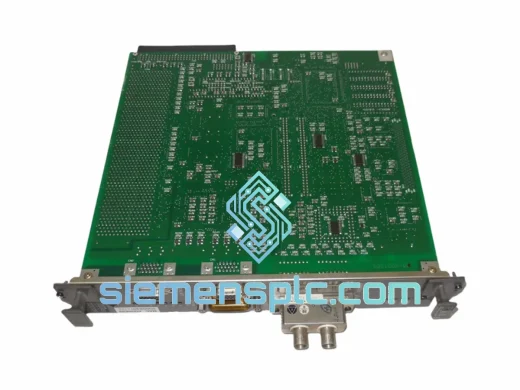
The YOKOGAWA CP401-10 is the central processing unit of the Field Control Station (FCS) within the CENTUM CS and CENTUM CS3000 distributed control system platform. Its role in the control loop is not peripheral — it is the deterministic execution engine that governs scan cycle timing, I/O data acquisition, control algorithm processing, and V-net communication arbitration simultaneously. In a typical CS3000 FCS cabinet, the CP401-10 occupies the CPU slot of the node unit and interfaces directly with the I/O bus backplane, executing function block logic at fixed scan intervals ranging from 100 ms to 1000 ms depending on loop configuration. The module’s real-time operating kernel enforces strict cycle-time guarantees, ensuring that analog PID loops, sequence logic, and interlock functions are processed within bounded latency windows — a non-negotiable requirement in continuous process industries such as refining, petrochemical, and power generation.
Unlike general-purpose PLCs that rely on a single-threaded scan model, the CP401-10 implements a multi-task scheduling architecture within the FCS firmware. Control tasks, communication tasks, and self-diagnostic tasks are allocated separate execution contexts, preventing communication overhead from encroaching on control scan determinism. This architectural separation is the foundation of YOKOGAWA’s high-availability DCS design philosophy and is what allows the CP401-10 to sustain sub-second loop response even under peak V-net traffic conditions.
📩 Real-time Stock & RFQ: [email protected] | WhatsApp: +86 18359268345
| Parameter | Specification |
|---|---|
| Part Number | CP401-10 |
| Manufacturer | YOKOGAWA Electric Corporation |
| Module Classification | CPU Controller Module (FCS Central Processing Unit) |
| Target Platform | CENTUM CS / CENTUM CS3000 Field Control Station |
| Control Network | V-net (token-passing, deterministic, 10 Mbps coaxial) |
| Scan Period Range | 100 ms / 200 ms / 500 ms / 1000 ms (configurable per function block) |
| Redundancy Mode | Dual-redundant CPU hot-standby (paired CP401-10 units) |
| Switchover Time | < 1 scan cycle (bumpless transfer on primary CPU fault) |
| Backplane Interface | Proprietary FCS I/O bus (node unit backplane) |
| Power Input | 24 VDC via backplane (supplied by FCS power module) |
| Power Consumption | Approx. 15 W (typical, under full I/O load) |
| Operating Temperature | 0°C to 55°C |
| Storage Temperature | -20°C to 70°C |
| Relative Humidity | 5% to 95% RH (non-condensing) |
| EMC Compliance | IEC 61000-4 series (ESD, EFT, surge, conducted/radiated immunity) |
| Safety Certification | CE marking; UL/cUL listed |
| Module Weight | Approx. 600 g |
| Form Factor | Single-slot node unit card (FCS standard card format) |
| Configuration Tool | CENTUM CS3000 Builder (Engineering Workstation software) |
| Warranty | 12 months from date of shipment |
The CP401-10’s hardware design reflects YOKOGAWA’s engineering discipline in three distinct areas: EMC immunity, redundancy arbitration logic, and backplane bus management.
EMC Design: The module’s PCB layout employs multi-layer ground plane segmentation to isolate the CPU core, V-net transceiver circuitry, and backplane I/O bus drivers into separate electromagnetic domains. Opto-isolation barriers are placed at the V-net interface boundary, decoupling the coaxial network’s common-mode noise from the CPU’s internal logic rails. Transient voltage suppression (TVS) diodes are fitted at all external interface points, providing protection against IEC 61000-4-5 surge events up to 1 kV (line-to-line) and 2 kV (line-to-earth). This design allows the CP401-10 to operate without degradation in environments with variable-frequency drive (VFD) interference, high-voltage switching transients from motor control centers, and ground potential differences common in large industrial facilities.
Redundancy Arbitration Logic: In a dual-redundant CP401-10 configuration, the two CPU modules communicate via a dedicated inter-CPU synchronization bus on the node unit backplane — separate from the I/O data bus. The primary CPU continuously transmits its internal state (control output values, function block execution status, and memory checksum) to the standby CPU at each scan boundary. The standby module maintains a shadow copy of the primary’s execution context, enabling bumpless switchover without re-initialization of control outputs. Arbitration is handled by hardware logic within the node unit backplane controller, not by software — this eliminates the risk of a software deadlock preventing failover during a CPU fault condition. The switchover decision is based on a watchdog timeout (hardware-enforced) and a V-net heartbeat loss detection circuit, both of which must independently confirm primary CPU failure before the standby asserts control.
Backplane Bus Management: The CP401-10 acts as the bus master on the FCS I/O bus, issuing cyclic read/write commands to all I/O modules installed in the node unit at each scan period. The bus protocol is deterministic and time-slotted — each I/O module is allocated a fixed time window for data transfer, preventing bus contention regardless of the number of installed modules. This architecture guarantees that I/O data latency is bounded and predictable, a property that is critical for tight PID loops controlling fast-responding processes such as compressor surge control or reactor temperature regulation.
Every CP401-10 unit supplied through our Xiamen, China operations is sourced from verified YOKOGAWA distribution channels and subjected to a structured pre-shipment verification process. Functional testing covers V-net communication initialization, backplane bus arbitration, CPU self-diagnostic execution, and redundancy switchover simulation. Units supplied as genuine new carry original YOKOGAWA factory packaging with intact serial number labels and manufacturing date codes traceable to YOKOGAWA’s production records.
A 12-month warranty is provided on all units from the date of shipment. Warranty coverage includes replacement or repair for hardware failures attributable to manufacturing defects under normal operating conditions. Certificate of conformance and test reports are available upon request for quality-critical procurement processes.
Logistics from Xiamen are handled via DHL Express, FedEx International Priority, and UCP air freight, with typical transit times of 3–7 business days to Europe, North America, Southeast Asia, and the Middle East. Export documentation — including commercial invoice, packing list, and HS code classification — is prepared in compliance with applicable customs regulations. ESD-safe packaging with anti-static foam inserts and moisture barrier bags is used as standard for all electronic module shipments.
📧 Email: [email protected]
📱 WhatsApp: +86 18359268345
🌐 Web: siemensplc.com
📍 Location: Xiamen, China
© 2026 siemensplc.com. All rights reserved.
We check the full part number, brand, series and visible nameplate information before quotation.
Sales confirms stock path, condition option, quantity and realistic lead time for export dispatch.
DHL, FedEx, UPS or buyer courier arrangements can be reviewed with packing requirements.
Similar brand or category products for fast comparison and multi-item RFQ lists.