Yokogawa
RFQ Ready
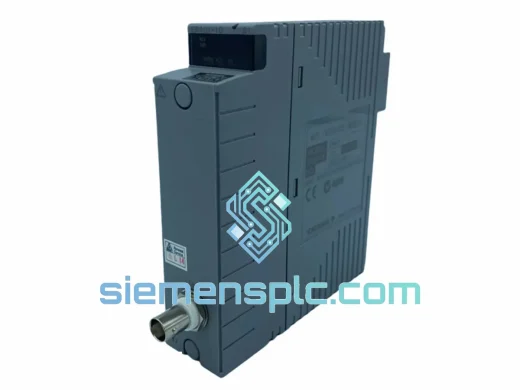
Yokogawa SAI143-H63/PRP S3 DCS Analog Input Module
CENTUM VP
Origin JP
DCS Analog Input Module
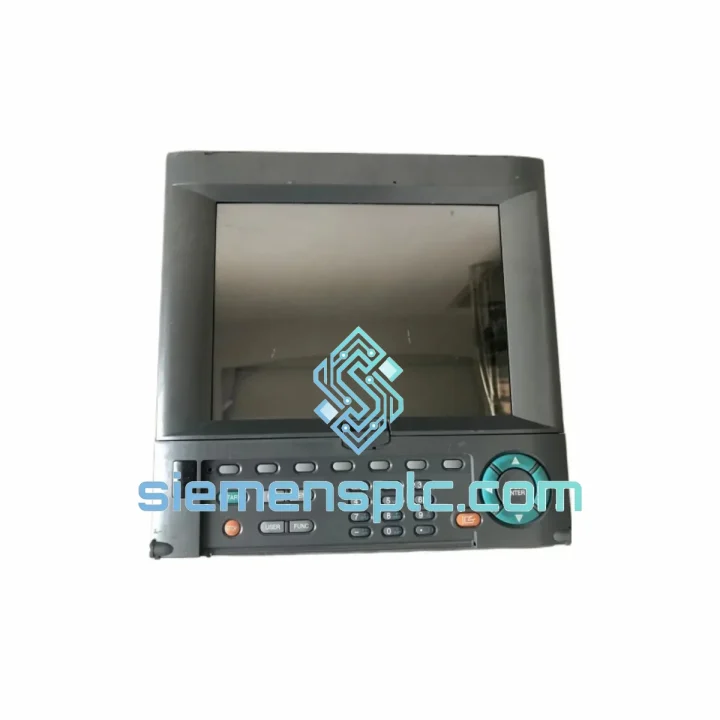
Request verified availability, condition, replacement risk review, packing options and courier lead time for DX2048T-3-4-1.
Click Request Quote and the part number is inserted into the inquiry form automatically.
Core fields for model confirmation and RFQ routing. Detailed product narrative remains below.
The DX2048T-3-4-1 occupies a structurally critical position within the DX2000 Daqstation measurement chain. As a 4-channel universal analog input expansion card, it serves as the primary signal conditioning and digitization interface between field sensors and the DX2048 mainframe CPU. Each channel independently accepts thermocouple, RTD, DC millivolt, DC voltage, and DC current signals without requiring external signal conditioners or interposing relays. The module’s onboard A/D converter operates at the mainframe’s configured scan interval — down to 125 ms per channel — and transfers digitized engineering-unit values across the DX2048 internal backplane bus to the CPU for real-time alarm evaluation, trend display, and non-volatile data logging.
In a closed-loop process monitoring architecture, measurement latency and signal fidelity at the input stage directly determine the quality of control decisions downstream. The DX2048T-3-4-1 addresses this by combining channel-to-channel galvanic isolation with a universal input front-end, eliminating ground-loop interference that commonly corrupts multi-sensor installations. The suffix code structure — -3 (universal input type), -4 (4 channels per card), -1 (standard accuracy grade) — encodes the module’s functional configuration and must be matched precisely to the DX2048 mainframe slot assignment during system commissioning.
📩 Real-time Stock & RFQ: [email protected] | WhatsApp: +86 18359268345
| Part Number / SKU | DX2048T-3-4-1 |
| Manufacturer | Yokogawa Electric Corporation |
| Product Series | DX2000 Daqstation |
| Module Function | Universal Analog Input Expansion |
| Channel Count | 4 channels per module |
| Supported Input Types | Thermocouple: B, E, J, K, N, R, S, T, W; RTD: Pt100, JPt100 (3-wire); DC Voltage: 20 mV / 60 mV / 200 mV / 2 V / 6 V / 20 V; DC Current: 4–20 mA (external 250 Ω shunt required) |
| Measurement Accuracy | ±0.1% of span (temperature-compensated, 23 °C reference) |
| A/D Resolution | 16-bit (per channel) |
| Minimum Scan Interval | 125 ms (mainframe-dependent) |
| Channel Isolation | Channel-to-channel and channel-to-chassis galvanic isolation |
| Compatible Mainframe | Yokogawa DX2048 (48-channel Daqstation) |
| Backplane Interface | DX2000 internal expansion bus (proprietary) |
| Power Source | Supplied via DX2048 mainframe backplane (no external PSU required) |
| Operating Temperature | 0 °C to +50 °C |
| Storage Temperature | -20 °C to +60 °C |
| Relative Humidity | 5% to 90% RH, non-condensing |
| EMC Compliance | CE Mark (EN 61326-1); meets industrial electromagnetic environment Class A |
| Safety Certifications | UL Listed (per DX2000 platform); CE (per EU Machinery Directive) |
| Country of Origin | Japan |
| Warranty | 12 months from date of shipment |
The DX2048T-3-4-1 implements a multiplexed front-end architecture where each of the four input channels feeds into a shared high-resolution A/D converter via an analog multiplexer. This design choice — common in precision data acquisition hardware — concentrates calibration complexity into a single converter stage, ensuring that inter-channel gain and offset errors remain tightly matched without per-channel trimming. The tradeoff is sequential rather than simultaneous sampling, which is acceptable for the process-speed signals (temperature, pressure, flow) this module targets.
Galvanic Isolation Architecture: Each channel input is isolated from the backplane ground reference using transformer-coupled or optocoupler-based isolation barriers rated to withstand common-mode voltages typical of industrial field wiring. This prevents ground loops — a primary source of measurement error in multi-sensor thermocouple installations where sensors are grounded at different potential points across a process vessel or pipeline.
Cold Junction Compensation (CJC): For thermocouple inputs, the module incorporates an onboard precision thermistor at the terminal block to measure the reference junction temperature in real time. The CJC correction is applied digitally in the mainframe CPU, using Yokogawa’s linearization tables for each thermocouple type. This approach eliminates the need for isothermal terminal blocks and maintains accuracy across the full 0–50 °C operating range of the module.
EMC Design: The module’s PCB layout follows Yokogawa’s standard EMC design rules for the DX2000 platform: analog signal traces are routed away from digital clock lines, the analog ground plane is separated from the digital ground plane with a single-point connection, and the backplane connector includes filter capacitors on power supply pins to suppress high-frequency noise injected from the mainframe’s switching power supply. The result is a module that maintains ±0.1% accuracy in environments with conducted and radiated interference levels consistent with EN 61326-1 Class A industrial environments.
RTD Excitation Current: For Pt100 and JPt100 RTD inputs, the module sources a precision constant current through the RTD element and measures the resulting voltage drop. The 3-wire connection scheme cancels lead resistance errors by measuring the voltage drop across one lead and subtracting it from the total measurement — a standard technique that achieves accuracy comparable to 4-wire Kelvin sensing without the additional wiring cost.
Every DX2048T-3-4-1 unit supplied by siemensplc.com is sourced as genuine Yokogawa OEM hardware. Units are procured through verified supply channels with full traceability documentation, including manufacturer part number confirmation, date code verification, and serial number cross-referencing against Yokogawa’s authorized product records. Pre-shipment inspection covers visual examination of the PCB and connector condition, label integrity verification, and a functional power-on test where test equipment is available.
Packaging follows ESD-safe handling protocols throughout the inspection and dispatch process. Original Yokogawa anti-static bags and foam inserts are retained where available; where original packaging is absent, IEC 61340-compliant ESD packaging is substituted. A Certificate of Conformance (CoC) is issued with each shipment. Calibration certificates and factory test reports are available upon request at time of order placement.
Logistics operations are based in Xiamen, China — a major export hub with direct access to DHL Express, FedEx International Priority, and UPS Worldwide Express services. Standard export documentation (commercial invoice, packing list, certificate of origin) is prepared for each shipment. Typical dispatch lead time for in-stock units is 1–3 business days from order confirmation. Express delivery to major industrial centers in Europe, North America, Southeast Asia, and the Middle East is achievable within 3–5 business days under normal customs clearance conditions. All shipments are fully insured and tracked from dispatch to delivery confirmation.
A 12-month warranty covers all supplied units against manufacturing defects and functional failure under normal operating conditions. Warranty claims are processed via email with a return merchandise authorization (RMA) number issued within 24 hours of a confirmed fault report.
Email: [email protected]
WhatsApp: +86 18359268345
Web: siemensplc.com
Location: Xiamen, China
© 2026 siemensplc.com. All rights reserved.
We check the full part number, brand, series and visible nameplate information before quotation.
Sales confirms stock path, condition option, quantity and realistic lead time for export dispatch.
DHL, FedEx, UPS or buyer courier arrangements can be reviewed with packing requirements.
Similar brand or category products for fast comparison and multi-item RFQ lists.