Yokogawa
RFQ Ready
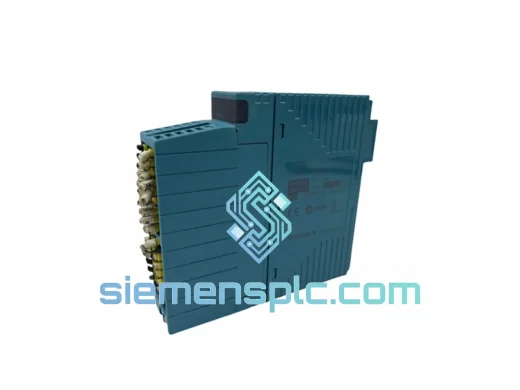
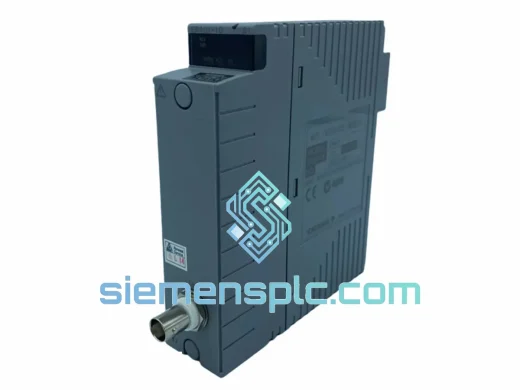
Yokogawa SAI143-H63/PRP S3 DCS Analog Input Module
CENTUM VP
Origin JP
DCS Analog Input Module
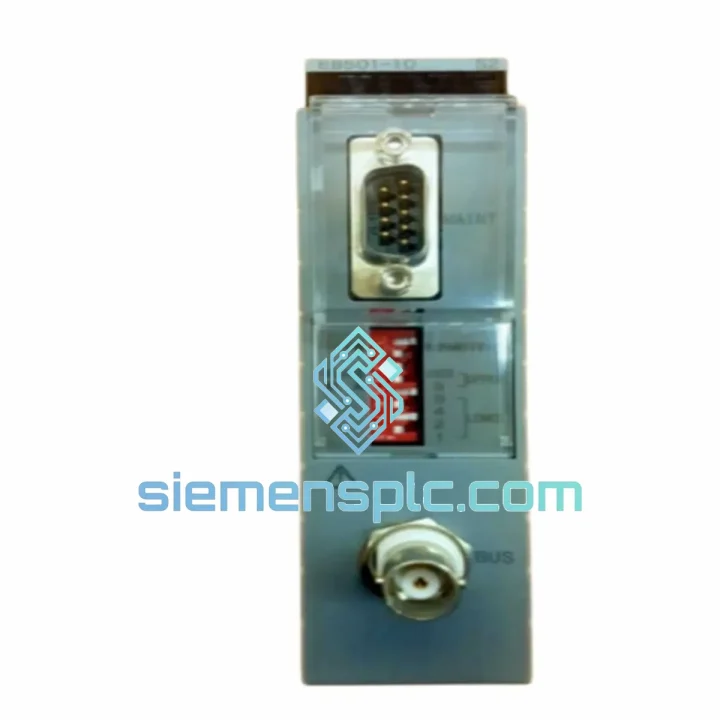
Request verified availability, condition, replacement risk review, packing options and courier lead time for EB501-50.
Click Request Quote and the part number is inserted into the inquiry form automatically.
Core fields for model confirmation and RFQ routing. Detailed product narrative remains below.
The YOKOGAWA EB501-50 S2 occupies a structurally critical position within the CENTUM VP distributed control system hierarchy. Positioned between the field I/O sub-modules and the V-net/ER communication backbone, this interface module functions as the primary arbitration node for all inbound and outbound process signals within a single node unit. Its role is not passive routing — it actively manages bus access scheduling, signal buffering, and diagnostic state reporting across the node’s I/O slots, making it a deterministic control point in high-availability process environments.
In a CENTUM VP node unit, the EB501-50 S2 interfaces directly with the Field Control Station (FCS) via the V-net or ER Bus, translating time-stamped process data from field instruments into structured packets consumable by the FCS CPU. The S2 hardware revision introduced improved bus arbitration logic and enhanced EMC shielding over the S1 generation, addressing field-reported susceptibility to conducted interference in heavy industrial environments such as petrochemical complexes and power generation facilities.
The module’s backplane connector interfaces with the node unit’s internal bus at a fixed slot address, and its firmware manages slot-polling cycles that determine the update rate for each connected I/O sub-module. This polling architecture ensures that analog input channels — typically 4–20 mA HART-enabled signals — are sampled at consistent intervals without jitter introduced by bus contention. For digital I/O sub-modules, the EB501-50 S2 enforces edge-detection latency within the node’s scan cycle, preserving the temporal integrity of discrete event records.
From a system architecture standpoint, the EB501-50 S2 supports dual-redundant node configurations when paired with a redundant FCS. In this topology, the module participates in the bumpless switchover protocol: upon detection of a primary FCS fault, the standby FCS assumes bus mastership within the failover window defined by the system’s redundancy parameters, and the EB501-50 S2 continues signal arbitration without interrupting field I/O scanning. This behavior is fundamental to achieving the continuous availability targets required in SIL 1–2 process loops operating under IEC 61511.
Real-time Stock & RFQ: [email protected] | WhatsApp: +86 18359268345
| Parameter | Specification |
|---|---|
| Manufacturer | YOKOGAWA Electric Corporation |
| Full Model Number | EB501-50 S2 |
| Module Category | I/O Bus Interface Module (Node Unit) |
| Compatible DCS Platform | YOKOGAWA CENTUM VP (R5.x / R6.x); CENTUM CS 3000 (conditional) |
| Communication Bus | V-net / ER Bus (YOKOGAWA proprietary) |
| Backplane Power Supply | 24 V DC (supplied via node unit backplane) |
| Power Consumption | ≤ 5 W (typical, under full I/O load) |
| I/O Sub-module Slots Supported | Up to 8 slots per node unit (slot addressing via DIP switch) |
| Signal Types Supported | Analog (4–20 mA, HART), Digital (24 V DC), Thermocouple, RTD (via sub-modules) |
| Bus Arbitration Cycle | Synchronous with FCS scan period (configurable: 100 ms / 200 ms / 500 ms) |
| Operating Temperature | 0 °C to +55 °C |
| Storage Temperature | -20 °C to +70 °C |
| Relative Humidity | 5% to 95% RH, non-condensing |
| EMC Compliance | EN 61000-4-2 (ESD), EN 61000-4-4 (EFT/Burst), EN 61000-4-5 (Surge) |
| Mounting Method | Rack-mount within CENTUM VP node unit chassis |
| Dimensions (W × H × D) | Approx. 30 mm × 200 mm × 250 mm (verify against node unit hardware manual) |
| Weight | Approx. 300 g |
| Certifications | CE Mark; UL Listed (verify current revision with YOKOGAWA datasheet) |
| Hardware Revision | S2 (second-generation; improved EMC and bus arbitration over S1) |
| Warranty | 12 months from date of shipment (manufacturing defects; DOA policy applies) |
The EB501-50 S2’s internal architecture centers on a dedicated bus controller ASIC that manages the V-net/ER Bus protocol stack independently of the host FCS CPU. This separation of bus management from process computation is a deliberate design choice: it prevents bus contention events from propagating latency into the FCS scan cycle, maintaining deterministic control loop execution even under abnormal bus load conditions.
EMC Design: The S2 revision introduced a multi-layer PCB ground plane strategy with localized decoupling capacitors at each bus driver stage. The module’s front panel incorporates a conductive gasket that bonds to the node unit chassis, creating a Faraday enclosure around the bus interface circuitry. This design targets conducted emissions compliance per EN 61000-4-4 (EFT/Burst, 2 kV) and EN 61000-4-5 (Surge, 1 kV line-to-earth), which are the dominant interference sources in switchgear-adjacent installations.
Optical Isolation Architecture: Signal paths between the backplane bus and the node unit’s internal I/O sub-module connectors pass through optocoupler stages rated at ≥ 2,500 V RMS isolation. This galvanic barrier prevents ground loop currents — common in multi-panel installations with long cable runs — from corrupting analog signal integrity. The isolation barrier also limits fault propagation: a wiring fault on a field instrument cannot induce a voltage transient that reaches the bus controller ASIC.
Redundancy Arbitration Logic: In dual-FCS configurations, the EB501-50 S2 implements a hardware-level bus mastership detection circuit. This circuit monitors the V-net bus for the primary FCS heartbeat token. Upon token absence exceeding the configured timeout (typically 3–5 scan cycles), the module asserts a local flag that the standby FCS reads during its switchover sequence. This hardware-assisted detection reduces the switchover decision latency compared to software-only polling approaches, contributing to the sub-second bumpless transfer characteristic of CENTUM VP redundant systems.
Diagnostic Register Map: The module exposes a set of internal status registers accessible via the FCS engineering console. These registers report bus error counters, slot communication failure flags, and power supply voltage deviation alerts. The register data feeds directly into CENTUM VP’s self-diagnostic framework, enabling predictive maintenance workflows without requiring physical inspection of the node unit.
Every YOKOGAWA EB501-50 S2 unit dispatched from our Xiamen, China facility is sourced exclusively from verified industrial supply channels with full traceability documentation. Pre-shipment inspection covers visual examination of the module housing and connector pins, label authentication against YOKOGAWA’s part numbering conventions, and functional continuity verification of the backplane interface. Batch records and supplier documentation are retained for each unit, supporting customer audit requirements in regulated industries.
Anti-counterfeit verification is applied to every unit: physical security features including holographic labels and laser-etched serial numbers are cross-referenced against YOKOGAWA’s known part identification standards. Units that do not pass authentication are rejected prior to stock entry.
Logistics from Xiamen cover all major global destinations. In-stock units are dispatched within 1–3 business days via DHL Express, FedEx International Priority, or UPS Worldwide Expedited, with typical transit times of 3–7 business days to Europe, North America, Southeast Asia, and the Middle East. Full export documentation — commercial invoice, packing list, certificate of origin — is provided as standard. For time-critical plant shutdowns or emergency maintenance scenarios, expedited same-day dispatch is available upon request. All shipments are insured and tracked end-to-end.
A 12-month warranty covers manufacturing defects from the date of shipment. Dead-on-arrival (DOA) units are replaced or refunded within 5 business days of confirmed fault diagnosis. Technical pre-sales consultation is available at no charge for system compatibility verification, BOM review, and procurement planning.
Email: [email protected]
WhatsApp: +86 18359268345
Web: siemensplc.com
Location: Xiamen, China
© 2026 siemensplc.com. All rights reserved.
We check the full part number, brand, series and visible nameplate information before quotation.
Sales confirms stock path, condition option, quantity and realistic lead time for export dispatch.
DHL, FedEx, UPS or buyer courier arrangements can be reviewed with packing requirements.
Similar brand or category products for fast comparison and multi-item RFQ lists.