Yokogawa
RFQ Ready
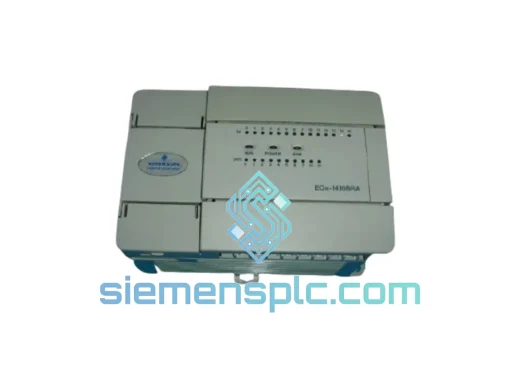
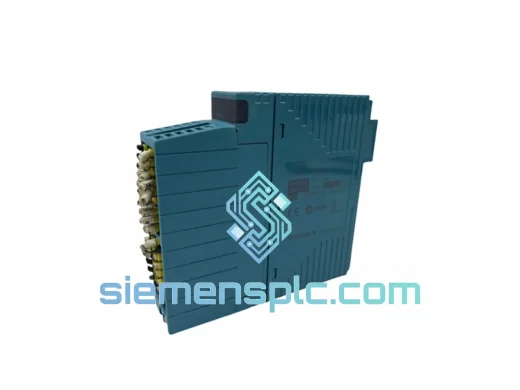
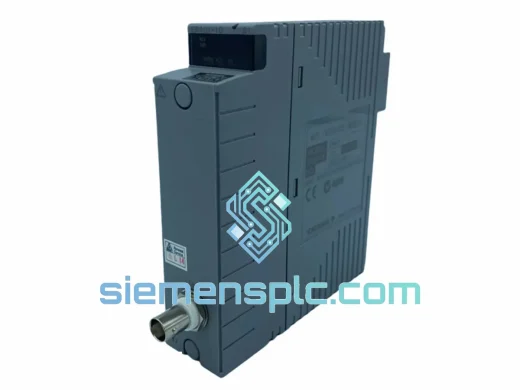
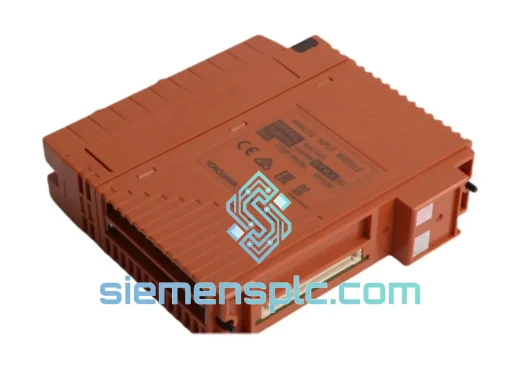
Yokogawa SAI143-H63/PRP S3 DCS Analog Input Module
CENTUM VP
Origin JP
DCS Analog Input Module
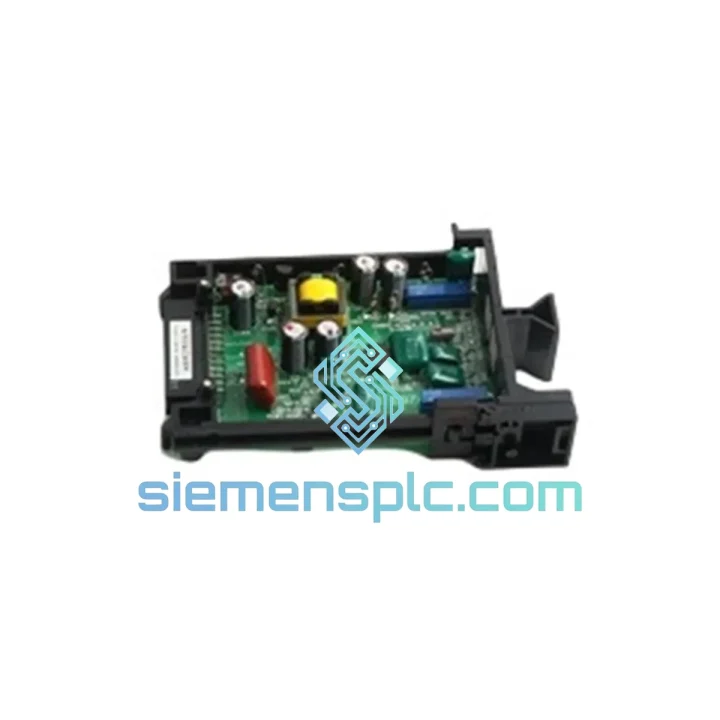
Request verified availability, condition, replacement risk review, packing options and courier lead time for EH1*A.
Click Request Quote and the part number is inserted into the inquiry form automatically.
Core fields for model confirmation and RFQ routing. Detailed product narrative remains below.
The YOKOGAWA EH1*A is a field-proven analog input module engineered for deployment within YOKOGAWA’s CENTUM CS 3000 and CENTUM VP distributed control systems. Its primary function is deterministic acquisition of process-variable signals from field transmitters — converting 4–20 mA current loops, thermocouple (TC) millivolt outputs, and RTD resistance values into digitized engineering-unit data that the Field Control Station (FCS) processes within its configured scan cycle. In a typical refinery or chemical plant DCS architecture, the EH1*A sits at the boundary between the field instrument layer and the control computation layer, making its signal fidelity and isolation integrity directly consequential to loop accuracy and safety interlock reliability.
Unlike generic I/O cards, the EH1*A is designed to operate natively on YOKOGAWA’s proprietary V-net/IP or ESB (Enhanced Serial Bus) backplane, eliminating the protocol translation overhead that degrades determinism in third-party I/O solutions. Each channel’s A/D conversion result is time-stamped and transferred to the FCS within the module’s configured scan period — typically 100 ms to 500 ms — ensuring that the control algorithm operates on data whose age is bounded and predictable.
📩 Real-time Stock & RFQ: [email protected] | WhatsApp: +86 18359268345
| Parameter | Specification |
|---|---|
| Part Number | EH1*A (EH1-A series, suffix denotes sub-variant) |
| Manufacturer | YOKOGAWA Electric Corporation, Japan |
| Module Category | Analog Input Module |
| Compatible Platform | CENTUM CS 3000 / CENTUM VP (R4–R6.09+) |
| Input Signal Types | 4–20 mA DC, 1–5 V DC, TC (B/E/J/K/R/S/T), RTD (Pt100/Pt1000), Pulse (model-dependent) |
| A/D Resolution | 16-bit (typical); ±0.1% of full scale accuracy |
| Channel Isolation | Optical isolation, channel-to-channel and channel-to-backplane bus |
| Scan Cycle | 100 ms / 200 ms / 500 ms (configurable via CENTUM VP Builder) |
| Operating Temperature | 0°C to +55°C |
| Storage Temperature | -20°C to +70°C |
| Relative Humidity | 5% to 95% RH, non-condensing |
| Power Consumption | Supplied via I/O nest backplane; typically <3 W per module |
| Mounting | CENTUM I/O nest (ANB10D / ANB11D or equivalent) |
| Module Weight | Approx. 60 g |
| Certifications | CE (EMC 2014/30/EU, LVD 2014/35/EU), UL 508, RoHS, ATEX (zone-specific variants) |
| Warranty | 12 months from date of shipment |
The EH1*A’s internal architecture is structured around three discrete functional stages: signal conditioning, galvanic isolation, and digital conversion with backplane arbitration.
Signal Conditioning Front-End: Incoming field signals pass through a passive RC filter network before reaching the instrumentation amplifier stage. This low-pass filter attenuates high-frequency noise components — particularly 50/60 Hz power-line interference common in panel environments — without introducing phase lag that would distort slow-moving process variables. For thermocouple inputs, a cold-junction compensation (CJC) circuit embedded on the module PCB measures the terminal block temperature and applies an automatic offset correction, eliminating the need for external CJC hardware.
Optical Isolation Barrier: Each channel employs a dedicated optocoupler stage rated for a minimum of 500 V DC channel-to-channel isolation and 1,500 V DC channel-to-bus isolation. This two-tier isolation architecture prevents ground loop currents — a persistent problem in multi-transmitter field wiring — from corrupting adjacent channel readings. In plants where field instruments share a common ground reference with motor drives or high-current switching equipment, this isolation margin is the primary defense against common-mode interference propagating into the DCS data layer.
A/D Conversion and Backplane Arbitration: The digitized channel data is serialized and transferred to the I/O nest’s internal ESB (Enhanced Serial Bus) via a dedicated arbitration controller. The ESB operates at a fixed clock rate, and the EH1*A’s arbitration logic ensures that its data transfer slot is reserved within each bus cycle — a deterministic scheduling mechanism that prevents bus contention from introducing variable latency into the scan cycle. This is architecturally distinct from polled I/O buses where module response time depends on bus load, and it is the reason CENTUM-native modules maintain tighter scan-cycle jitter than third-party I/O solutions connected via gateway adapters.
EMC Design: The module housing incorporates a grounded metal shield that provides a Faraday cage effect against radiated electromagnetic interference. PCB trace routing follows a star-ground topology, with analog and digital ground planes separated and joined at a single point to prevent digital switching noise from coupling into the analog signal path. Ferrite beads on power supply rails suppress conducted EMI from the backplane bus.
Every YOKOGAWA EH1*A unit dispatched from our Xiamen, China facility is sourced through verified industrial distribution channels with full traceability documentation. Our pre-shipment quality process covers four stages:
Logistics from Xiamen covers DHL Express (3–5 business days to Europe/North America), FedEx International Priority, and sea freight for bulk orders. Full export documentation — commercial invoice, packing list, certificate of origin, and certificate of conformance — is provided with every shipment. Standard stock items ship within 3–7 business days of order confirmation.
📧 Email: [email protected]
📱 WhatsApp: +86 18359268345
🌐 Web: siemensplc.com
📍 Location: Xiamen, China
© 2026 siemensplc.com. All rights reserved.
We check the full part number, brand, series and visible nameplate information before quotation.
Sales confirms stock path, condition option, quantity and realistic lead time for export dispatch.
DHL, FedEx, UPS or buyer courier arrangements can be reviewed with packing requirements.
Similar brand or category products for fast comparison and multi-item RFQ lists.