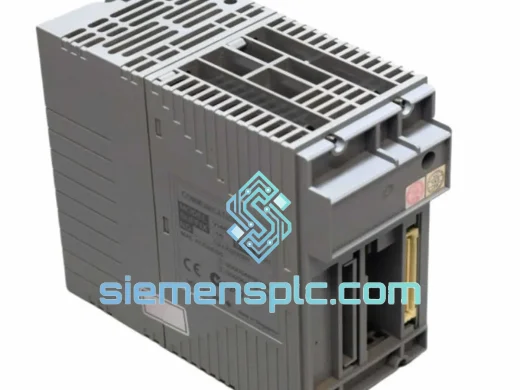
Yokogawa
In Stock OK
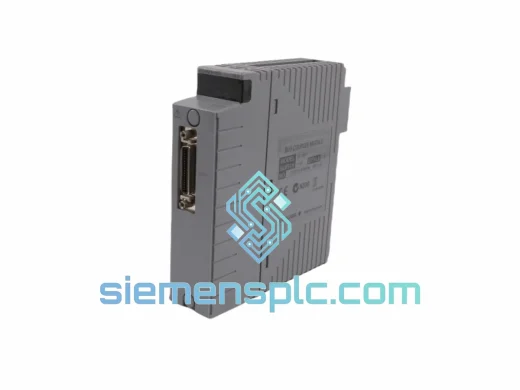
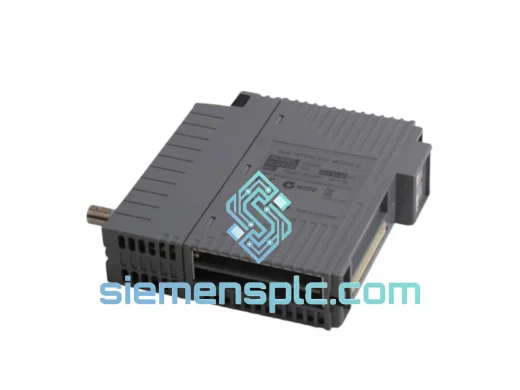
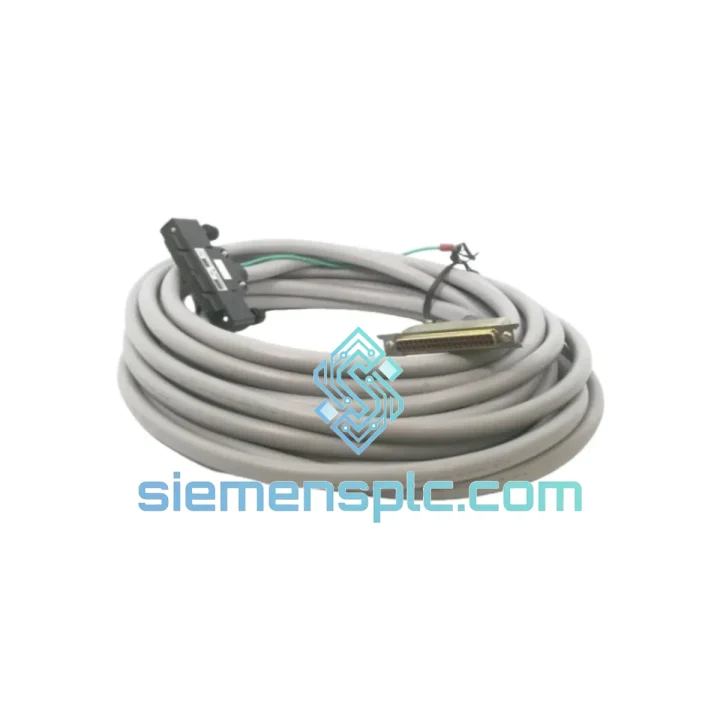
YOKOGAWA KS3-10*A DCS Signal Cable
Request verified availability, condition, replacement risk review, packing options and courier lead time for KS3-10.
BrandYokogawa
Part NumberKS3-10
ConditionAvailability Check
Lead TimeRFQ Confirmation
DocumentsDatasheet / photos by RFQ
ShippingExport packing available
Auto-filled RFQ
KS3-10
Click Request Quote and the part number is inserted into the inquiry form automatically.
- Reply by email: [email protected]
- WhatsApp / Tel: +86 18359268345
- Mon-Sat 9:00-18:00 GMT+8
Procurement Data
Key Product Information
Core fields for model confirmation and RFQ routing. Detailed product narrative remains below.
- Brand
- Yokogawa
- Primary Part Number
- KS3-10
- Product Type
- DCS Wiring Component
- Series / Family
- CENTUM VP
- Manufacturer
- YOKOGAWA Electric Corporation
- Country of Origin
- JP
- Catalog Category
- DCS & Safety Modules
- Operating Temp.
- -20°C to +70°C
Model confirmed for inquiry
KS3-10
Send quantity, destination and urgency. The RFQ form keeps this part number attached.
Request Quote
Product Overview
YOKOGAWA KS3-10*A: Cut the Downtime Before It Cuts Your Margin
A failed inter-module signal cable in a CENTUM VP or CS 3000 field control station doesn’t announce itself politely. It shows up as a cascade of IOM communication alarms at 02:00, a process unit forced to manual, and a maintenance team pulling cards that don’t need pulling. The KS3-10*A is the passive interconnect between your I/O module and its terminal board — small part, catastrophic failure mode. We stock it in Xiamen, pull it same day, and put it on a DHL Express flight before your day shift starts. No lead-time negotiation. No substitute part. OEM YOKOGAWA, verified, ready.
URGENT REQUIREMENT? Contact: [email protected] | WhatsApp: +86 18359268345
Quick Technical Datasheet
| Parameter | Specification |
|---|---|
| Part Number / SKU | KS3-10*A |
| Manufacturer | YOKOGAWA Electric Corporation |
| Product Category | DCS Inter-Module Signal Cable / Wiring Component |
| Compatible Systems | CENTUM VP, CS 3000, ProSafe-RS (marshalling cabinet wiring) |
| Signal Type | Analog & Digital I/O inter-module signal routing |
| Shielding Construction | Individually shielded pairs + overall foil shield with drain wire |
| Operating Temperature | -20°C to +70°C |
| Connector Locking | Positive-latch keyed connector, vibration-rated per IEC 60068-2-6 |
| Firmware / DIP Switch Required | None — passive component, zero configuration |
| Country of Origin | Japan (OEM) |
| Condition | New / Surplus New — OEM verified |
| Stock Status | ✅ Ready to Ship — Xiamen Warehouse |
| Dispatch Lead Time | Same business day (orders confirmed before 14:00 CST) |
| Minimum Order Qty | 1 unit — bulk pricing available on request |
Troubleshooting & Replacement Tips
The KS3-10*A is a passive cable — no firmware, no address switches, no self-commissioning sequence. But a degraded or mis-seated unit generates fault signatures that look exactly like a failed I/O module. Engineers waste hours swapping cards before someone checks the cable. Don’t be that engineer.
Fault Patterns That Point Directly to the KS3-10*A:
- ALM-3301 / IOM Communication Fault — intermittent: If the alarm clears on power cycle and returns within hours, the IOM card is almost certainly fine. Thermal expansion is opening a micro-fracture in the connector crimp. Wiggle-test the cable under load — if the alarm flickers, you’ve found your fault. Replace the cable, not the card.
- Simultaneous dropout of a full channel group (8 or 16 channels): A single failed I/O point is a card or field device issue. A full group going dark while adjacent groups stay healthy is a cable fault between the IOM and its terminal board. The KS3-10*A is the only component in that signal path.
- Analog input drift and 50/60 Hz noise on 4–20 mA loops: A compromised shield drain wire in the KS3-10*A allows power-frequency interference to couple onto signal conductors. Before condemning a transmitter or input card, measure shield continuity end-to-end. A reading above 1 Ω on a drain wire that should be near zero is a failed cable.
- Alarms that correlate with ambient temperature peaks: Afternoon alarms in a hot utility corridor that clear overnight are a thermal expansion signature. The conductor stranding work-hardens at a flex point near the connector body. Replace before the fracture becomes permanent.
Replacement Procedure — Step by Step:
- Notify the control room and place the affected FCS node in manual or backup control. Do not pull a live cable without operator coordination — a hard disconnect can generate a process trip depending on your FCS configuration.
- Set the target IOM to Maintenance Mode via CENTUM VP Engineering Builder. This suppresses alarm generation during the swap and prevents a spurious trip on the process side.
- Label both cable ends before disconnecting. The KS3-10*A connector is keyed, but in a dense marshalling cabinet with 20+ identical cables, a mis-routed replacement is a common second fault. Label with slot number and terminal board ID.
- Inspect the connector housing on both the module side and terminal board side. Look for bent pins, green corrosion on contact surfaces, or cracked locking tab ears. A damaged housing on the receiving end will cause the new cable to fail within weeks.
- Seat the new KS3-10*A until you hear and feel a positive click. A half-seated connector passes a continuity check but fails under vibration. Apply light lateral pressure after seating to confirm the latch is engaged.
- Return the IOM to Normal Mode and verify all channel statuses go green in the HIS. Confirm analog input readings match field device values before releasing the loop to automatic control.
- Log the replacement. Record the cable lot number, date, slot location, and fault symptom in your maintenance management system. Repeat failures at the same slot indicate a connector housing issue on the module or terminal board — escalate to a card-level inspection.
Configuration note: The KS3-10*A carries no firmware and has no DIP switches or address configuration. Replacement is purely mechanical. No CENTUM VP software action is required after the cable swap beyond returning the IOM to Normal Mode.
Reliability in Harsh Conditions
YOKOGAWA builds the KS3-10*A for the environments where DCS systems actually live — not climate-controlled server rooms, but compressor halls, crude unit control houses, and coastal chemical plants where the air smells like salt and process gas simultaneously.
Vibration: The positive-latch connector housing is rated for continuous vibration per IEC 60068-2-6. In pump rooms and compressor bays where floor-transmitted vibration is constant and broadband, this latch prevents the micro-disconnects that generate ghost alarms and force unnecessary maintenance interventions. Competing generic cables use friction-fit connectors that walk loose over a 12-month service interval. The KS3-10*A does not.
Thermal cycling: The cable jacket compound and conductor insulation are selected for the daily thermal swing between a climate-controlled control room and an adjacent hot utility corridor running at 50°C ambient. Fine-gauge conductor stranding resists work-hardening at flex points during routine maintenance access — a failure mode that kills stiff-conductor cables within two to three years in high-access cabinets.
Humidity and condensation: The foil shield and drain wire construction provides a continuous EMI barrier even when condensation forms on cable trays in tropical or coastal plant environments. The connector mating interface is sealed against moisture ingress, blocking the creep corrosion that degrades contact resistance over multi-year service intervals and produces the slow-onset signal drift that is notoriously difficult to diagnose.
EMI/RFI immunity: Plants running variable-frequency drives, large motor starters, and high-current bus bars parallel to signal cable trays are the norm, not the exception. The KS3-10*A shielding architecture maintains signal integrity on 4–20 mA and discrete I/O channels without requiring additional conduit separation beyond YOKOGAWA standard cable routing guidelines. If you’re seeing noise on analog inputs and your cable routing is compliant, the shield drain wire is the first thing to check — not the transmitter.
Global Express Logistics
Our warehouse is in Xiamen, Fujian, China — direct DHL Express and FedEx International Priority gateway access, no inland relay required. Here is exactly how an urgent order moves from your WhatsApp message to your receiving dock:
- Contact received (Hour 0): Send your part number, quantity, and ship-to country via email or WhatsApp. We confirm stock on-hand and issue a proforma invoice within 2 hours during business hours (UTC+8, Monday–Saturday).
- Payment confirmed (Hour 2–4): We accept T/T bank transfer and standard B2B payment methods. Once payment clears, the KS3-10*A is pulled from the shelf, inspected, and staged for export packing.
- Same-day dispatch: Orders confirmed before 14:00 CST ship the same afternoon via DHL Express or FedEx International Priority. Tracking number delivered to you within 60 minutes of carrier pickup.
- Transit times from Xiamen: Southeast Asia 1–2 days | Europe 3–4 days | North America 3–5 days | Middle East 3–4 days | Australia 3–4 days. All shipments include commercial invoice, packing list, and HS code declaration prepared by our logistics team — customs clearance documentation is not an afterthought here.
- Active shipment monitoring: We track your consignment and notify you proactively of any customs holds or carrier exceptions. For critical plant shutdowns, Saturday dispatch and door-to-door courier with signature confirmation are available on request.
We have shipped YOKOGAWA DCS components to refineries in the Middle East, power stations across Southeast Asia, and chemical facilities in Europe. Accurate documentation and clean customs compliance are standard operating procedure — not a premium service.
Contact Information
Email: [email protected]
WhatsApp: +86 18359268345
Web: siemensplc.com
© 2026 siemensplc.com. All rights reserved.
Ready to quote
[email protected]
Send This Part Number to Sales
RFQ workflow
Quality workflow ->
Confirmation Process
01Model confirmation
We check the full part number, brand, series and visible nameplate information before quotation.
02Availability reply
Sales confirms stock path, condition option, quantity and realistic lead time for export dispatch.
03Packing & courier
DHL, FedEx, UPS or buyer courier arrangements can be reviewed with packing requirements.
Continue sourcing
Browse full catalog ->
Related Automation Parts
Similar brand or category products for fast comparison and multi-item RFQ lists.