Yokogawa
RFQ Ready
Yokogawa SAI143-H63/PRP S3 DCS Analog Input Module
CENTUM VP
Origin JP
DCS Analog Input Module
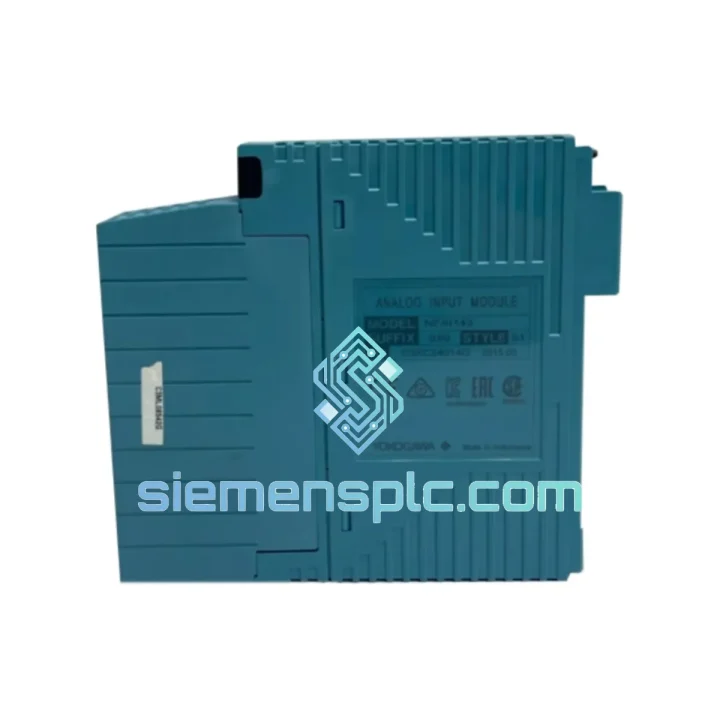
Request verified availability, condition, replacement risk review, packing options and courier lead time for NFAI143-H50.
Click Request Quote and the part number is inserted into the inquiry form automatically.
Core fields for model confirmation and RFQ routing. Detailed product narrative remains below.
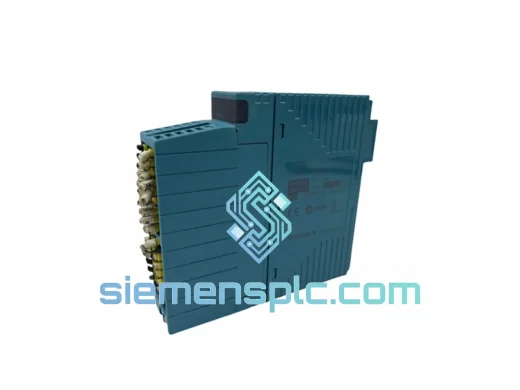
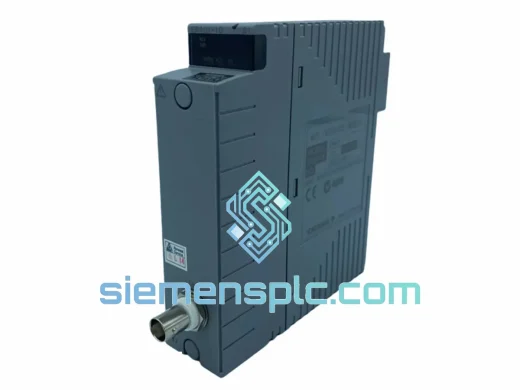
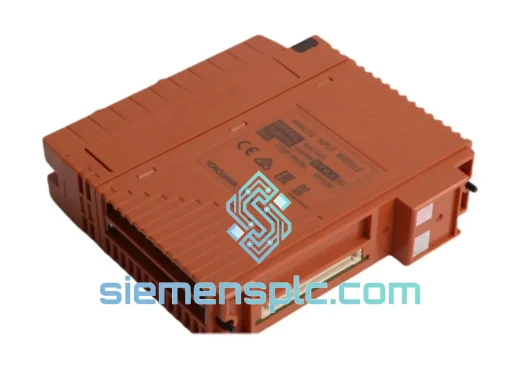
The NFAI143-H50 occupies a well-defined role within YOKOGAWA’s CENTUM VP field control station (FCS) I/O subsystem: it converts continuous analog field signals — 4–20 mA current loops and 1–5 V voltage sources — into 16-bit digital process values that the FCS uses for closed-loop PID control, alarm management, and historian archiving. Each of its four independent input channels is galvanically isolated from every other channel and from the backplane bus, a design choice that eliminates ground-loop interference in multi-transmitter wiring topologies common in refinery and power-plant environments. The module slots directly into a CENTUM VP I/O nest, draws power from the backplane, and communicates with the FCS via the V-net/IP or ESB bus without requiring any external power supply or dedicated communication wiring.
In process control terms, the NFAI143-H50 sits at the boundary between the physical process and the digital control domain. A field transmitter — a pressure cell, a thermocouple transmitter, a flow meter — generates a 4–20 mA signal proportional to the measured variable. The NFAI143-H50 receives that signal, applies a precision 16-bit analog-to-digital conversion, scales the raw count to engineering units, and delivers a process value (PV) to the FCS scan cycle. The FCS then executes the configured function blocks — PID, ratio, cascade — against that PV within its deterministic scan period. Any degradation in signal fidelity at the NFAI143-H50 stage propagates directly into control loop error; hence the module’s 16-bit resolution and ±0.1% full-scale accuracy specification are not marketing figures but functional requirements for tight process control.
The H50 suffix in the part number designates the module’s hardware revision and connector configuration, distinguishing it from earlier NFAI143 variants used in CENTUM CS 3000. The NFAI143-H50 is mechanically and electrically keyed for CENTUM VP I/O nests and is not backward-compatible with CS 3000 hardware. Engineers specifying spare parts for mixed-generation YOKOGAWA installations must verify the platform suffix before procurement.
Real-time Stock & RFQ: [email protected] | WhatsApp: +86 18359268345
| Parameter | Specification |
|---|---|
| Part Number / SKU | NFAI143-H50 |
| Manufacturer | YOKOGAWA Electric Corporation |
| Module Function | Analog Input (AI) |
| Compatible Platform | CENTUM VP DCS (FCS I/O subsystem) |
| Number of Input Channels | 4 channels, independently isolated |
| Input Signal Range — Current | 4–20 mA (with burnout detection) |
| Input Signal Range — Voltage | 1–5 V DC |
| A/D Resolution | 16-bit |
| Measurement Accuracy | ±0.1% of full scale (at 25°C reference) |
| Channel Isolation | Galvanic isolation, channel-to-channel and channel-to-bus |
| Bus Interface | CENTUM VP I/O backplane (V-net/IP or ESB) |
| Power Supply | Backplane-powered; no external supply required |
| Operating Temperature | 0°C to +55°C |
| Storage Temperature | -20°C to +70°C |
| Relative Humidity | 5% to 95% RH, non-condensing |
| EMC Compliance | IEC 61000-4 series (ESD, EFT, surge, conducted RF) |
| Safety Certification | CE, UL, IEC 61508 (SIL-capable platform) |
| Mounting | CENTUM VP I/O nest backplane slot |
| Field Wiring | Removable terminal block (RTB) |
| Module Weight | Approx. 700 g |
| Country of Origin | Japan |
| Warranty | 12 months from date of shipment |
Galvanic Isolation Architecture: Each of the four input channels on the NFAI143-H50 is isolated from the others and from the module’s internal logic bus using optocoupler-based galvanic barriers. In a typical DCS field wiring scenario, multiple transmitters share a common cable tray and may reference different ground potentials depending on their physical location in the plant. Without per-channel isolation, a ground potential difference of even a few volts between two transmitters wired to the same module would create a circulating ground-loop current that adds a DC offset error to both channels. The NFAI143-H50’s isolation architecture breaks this loop at the module boundary, ensuring that each channel’s measurement is referenced only to its own transmitter’s signal common, not to a shared module ground.
16-Bit ADC Signal Chain: The analog front end of each channel consists of a precision input buffer amplifier, a low-pass anti-aliasing filter, and a successive-approximation register (SAR) ADC operating at 16-bit resolution. The 16-bit word provides 65,536 discrete counts across the full input span. For a 4–20 mA input representing a 0–100% process range, this yields a resolution of approximately 0.0015% per count — well below the ±0.1% accuracy specification, meaning the ADC quantization error is not the limiting factor in measurement uncertainty. The dominant error sources are the input buffer’s offset voltage drift and the reference voltage stability, both of which YOKOGAWA trims at the factory to achieve the published ±0.1% figure across the operating temperature range.
Burnout Detection: The module implements wire-break (burnout) detection on current-input channels. A small bias current is injected into the 4–20 mA loop. If the loop opens — due to a broken wire or failed transmitter — the bias current drives the input to a defined out-of-range state (either upscale or downscale, configurable per channel). The FCS detects this out-of-range condition and generates a hardware alarm, allowing operators to identify the failed field device without ambiguity. This mechanism eliminates the risk of a broken wire being misinterpreted as a valid 4 mA (0% process) reading.
EMC Design: The module’s PCB layout follows YOKOGAWA’s internal EMC design rules, which include ground plane segmentation between analog and digital sections, ferrite bead filtering on all power rails entering the analog domain, and shielded routing of the ADC reference voltage traces. These measures ensure the module meets IEC 61000-4-3 (radiated immunity) and IEC 61000-4-6 (conducted RF immunity) without requiring external shielding enclosures in standard CENTUM VP cabinet installations.
Every NFAI143-H50 unit supplied through siemensplc.com is sourced from verified YOKOGAWA-authorized distribution channels or traceable industrial surplus with documented chain of custody. Prior to shipment, each module undergoes a structured pre-delivery inspection protocol: visual examination of the PCB, connector pins, and module housing for physical damage; label and serial number verification against YOKOGAWA’s published part number format; and a functional power-on check confirming that the module’s self-diagnostic LEDs indicate normal operating status.
Shipments originate from our warehouse in Xiamen, China — a major logistics hub with direct access to international air freight services via Xiamen Gaoqi International Airport and sea freight via Xiamen Port. Standard international delivery timelines are 3–7 business days for air freight to Europe, North America, Southeast Asia, and the Middle East. Express options (DHL, FedEx, UPS) are available for urgent requirements. All shipments include a commercial invoice, packing list, and — upon request — a Certificate of Conformance and inspection report suitable for plant maintenance records.
A 12-month warranty covers all units against manufacturing defects and functional failure under normal operating conditions. Warranty claims are processed with a target response time of 48 hours, and replacement units are dispatched from Xiamen stock where available. Our technical team, with direct experience in YOKOGAWA CENTUM VP system architecture, is available to support installation verification, compatibility queries, and commissioning questions via email and WhatsApp.
Email: [email protected]
WhatsApp: +86 18359268345
Web: siemensplc.com
Location: Xiamen, China
© 2026 siemensplc.com. All rights reserved.
We check the full part number, brand, series and visible nameplate information before quotation.
Sales confirms stock path, condition option, quantity and realistic lead time for export dispatch.
DHL, FedEx, UPS or buyer courier arrangements can be reviewed with packing requirements.
Similar brand or category products for fast comparison and multi-item RFQ lists.