Yokogawa
In Stock OK
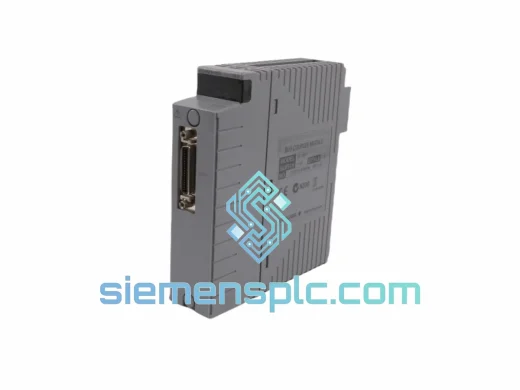
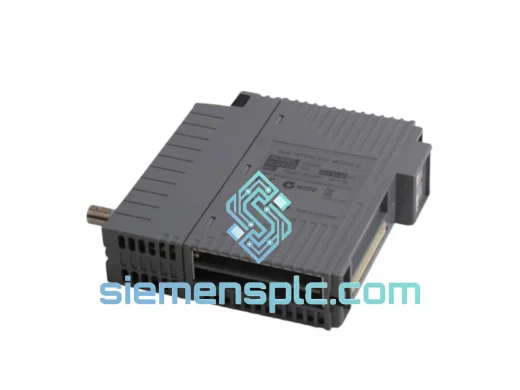
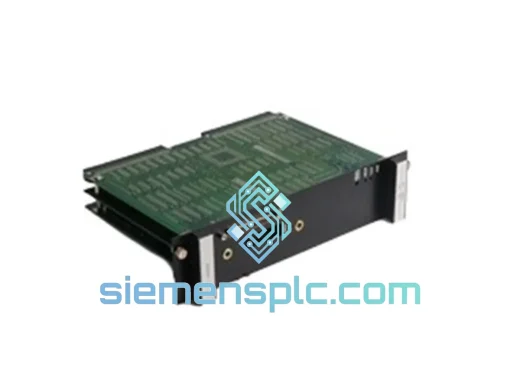
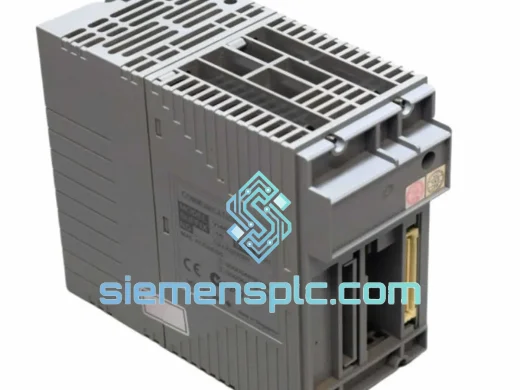
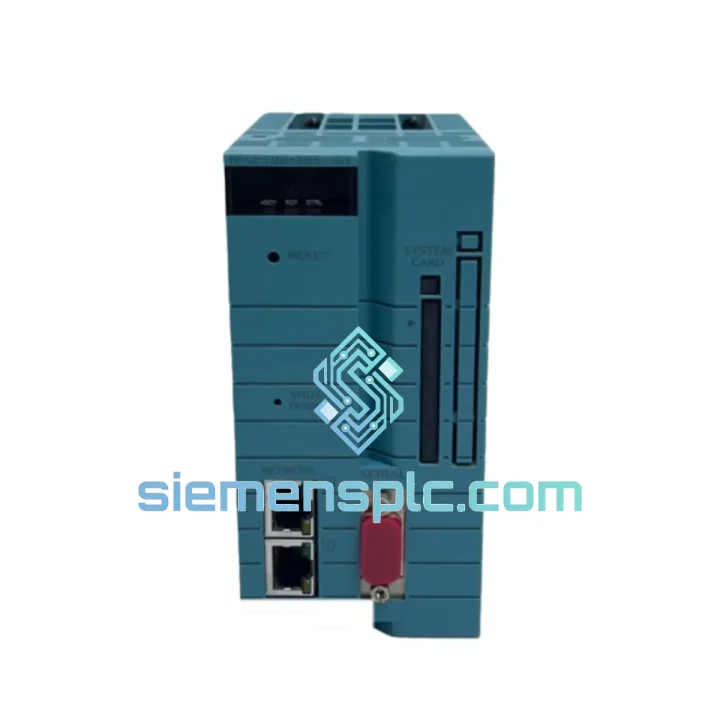
Yokogawa NFCP100-S05 S3 DCS CPU Module – CENTUM VP CS 3000
Request verified availability, condition, replacement risk review, packing options and courier lead time for NFCP100-S05.
BrandYokogawa
Part NumberNFCP100-S05
ConditionAvailability Check
Lead TimeRFQ Confirmation
DocumentsDatasheet / photos by RFQ
ShippingExport packing available
Auto-filled RFQ
NFCP100-S05
Click Request Quote and the part number is inserted into the inquiry form automatically.
- Reply by email: [email protected]
- WhatsApp / Tel: +86 18359268345
- Mon-Sat 9:00-18:00 GMT+8
Procurement Data
Key Product Information
Core fields for model confirmation and RFQ routing. Detailed product narrative remains below.
- Brand
- Yokogawa
- Primary Part Number
- NFCP100-S05
- Product Type
- DCS CPU Module
- Series / Family
- CENTUM VP
- Manufacturer
- Yokogawa Electric Corporation
- Country of Origin
- JP
- Catalog Category
- DCS & Safety Modules
- Operating Temp.
- 0 °C to +55 °C (per Yokogawa FCS cabinet specification)
- Warranty
- 12 months from shipment date
Model confirmed for inquiry
NFCP100-S05
Send quantity, destination and urgency. The RFQ form keeps this part number attached.
Request Quote
Product Overview
Yokogawa NFCP100-S05 S3: Field Control Station Processor Architecture and Control Loop Role
Within a Distributed Control System, the Field Control Station (FCS) is the execution layer that separates a functioning plant from a collection of sensors and actuators. The Yokogawa NFCP100-S05 S3 is the CPU module that anchors this layer — it carries the real-time operating kernel, the function block execution engine, and the V-net/IP communication stack that binds the FCS to the rest of the CENTUM VP or CS 3000 architecture. Without a healthy NFCP100-S05 S3, the FCS nest becomes inert: I/O modules continue to scan field signals, but no control output is computed, no setpoint is tracked, and no alarm is processed. The module is not a peripheral — it is the station.
The “-S05” suffix in the part number designates the memory and processing tier within the NFCP100 family. This variant carries sufficient SRAM and flash capacity to host large function block sheets with hundreds of PID loops, sequence control blocks, and arithmetic elements executing concurrently at configurable scan periods — typically 100 ms, 200 ms, 500 ms, or 1000 ms per block group. The “S3” hardware revision reflects a mature PCB generation with improved component sourcing, tightened EMC shielding on the backplane connector region, and revised firmware compatibility extending support through CENTUM VP R6.xx. This is not a first-generation design; it is a module that has accumulated field hours across refineries, LNG terminals, and power stations on multiple continents.
In a dual-redundant FCS configuration, two NFCP100-S05 S3 modules occupy adjacent slots in the FCS nest. The primary module executes all control logic and continuously synchronizes its internal state — including PID integral terms, sequence step pointers, and timer values — to the standby module over the internal redundancy bus at each scan cycle. This synchronization granularity means that on a primary CPU fault, the standby assumes control with zero process bump: the integral term does not reset, the sequence does not restart from step one, and the output does not spike. The switchover time is bounded within one scan cycle, a determinism that is architecturally enforced rather than statistically estimated.
Real-time stock and RFQ: [email protected] | WhatsApp: +86 18359268345
Technical Parameters
| Parameter | Specification |
|---|---|
| Part Number | NFCP100-S05 S3 |
| Manufacturer | Yokogawa Electric Corporation |
| Series | CENTUM VP / CS 3000 Field Control Station |
| Module Function | FCS Central Processing Unit (CPU) |
| Hardware Revision | S3 |
| Memory Tier | S05 (extended SRAM + flash configuration) |
| Control Network Interface | V-net/IP (100 Mbps Ethernet-based, ring topology) |
| Backplane Bus | Yokogawa FCS internal nest bus (proprietary parallel bus) |
| Redundancy Mode | 1:1 dual-redundant CPU, bumpless switchover |
| Scan Period Options | 100 ms / 200 ms / 500 ms / 1000 ms (per block group) |
| Compatible Software | CENTUM VP R4.xx, R5.xx, R6.xx; CS 3000 R3.xx |
| Form Factor | Card-type, FCS nest slot insertion |
| Operating Temperature | 0 °C to +55 °C (per Yokogawa FCS cabinet specification) |
| Storage Temperature | -25 °C to +70 °C |
| Relative Humidity | 5% to 95% RH, non-condensing |
| Power Consumption | Per FCS nest power budget (NFPS100 series supply) |
| Weight | Approx. 700 g |
| Country of Origin | Japan |
| Warranty | 12 months from shipment date |
Hardware Logical Analysis
The NFCP100-S05 S3 operates on a real-time operating kernel that enforces strict task scheduling with fixed-priority preemption. Control block execution is partitioned into scan groups, each assigned a discrete period. The scheduler guarantees that a 100 ms scan group completes its full execution pass — reading I/O data from the backplane bus, computing all function block outputs in topological order, and writing results back to the output registers — within the 100 ms window, with a deterministic worst-case execution time that does not drift under load. This is not a best-effort scheduler; it is a hard real-time architecture where a missed deadline is treated as a fault condition, not a performance metric.
The backplane bus interface is the module’s highest-bandwidth internal path. The NFCP100-S05 S3 arbitrates bus access with the I/O modules installed in the same FCS nest using a time-division multiplexing scheme. Each I/O module is allocated a fixed bus slot per scan cycle, and the CPU module reads all I/O data in a single burst at the start of each scan period. This deterministic I/O refresh eliminates the variable latency that would arise from polled or interrupt-driven I/O architectures, ensuring that every function block computation within a scan group operates on data that is exactly one scan period old — a known, bounded staleness that control engineers can account for in loop tuning.
EMC performance on the S3 revision benefits from a revised PCB stackup with dedicated ground planes flanking the high-speed signal layers on the backplane connector side. The connector region — where the module interfaces with the FCS nest backplane — is the primary ingress point for conducted interference in card-type modules. The S3 design addresses this with localized decoupling capacitor arrays placed within 2 mm of the connector pins, reducing the impedance of the power distribution network at frequencies above 10 MHz where switching noise from adjacent I/O modules is most concentrated. The result is a module that maintains stable operation in FCS cabinets installed near variable-frequency drives, large motor starters, and high-current bus bars — environments where first-generation DCS hardware frequently exhibited spurious resets.
The redundancy synchronization bus between the primary and standby NFCP100-S05 S3 modules operates independently of the V-net/IP control network. This physical separation means that a V-net/IP network fault — cable break, switch failure, or broadcast storm — does not degrade the redundancy synchronization path. The two modules maintain state coherence even when the FCS is temporarily isolated from the engineering workstation and historian, a scenario that occurs during network maintenance windows in operating plants.
System Integration Benefits
- Deterministic scan-cycle execution: Fixed-priority real-time kernel guarantees that all function blocks within a scan group complete within their assigned period, eliminating jitter-induced process variability in tight control loops such as compressor surge control and reactor temperature regulation.
- Bumpless redundancy switchover: State synchronization at every scan cycle — including PID integral terms, sequence step pointers, and timer accumulators — ensures that a primary CPU fault produces zero process disturbance, meeting the availability requirements of SIL-rated safety instrumented systems operating in parallel.
- Scalable function block capacity: The S05 memory tier accommodates large control databases with hundreds of concurrent PID, ratio, cascade, and sequence blocks, supporting complex unit operations such as distillation column control and multi-variable furnace management without requiring database partitioning across multiple FCS units.
- V-net/IP ring topology resilience: The module’s network interface supports the ring redundancy of V-net/IP, where a single cable break does not interrupt communication between the FCS and the Human Interface Station (HIS), maintaining operator visibility and setpoint authority during network faults.
- Transparent diagnostic reporting: The NFCP100-S05 S3 continuously reports its own health status — CPU load percentage, memory utilization, scan overrun counts, and redundancy synchronization state — to the CENTUM VP system log, giving maintenance engineers quantitative data for predictive maintenance decisions rather than binary fault/no-fault indications.
- Hot-swap replacement in redundant configurations: A failed primary module can be physically removed and replaced while the standby continues executing control logic, with the replacement module automatically synchronizing its state from the running standby upon insertion — no process shutdown, no manual state transfer, no operator intervention required.
- Backward compatibility across software revisions: The S3 hardware revision maintains compatibility with CENTUM VP R4 through R6 and CS 3000 R3, allowing plants to upgrade their engineering workstation software without replacing installed FCS hardware — a significant capital expenditure avoidance in large multi-FCS installations.
- Unified engineering environment integration: The module operates natively within CENTUM VP’s function block engineering environment, where control logic is graphically configured, downloaded, and modified online without interrupting running control — supporting the incremental loop commissioning workflows used in phased plant startups.
- Deterministic I/O refresh from backplane bus arbitration: Time-division multiplexed backplane access ensures every function block computation uses I/O data with a known, bounded age of exactly one scan period, eliminating the variable read latency that complicates loop tuning in systems with polled I/O architectures.
Quality Assurance & Global Logistics
Every NFCP100-S05 S3 unit dispatched from our Xiamen facility is a genuine Yokogawa-manufactured module. Yokogawa’s manufacturing process for CENTUM VP FCS components applies IPC-A-610 Class 3 workmanship standards — the highest classification, reserved for equipment where continued performance is critical and field repair is not an option. PCB assembly is performed under controlled electrostatic discharge (ESD) protocols, with all handling personnel and workstations continuously monitored for compliance. Component traceability is maintained from wafer lot to finished module, enabling Yokogawa’s quality system to isolate and address any field reliability issue to its manufacturing root cause.
Our Xiamen warehouse maintains controlled storage conditions — temperature between 15 °C and 25 °C, relative humidity below 60% RH — for all DCS module inventory. Modules are stored in their original ESD-shielded packaging or re-packaged in equivalent anti-static bags with desiccant inserts when original packaging is unavailable. Prior to shipment, each unit undergoes a physical inspection covering connector pin integrity, PCB surface condition, label legibility, and revision marking verification against the purchase order specification.
International shipments are dispatched via DHL Express, FedEx International Priority, or TNT, with transit times of 3–7 business days to most destinations in Southeast Asia, the Middle East, Europe, and the Americas. For time-critical plant shutdowns, same-day dispatch is available for orders confirmed before 14:00 CST. All shipments include a commercial invoice, packing list, and certificate of origin. For destinations requiring import permits or end-user declarations for industrial automation equipment, our logistics team provides documentation support based on experience with customs requirements across 40+ countries. A 12-month warranty covers manufacturing defects from the shipment date.
Contact Information
Email: [email protected]
WhatsApp: +86 18359268345
Web: siemensplc.com
Location: Xiamen, China
© 2026 siemensplc.com. All rights reserved.
Ready to quote
[email protected]
Send This Part Number to Sales
RFQ workflow
Quality workflow ->
Confirmation Process
01Model confirmation
We check the full part number, brand, series and visible nameplate information before quotation.
02Availability reply
Sales confirms stock path, condition option, quantity and realistic lead time for export dispatch.
03Packing & courier
DHL, FedEx, UPS or buyer courier arrangements can be reviewed with packing requirements.
Continue sourcing
Browse full catalog ->
Related Automation Parts
Similar brand or category products for fast comparison and multi-item RFQ lists.