Yokogawa
RFQ Ready
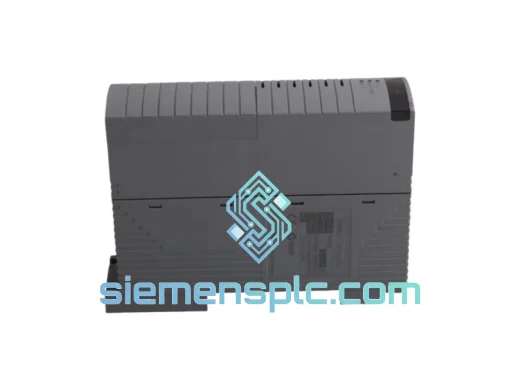
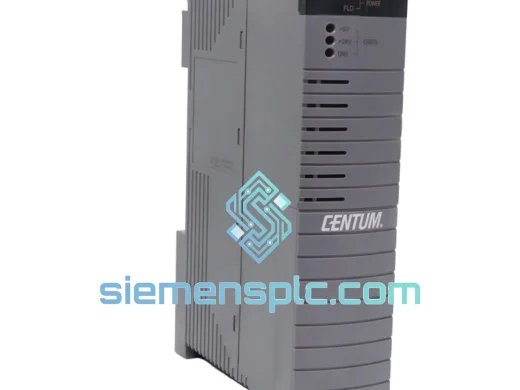
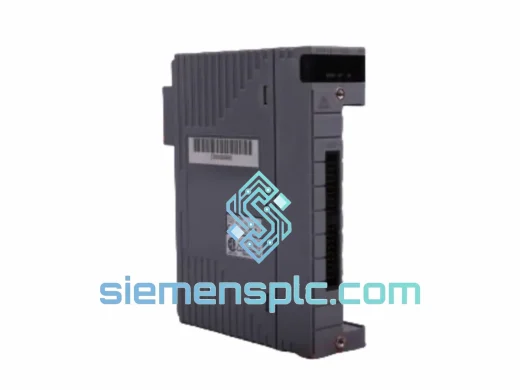
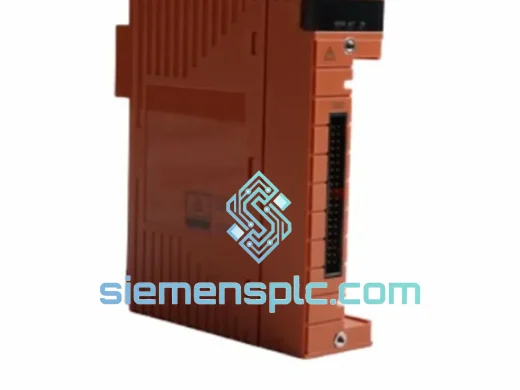
Yokogawa SPW482-13 S1 DCS Power Supply Module
CENTUM VP
Origin JP
DCS Power Supply Module
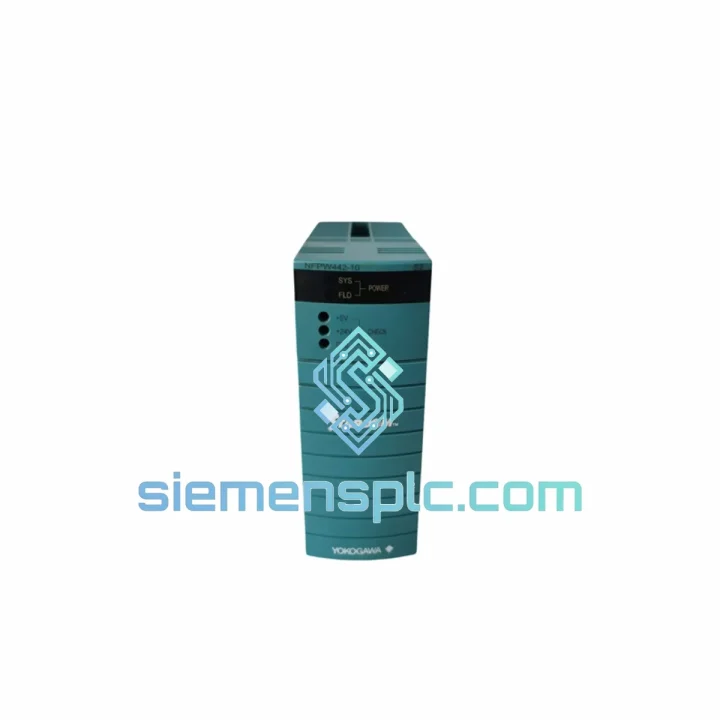
Request verified availability, condition, replacement risk review, packing options and courier lead time for NFPW442-51.
Click Request Quote and the part number is inserted into the inquiry form automatically.
Core fields for model confirmation and RFQ routing. Detailed product narrative remains below.
A CENTUM VP Field Control Unit without a functioning power supply is a dead node. Your process is either in manual, running on a single redundant leg with zero fault tolerance, or already tripped. The NFPW442-51 S2 is not a shelf item you order and wait three weeks for — it is a critical spare that needs to be in your hands within 72 hours. We maintain physical stock in Xiamen. No broker middlemen. No “lead time TBD.” If you’re reading this during a shutdown, call us now.
URGENT REQUIREMENT? Contact: [email protected] | WhatsApp: +86 18359268345
| Part Number | NFPW442-51 S2 |
| Manufacturer | Yokogawa Electric Corporation |
| Compatible Platform | CENTUM VP / CENTUM CS 3000 — FCU Nest |
| Module Function | DC Power Supply Unit for Field Control Unit (FCU) |
| Input Voltage | 24 V DC (nominal) |
| Redundancy | 1:1 redundant power pair supported |
| Hot-Swap Capable | Yes — live extraction in redundant mode |
| Hardware Revision | S2 (improved EMC shielding and thermal management vs. S1) |
| Operating Temperature | 0 °C to +55 °C |
| Humidity Range | 5% – 95% RH, non-condensing |
| Approx. Weight | 1,320 g |
| Certifications | CE, UL — per CENTUM VP platform approval |
| Country of Origin | Japan |
| Availability | ✔ In Stock — Ready to Ship from Xiamen |
Reading the Failure Before You Pull the Module
Don’t yank the NFPW442-51 S2 on instinct. Spend 90 seconds confirming the fault source — it saves you from replacing a healthy module while the real culprit sits upstream.
Hot-Swap Replacement Procedure — Redundant Configuration
Configuration Notes — No DIP Switches, No Addressing
The NFPW442-51 S2 is slot-position-identified by the FCU backplane. There are no rotary switches, no DIP banks, no firmware to flash. Plug-and-play in the mechanical sense — but verify FCU nest firmware compatibility if you are replacing an S1 unit on a CENTUM VP R3.x installation. Yokogawa Technical Information document TI 33J01B10-01EN contains the revision compatibility matrix. If your site runs R4.x or later, S2 insertion is unconditional.
One Mistake That Costs You: Do not power-cycle the FCU to verify the new module on a live process. The CENTUM VP FCU executes a full I/O scan restart on power restoration — this produces a brief output freeze that will cause a process upset in non-redundant controller configurations. Verify via HIS LED status only.
The NFPW442-51 S2 was not designed for a climate-controlled data center. It was designed for the inside of a marshalling cabinet in a refinery, a pulp mill, or a chemical plant — where ambient temperature swings 25 °C between day and night, where VFD noise rides the 24 V DC bus, and where the cabinet door gets left open during a three-hour maintenance window in a coastal environment.
The internal electrolytic capacitors are rated at 105 °C junction temperature. This is not a minor spec detail — it is the difference between a module that lasts 12 years and one that fails at year four when the cabinet ambient climbs to 48 °C during a summer heat event. Counterfeit and grey-market units routinely use 85 °C-rated components that are visually identical but thermally marginal in sustained high-temperature operation.
The PCB carries a full conformal coating applied to IPC-CC-830 standard, providing protection against humidity ingress, condensation during seasonal temperature transitions, and airborne contaminants including H₂S and SO₂ — gases present in petrochemical and smelting environments that corrode uncoated copper traces within 18 months.
Vibration performance is qualified to IEC 60068-2-6, covering 5–150 Hz at 1 g acceleration. For installations near reciprocating compressors, pump skids, or turbine packages where cabinet vibration is a continuous background condition, this qualification matters. The backplane connector uses gold-plated contacts with a rated mating cycle life of 500 insertions — sufficient for a 15-year service life with quarterly maintenance intervals.
Every unit dispatched from our Xiamen warehouse has been stored in a climate-controlled environment at 20–25 °C with relative humidity held below 60% RH. Units are individually sealed in anti-static bags with silica gel desiccant and inspected for physical integrity — connector pin condition, front panel integrity, label legibility — before packaging. We do not ship units sourced from uncontrolled surplus storage.
Our dispatch hub operates out of Xiamen, Fujian — one of China’s primary export gateways with direct DHL Express and FedEx International Priority lanes to over 220 destinations. For confirmed in-stock units, same-day dispatch is available for orders placed before 15:00 CST. Emergency orders placed after cutoff are dispatched first thing the following morning.
Estimated Transit Times from Xiamen:
Every shipment includes a pre-completed commercial invoice, packing list, and HS code declaration (HS 8537.10) formatted for customs clearance at destination. Certificate of Origin, material safety data, and import duty exemption documentation are prepared at no additional charge — notify us at order placement. Tracking numbers are issued within 2 hours of dispatch and sent directly to your procurement contact. For plant shutdown scenarios, we coordinate directly with your freight forwarder or in-country customs broker to compress clearance timelines.
Email: [email protected]
WhatsApp: +86 18359268345
Web: siemensplc.com
© 2026 siemensplc.com. All rights reserved.
We check the full part number, brand, series and visible nameplate information before quotation.
Sales confirms stock path, condition option, quantity and realistic lead time for export dispatch.
DHL, FedEx, UPS or buyer courier arrangements can be reviewed with packing requirements.
Similar brand or category products for fast comparison and multi-item RFQ lists.