Yokogawa
RFQ Ready
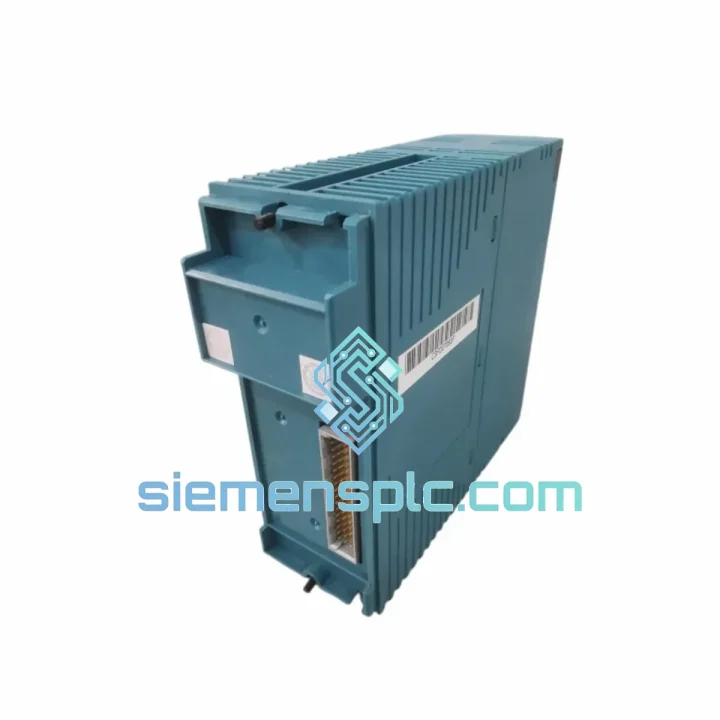
Yokogawa SPW482-13 S1 DCS Power Supply Module
CENTUM VP
Origin JP
DCS Power Supply Module
Request verified availability, condition, replacement risk review, packing options and courier lead time for NFPW444-10.
Click Request Quote and the part number is inserted into the inquiry form automatically.
Core fields for model confirmation and RFQ routing. Detailed product narrative remains below.
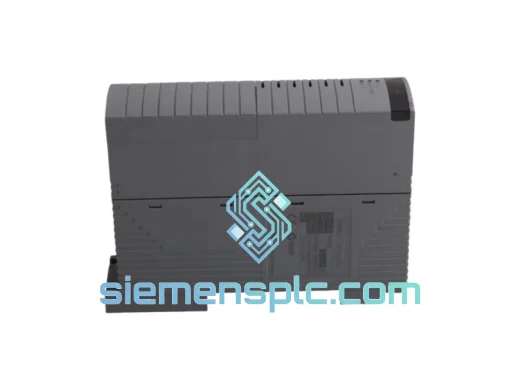
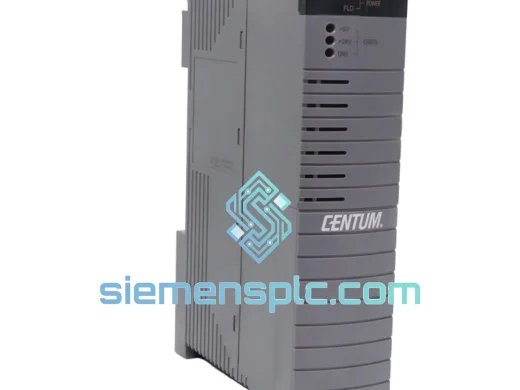
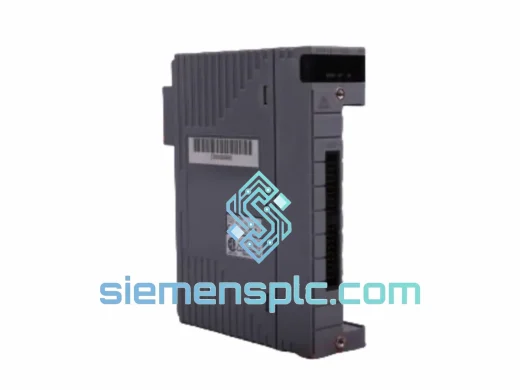
The YOKOGAWA NFPW444-10 S2 is a rack-mount, plug-in DC power supply module purpose-built for YOKOGAWA’s CENTUM VP and CENTUM CS 3000 Distributed Control System (DCS) platforms. Within a Field Control Station (FCS) cabinet, the power supply module occupies the most structurally critical position in the hardware hierarchy: it converts and conditions incoming AC or DC bus voltage into the stable, low-ripple DC rails that feed processor cards, I/O modules, and communication interfaces. Any deviation in output voltage regulation — even transient spikes exceeding ±5% — can trigger watchdog resets across the entire node unit, causing unplanned process interruptions in continuous manufacturing environments. The NFPW444-10 S2 is engineered to eliminate that risk.
The S2 suffix designates a specific output voltage and redundancy configuration within the NFPW444 series. In YOKOGAWA’s CENTUM architecture, power supply modules are installed in dedicated power supply nests within the node unit (NU) chassis. The S2 variant is designed to operate in parallel with a companion NFPW module, enabling N+1 redundant power distribution. Load sharing between two active modules is managed by internal current-balancing circuitry, ensuring neither unit operates at thermal saturation while the other carries zero load — a failure mode common in passive redundancy schemes.
Real-time Stock & RFQ: [email protected] | WhatsApp: +86 18359268345
| Parameter | Specification |
|---|---|
| Manufacturer | YOKOGAWA Electric Corporation |
| Full Part Number | NFPW444-10 S2 |
| Module Category | DCS Power Supply Module |
| Compatible Platform | CENTUM VP, CENTUM CS 3000 |
| Installation Type | Rack-mount plug-in, YOKOGAWA standard node unit nest |
| Suffix Code | S2 — specific output voltage / redundancy configuration |
| Redundancy Support | N+1 active parallel redundancy with load sharing |
| Hot-Swap Capability | Yes — online module replacement without process shutdown |
| Output Stability | Tightly regulated DC rail; low ripple for analog I/O integrity |
| EMC Compliance | Designed per IEC 61000 series; CE Marking applicable |
| Functional Safety | Compatible with IEC 61511 / IEC 61508 SIS configurations |
| Environmental Rating | Industrial grade; suitable for high-humidity, vibration environments |
| Weight | Approx. 500 g |
| Country of Origin | Japan |
| Warranty | 12 months from date of shipment |
The NFPW444-10 S2 operates within YOKOGAWA’s proprietary V-net / ESB bus power architecture. At the hardware level, the module integrates several design disciplines that distinguish it from generic industrial power supplies:
Active Load-Sharing Architecture: Unlike passive diode-OR redundancy schemes — where one module carries full load until failure — the NFPW444-10 S2 employs active current-balancing logic. Both the primary and redundant modules continuously monitor output current via internal sense resistors. A dedicated balancing controller adjusts each module’s output voltage setpoint in real time, maintaining current distribution within a tight tolerance band. This prevents thermal asymmetry and extends capacitor and MOSFET service life across both units simultaneously.
EMC and Conducted Noise Suppression: The module’s input stage incorporates a multi-stage LC filter network designed to attenuate conducted emissions per CISPR 11 Class A limits. Common-mode chokes on the input lines suppress high-frequency noise injected from variable-frequency drives (VFDs) and motor starters sharing the same AC distribution panel — a realistic scenario in process plant electrical rooms. The output stage uses low-ESR bulk capacitors combined with a high-frequency bypass network to maintain output impedance below the threshold that would cause noise coupling into 4–20 mA analog signal loops.
Thermal Management and Derating: The NFPW444-10 S2 is rated for continuous operation across the full industrial temperature range. Internal thermal sensors feed into the module’s protection logic, triggering output current derating before junction temperatures reach critical thresholds. This derating behavior is preferable to hard shutdown in process environments, as it allows the redundant companion module to absorb the load gradually rather than experiencing an instantaneous step-load transient.
Isolation and Ground Fault Detection: The DC output is isolated from the AC input via a high-frequency transformer stage, providing galvanic isolation that protects downstream I/O modules from ground potential differences between field devices and the control cabinet. The isolation barrier is rated to withstand the dielectric test voltages specified in YOKOGAWA’s CENTUM hardware qualification standards.
Every YOKOGAWA NFPW444-10 S2 unit supplied by siemensplc.com is sourced as genuine OEM hardware. YOKOGAWA Electric Corporation manufactures its DCS hardware under an ISO 9001-certified quality management system, with each module subject to factory acceptance testing (FAT) prior to release. We do not supply refurbished, remanufactured, or counterfeit components.
Our procurement and inspection process includes: visual inspection against YOKOGAWA’s cosmetic and labeling standards; verification of serial number and date code against known production batches; functional continuity checks on connector pins and module locking mechanisms; and anti-static, moisture-barrier packaging using ESD-safe materials rated for international air and sea freight.
Shipments originate from our warehouse in Xiamen, China. We offer DHL Express, FedEx International Priority, and UPS Worldwide Expedited services for time-critical orders. Standard air freight transit times are 3–7 business days to most destinations in Europe, Southeast Asia, the Middle East, and the Americas. Full export documentation is provided with every shipment: commercial invoice, packing list, certificate of origin, and — upon request — a material traceability record and inspection report. For orders requiring customs pre-clearance documentation or specific HS code declarations, our logistics team coordinates directly with the consignee’s freight forwarder.
Email: [email protected]
WhatsApp: +86 18359268345
Web: siemensplc.com
Location: Xiamen, China
© 2026 siemensplc.com. All rights reserved.
We check the full part number, brand, series and visible nameplate information before quotation.
Sales confirms stock path, condition option, quantity and realistic lead time for export dispatch.
DHL, FedEx, UPS or buyer courier arrangements can be reviewed with packing requirements.
Similar brand or category products for fast comparison and multi-item RFQ lists.