Yokogawa
RFQ Ready
Yokogawa SPW482-13 S1 DCS Power Supply Module
CENTUM VP
Origin JP
DCS Power Supply Module
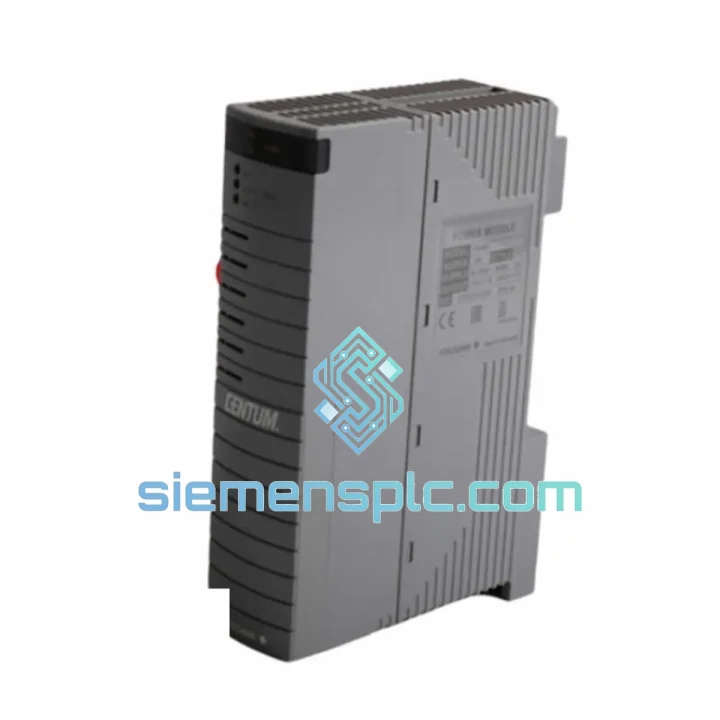
Request verified availability, condition, replacement risk review, packing options and courier lead time for PW481-50.
Click Request Quote and the part number is inserted into the inquiry form automatically.
Core fields for model confirmation and RFQ routing. Detailed product narrative remains below.
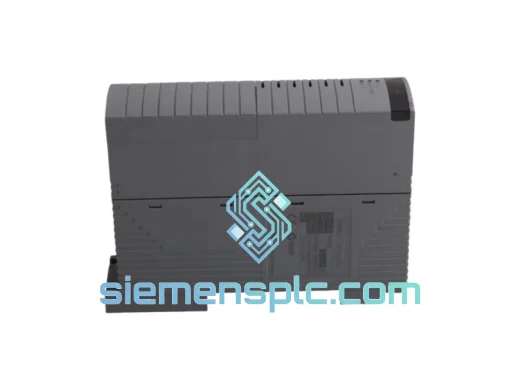
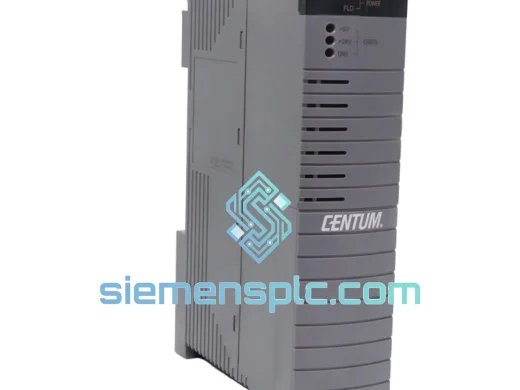
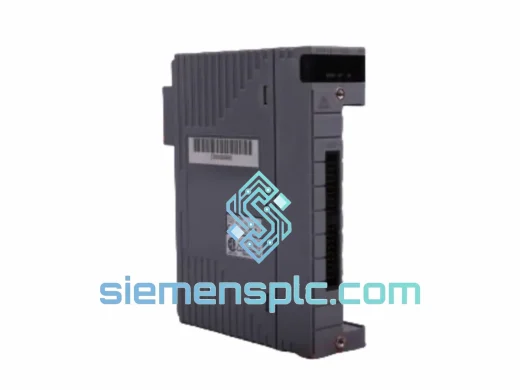
The PW481-50 is a slot-mount DC power supply module purpose-built for YOKOGAWA’s CENTUM VP and CENTUM CS 3000 distributed control system platforms. Within a field control station (FCS) cabinet, this module occupies a dedicated power slot on the node unit backplane and delivers a regulated 24 VDC bus to all co-resident I/O modules, communication cards, and processor sub-assemblies. Its role is not peripheral — without a stable, low-ripple DC rail, every downstream module in the node unit is exposed to voltage excursions that can corrupt analog signal chains, trigger watchdog resets, or force a controller failover. The PW481-50 eliminates that risk by providing a tightly regulated output with active load compensation, making it the foundational element of any CENTUM VP power architecture.
In process industries where a single unplanned shutdown can cost tens of thousands of dollars per hour — oil refining, ethylene cracking, LNG liquefaction, pharmaceutical batch processing — the power supply module is the last component engineers want to compromise on. The PW481-50 is specified precisely because it is a factory-matched, platform-native component: its electrical interface, mechanical form factor, and firmware handshake are all validated against the CENTUM VP backplane specification, eliminating the integration uncertainty that accompanies third-party alternatives.
Real-time Stock & RFQ: [email protected] | WhatsApp: +86 18359268345
| Parameter | Specification |
|---|---|
| Part Number | PW481-50 |
| Manufacturer | YOKOGAWA Electric Corporation |
| Compatible Platform | CENTUM VP, CENTUM CS 3000 |
| Module Classification | Backplane-Mount DC Power Supply Module |
| Nominal Output Voltage | 24 VDC |
| Output Voltage Regulation | ±1% under rated load (static); ±3% under step-load transient |
| Redundancy Architecture | 1:1 hot-standby; dual PW481-50 modules share load with automatic bumpless transfer |
| Inrush Current Limiting | Active soft-start circuit; limits inrush to ≤ 2× rated current at cold start |
| Operating Temperature | 0 °C to +55 °C (ambient, forced-air cabinet) |
| Storage Temperature | −25 °C to +70 °C |
| Relative Humidity | 5% to 95% RH, non-condensing |
| Vibration Resistance | IEC 60068-2-6 compliant (10–150 Hz, 1 g) |
| EMC Emissions | EN 55011 Class A industrial |
| EMC Immunity | IEC 61000-4-2 (ESD), IEC 61000-4-4 (EFT/Burst), IEC 61000-4-5 (Surge) |
| Safety Certifications | CE, UL (verify current revision datasheet) |
| RoHS Compliance | EU Directive 2011/65/EU |
| Mounting Interface | CENTUM VP / CS 3000 node unit backplane slot |
| Approximate Weight | 100 g |
| Warranty | 12 months from date of shipment (siemensplc.com standard terms) |
The PW481-50 operates as a synchronous DC-DC converter stage downstream of the cabinet’s AC-to-DC bulk rectifier. Its internal architecture centers on a pulse-width modulation (PWM) controller that samples the output rail at high frequency and adjusts duty cycle in real time to compensate for load current changes across the backplane. This closed-loop regulation topology is critical in a CENTUM VP node unit because the aggregate load is not static — I/O modules transition between scan states, communication cards burst data across Vnet/IP, and processor cards execute control algorithms at deterministic cycle times, all of which create dynamic current demands on the 24 VDC bus.
From an electromagnetic compatibility standpoint, the PW481-50 incorporates a multi-stage LC filter on both its input and output ports. The input filter attenuates conducted emissions from the switching stage back toward the AC supply, preventing high-frequency noise from propagating into adjacent cabinet wiring. The output filter suppresses switching ripple to a level that keeps analog I/O modules — particularly 4–20 mA current loop interfaces and thermocouple input cards — within their specified common-mode rejection ratios. Without this filtering, switching artifacts at the PWM frequency (typically in the 50–200 kHz range) would appear as noise floors on millivolt-level sensor signals, degrading measurement resolution.
The redundancy arbitration logic embedded in the PW481-50 pair uses a diode-OR output stage combined with a current-sharing bus. When two modules are installed in the same node unit, each monitors the other’s output voltage via a dedicated sense line. If the primary module’s output drops below a threshold — due to component aging, thermal stress, or input supply interruption — the standby module’s output diode becomes forward-biased within microseconds, and the load current transfers without a voltage dip detectable by downstream logic. This bumpless transfer characteristic is essential for maintaining the deterministic scan cycle of the FCU processor, which would otherwise interpret a power transient as a hardware fault and initiate a controlled shutdown sequence.
Thermal management within the module relies on a combination of copper heat-spreading layers in the PCB and convective airflow from the cabinet’s forced-ventilation system. The power dissipation of the conversion stage is a function of efficiency; at rated load, the PW481-50 is designed to operate within the thermal envelope of the CENTUM VP cabinet’s airflow specification, ensuring junction temperatures of critical switching components remain below their derating thresholds across the full 0–55 °C ambient range.
Every PW481-50 unit offered through siemensplc.com is sourced through documented industrial automation supply channels and undergoes a structured incoming inspection process before being listed for sale. Physical inspection covers connector integrity, label authenticity, PCB condition, and housing completeness. Units are stored in ESD-safe, climate-controlled warehousing in Xiamen, China, in accordance with YOKOGAWA’s recommended storage conditions for electronic modules: temperature 15–35 °C, humidity 45–75% RH, with anti-static packaging maintained throughout the storage period.
Outbound logistics from Xiamen are handled via DHL Express, FedEx International Priority, and UPS Worldwide Expedited, with typical transit times of 3–7 business days to major industrial hubs in Europe, North America, Southeast Asia, and the Middle East. For urgent plant maintenance scenarios, same-day dispatch is available for orders confirmed before 14:00 CST. All shipments include commercial invoice, packing list, and country-of-origin documentation to support customs clearance. Export classification and HS code documentation are prepared in accordance with Chinese customs regulations and destination-country import requirements.
Each unit is covered by a 12-month warranty from the date of shipment. Warranty claims are processed through direct communication with our technical team; defective units are evaluated and replaced or credited within agreed timelines. Supply chain traceability records are maintained and available upon request for customers with quality management system audit requirements.
Email: [email protected]
WhatsApp: +86 18359268345
Web: siemensplc.com
Location: Xiamen, China
© 2026 siemensplc.com. All rights reserved.
We check the full part number, brand, series and visible nameplate information before quotation.
Sales confirms stock path, condition option, quantity and realistic lead time for export dispatch.
DHL, FedEx, UPS or buyer courier arrangements can be reviewed with packing requirements.
Similar brand or category products for fast comparison and multi-item RFQ lists.