Yokogawa
RFQ Ready
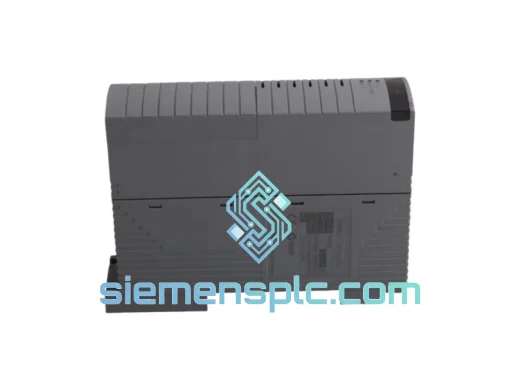
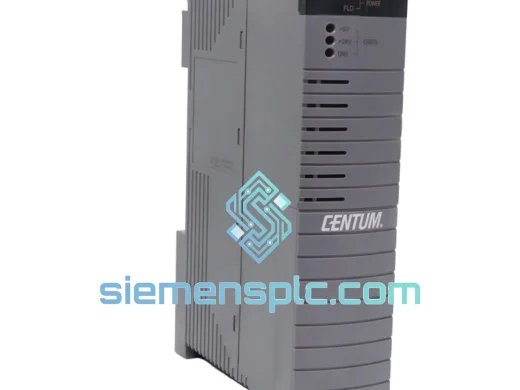
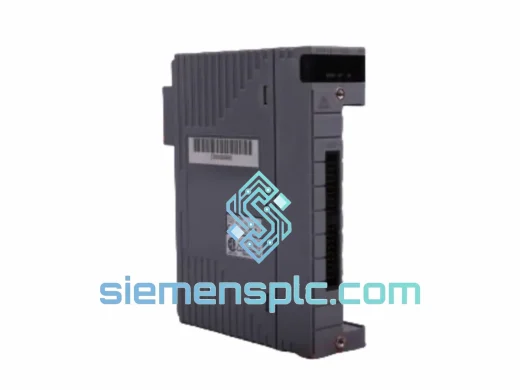
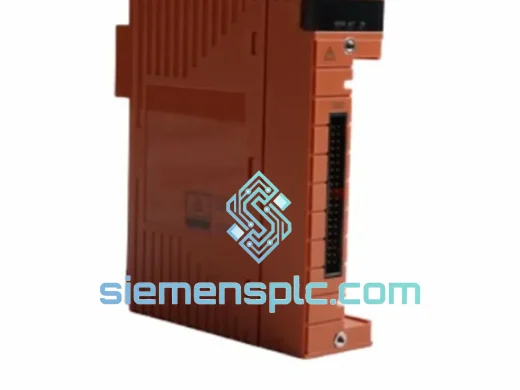
Yokogawa SPW482-13 S1 DCS Power Supply Module
CENTUM VP
Origin JP
DCS Power Supply Module
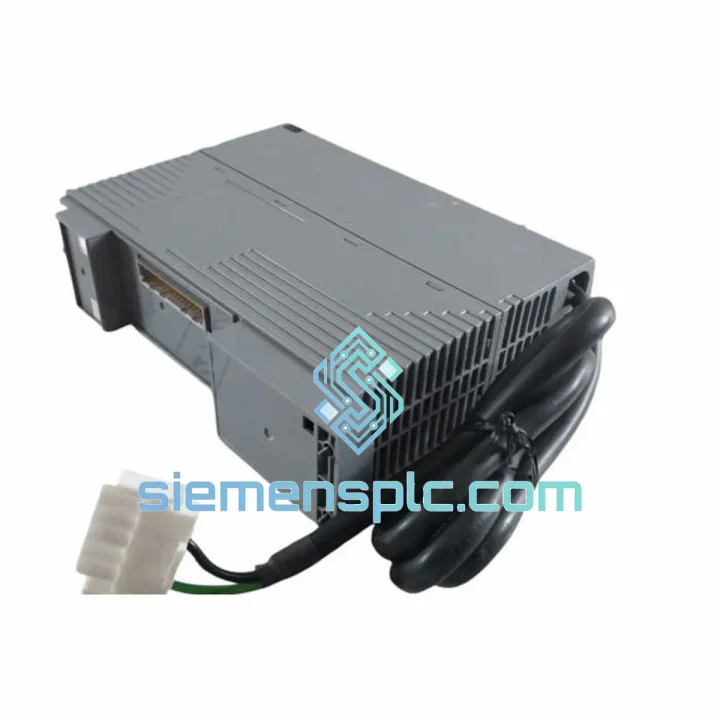
Request verified availability, condition, replacement risk review, packing options and courier lead time for PW482-50.
Click Request Quote and the part number is inserted into the inquiry form automatically.
Core fields for model confirmation and RFQ routing. Detailed product narrative remains below.
In continuous-process industries — refining, petrochemicals, LNG, and power generation — the distributed control system is not a peripheral asset. It is the operational backbone. When a power supply module within that backbone degrades or fails, the downstream consequences are not measured in component cost; they are measured in lost throughput, emergency shutdown sequences, and the compounding labor burden of unplanned maintenance. The Yokogawa PW482-50 is the primary DC power conversion and distribution card for the CENTUM VP Field Control Station (FCS) cabinet, and its availability in your MRO inventory is a direct hedge against that category of operational risk.
The CENTUM VP platform is one of the most widely deployed DCS architectures across the global process industries, with active installations spanning Asia-Pacific, the Middle East, Europe, and the Americas. That installed base translates into sustained, predictable demand for the PW482-50 — not as a speculative purchase, but as a routine replenishment item for any plant running CENTUM VP or the legacy CENTUM CS 3000 infrastructure. For procurement teams managing multi-site MRO programs, the PW482-50 is a high-velocity spare: it appears on BOM lists, it is consumed during scheduled turnarounds, and it is the first module evaluated when a power fault alarm surfaces in the DCS historian.
Sourcing this module through a specialized third-party supplier such as siemensplc.com addresses a structural gap that OEM distribution channels frequently cannot fill: speed, pricing flexibility, and access to stock outside the standard lead-time queue. Yokogawa’s authorized distribution network operates on standard commercial terms — minimum order quantities, fixed list pricing, and lead times that can extend from four to sixteen weeks for non-stocked items. For a plant facing an unplanned outage or a turnaround with a compressed schedule, those terms are operationally incompatible with the urgency of the situation. A specialist supplier with global sourcing reach can close that gap, often delivering verified units within days rather than weeks.
From a capital expenditure perspective, the PW482-50 represents a low-unit-cost, high-consequence component. Its acquisition price is a fraction of the cost of a single hour of unplanned downtime in a refinery or chemical plant. Procurement teams that treat this module as a discretionary purchase — ordering only when a failure has already occurred — consistently absorb higher total costs than those who maintain a strategic buffer stock. The math is straightforward: the carrying cost of one or two spare units is negligible against the avoided cost of a single process interruption.
Request an Official Quote: [email protected] | WhatsApp: +86 18359268345
| Part Number | PW482-50 |
| Manufacturer | Yokogawa Electric Corporation |
| Series | CENTUM VP / CENTUM CS 3000 |
| Module Function | DC Power Supply & Distribution for FCS Cabinet |
| Form Factor | Card-type, cabinet-mount |
| Redundancy | N+1 redundant configuration supported |
| Compliance Standards | IEC 61508, CE, UL |
| Country of Origin | Japan |
| Weight | Approx. 500 g |
| Compatible Platforms | CENTUM VP FCS, CENTUM CS 3000 FCS |
| Condition Available | New (factory-sealed), Refurbished (tested), Used (tested, as-removed) |
| Lead Time — In Stock | 3–7 business days after payment confirmation |
| Lead Time — Sourced | 2–5 weeks depending on global channel availability |
| Documentation | Commercial invoice, packing list, test report (on request), certificate of conformance (on request) |
| Warranty | 12 months from date of shipment |
Procurement decisions on industrial automation spares are frequently evaluated on unit price alone. That is a methodologically incomplete framework. The true cost of a PW482-50 procurement decision encompasses four distinct cost categories that extend well beyond the purchase order value.
Downtime Avoidance Value. A power supply fault in a CENTUM VP FCS cabinet can take an entire process unit offline within seconds. In a mid-scale refinery, a single unplanned shutdown event carries a direct production loss typically ranging from USD 50,000 to USD 500,000 per day, depending on unit throughput and product margins. The cost of maintaining one spare PW482-50 in inventory — even at a premium sourcing price — is recovered in full if it prevents a single unplanned outage event. For procurement officers calculating risk-adjusted inventory value, the PW482-50 belongs in the critical-spare category, not the consumable category.
Maintenance Labor Efficiency. When a replacement module is available on-site, a trained instrument technician can execute a hot-swap in a redundant power configuration within 30 to 60 minutes, with zero process interruption. When the module must be sourced reactively — through emergency OEM channels or spot-market brokers — the same repair event can consume 3 to 14 days of elapsed time, during which the system operates in a degraded, non-redundant state. That exposure window carries its own risk premium, which does not appear on any purchase order but is absorbed directly by the plant’s OPEX budget through elevated maintenance labor hours, expedite freight charges, and potential insurance implications.
Warranty Coverage and Repair Cost Avoidance. Every PW482-50 unit supplied through siemensplc.com carries a 12-month warranty from the date of shipment. For a module with a typical field service life of 8 to 15 years, a 12-month warranty on a replacement unit provides meaningful coverage during the highest-risk period — the initial months of reinstallation, when installation errors or latent defects are most likely to surface. The cost of a warranty claim on a failed replacement unit, including the labor to remove and reinstall, can easily exceed the original module purchase price. Warranty coverage is not a marketing feature; it is a quantifiable risk transfer mechanism.
CAPEX vs. OPEX Classification. For corporate procurement teams operating under strict capital expenditure controls, sourcing replacement automation modules through a third-party specialist supplier rather than through a formal OEM capital project can provide meaningful budget flexibility. Spare parts procurement through a commercial supplier is typically classifiable as OPEX maintenance expenditure, avoiding the approval cycles and budget constraints associated with CAPEX projects. This classification advantage is particularly relevant for multi-site operators managing centralized MRO budgets across multiple plant locations.
Every unit shipped from siemensplc.com is subject to a structured pre-shipment verification protocol. Visual inspection confirms OEM labeling integrity, date codes, and part markings against Yokogawa reference standards. Where test bench facilities permit, modules are powered up and output parameters are verified prior to dispatch. Units are graded transparently — New, Refurbished, or Tested Used — with no ambiguity in the quotation documentation.
All export transactions are processed through Xiamen Customs in full compliance with Chinese export regulations. Commercial invoices, packing lists, and HS code declarations are prepared accurately for each shipment, supporting smooth import clearance at the destination port. For buyers in regulated industries requiring documentation packages — test reports, certificates of conformance, or material traceability records — these are available upon request and specified in the proforma invoice.
Payment is accepted in multiple currencies including USD, EUR, HKD, and CNY, via T/T bank transfer, and other agreed commercial payment methods. Multi-currency support eliminates foreign exchange friction for international buyers and simplifies accounts payable processing for procurement teams operating across multiple currency zones.
Our 100% genuine parts commitment is not a slogan. It is a sourcing discipline. We do not knowingly handle counterfeit or non-OEM components. Any unit that does not pass our verification protocol is not offered for sale. If a delivered unit is found to be non-genuine upon receipt, we will replace it or refund in full — no dispute process required.
Xiamen is one of China’s five original Special Economic Zones and has developed into a mature international trade and logistics hub over four decades of sustained investment in port infrastructure, customs efficiency, and freight connectivity. Xiamen Port ranks among the top 20 container ports globally by throughput volume, with direct shipping services to major ports across Southeast Asia, the Middle East, Europe, and North America.
For industrial automation components destined for plant sites across Asia-Pacific — a region that hosts a significant share of the world’s active CENTUM VP installations — Xiamen’s geographic position provides transit time advantages over suppliers based in Europe or North America. Air freight from Xiamen Gaoqi International Airport reaches Singapore, Kuala Lumpur, Bangkok, Jakarta, and Mumbai within 4 to 8 hours of flight time. Sea freight to Middle Eastern ports via the Malacca Strait and Indian Ocean lanes is well-served by established carrier networks operating from Xiamen Port.
Beyond transit geography, Xiamen’s customs infrastructure supports efficient export processing for industrial goods. Our team has established working relationships with licensed freight forwarders and customs brokers who specialize in industrial automation component exports, ensuring that documentation is accurate, HS code classifications are defensible, and shipments clear export inspection without unnecessary delays. For buyers with time-sensitive requirements — turnaround schedules, emergency maintenance windows, or project commissioning deadlines — this operational reliability at the point of origin is as important as the product itself.
Email: [email protected]
WhatsApp: +86 18359268345
Web: siemensplc.com
© 2026 siemensplc.com. All rights reserved.
We check the full part number, brand, series and visible nameplate information before quotation.
Sales confirms stock path, condition option, quantity and realistic lead time for export dispatch.
DHL, FedEx, UPS or buyer courier arrangements can be reviewed with packing requirements.
Similar brand or category products for fast comparison and multi-item RFQ lists.