Yokogawa
RFQ Ready
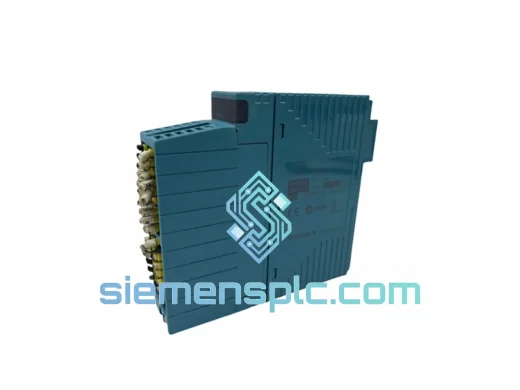
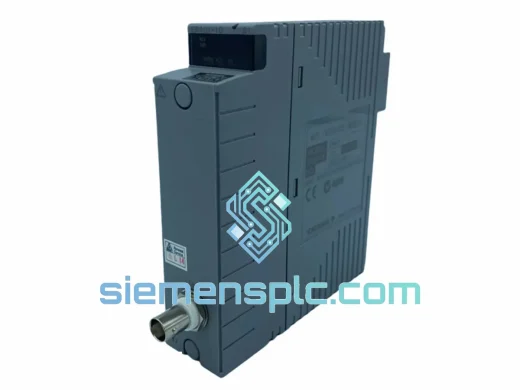
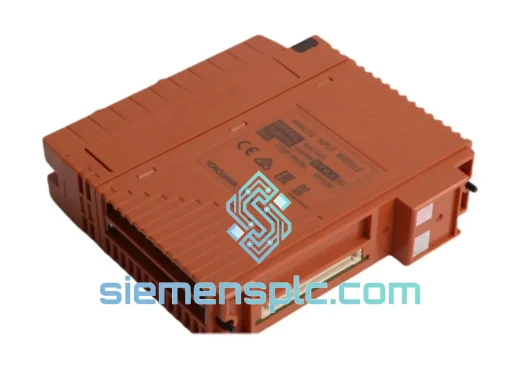
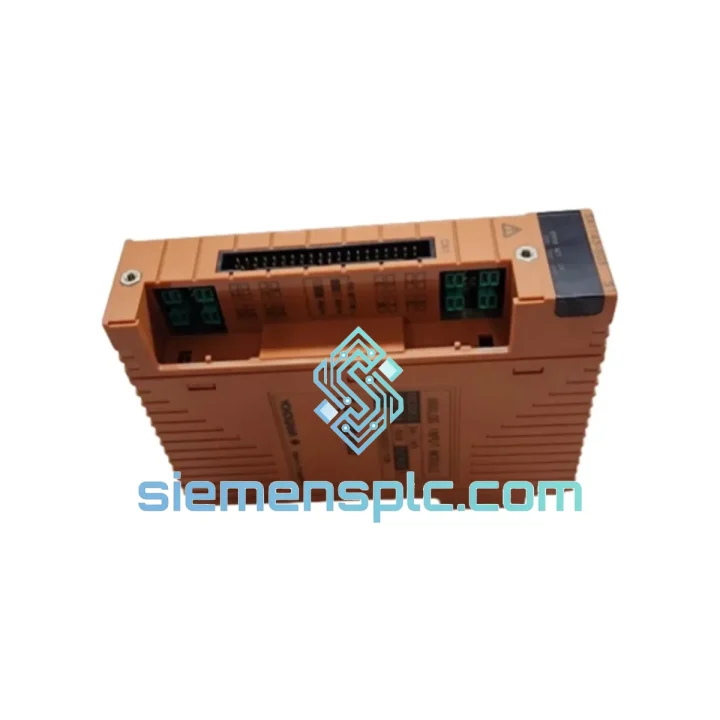
Yokogawa SAI143-H63/PRP S3 DCS Analog Input Module
CENTUM VP
Origin JP
DCS Analog Input Module
Request verified availability, condition, replacement risk review, packing options and courier lead time for SAI143-H03-S2.
Click Request Quote and the part number is inserted into the inquiry form automatically.
Core fields for model confirmation and RFQ routing. Detailed product narrative remains below.
The Yokogawa SAI143-H03-S2 is a multi-channel analog input signal amplifier module engineered for deployment within Yokogawa’s CENTUM VP and CS 3000 distributed control systems. Its primary function is to receive low-level field signals — predominantly 4–20 mA current loops and 1–5 V DC voltage inputs — and condition them to a normalized digital representation suitable for the FCS (Field Control Station) backplane bus. In process industries where measurement accuracy directly governs product quality, safety interlock reliability, and regulatory compliance, the SAI143-H03-S2 occupies a structurally critical position in the analog signal chain.
Unlike generic signal conditioners, this module is designed as an integral component of the CENTUM VP I/O architecture. Its firmware, calibration registers, and diagnostic reporting are tightly coupled to the FCS engineering environment, enabling online parameter verification, channel-level fault isolation, and non-intrusive calibration without loop interruption. The H03 option suffix designates a specific hardware configuration — including input impedance characteristics and isolation voltage class — that must be matched precisely to the project’s I/O assignment database during system engineering.
In a typical CENTUM VP FCS, the SAI143-H03-S2 occupies a dedicated I/O slot on the node unit. Each channel independently samples the field signal at a defined scan rate, applies linearization and engineering unit conversion within the module’s onboard processor, and transmits the result to the FCS CPU via the V-net/IP or ESB bus. This distributed processing architecture offloads analog conversion workload from the central CPU, preserving deterministic scan cycle performance even under high I/O density configurations.
Real-time Stock & RFQ: [email protected] | WhatsApp: +86 18359268345
| Parameter | Specification |
|---|---|
| Model Number | SAI143-H03-S2 |
| Manufacturer | Yokogawa Electric Corporation |
| Module Classification | Analog Input Signal Amplifier |
| Compatible Platform | CENTUM VP, CENTUM CS 3000 (FCS) |
| Input Signal Type | 4–20 mA DC / 1–5 V DC (per channel) |
| Number of Input Channels | 8 channels (isolated) |
| Input Impedance (Current) | Approx. 250 Ω (burden resistor integrated) |
| Input Impedance (Voltage) | ≥ 1 MΩ |
| A/D Resolution | 16-bit |
| Accuracy | ±0.1% of full scale (at 25°C) |
| Channel-to-Channel Isolation | 500 V DC (optical isolation) |
| Channel-to-Bus Isolation | 500 V DC |
| Scan Cycle | Synchronized with FCS control cycle (min. 100 ms) |
| Power Consumption | Supplied via FCS backplane bus (≤ 3.5 W typical) |
| Operating Temperature | 0°C to +55°C |
| Storage Temperature | -20°C to +70°C |
| Relative Humidity | 5% to 95% RH, non-condensing |
| EMC Compliance | IEC 61000-4 series (ESD, EFT, surge, conducted RF) |
| Mounting | FCS node unit I/O slot (backplane-mounted) |
| Dimensions (W × H × D) | Approx. 28 × 130 × 100 mm |
| Weight | Approx. 200 g |
| Certifications | CE, UL, ATEX (zone classification per project spec) |
| Country of Origin | Japan |
| Warranty | 12 months against manufacturing defects |
Optical Isolation Architecture: Each of the eight input channels on the SAI143-H03-S2 is galvanically isolated from both adjacent channels and the backplane bus using opto-coupler barriers rated at 500 V DC. This per-channel isolation topology prevents ground loop currents — a persistent problem in multi-drop 4–20 mA installations where field instruments share a common reference potential — from introducing common-mode noise into the A/D conversion stage. The isolation barrier also limits fault propagation: a wiring fault or transient overvoltage on one channel cannot corrupt the signal integrity of neighboring channels or damage the backplane bus interface.
16-Bit A/D Conversion and Linearization: The module employs a successive-approximation register (SAR) A/D converter with 16-bit resolution per channel. At a 4–20 mA full-scale range, this yields a theoretical resolution of approximately 0.24 µA per LSB — sufficient to resolve sub-0.1% process variations without oversampling. Onboard firmware applies configurable linearization tables for thermocouple cold-junction compensation and non-linear sensor curves, executing these calculations within the module’s local processor rather than consuming FCS CPU cycles.
EMC Design and Shielding: The PCB layout follows IEC 61000-4 design guidelines, with analog signal traces routed on inner layers separated from digital logic by ground plane fills. Transient voltage suppression (TVS) diodes are placed at each input terminal to clamp EFT (Electrical Fast Transient) bursts per IEC 61000-4-4 at ±2 kV. The module housing provides additional shielding continuity through the FCS node unit chassis ground, attenuating radiated interference in environments with variable-frequency drives, high-current contactors, and RF-emitting equipment operating in proximity.
Onboard Diagnostic Registers: The SAI143-H03-S2 maintains per-channel status registers accessible via the CENTUM VP Engineering Environment. These registers report open-circuit detection (signal below 3.6 mA threshold), over-range conditions, A/D conversion errors, and module hardware faults. Fault status is propagated to the FCS alarm management system in real time, enabling operators to distinguish between process deviations and instrumentation failures without physical inspection of the field wiring.
Backplane Bus Interface: Communication with the FCS CPU occurs over the ESB (Extended Signal Bus) or equivalent internal bus, using a time-division multiplexed protocol that guarantees deterministic data delivery within each FCS scan cycle. The module’s bus interface logic includes a watchdog timer that forces all channel outputs to a configurable fail-safe state if bus communication is interrupted for more than one scan cycle, preventing stale data from propagating to control function blocks.
Every SAI143-H03-S2 unit supplied by siemensplc.com is sourced as genuine Yokogawa manufacture, verified against Yokogawa’s serial number traceability records where applicable. Prior to dispatch, each module undergoes a structured inspection protocol: visual examination of PCB, connector pins, and label authenticity; functional power-on test confirming bus communication and channel status register response; and packaging integrity check to prevent transit damage to the module’s edge connector and front-panel locking mechanism.
Our logistics operation is based in Xiamen, China — a major international freight hub with direct air cargo connections to Singapore, Frankfurt, Dubai, Los Angeles, and Tokyo. Standard dispatch lead time for in-stock units is 3–5 business days from order confirmation. Express air freight options (DHL Express, FedEx International Priority, SF International) are available for urgent plant maintenance requirements, with door-to-door transit times of 3–7 business days to most industrial regions globally. All shipments include commercial invoice, packing list, and certificate of conformance documentation required for customs clearance in regulated markets.
A 12-month warranty against manufacturing defects is provided on all units. Warranty claims are processed with a target replacement dispatch of 5 business days from fault confirmation, minimizing plant downtime exposure for customers operating without local spare inventory.
Email: [email protected]
WhatsApp: +86 18359268345
Web: siemensplc.com
Location: Xiamen, China
© 2026 siemensplc.com. All rights reserved.
We check the full part number, brand, series and visible nameplate information before quotation.
Sales confirms stock path, condition option, quantity and realistic lead time for export dispatch.
DHL, FedEx, UPS or buyer courier arrangements can be reviewed with packing requirements.
Similar brand or category products for fast comparison and multi-item RFQ lists.