Yokogawa
In Stock OK
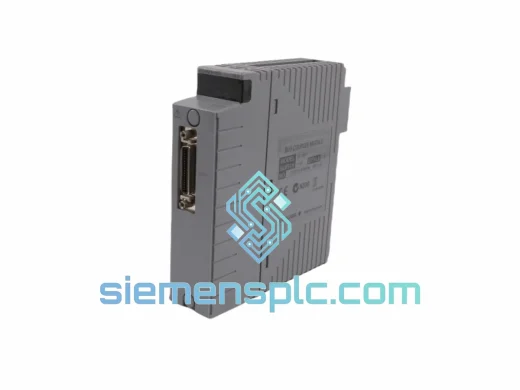
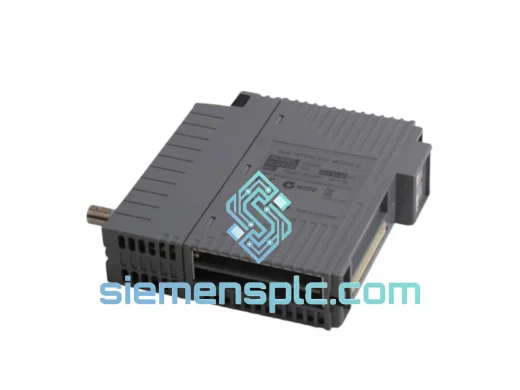
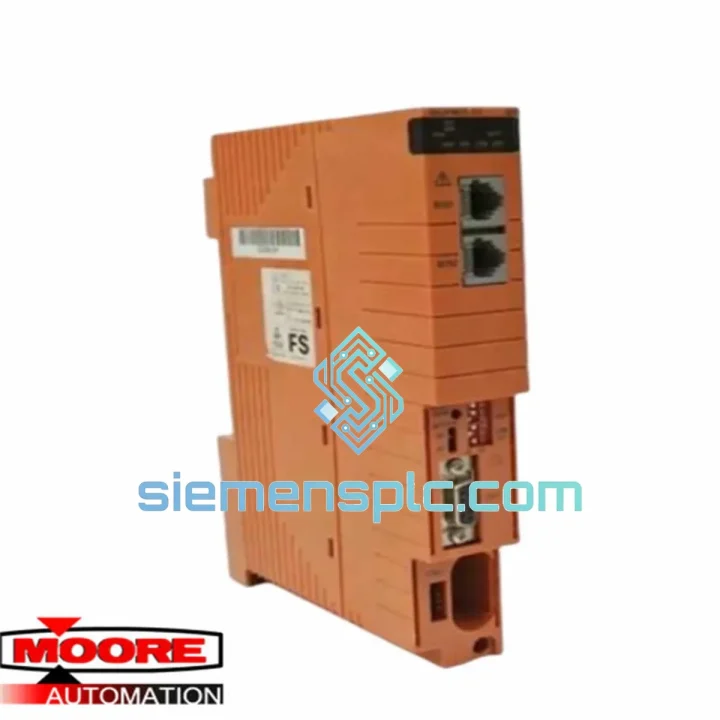
YOKOGAWA SCP401-11 DCS Processor Module – CENTUM VP
Request verified availability, condition, replacement risk review, packing options and courier lead time for SCP401-11.
BrandYokogawa
Part NumberSCP401-11
ConditionAvailability Check
Lead TimeRFQ Confirmation
DocumentsDatasheet / photos by RFQ
ShippingExport packing available
Auto-filled RFQ
SCP401-11
Click Request Quote and the part number is inserted into the inquiry form automatically.
- Reply by email: [email protected]
- WhatsApp / Tel: +86 18359268345
- Mon-Sat 9:00-18:00 GMT+8
Procurement Data
Key Product Information
Core fields for model confirmation and RFQ routing. Detailed product narrative remains below.
- Brand
- Yokogawa
- Primary Part Number
- SCP401-11
- Product Type
- DCS Processor Module
- Series / Family
- CENTUM VP
- Manufacturer
- YOKOGAWA Electric Corporation
- Country of Origin
- JP
- Catalog Category
- DCS & Safety Modules
- Operating Temp.
- 0°C to +55°C (ambient, forced-air cooled rack)
- Warranty
- 12 months from date of shipment
Model confirmed for inquiry
SCP401-11
Send quantity, destination and urgency. The RFQ form keeps this part number attached.
Request Quote
Product Overview
YOKOGAWA SCP401-11 – Core Processor Module for CENTUM VP Field Control Station
The SCP401-11 is the dedicated processor module (CPU card) for YOKOGAWA’s CENTUM VP Field Control Station (FCS). Within the CENTUM VP distributed control architecture, the FCS occupies the real-time control tier, executing process logic, managing I/O bus communication, and arbitrating redundancy state between paired controller nodes. The SCP401-11 is the computational core of that tier — responsible for scan-cycle execution, application program storage, and inter-node synchronization across the Vnet/IP or ESB bus backbone.
CENTUM VP installations are deployed across more than 30,000 sites globally, spanning oil refining, petrochemical complexes, power generation, and pharmaceutical batch manufacturing. In these environments, the FCS processor is not a peripheral component — it is the deterministic engine that maintains loop integrity under all operating conditions. When an SCP401-11 fails, the entire FCS node loses its control capability. Sourcing a verified, compatible replacement with minimal lead time is operationally critical.
The SCP401-11 variant within the SCP401 series is designed for high-availability FCS configurations. It supports YOKOGAWA’s dual-redundant controller architecture, where two SCP401-11 modules operate in active/standby mode with continuous state synchronization. Failover is handled at the hardware arbitration level, with switchover times measured in milliseconds — well within the tolerance of most process control loops. This architecture eliminates the processor module as a single point of failure in the control system.
From a backplane bus perspective, the SCP401-11 interfaces with the FCS chassis via YOKOGAWA’s proprietary ESB (Enhanced Signal Bus) or Vnet/IP communication layer, depending on the FCS generation. The processor manages all upstream data exchange with the Engineering Station (ENG) and Human Interface Station (HIS), including configuration downloads, online tuning parameter updates, and alarm/event log transmission. Internally, the module coordinates I/O data acquisition from field-side modules (AAI, ADV, ADI, AAB series) through the FCS backplane at deterministic scan intervals, typically configurable from 100 ms to 1000 ms depending on loop requirements.
The SCP401-11 is engineered to operate continuously in industrial environments characterized by wide temperature variation, high electromagnetic interference from variable-frequency drives and high-voltage switchgear, and mechanical vibration from rotating equipment. Its hardware design incorporates multi-layer PCB shielding, optically isolated I/O signal paths at the backplane interface, and onboard watchdog circuitry that triggers a controlled failover to the standby module rather than an uncontrolled process trip.
Real-time Stock & RFQ: [email protected] | WhatsApp: +86 18359268345
Technical Parameters
| Parameter | Specification |
|---|---|
| Part Number | SCP401-11 |
| Manufacturer | YOKOGAWA Electric Corporation |
| Module Classification | FCS Processor Module (CPU) |
| Compatible Platform | CENTUM VP Field Control Station (FCS) |
| Bus Interface | ESB (Enhanced Signal Bus) / Vnet/IP (generation-dependent) |
| Redundancy Architecture | Dual-redundant active/standby; hardware-level arbitration |
| Scan Cycle Range | 100 ms – 1000 ms (configurable per loop) |
| Failover Switchover Time | Millisecond-class (sub-scan-cycle) |
| Operating Temperature | 0°C to +55°C (ambient, forced-air cooled rack) |
| Storage Temperature | -20°C to +70°C |
| Relative Humidity | 5% to 95% RH (non-condensing) |
| Power Supply | Supplied via FCS backplane (24 VDC bus) |
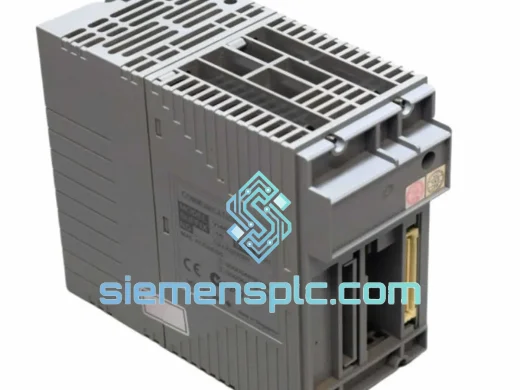
| Form Factor | Single-slot rack-mount module (CENTUM VP FCS chassis) |
| Approx. Weight | 0.2 kg |
| EMC Compliance | Designed to IEC 61000 series; CE-marked system |
| Functional Safety | Compatible with CENTUM VP SIL-capable FCS configurations |
| Warranty | 12 months from date of shipment |
Hardware Logical Analysis
The SCP401-11’s hardware architecture reflects YOKOGAWA’s design philosophy of determinism-first control: every subsystem is subordinated to the requirement that the scan cycle completes within its configured period, regardless of communication load or diagnostic activity.
The processor’s onboard memory is partitioned into separate regions for application program storage, real-time data tables, and communication buffers. This partitioning prevents I/O data acquisition — which must complete within each scan cycle — from being delayed by upstream communication traffic to the HIS or ENG stations. The backplane interface logic operates as a dedicated co-processor, handling I/O module polling independently of the main CPU execution thread.
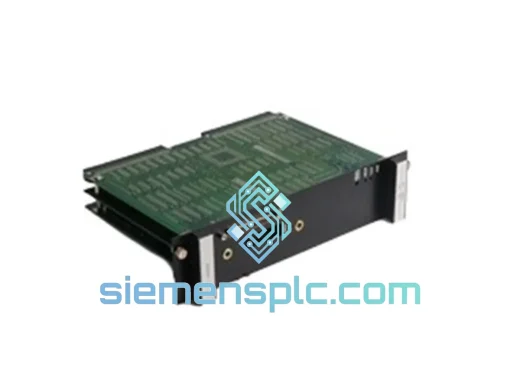
EMC hardening is implemented at multiple levels. The PCB stack uses dedicated ground planes between signal layers to suppress crosstalk from adjacent high-frequency switching circuits. Backplane connector pins carrying analog reference signals are shielded from digital bus lines. The module’s front-panel connector interface includes transient voltage suppression (TVS) diodes on all external signal paths, protecting against electrostatic discharge events during hot-swap maintenance procedures.
The redundancy arbitration logic is implemented in dedicated hardware rather than firmware, which eliminates the possibility of a software fault preventing a failover event. The active module continuously transmits a heartbeat signal to the standby module via a dedicated inter-module link. If the standby module detects a heartbeat interruption exceeding a configurable threshold (typically 1–3 scan cycles), it assumes control autonomously without requiring intervention from the supervisory system. This hardware-level arbitration is a key differentiator from software-managed redundancy schemes used in lower-tier PLCs.
Thermal management is handled through the FCS rack’s forced-air cooling system, with the SCP401-11 designed to operate within its thermal envelope at the maximum rated ambient temperature of 55°C. The module includes an onboard thermal sensor that reports temperature status to the CENTUM VP diagnostic system, enabling predictive maintenance alerts before thermal stress affects processor reliability.
System Integration Benefits
- Zero-interruption redundancy: Hardware-arbitrated failover between paired SCP401-11 modules completes within milliseconds, maintaining loop integrity without process upset or operator intervention.
- Deterministic scan-cycle execution: Dedicated I/O co-processor logic ensures field data acquisition completes within each configured scan period, independent of upstream communication load.
- Transparent diagnostic visibility: Module health status, thermal readings, communication error counters, and redundancy state are all reported to the CENTUM VP HIS in real time, enabling condition-based maintenance scheduling.
- Online configuration updates: CENTUM VP supports online download of tuning parameters and control logic modifications to the active SCP401-11 without requiring a process shutdown or scan-cycle interruption.
- Scalable I/O capacity: The SCP401-11 manages communication with all I/O modules installed in the FCS chassis, supporting mixed analog and digital I/O configurations across AAI, ADV, ADI, and AAB module families.
- SIL-capable system compatibility: When deployed in CENTUM VP FCS configurations certified for functional safety, the SCP401-11 participates in the safety-rated control architecture, supporting SIL 2 loop execution where the overall system is so certified.
- Vnet/IP network integration: The module interfaces with YOKOGAWA’s Vnet/IP Ethernet-based control network, enabling high-speed data exchange between multiple FCS nodes and the supervisory layer with deterministic latency characteristics.
- Long-term platform continuity: CENTUM VP is YOKOGAWA’s current-generation DCS platform with an active product lifecycle, ensuring continued firmware support, spare parts availability, and engineering tool compatibility for the SCP401-11 over extended plant operating horizons.
- Hot-swap maintenance support: The SCP401-11 is designed for replacement under power in redundant FCS configurations, allowing maintenance teams to swap a failed module without taking the FCS node offline or interrupting process control.
Quality Assurance & Global Logistics
Every SCP401-11 unit supplied by siemensplc.com is sourced through verified channels and subjected to a structured pre-shipment inspection protocol. Physical inspection covers PCB condition, connector pin integrity, label authenticity, and counterfeit indicators including font consistency, hologram verification, and date code cross-referencing against manufacturer production records. Units that do not pass inspection are quarantined and not listed for sale.
Packaging follows ESD-safe handling standards: each module is placed in an anti-static bag, cushioned with conductive foam, and enclosed in a rigid outer carton rated for international air freight. For temperature-sensitive shipments or long-haul ocean freight, additional desiccant packs and humidity indicators are included.
Shipments originate from Xiamen, China — a major logistics hub with direct access to DHL Express, FedEx International Priority, and UPS Worldwide Express services. Standard transit times to major industrial centers: Europe 3–5 business days, North America 4–6 business days, Southeast Asia 2–3 business days, Middle East 4–5 business days. All shipments include full export documentation: commercial invoice, packing list, certificate of origin, and — where required — CITES or dual-use export compliance documentation.
A 12-month warranty covers all units against defects in materials and workmanship from the date of shipment. Warranty claims are processed with a target response time of 48 hours. Replacement units are dispatched before the defective unit is returned, minimizing plant downtime for customers with critical spare requirements.
Contact Information
Email: [email protected]
WhatsApp: +86 18359268345
Web: siemensplc.com
Location: Xiamen, China
© 2026 siemensplc.com. All rights reserved.
Ready to quote
[email protected]
Send This Part Number to Sales
RFQ workflow
Quality workflow ->
Confirmation Process
01Model confirmation
We check the full part number, brand, series and visible nameplate information before quotation.
02Availability reply
Sales confirms stock path, condition option, quantity and realistic lead time for export dispatch.
03Packing & courier
DHL, FedEx, UPS or buyer courier arrangements can be reviewed with packing requirements.
Continue sourcing
Browse full catalog ->
Related Automation Parts
Similar brand or category products for fast comparison and multi-item RFQ lists.