Yokogawa
In Stock OK
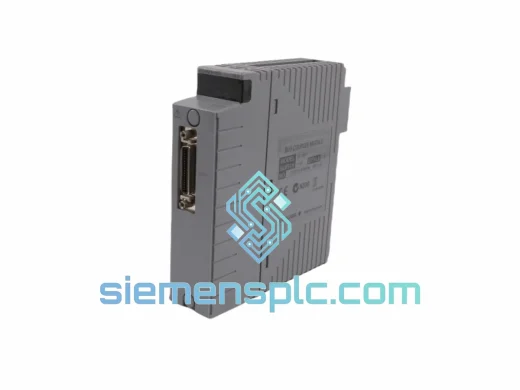
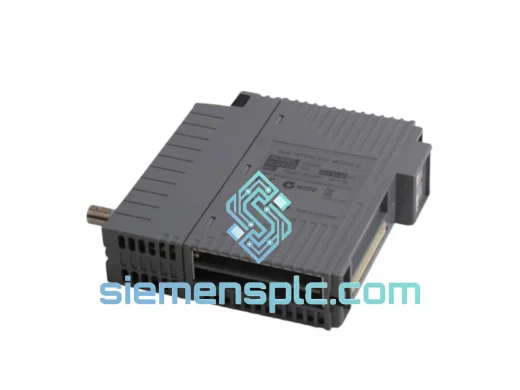
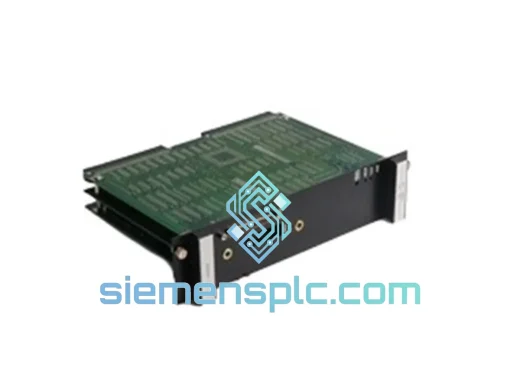
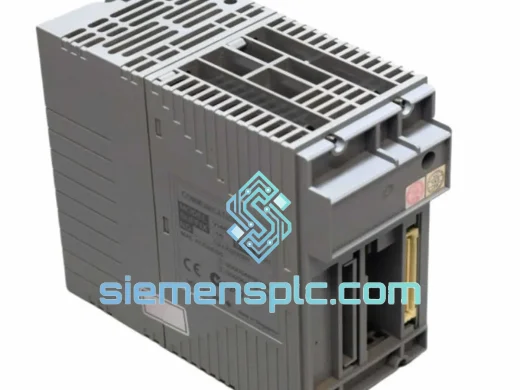
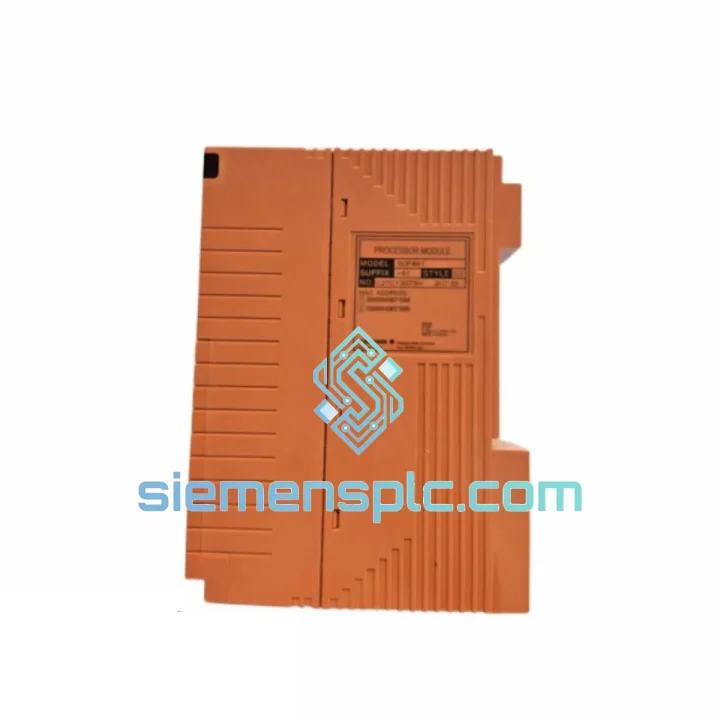
YOKOGAWA SCP461-51 S2 DCS Processor Module – CENTUM VP
Request verified availability, condition, replacement risk review, packing options and courier lead time for SCP461-51.
BrandYokogawa
Part NumberSCP461-51
ConditionAvailability Check
Lead TimeRFQ Confirmation
DocumentsDatasheet / photos by RFQ
ShippingExport packing available
Auto-filled RFQ
SCP461-51
Click Request Quote and the part number is inserted into the inquiry form automatically.
- Reply by email: [email protected]
- WhatsApp / Tel: +86 18359268345
- Mon-Sat 9:00-18:00 GMT+8
Procurement Data
Key Product Information
Core fields for model confirmation and RFQ routing. Detailed product narrative remains below.
- Brand
- Yokogawa
- Primary Part Number
- SCP461-51
- Product Type
- DCS Processor Module
- Series / Family
- CENTUM VP
- Manufacturer
- YOKOGAWA Electric Corporation
- Country of Origin
- JP
- Catalog Category
- DCS & Safety Modules
- Operating Temp.
- 0°C to +55°C
- Warranty
- 12 months against manufacturing defects; DOA replacement within 7 business days
Model confirmed for inquiry
SCP461-51
Send quantity, destination and urgency. The RFQ form keeps this part number attached.
Request Quote
Product Overview
YOKOGAWA SCP461-51 S2 — FCS Processor Module: Core Execution Engine of the CENTUM VP / CS 3000 Control Loop
The SCP461-51 S2 is the central processing unit of YOKOGAWA’s Field Control Station (FCS) architecture, deployed within CENTUM VP and CENTUM CS 3000 Distributed Control System platforms. Its role in the control loop is not peripheral — it is the deterministic execution core that translates field-level process variables into precise output commands, sustains real-time PID and sequence logic, and arbitrates redundancy state across the entire FCS chassis. In continuous process industries where scan-cycle jitter of even a few milliseconds can destabilize a control loop, the SCP461-51 S2 provides the timing discipline and computational headroom that mission-critical automation demands.
The S2 hardware revision introduces expanded on-board memory and an enhanced Vnet/IP protocol stack compared to the original S1 release, enabling higher function block counts per FCS and improved throughput on Gigabit Ethernet plant networks. For maintenance engineers managing brownfield CENTUM CS 3000 installations or executing phased migrations to CENTUM VP R6.xx, the SCP461-51 S2 is the validated drop-in replacement that preserves chassis compatibility while delivering second-generation processing performance.
📩 Real-time Stock & RFQ: [email protected] | WhatsApp: +86 18359268345
Technical Parameters
| Manufacturer | YOKOGAWA Electric Corporation |
| Part Number | SCP461-51 S2 |
| Module Category | FCS Processor Module (DCS) |
| Compatible Platforms | CENTUM VP (R4.xx–R6.xx), CENTUM CS 3000 (R3.xx) |
| Processor Architecture | Dual-core RISC, hot-standby redundancy capable |
| Control Scan Cycle | Configurable: 0.1 s / 0.2 s / 0.5 s / 1.0 s (application-dependent) |
| Function Block Capacity | Up to 2,500 function blocks per FCS (S2 revision) |
| Plant Network Interface | Vnet/IP (100/1000 Mbps Ethernet, dual-port) |
| Station Bus | ESB (Extended Station Bus) — connects to I/O node modules |
| Redundancy Mode | Hot-standby; switchover <100 ms, bumpless transfer |
| Power Input | 24 VDC via FCS chassis backplane |
| Power Consumption | ≤ 15 W (typical operating load) |
| Operating Temperature | 0°C to +55°C |
| Storage Temperature | -20°C to +70°C |
| Relative Humidity | 5% to 95% RH, non-condensing |
| EMC Compliance | IEC 61000-4 series (ESD, EFT, surge, conducted/radiated immunity) |
| Safety Certifications | CE, UL (per YOKOGAWA platform certification) |
| Form Factor | Single-slot FCS chassis module (KFCS / SFCS / LFCS compatible) |
| Firmware Revision | S2 (second-generation hardware and firmware) |
| Country of Origin | Japan |
| Warranty | 12 months against manufacturing defects; DOA replacement within 7 business days |
Hardware Logical Analysis
Backplane Bus Architecture and Scan-Cycle Determinism
The SCP461-51 S2 interfaces with I/O sub-modules via the ESB (Extended Station Bus), a time-division multiplexed bus that allocates fixed communication slots to each I/O node. This architecture eliminates bus contention — a fundamental requirement for deterministic scan-cycle execution. The processor’s internal scheduler enforces a hard real-time execution model: function block logic is computed within a bounded time window, and the ESB transaction completes before the next scan epoch begins. The result is scan-cycle jitter measured in microseconds, not milliseconds — a critical distinction for fast-loop applications such as compressor surge control or reactor temperature regulation.
EMC Design and Electrical Isolation
Industrial DCS environments expose processor modules to conducted interference from variable-frequency drives, high-current motor starters, and ground-loop differentials across large plant footprints. The SCP461-51 S2 addresses this through multi-layer PCB ground plane segmentation, which isolates the digital logic domain from the backplane power domain. Decoupling capacitors are placed at the die level on critical clock and data lines. The Vnet/IP physical layer uses transformer-coupled Ethernet interfaces, providing galvanic isolation between the processor’s internal logic and the plant network cabling — suppressing common-mode noise that would otherwise corrupt high-speed data frames.
Hot-Standby Redundancy Arbitration Logic
In a dual-redundant FCS configuration, two SCP461-51 S2 modules operate in a primary/standby relationship. The active module continuously transmits its execution state — including function block outputs, PID integral terms, and sequence step pointers — to the standby module via a dedicated redundancy synchronization bus. The arbitration logic monitors heartbeat signals at a sub-scan-cycle interval. Upon detection of a primary module fault (watchdog timeout, memory parity error, or Vnet/IP link failure), the standby module assumes control within one scan cycle, with bumpless transfer ensured by the pre-synchronized output state. This architecture meets IEC 61511 requirements for high-availability process control without requiring a safety-rated SIL layer for availability purposes.
Memory Architecture and Firmware Integrity
The S2 revision expands on-board SRAM for function block data storage and introduces ECC (Error-Correcting Code) memory protection on the control database. Single-bit memory errors are corrected transparently; double-bit errors trigger a controlled module fault and redundancy switchover rather than silent data corruption. Firmware is stored in flash memory with CRC verification at boot — any firmware image mismatch between primary and standby modules is flagged as a diagnostic alarm before the discrepancy can affect control execution.
System Integration Benefits
- Deterministic Real-Time Response: Fixed ESB time-slot allocation and hard real-time OS scheduling deliver scan-cycle consistency below ±500 µs jitter, enabling stable PID tuning for fast-response loops including flow, pressure, and compressor surge control.
- Bumpless Redundancy Switchover: State synchronization at sub-scan-cycle frequency ensures that a primary-to-standby transition produces zero step-change in control output — critical for continuous processes where output bumps cause product quality deviations or equipment stress.
- Transparent Diagnostic Visibility: On-board self-diagnostics publish module health data (CPU load, memory utilization, ESB error counts, Vnet/IP link quality) to the CENTUM VP HIS in real time, enabling predictive maintenance without physical module inspection.
- Vnet/IP Scalability: Dual-port Gigabit Ethernet connectivity supports ring topology plant networks with up to 16 FCS nodes per domain, allowing large-scale process units to share a single network infrastructure without bandwidth contention.
- Backward Compatibility with CS 3000: The SCP461-51 S2 installs directly into existing KFCS, SFCS, and LFCS chassis without hardware modification, protecting capital investment in installed I/O wiring, marshalling cabinets, and engineering databases during phased CENTUM VP migrations.
- High Function Block Density: Support for up to 2,500 function blocks per FCS reduces the number of FCS nodes required for complex process units, lowering cabinet count, network node licensing costs, and overall system footprint.
- ECC Memory Protection: Hardware-level error correction on the control database prevents silent data corruption from cosmic-ray-induced single-event upsets — a documented failure mode in long-running industrial processors operating in high-altitude or high-radiation environments.
- Integrated Sequence and Continuous Control: The SCP461-51 S2 executes both continuous function block logic (PID, arithmetic, signal conditioning) and sequential function chart (SFC) logic within the same scan cycle, eliminating the latency penalty of inter-controller communication in hybrid batch/continuous processes.
- Alarm and Event Timestamping: Process alarms and state changes are timestamped at the FCS level with millisecond resolution, synchronized to the plant-wide time reference via Vnet/IP — enabling accurate sequence-of-events (SOE) reconstruction for incident investigation without relying on HIS-level timestamps.
- Long-Term Parts Availability: YOKOGAWA’s documented 10-year spare parts availability commitment for CENTUM VP components supports lifecycle planning for brownfield installations, reducing the risk of obsolescence-driven emergency procurement.
Quality Assurance & Global Logistics
Every SCP461-51 S2 unit offered through siemensplc.com is sourced from verified supply channels — including authorized YOKOGAWA distributors, certified MRO surplus networks, and decommissioned plant overhauls with documented service histories. Each module undergoes a structured pre-shipment inspection protocol:
- Visual Inspection: PCB surface examination for corrosion, component damage, and connector pin integrity; firmware revision label verification against declared S2 specification.
- Power-On Functional Test: Module energized in a compatible FCS chassis; boot sequence, self-diagnostic pass/fail status, and Vnet/IP link establishment confirmed.
- Communication Handshake Verification: ESB bus communication with a reference I/O node verified to confirm backplane interface integrity.
- Serial Number Documentation: Unit serial number and firmware revision recorded; test records available upon request for critical-path procurement and quality audits.
- ESD-Safe Packaging: Modules packed in anti-static bags, foam-lined cartons, and moisture-barrier outer packaging — compliant with IEC 61340-5-1 ESD protection requirements for sensitive electronic assemblies.
Shipments originate from our warehouse in Xiamen, China, with dispatch via DHL Express or FedEx International Priority. Standard in-stock lead time is 2–3 business days from order confirmation. Commercial invoices, packing lists, and HS code documentation are prepared for customs clearance in all major import markets. Export compliance screening (EAR/ECCN classification) is completed prior to international shipments. A 12-month warranty covers manufacturing defects; DOA units are replaced within 7 business days of confirmed receipt.
Contact Information
Email: [email protected]
WhatsApp: +86 18359268345
Web: siemensplc.com
Location: Xiamen, China
© 2026 siemensplc.com. All rights reserved.
Ready to quote
[email protected]
Send This Part Number to Sales
RFQ workflow
Quality workflow ->
Confirmation Process
01Model confirmation
We check the full part number, brand, series and visible nameplate information before quotation.
02Availability reply
Sales confirms stock path, condition option, quantity and realistic lead time for export dispatch.
03Packing & courier
DHL, FedEx, UPS or buyer courier arrangements can be reviewed with packing requirements.
Continue sourcing
Browse full catalog ->
Related Automation Parts
Similar brand or category products for fast comparison and multi-item RFQ lists.