Yokogawa
In Stock OK
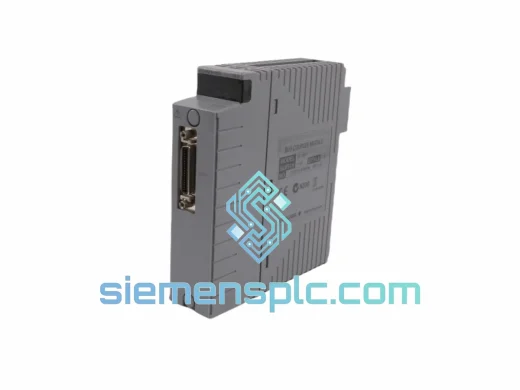
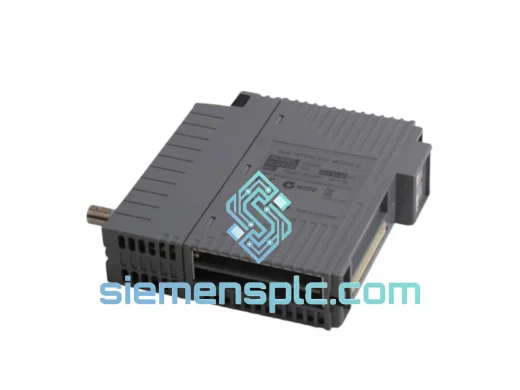
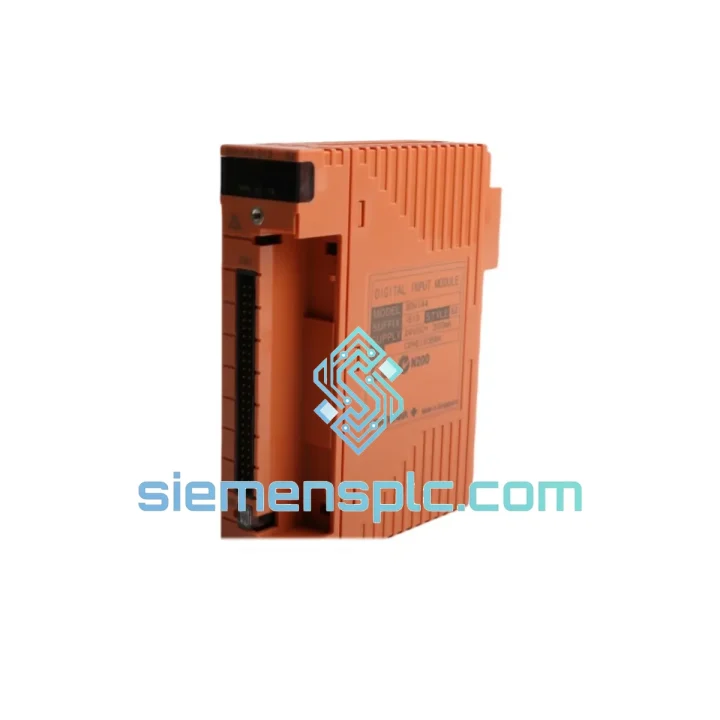
Yokogawa SDV144-S13 S1 DCS Module – CENTUM VP Series
Request verified availability, condition, replacement risk review, packing options and courier lead time for SDV144-S13.
BrandYokogawa
Part NumberSDV144-S13
ConditionAvailability Check
Lead TimeRFQ Confirmation
DocumentsDatasheet / photos by RFQ
ShippingExport packing available
Auto-filled RFQ
SDV144-S13
Click Request Quote and the part number is inserted into the inquiry form automatically.
- Reply by email: [email protected]
- WhatsApp / Tel: +86 18359268345
- Mon-Sat 9:00-18:00 GMT+8
Procurement Data
Key Product Information
Core fields for model confirmation and RFQ routing. Detailed product narrative remains below.
- Brand
- Yokogawa
- Primary Part Number
- SDV144-S13
- Product Type
- DCS Signal Distribution Module
- Series / Family
- CENTUM VP
- Manufacturer
- Yokogawa Electric Corporation
- Country of Origin
- JP
- Catalog Category
- DCS & Safety Modules
- Operating Temp.
- 0°C to +55°C
- Warranty
- 12 months from date of shipment
Model confirmed for inquiry
SDV144-S13
Send quantity, destination and urgency. The RFQ form keeps this part number attached.
Request Quote
Product Overview
Yokogawa SDV144-S13 S1 — Signal Distribution Module in CENTUM VP Distributed Control Architecture
The SDV144-S13 S1 is a signal distribution and conditioning module manufactured by Yokogawa Electric Corporation, designed for deployment within the CENTUM VP and CS 3000 distributed control system (DCS) platforms. Its primary function is to serve as the physical and electrical interface layer between field instrumentation and the field control station (FCS) processor, managing signal routing, isolation, and distribution across multi-loop process control environments. In large-scale continuous process plants — refineries, ethylene crackers, LNG terminals, and combined-cycle power stations — the SDV144-S13 S1 occupies a structurally critical position: it determines the fidelity and integrity of every analog and discrete signal entering the control loop before the FCS executes its scan cycle.
Unlike generic marshalling panels, the SDV144-S13 S1 is engineered to Yokogawa’s internal bus timing specifications, ensuring that signal latency introduced at the distribution layer does not degrade the deterministic scan performance of the AFV10D or AFV30D field control station. This is not a passive terminal block substitute — it is an active distribution component with defined electrical characteristics that must be matched to the nest backplane’s power budget and the Vnet/IP segment’s node count.
Real-time Stock & RFQ: [email protected] | WhatsApp: +86 18359268345
Technical Parameters
| Part Number | SDV144-S13 S1 |
| Manufacturer | Yokogawa Electric Corporation |
| Compatible Platform | CENTUM VP / CS 3000 |
| Module Classification | Signal Distribution / Marshalling Module |
| Channel Count | Up to 144 signal paths (per nest configuration) |
| Signal Types Supported | Analog (4–20 mA), Digital (24 VDC discrete), HART pass-through |
| Isolation Architecture | Channel-to-channel optical isolation; field-to-bus galvanic separation |
| Backplane Interface | ESB (Extended Station Bus) / Vnet/IP segment node |
| Supply Voltage | 24 VDC via nest backplane (PW481/PW482 redundant PSU) |
| Power Consumption | ≤ 8 W per module slot (typical) |
| Operating Temperature | 0°C to +55°C |
| Storage Temperature | −25°C to +70°C |
| Relative Humidity | 5% to 95% RH, non-condensing |
| EMC Compliance | IEC 61000-4-2 (ESD), IEC 61000-4-4 (EFT/Burst), IEC 61000-4-5 (Surge) |
| Safety Certifications | CE, UL 508, RoHS 2011/65/EU |
| Functional Safety | IEC 61511 compliant configurations available |
| Form Factor | CENTUM VP nest-mount, single-slot |
| Weight | Approx. 0.45 kg (module only) |
| Warranty | 12 months from date of shipment |
Hardware Logical Analysis
The SDV144-S13 S1 implements a layered signal conditioning architecture that addresses three distinct engineering challenges common to large DCS installations: ground loop interference, common-mode noise rejection, and signal fan-out without impedance mismatch.
Optical Isolation Mechanism: Each signal channel passes through a dedicated optocoupler stage rated for a minimum 500 Vrms isolation barrier. This prevents ground potential differences between field junction boxes — which in large plants can reach 30–50 V due to soil resistivity gradients — from introducing offset errors into the 4–20 mA measurement chain. The isolation stage is implemented per-channel rather than per-group, which eliminates the cross-channel leakage current that occurs in shared-barrier designs when one channel’s field wiring develops a ground fault.
EMC Design: The PCB layout follows a three-layer ground plane strategy: a dedicated analog ground plane, a digital return plane, and a chassis earth plane, each connected at a single star point to prevent circulating currents. Ferrite bead arrays on all field-side signal entry points suppress high-frequency conducted interference in the 1–100 MHz band, which is particularly relevant in plants where variable-frequency drives (VFDs) operate in proximity to instrument cable trays. The module’s metal housing provides a Faraday cage effect with a shielding effectiveness of approximately 40 dB at 100 MHz.
Backplane Bus Arbitration: Communication with the FCS processor occurs over the ESB backplane at a fixed arbitration priority assigned during nest configuration. The SDV144-S13 S1 does not participate in Vnet/IP token-passing directly; instead, it presents its data to the FCS via the local ESB segment, which the FCS then aggregates and transmits upstream. This architecture decouples field-side signal acquisition timing from network-side communication jitter, preserving scan cycle determinism even when Vnet/IP segment utilization is high.
HART Pass-Through: The S13 suffix designates a variant with HART protocol pass-through capability on analog channels. The 1200 baud FSK HART signal (±0.5 mA superimposed on the 4–20 mA loop) is extracted via a passive filter network and routed to the HART multiplexer interface, allowing the CENTUM VP HIS workstation to perform device configuration and diagnostics without interrupting the primary process measurement. This is implemented without active signal injection, preserving loop impedance within the HART specification of 230–600 Ω.
System Integration Benefits
- Deterministic Scan Cycle Preservation: By handling signal distribution at the hardware layer, the SDV144-S13 S1 ensures that the FCS scan cycle — typically 100 ms to 1 s depending on loop configuration — is not burdened by signal conditioning overhead, maintaining loop execution timing within ±1 ms of the configured period.
- Reduced Field Wiring Complexity: The module’s 144-channel capacity consolidates what would otherwise require multiple marshalling cabinets into a single nest slot, reducing field cable termination count and the associated probability of wiring errors during commissioning.
- Redundancy-Ready Architecture: The SDV144-S13 S1 supports dual-module redundant configurations when paired with the appropriate nest type, providing automatic switchover in under 100 ms upon primary module failure — a requirement for SIL 2 process safety applications.
- Diagnostic Transparency: Module-level diagnostics are surfaced through the CENTUM VP HIS as structured alarm messages, including channel open-circuit detection, power supply undervoltage, and communication timeout events, enabling maintenance teams to isolate faults to the specific channel without loop tracing.
- HART Device Management Integration: Pass-through HART capability allows integration with Yokogawa’s PRM (Plant Resource Manager) for asset management, enabling predictive maintenance workflows based on device health parameters without additional field wiring.
- Long-Term Parts Availability: Yokogawa maintains a documented 10-year parts support commitment for CENTUM VP components, making the SDV144-S13 S1 a viable specification for greenfield projects with 20+ year operational horizons.
- Brownfield Upgrade Compatibility: The module is backward-compatible with CS 3000 nest hardware in most configurations, allowing phased migration from CS 3000 to CENTUM VP without full cabinet replacement — a significant capital cost reduction for plant modernization projects.
- Reduced MTTR: Hot-swap capability in redundant configurations, combined with module-level LED status indicators (power, communication, fault), reduces mean time to repair to under 15 minutes for trained maintenance personnel, compared to 2–4 hours for traditional marshalling panel fault isolation.
Quality Assurance & Global Logistics
Every SDV144-S13 S1 unit dispatched from our Xiamen, China facility undergoes a structured pre-shipment verification protocol. Visual inspection covers PCB surface condition, connector pin integrity, housing seam alignment, and label authenticity — including verification of Yokogawa’s holographic security marking and revision code against the manufacturer’s published part number matrix. Firmware revision is confirmed where applicable. Units sourced through authorized distribution channels are accompanied by original Yokogawa packaging and documentation where available.
Functional verification includes backplane connector continuity testing and, where test fixtures are available, powered communication verification against a reference CENTUM VP nest. Each unit ships with a condition report documenting inspection findings and sourcing declaration.
Logistics: Standard dispatch from Xiamen is 3–5 business days for in-stock units. International shipment is handled via DHL Express, FedEx International Priority, or UPS Worldwide Expedited, with full export documentation including commercial invoice, packing list, and certificate of origin. Air freight transit times to major industrial hubs: Europe 3–5 days, North America 4–6 days, Middle East 2–4 days, Southeast Asia 1–3 days. For time-critical plant shutdowns, same-day dispatch is available on confirmed in-stock units when orders are placed before 14:00 CST.
All shipments are insured at declared value. Customs HS code documentation is prepared in accordance with the destination country’s import classification requirements to minimize clearance delays.
Contact Information
Email: [email protected]
WhatsApp: +86 18359268345
Web: siemensplc.com
Location: Xiamen, China
© 2026 siemensplc.com. All rights reserved.
Ready to quote
[email protected]
Send This Part Number to Sales
RFQ workflow
Quality workflow ->
Confirmation Process
01Model confirmation
We check the full part number, brand, series and visible nameplate information before quotation.
02Availability reply
Sales confirms stock path, condition option, quantity and realistic lead time for export dispatch.
03Packing & courier
DHL, FedEx, UPS or buyer courier arrangements can be reviewed with packing requirements.
Continue sourcing
Browse full catalog ->
Related Automation Parts
Similar brand or category products for fast comparison and multi-item RFQ lists.