Yokogawa
RFQ Ready
Yokogawa SAI143-H63/PRP S3 DCS Analog Input Module
CENTUM VP
Origin JP
DCS Analog Input Module
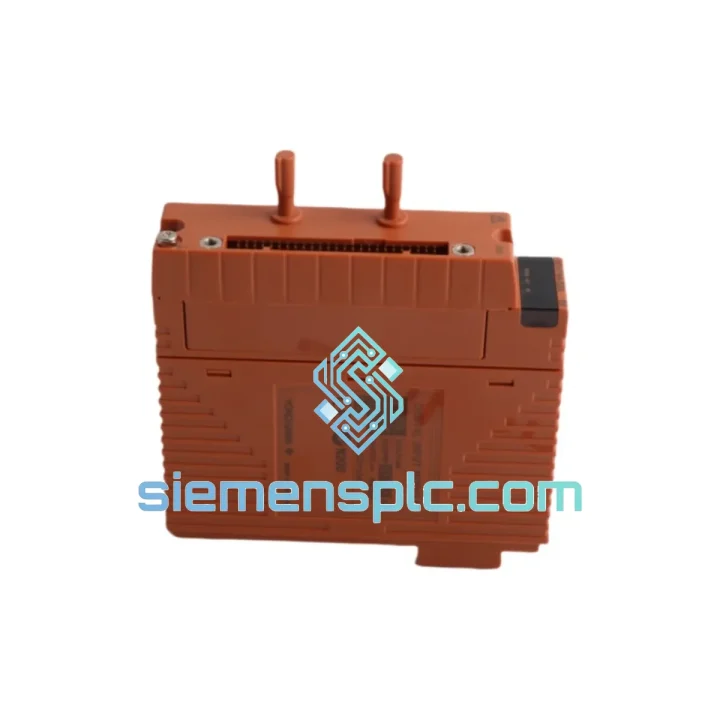
Request verified availability, condition, replacement risk review, packing options and courier lead time for SDV144-S33/PRP.
Click Request Quote and the part number is inserted into the inquiry form automatically.
Core fields for model confirmation and RFQ routing. Detailed product narrative remains below.
The Yokogawa SDV144-S33/PRP S4 is a 32-channel digital input (DI) module engineered for deployment within Yokogawa’s CENTUM VP and CENTUM CS 3000 distributed control systems. Its /PRP suffix designates a redundant power supply configuration, a hardware-level design choice that eliminates single-point power failure as a cause of I/O unavailability in safety-critical process loops. The S4 hardware revision reflects Yokogawa’s fourth-generation field I/O architecture, incorporating tighter EMC tolerance bands and improved optical isolation circuitry compared to earlier S3 and S2 revisions.
In a CENTUM VP Field Control Station (FCS), the SDV144-S33/PRP S4 occupies a standard I/O nest slot and communicates with the FCS processor via the V-net/ER internal bus. Each of the 32 channels independently acquires dry-contact or 24 VDC wet-contact discrete signals from field devices — limit switches, valve position feedback, motor run/stop status, and interlock relay outputs. The module’s channel-group optical isolation architecture prevents ground loops and transient voltage spikes originating in the field from propagating into the FCS backplane, a design requirement in environments where cable runs exceed 200 m or pass through electrically noisy cable trays.
Real-time Stock & RFQ: [email protected] | WhatsApp: +86 18359268345
| Parameter | Specification |
|---|---|
| Full Model Number | SDV144-S33/PRP S4 |
| Module Function | 32-Channel Digital Input (DI) |
| Input Signal Type | Dry contact / Wet contact 24 VDC |
| Input Voltage Range | 19.2 VDC – 28.8 VDC (wet contact) |
| ON State Threshold | ≥ 15 VDC |
| OFF State Threshold | ≤ 5 VDC |
| Input Current per Channel | Approx. 5 mA at 24 VDC |
| Isolation Method | Optical isolation, channel-group basis |
| Isolation Voltage | 500 VAC (field side to logic side) |
| Power Supply Configuration | Redundant (PRP — dual power feed) |
| Bus Interface | V-net/ER (CENTUM VP / CS 3000 internal bus) |
| Hardware Revision | S4 |
| Compatible DCS Platforms | CENTUM VP (R4.01+), CENTUM CS 3000 (R3.08+) |
| Operating Temperature | 0 °C to +55 °C |
| Storage Temperature | −25 °C to +70 °C |
| Relative Humidity | 10 % to 90 % RH, non-condensing |
| Mounting | FCS I/O nest (DIN-rail compatible nest) |
| Approximate Weight | 350 g |
| Certifications | CE, UL (system-level approval) |
| Country of Origin | Japan |
| Warranty | 12 months from date of shipment |
The SDV144-S33/PRP S4 implements a channel-group optical isolation topology rather than per-channel isolation. Channels are grouped in banks of eight, with each bank sharing a common optical barrier rated at 500 VAC between the field-side terminal block and the logic-side ASIC. This design balances isolation integrity against component density: 32 channels are served by four isolation banks, keeping the module’s physical footprint within a single nest slot while maintaining adequate protection against common-mode transients up to 500 V peak.
The /PRP redundant power architecture routes two independent 24 VDC supply feeds through an internal diode-OR circuit. Under normal conditions, both feeds are active and the module draws from whichever supply presents the higher voltage. If one supply fails, the diode-OR circuit transfers load to the surviving feed within microseconds — well below the FCS scan cycle period (typically 100 ms to 1 s depending on configuration). This means a power supply fault generates a diagnostic alarm in the FCS HMI without causing any channel data loss or control loop interruption.
The V-net/ER bus interface on the S4 revision uses a deterministic token-passing protocol. The FCS processor polls each I/O module in a fixed sequence, and the SDV144-S33/PRP S4 responds with a 32-bit status word representing all channel states plus a 4-bit module health code. This structure allows the FCS to detect module communication failure independently of channel-level faults, enabling the control application to execute a pre-programmed fallback strategy (e.g., hold last value, force safe state) without operator intervention.
EMC performance on the S4 revision meets IEC 61000-4-4 (electrical fast transient, 2 kV) and IEC 61000-4-5 (surge immunity, 1 kV line-to-line) at the module level. The PCB layout routes high-frequency digital signals on inner layers with ground-plane shielding, and all field-side connectors include transient voltage suppression (TVS) diodes to clamp inductive kickback from relay coils connected to the input terminals.
Every Yokogawa SDV144-S33/PRP S4 unit supplied by siemensplc.com is sourced through verified channels — authorized distributors, certified system integrators, and documented surplus inventory from decommissioned plant upgrades. Before dispatch, each module undergoes a structured pre-shipment inspection protocol: visual examination of the PCB and connector pins, label and serial number verification against Yokogawa’s part numbering convention, and a functional power-on check to confirm the module’s self-test LED sequence completes without fault codes.
Units are packed in anti-static ESD bags, placed in foam-lined cartons, and double-boxed for international freight. Shipments originate from our warehouse in Xiamen, China, with access to DHL Express, FedEx International Priority, and UPS Worldwide Expedited services. Standard transit times are 3–5 business days to Europe and North America, 2–3 business days to Southeast Asia, and 1–2 business days to Hong Kong, Taiwan, and South Korea. Export documentation — commercial invoice, packing list, and certificate of origin — is prepared in compliance with destination country customs requirements. HS code 8538.9000 applies to this module category.
A 12-month warranty covers manufacturing defects and DOA (Dead on Arrival) conditions from the date of shipment. Warranty claims are processed with a replacement-first policy: a replacement unit ships before the defective unit is returned, minimizing plant downtime. Technical documentation — including the Yokogawa SDV144 hardware manual, wiring diagrams, and FCS configuration guide — is available upon request at no charge.
Email: [email protected]
WhatsApp: +86 18359268345
Web: siemensplc.com
Location: Xiamen, China
© 2026 siemensplc.com. All rights reserved.
We check the full part number, brand, series and visible nameplate information before quotation.
Sales confirms stock path, condition option, quantity and realistic lead time for export dispatch.
DHL, FedEx, UPS or buyer courier arrangements can be reviewed with packing requirements.
Similar brand or category products for fast comparison and multi-item RFQ lists.