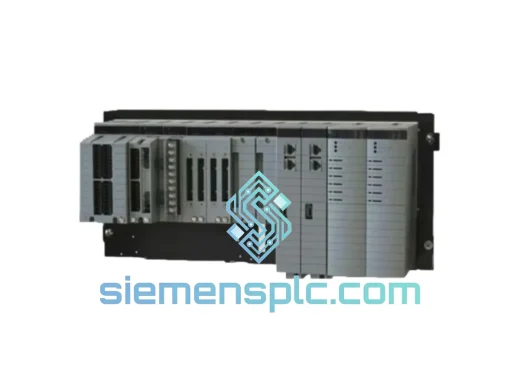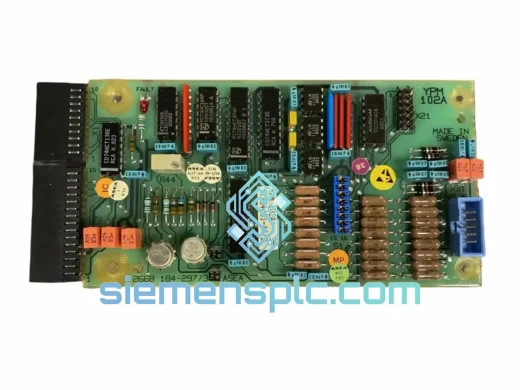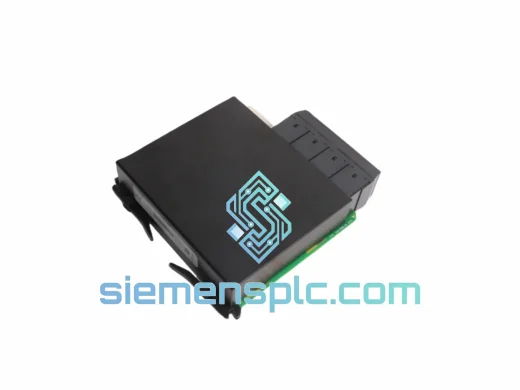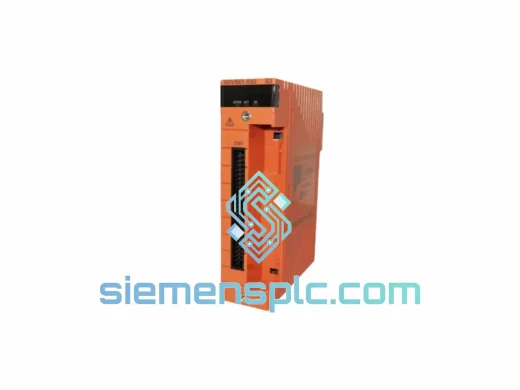
YOKOGAWA Electric Corporation
RFQ Ready
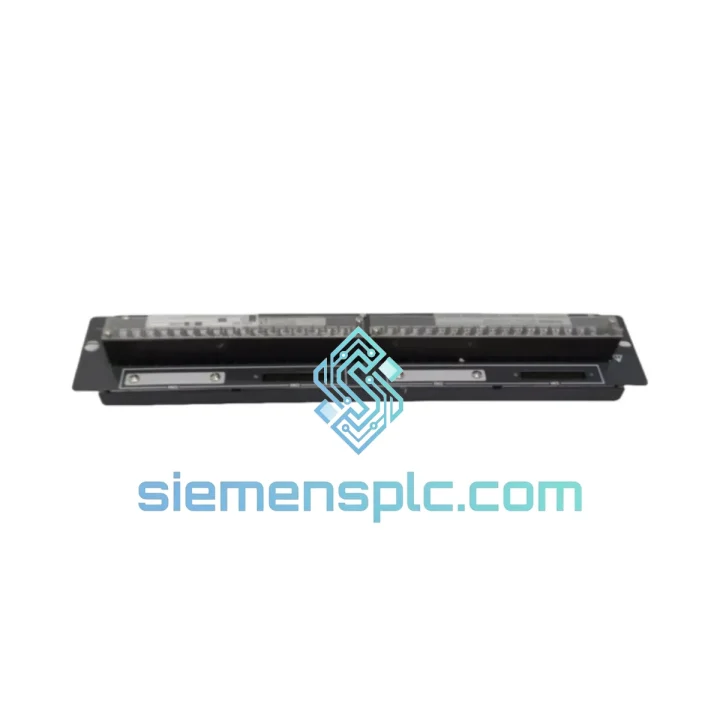
Yokogawa SDV541-S63/PRP S3 DCS Digital Output Module
CENTUM CS 3000
Origin JP
DCS I/O Module
Request verified availability, condition, replacement risk review, packing options and courier lead time for SEA4D.
Click Request Quote and the part number is inserted into the inquiry form automatically.
Core fields for model confirmation and RFQ routing. Detailed product narrative remains below.
In a distributed control system, the analog input card is where the physical world meets the control logic. Every milliamp deviation in a 4–20 mA loop, every microvolt of noise injected at the A/D stage, propagates directly into PID calculations, alarm thresholds, and historian records. The YOKOGAWA SEA4D is the analog input module deployed in CENTUM VP field control stations (FCS) to handle this conversion with the accuracy and channel isolation that continuous process industries demand. This is not a peripheral component — it is a load-bearing element of your control architecture.
The SEA4D occupies a slot in the CENTUM VP I/O nest (AMN-series), communicating upstream to the node unit (ANB-series) via the V-net/RIO internal bus. Its role is deterministic: sample field transmitter signals, digitize them with high-resolution A/D conversion, apply engineering unit scaling, and deliver tagged process values to the FCS CPU within the defined scan cycle. Any failure or degradation in this chain — whether from a failing module, a loose terminal, or firmware mismatch — manifests as erratic PV readings, spurious alarms, or complete loss of a control loop. Stocking a verified replacement SEA4D is standard practice in any plant with a CENTUM VP backbone.
URGENT REQUIREMENT? Real-time Stock & RFQ: [email protected] | WhatsApp: +86 18359268345
| Parameter | Specification |
|---|---|
| Part Number / SKU | SEA4D |
| Manufacturer | YOKOGAWA Electric Corporation |
| Series | CENTUM VP / CS 3000 (FCS I/O) |
| Module Function | Analog Input (AI) |
| Input Signal Range | 4–20 mA DC / 1–5 V DC (field-selectable per channel) |
| Number of Channels | 4 channels (isolated) |
| A/D Resolution | 16-bit |
| Isolation Type | Channel-to-channel and channel-to-bus photocoupler isolation |
| Input Impedance (mA mode) | ≤ 250 Ω (burden resistor integrated) |
| Accuracy | ±0.1% of full scale (at 25°C) |
| Temperature Coefficient | ±0.01% FS/°C |
| Operating Temperature | 0°C to +60°C |
| Storage Temperature | -20°C to +70°C |
| Humidity | 5% to 95% RH (non-condensing) |
| Bus Interface | V-net / RIO (CENTUM VP internal I/O bus) |
| Power Consumption | Supplied via I/O nest backplane |
| Weight | Approx. 1,000 g |
| Country of Origin | Japan |
| Warranty | 12 months from date of shipment |
| Stock Status | Ready to Ship |
The SEA4D’s internal architecture reflects YOKOGAWA’s design philosophy for process-critical I/O: determinism, isolation integrity, and long-term signal stability under industrial stress.
Photocoupler Isolation Architecture: Each of the four input channels is galvanically isolated from the module backplane bus and from adjacent channels via photocoupler barriers. This is not a shared-bus isolation scheme — each channel maintains its own isolation boundary. The practical consequence: a ground fault or high-voltage transient on one field loop cannot propagate to the RIO bus or corrupt readings on neighboring channels. In a refinery environment where field wiring runs hundreds of meters through cable trays shared with power conductors, this per-channel isolation is a fundamental protection mechanism, not a marketing feature.
16-Bit A/D Conversion: The module employs a 16-bit successive approximation or sigma-delta A/D converter (architecture varies by revision). At 16-bit resolution over a 4–20 mA span, the LSB represents approximately 0.24 µA — well below the noise floor of any standard 4–20 mA transmitter. This headroom ensures that the digitization step itself does not introduce quantization error into the control loop, preserving the full accuracy of the connected field instrument.
EMC Design: The PCB layout incorporates ground plane segmentation between the analog front-end and the digital bus interface section. Decoupling capacitors are placed at the power entry points of both sections. The module housing provides shielding continuity when seated in the AMN nest, contributing to the system-level EMC compliance of the CENTUM VP cabinet. This matters in environments with variable-frequency drives, large motor starters, or high-current bus bars in proximity to the control room.
Firmware-Driven Diagnostics: The SEA4D reports channel-level diagnostic status to the FCS CPU via the RIO bus. Open-circuit detection (signal below 3.6 mA), over-range, and under-range conditions generate module-level fault flags that appear in the CENTUM VP alarm management system without requiring external wiring or additional hardware. This embedded diagnostic layer reduces the mean time to detect (MTTD) for field instrument failures.
Burn-in and Thermal Stability: YOKOGAWA subjects production I/O modules to accelerated thermal cycling during manufacturing to screen for early-life component failures. The SEA4D’s analog front-end components — precision resistors, reference voltage sources, and op-amp stages — are selected for low temperature coefficient to maintain ±0.1% FS accuracy across the 0–60°C operating range without field recalibration.
Every SEA4D unit dispatched from our Xiamen facility is sourced from verified YOKOGAWA supply channels — authorized distributors, OEM surplus, or certified refurbishment programs. The following inspection protocol is applied before shipment:
Logistics from Xiamen, China to Global Destinations:
12-month warranty from shipment date. Warranty covers manufacturing defects and verified functional failures under normal operating conditions. DOA (Dead on Arrival) units are replaced or refunded within 5 business days of confirmed fault report.
Email: [email protected]
WhatsApp: +86 18359268345
Web: siemensplc.com
Location: Xiamen, China
© 2026 siemensplc.com. All rights reserved.
We check the full part number, brand, series and visible nameplate information before quotation.
Sales confirms stock path, condition option, quantity and realistic lead time for export dispatch.
DHL, FedEx, UPS or buyer courier arrangements can be reviewed with packing requirements.
Similar brand or category products for fast comparison and multi-item RFQ lists.