YOKOGAWA Electric Corporation
RFQ Ready
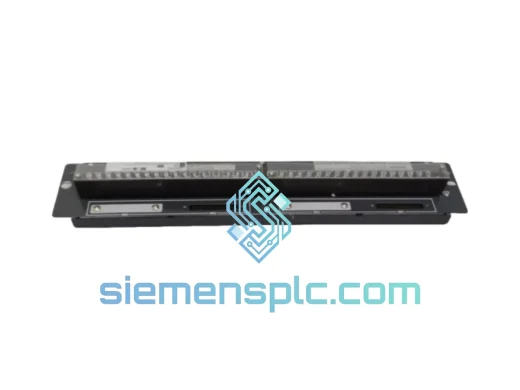
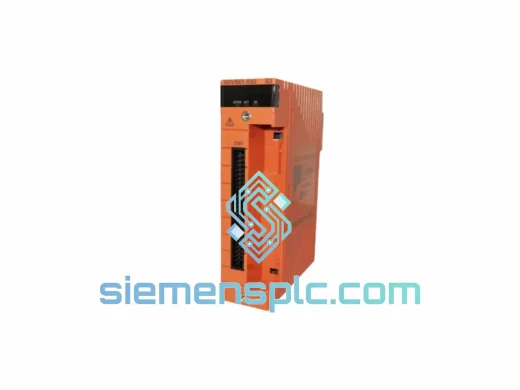
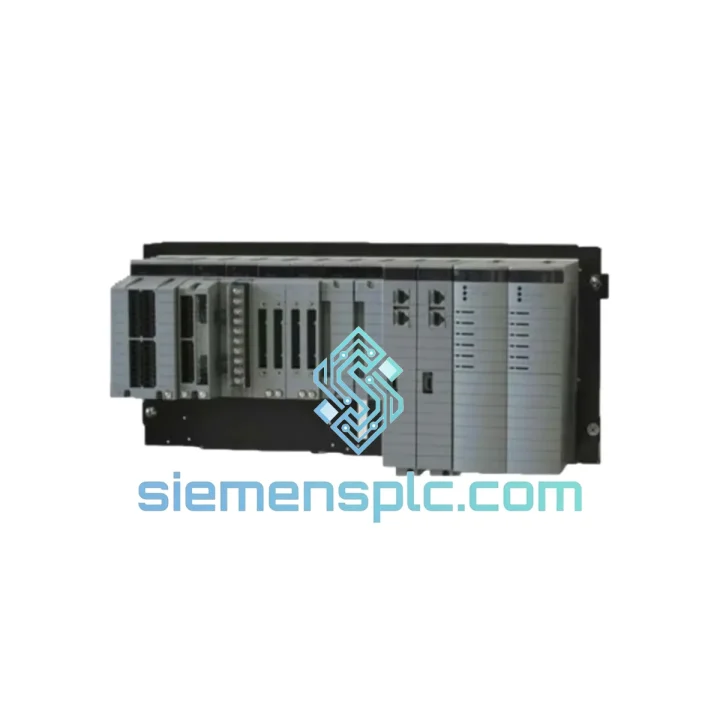
Yokogawa SDV541-S63/PRP S3 DCS Digital Output Module
CENTUM CS 3000
Origin JP
DCS I/O Module
Request verified availability, condition, replacement risk review, packing options and courier lead time for YCB149.
Click Request Quote and the part number is inserted into the inquiry form automatically.
Core fields for model confirmation and RFQ routing. Detailed product narrative remains below.
The YOKOGAWA YCB149 is a V-net converter connector module purpose-built for YOKOGAWA’s CENTUM distributed control system (DCS) platform. Within a CENTUM architecture, V-net (Vnet) functions as the primary high-speed, token-passing control bus that interconnects Human Interface Stations (HIS), Field Control Stations (FCS), and Engineering Workstations (EWS). The YCB149 occupies the physical node termination layer of this bus, converting V-net coaxial bus signals into the electrical interface required by downstream I/O modules and field control stations. Without a correctly specified converter connector at each node, bus impedance mismatches degrade signal integrity, introduce jitter into the token-passing cycle, and ultimately compromise the deterministic response that closed-loop process control demands.
This module is the correct procurement target for engineers maintaining or expanding CENTUM VP, CENTUM CS 3000, and legacy CENTUM CS installations in refinery, petrochemical, power generation, and pharmaceutical environments. It is a direct OEM-specification component — no firmware modification, address reconfiguration, or bus parameter adjustment is required upon installation.
Real-time Stock & RFQ: [email protected] | WhatsApp: +86 18359268345
| Parameter | Specification |
|---|---|
| Part Number / SKU | YCB149 |
| Manufacturer | YOKOGAWA Electric Corporation |
| Product Series | CENTUM DCS V-net Interface Series |
| Module Function | V-net Converter Connector (bus node termination and signal conversion) |
| Bus Protocol | V-net (Vnet) — YOKOGAWA proprietary token-passing control bus |
| Compatible Platforms | CENTUM VP, CENTUM CS 3000, CENTUM CS |
| Connector Interface | V-net coaxial / proprietary bus connector per YOKOGAWA bus specification |
| Bus Topology | Dual-redundant coaxial bus (Bus A / Bus B) |
| Operating Temperature | 0 °C to +55 °C |
| Storage Temperature | −20 °C to +60 °C |
| Relative Humidity | 5 % to 95 % RH, non-condensing |
| Module Weight | Approx. 50 g |
| Country of Origin | Japan |
| Compliance | CE, RoHS |
| Condition | New OEM / Refurbished available on request |
| Warranty | 12 months against manufacturing defects |
The V-net bus used in CENTUM DCS operates on a deterministic token-passing protocol over a dual-redundant coaxial medium. Each node on the bus — whether an FCS, HIS, or EWS — requires a converter connector that performs three distinct hardware functions: impedance matching to the bus characteristic impedance (typically 75 Ω for V-net coaxial segments), signal level conversion between the bus medium and the node’s internal logic interface, and physical bus termination at segment endpoints to suppress reflections.
The YCB149 integrates all three functions in a single compact housing. Its internal signal path uses passive and active components selected for low insertion loss across the V-net operating frequency band, ensuring that the token frame waveform arriving at the node retains sufficient amplitude margin for reliable detection by the FCS receiver circuitry. In dual-redundant bus configurations (Bus A and Bus B), the YCB149 is deployed per bus segment, with the CENTUM FCS controller managing automatic bus switchover in the event of a primary bus fault — a switchover that completes within one token cycle, transparent to the control application.
From an EMC standpoint, the coaxial bus medium itself provides inherent shielding against radiated interference. The YCB149’s connector body and cable termination maintain shield continuity at the node junction, preventing the shield discontinuity that would otherwise create a common-mode noise injection point. In plant environments with variable-frequency drives, high-current motor starters, and arc welding equipment operating in proximity to DCS cabinets, this shield continuity is a non-negotiable design requirement. The YCB149 meets this requirement through its OEM-specified connector geometry and grounding path, which are validated against YOKOGAWA’s internal EMC test protocols for CENTUM hardware.
The module’s operating temperature ceiling of +55 °C is consistent with IEC 61131-2 Class II environmental ratings, accommodating the thermal load typical of enclosed DCS marshalling cabinets with forced-air cooling. Storage down to −20 °C covers transportation and warehousing in cold-climate regions without risk of component parameter drift.
Every YOKOGAWA YCB149 unit dispatched from our Xiamen, China facility undergoes a structured pre-shipment verification process. Visual inspection confirms OEM label integrity, connector body condition, and the absence of physical damage or counterfeit markings. Functional verification checks bus connector continuity and shield grounding path resistance. Units are then packed in anti-static ESD bags with foam cushioning inside double-wall corrugated cartons, meeting ISTA 2A transport testing standards for fragile electronic components.
Export documentation provided with every shipment includes a commercial invoice, packing list, country of origin certificate (Japan), and HS code classification documentation to support customs clearance in the destination country. For sites requiring traceability records, a certificate of conformance and functional test report are available upon request at no additional charge.
Logistics options from Xiamen include DHL Express (2–4 business days to most destinations), FedEx International Priority, and sea freight consolidation for large-volume orders. Tracking numbers are issued within 24 hours of dispatch. For urgent plant maintenance requirements, same-day dispatch is available for in-stock units when orders are confirmed before 14:00 CST.
All units carry a 12-month warranty against manufacturing defects, with replacement dispatch within 5 business days of confirmed fault verification. Our technical team provides post-sale support for installation queries, compatibility confirmation, and CENTUM bus configuration guidance.
Email: [email protected]
WhatsApp: +86 18359268345
Web: siemensplc.com
Location: Xiamen, China
© 2026 siemensplc.com. All rights reserved.
We check the full part number, brand, series and visible nameplate information before quotation.
Sales confirms stock path, condition option, quantity and realistic lead time for export dispatch.
DHL, FedEx, UPS or buyer courier arrangements can be reviewed with packing requirements.
Similar brand or category products for fast comparison and multi-item RFQ lists.