Yokogawa
RFQ Ready
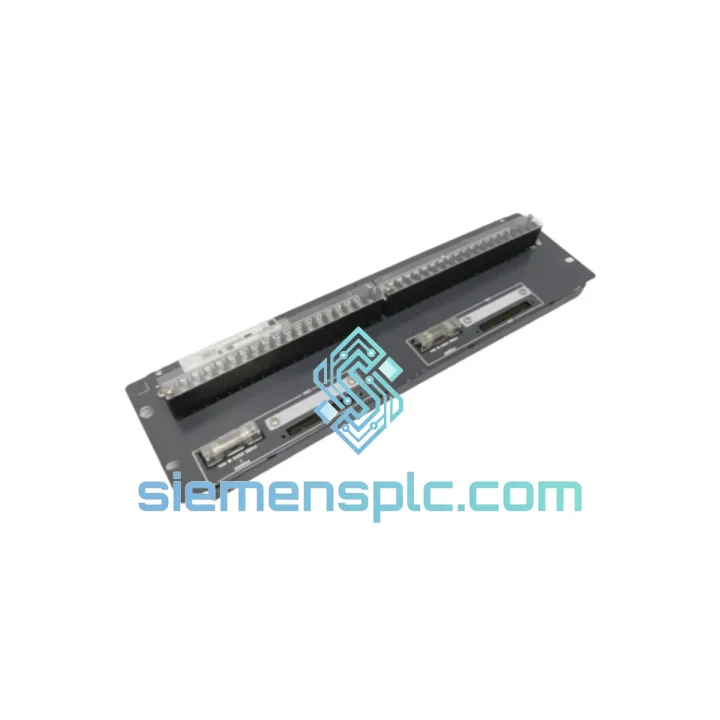
Yokogawa SAI143-H63/PRP S3 DCS Analog Input Module
CENTUM VP
Origin JP
DCS Analog Input Module
Request verified availability, condition, replacement risk review, packing options and courier lead time for SED4D.
Click Request Quote and the part number is inserted into the inquiry form automatically.
Core fields for model confirmation and RFQ routing. Detailed product narrative remains below.
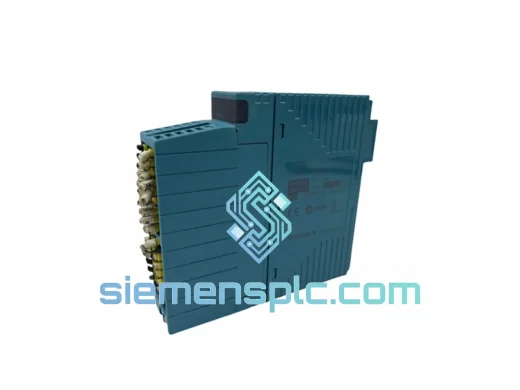
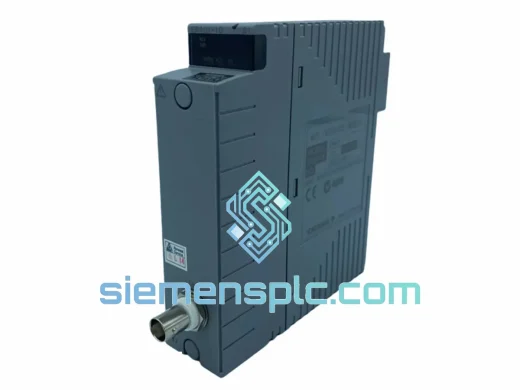
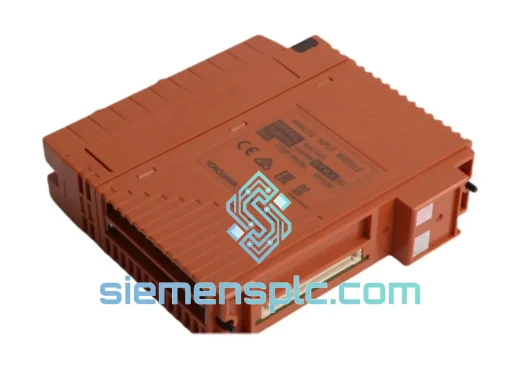
The YOKOGAWA SED4D is a 4-channel digital (discrete) output module engineered for deployment within YOKOGAWA’s CENTUM VP and CS 3000 Distributed Control System platforms. In a process control loop, the SED4D occupies the final output layer between the controller CPU and field actuators — translating logical command states from the DCS into discrete electrical switching signals that drive solenoid valves, motor contactors, relay coils, and interlock circuits. Its role is deterministic and latency-sensitive: output state transitions must be executed within the scan cycle of the node unit without jitter, and the module’s internal architecture is designed to meet that requirement under continuous industrial duty.
Unlike analog output modules that modulate a continuous signal, the SED4D operates in a binary domain. Each of its four channels independently asserts or de-asserts an output state based on the tag value written by the DCS controller. The module communicates with the node unit via the ESB (Expanded Serial Bus) backplane, a synchronous serial bus that YOKOGAWA designed specifically for deterministic I/O scan performance in CENTUM-series systems. The ESB protocol guarantees that all I/O modules within a node unit are polled within a fixed cycle, eliminating the variable latency that would otherwise compromise time-critical interlock and shutdown sequences.
The SED4D is a field-proven component with documented deployment across oil and gas upstream and downstream facilities, chemical batch reactors, power generation auxiliary systems, and pharmaceutical manufacturing lines. Its compact form factor, standardized backplane interface, and full integration with YOKOGAWA’s CENTUM VP engineering environment make it a low-risk, high-reliability choice for both greenfield installations and brownfield expansion projects.
📧 Real-time Stock & RFQ: [email protected] | WhatsApp: +86 18359268345
| Parameter | Specification |
|---|---|
| Model Number | SED4D |
| Manufacturer | YOKOGAWA Electric Corporation |
| Compatible Platform | CENTUM VP (R4.x – R6.x), CS 3000 |
| Module Function | Digital Output (Discrete DO) |
| Output Channels | 4 channels, independently controlled |
| Output Signal Type | Discrete ON/OFF (binary state) |
| Channel Isolation | Optical isolation, channel-to-channel and channel-to-backplane |
| Backplane Interface | ESB (Expanded Serial Bus), synchronous serial protocol |
| Power Source | DCS node unit backplane (no external power required) |
| Operating Temperature | 0°C to +55°C |
| Storage Temperature | -25°C to +70°C |
| Relative Humidity | 5% to 95% RH, non-condensing |
| Mounting Method | Node unit backplane slot (DIN rail via node unit) |
| Compatible Node Units | ANB10D, ANB11D, ANR10D series |
| Certifications | CE, UL (refer to YOKOGAWA official datasheet for full compliance) |
| Module Weight | Approx. 300 g (module only) |
| Origin | Japan |
| Warranty | 12 months from date of shipment |
The SED4D’s internal architecture reflects YOKOGAWA’s design philosophy of isolating field-side electrical environments from the DCS backplane logic at every signal boundary. Each of the four output channels is driven through an optocoupler stage that provides galvanic isolation between the ESB backplane domain and the field wiring terminals. This isolation barrier serves two functions: it prevents ground loop currents from field devices from propagating into the node unit’s signal ground, and it limits the fault propagation path so that a field-side short circuit or transient overvoltage event cannot damage the backplane bus or adjacent modules.
The module’s output driver stage is designed to handle inductive loads — a critical requirement when switching solenoid valves and relay coils, which generate back-EMF transients at the moment of de-energization. Internal transient suppression circuitry clamps these voltage spikes before they can exceed the isolation barrier’s rated withstand voltage, extending both the module’s service life and the reliability of connected field devices.
From an EMC perspective, the SED4D’s PCB layout follows YOKOGAWA’s standard practice of separating high-frequency digital logic planes from field-side analog and switching circuits with defined ground plane segmentation. This reduces conducted and radiated emissions from the switching output stage, which is particularly relevant in installations where the node unit is located in close proximity to variable-frequency drives, high-current motor starters, or other sources of electromagnetic interference. The module meets IEC 61000-series EMC immunity requirements applicable to industrial process control equipment.
The ESB backplane interface logic within the SED4D includes a local watchdog circuit that monitors communication continuity with the node unit controller. If the ESB polling cycle is interrupted beyond a configurable timeout threshold — due to a controller fault, bus error, or node unit power anomaly — the watchdog logic forces all four output channels to a defined fail-safe state. This behavior is configurable per channel in the CENTUM VP engineering environment, allowing the system designer to specify whether each channel should de-energize (fail-open) or hold its last state during a communication loss event, depending on the process safety requirements of the connected actuator.
Every YOKOGAWA SED4D unit supplied by siemensplc.com is sourced as genuine OEM hardware through verified supply channels. Prior to shipment, each module undergoes a structured pre-dispatch inspection protocol: visual examination of the PCB, connector pins, and housing for physical damage or evidence of prior field use; label and serial number verification against YOKOGAWA’s published part numbering conventions; and a functional continuity check of the backplane connector interface. Units that do not pass inspection are quarantined and not offered for sale.
Shipments originate from our warehouse in Xiamen, China — a major international logistics hub with direct access to DHL Express, FedEx International Priority, UPS Worldwide Express, and sea freight consolidation services. For urgent project requirements, air express delivery to most destinations in Southeast Asia, the Middle East, Europe, and the Americas is achievable within 3 to 7 business days from order confirmation. All export shipments are accompanied by a commercial invoice, packing list, and certificate of origin. For customers in regulated industries, we can provide a material traceability document upon request.
Anti-static packaging is standard for all SED4D shipments. Modules are individually bagged in ESD-protective poly, placed in foam-lined cartons, and outer-packed for international freight handling. For multi-unit orders, custom pallet configurations and freight insurance are available. Our logistics team coordinates customs documentation for import into the EU, GCC countries, India, and other markets with specific import compliance requirements.
All units are covered by a 12-month warranty from the date of shipment. Warranty claims are handled directly by our technical team in Xiamen, with replacement units dispatched within 5 business days of a confirmed defect report. We do not require customers to return defective units before dispatching replacements for verified warranty cases, minimizing production downtime for our clients.
📧 Email: [email protected]
💬 WhatsApp: +86 18359268345
🌐 Web: siemensplc.com
📍 Location: Xiamen, China
© 2026 siemensplc.com. All rights reserved.
We check the full part number, brand, series and visible nameplate information before quotation.
Sales confirms stock path, condition option, quantity and realistic lead time for export dispatch.
DHL, FedEx, UPS or buyer courier arrangements can be reviewed with packing requirements.
Similar brand or category products for fast comparison and multi-item RFQ lists.