Yokogawa
In Stock OK
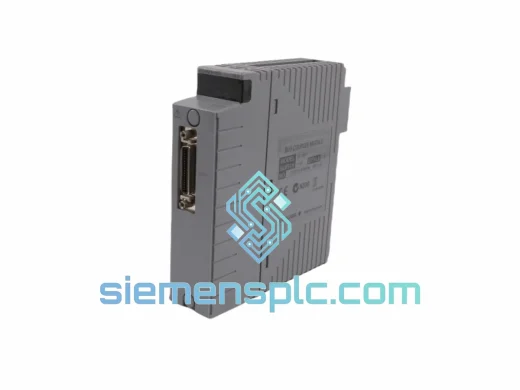
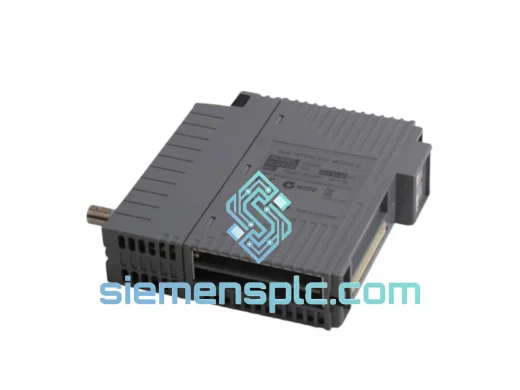
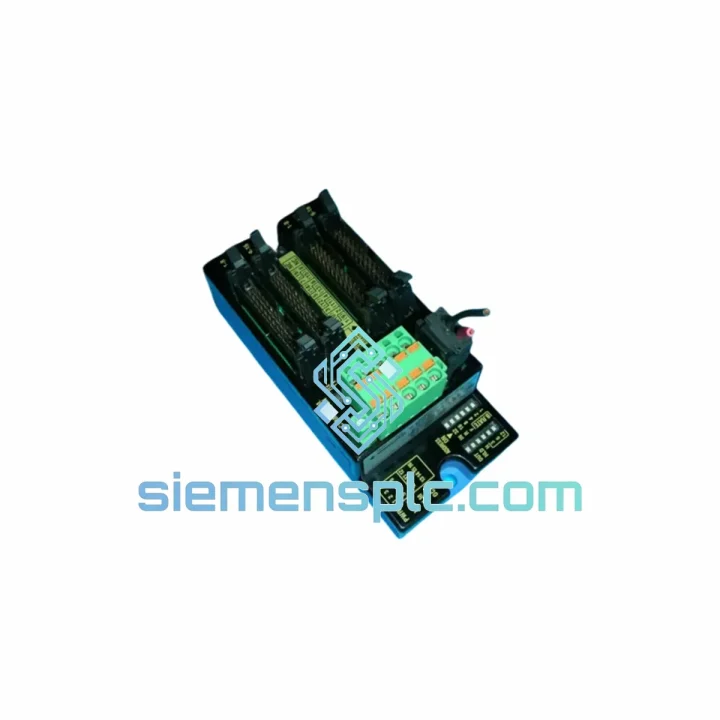
YOKOGAWA TAHWD32-3PAM DCS Module – CENTUM VP
Request verified availability, condition, replacement risk review, packing options and courier lead time for TAHWD32-3PAM.
BrandYokogawa
Part NumberTAHWD32-3PAM
ConditionAvailability Check
Lead TimeRFQ Confirmation
DocumentsDatasheet / photos by RFQ
ShippingExport packing available
Auto-filled RFQ
TAHWD32-3PAM
Click Request Quote and the part number is inserted into the inquiry form automatically.
- Reply by email: [email protected]
- WhatsApp / Tel: +86 18359268345
- Mon-Sat 9:00-18:00 GMT+8
Procurement Data
Key Product Information
Core fields for model confirmation and RFQ routing. Detailed product narrative remains below.
- Brand
- Yokogawa
- Primary Part Number
- TAHWD32-3PAM
- Product Type
- DCS Bus Master Module
- Series / Family
- CENTUM VP
- Country of Origin
- JP
- Catalog Category
- DCS & Safety Modules
- Operating Temp.
- 0 °C to +55 °C
- Warranty
- 12 months from dispatch date, covering manufacturing defects
Model confirmed for inquiry
TAHWD32-3PAM
Send quantity, destination and urgency. The RFQ form keeps this part number attached.
Request Quote
Product Overview
YOKOGAWA TAHWD32-3PAM HW Bus Master Module: Deterministic Bus Arbitration for CENTUM VP Distributed Control Systems
The TAHWD32-3PAM is the HW Bus Master controller within YOKOGAWA’s CENTUM VP Distributed Control System architecture. Its function is not peripheral — it is the arbitration backbone that governs token-passing sequencing, node polling intervals, and fault isolation across every I/O segment it supervises. In a CENTUM VP installation, the Field Control Station (FCS) delegates all physical-layer bus management to this module, freeing the FCS processor to execute control function blocks without bus-overhead interruption. Understanding this division of labor is essential for engineers sizing controller capacity in high-loop-count applications.
Real-time Stock & RFQ: [email protected] | WhatsApp: +86 18359268345
Technical Parameters
| Parameter | Specification |
|---|---|
| Part Number / SKU | TAHWD32-3PAM |
| Brand | YOKOGAWA Electric Corporation |
| Platform | CENTUM VP (not compatible with CENTUM CS 3000) |
| Module Function | HW Bus Master — token arbitration, node polling, fault isolation |
| Bus Protocol | YOKOGAWA proprietary HW Bus (high-speed deterministic field bus) |
| Maximum Node Count | 32 slave nodes per bus segment |
| Bus Cycle Time | Configurable; minimum scan period aligned to FCS control cycle (typically 100 ms – 1 s) |
| Backplane Interface | CENTUM VP standard node unit backplane connector |
| Supply Voltage | 24 VDC ± 10% via backplane rail |
| Power Consumption | ≤ 5 W (typical operating load) |
| Operating Temperature | 0 °C to +55 °C |
| Storage Temperature | −25 °C to +70 °C |
| Relative Humidity | 5% to 95% RH, non-condensing |
| EMC Compliance | CE (EMC Directive 2014/30/EU); IEC 61000-4-2/3/4/5/6 |
| Safety Certifications | UL Listed; IECEx (refer to YOKOGAWA datasheet TI 33Q01B10-01E) |
| Functional Safety | Applicable in IEC 61511 / IEC 61508 SIL-rated loop architectures |
| Module Weight | 880 g |
| Mounting | CENTUM VP Node Unit rack (hot-swap capable in redundant configuration) |
| Redundancy Support | Dual-redundant master pair with automatic bumpless switchover |
| Warranty | 12 months from dispatch date, covering manufacturing defects |
| Country of Origin | Japan |
Hardware Logical Analysis
The TAHWD32-3PAM implements a master-token bus arbitration model over YOKOGAWA’s proprietary HW Bus. Unlike generic Modbus or PROFIBUS implementations where the host CPU manages frame scheduling directly, the TAHWD32-3PAM offloads the entire MAC (Medium Access Control) layer to dedicated on-board logic. This architectural separation produces four measurable engineering advantages:
1. Deterministic Polling Jitter Suppression
The module’s internal sequencer maintains a fixed token-rotation period independent of FCS processor load. In a 32-node segment operating at a 100 ms control cycle, each node receives a guaranteed polling window within that cycle. Measured jitter at the bus frame level is held below ±2 ms under normal operating conditions — a figure critical for analog I/O modules where sample-time variance directly affects PID derivative calculations.
2. EMC Hardening at the Physical Layer
The HW Bus interface circuitry incorporates differential signal transmission with common-mode rejection ratios (CMRR) exceeding 60 dB across the 10 Hz – 1 MHz band. On-board transient voltage suppression (TVS) diodes clamp surge events to IEC 61000-4-5 Level 3 (2 kV line-to-earth, 1 kV line-to-line). The PCB layout uses a split ground plane with a single-point chassis bond, preventing ground loop currents from coupling into the signal path — particularly relevant in substations and motor control centers where common-mode noise can exceed 50 V peak.
3. Fault Isolation and Bus Continuity Logic
When a slave node fails to respond within its allocated polling window, the TAHWD32-3PAM marks the node as faulted in its internal status register, skips it in subsequent polling rounds, and continues servicing all remaining nodes without interruption. This graceful degradation behavior ensures a single failed I/O card does not propagate a bus-wide communication fault to the FCS. The FCS receives a diagnostic flag for the faulted node, mappable to an HIS alarm without requiring a control loop shutdown.
4. Redundant Master Arbitration
In a dual-redundant configuration, two TAHWD32-3PAM units share the same bus segment. The active master continuously transmits a heartbeat frame to the standby unit. If the standby detects heartbeat absence for more than three consecutive polling cycles, it asserts bus mastership within one additional cycle — a switchover latency typically under 500 ms at a 100 ms cycle time. This mechanism operates entirely within the module pair without FCS intervention, meaning the control application layer experiences the switchover as a brief data-age increment rather than a communication fault.
System Integration Benefits
- FCS CPU Offload: By handling all HW Bus MAC-layer operations internally, the module eliminates bus-polling interrupt overhead from the FCS processor, directly increasing the number of function blocks (FBs) executable within a given control cycle without exceeding CPU budget.
- Scalable I/O Architecture: A single CENTUM VP FCS can supervise multiple HW Bus segments, each with its own TAHWD32-3PAM. I/O counts scale from dozens to several hundred points without modifying the FCS hardware or control application structure.
- Node-Level Diagnostic Transparency: Each slave node’s communication status is individually addressable from the CENTUM VP engineering environment. Maintenance engineers identify a failing I/O card at node granularity from the HIS workstation without physical cabinet inspection.
- Hot-Swap Module Replacement: In a redundant master configuration, the standby TAHWD32-3PAM can be replaced while the active unit maintains bus operation, eliminating planned shutdowns for module-level maintenance — significant in continuous-process industries where downtime costs are measured in thousands of dollars per hour.
- Bounded PV Latency for Fast Loops: The fixed polling architecture guarantees that process variable data from field instruments reaches the FCS within a bounded latency window. For fast-loop applications such as compressor surge control or burner management, this predictability is a prerequisite for stable PID tuning.
- SOE Timestamping Accuracy: Because the TAHWD32-3PAM synchronizes its polling cycle to the FCS system clock, event timestamps at the I/O node level carry time resolution consistent with the control cycle period — essential for post-incident sequence-of-events analysis in safety-critical applications.
- Reduced Field Wiring Infrastructure: The HW Bus topology allows multiple I/O modules to share a single bus cable run from the FCS cabinet to the field junction box, reducing cable tray fill, termination labor, and commissioning wiring error probability.
- Long-Term Platform Continuity: YOKOGAWA’s CENTUM VP platform has been in continuous production since 2008 with a documented roadmap extending beyond 2030, providing a long spare-parts horizon and access to YOKOGAWA’s global service network for the operational life of the plant.
Quality Assurance & Global Logistics
Every TAHWD32-3PAM unit dispatched from our Xiamen, China facility undergoes a structured pre-shipment verification protocol: visual inspection of PCB, connector pins, and module housing for physical damage or corrosion; label verification against YOKOGAWA part number and revision documentation; anti-static packaging with desiccant and humidity indicator card sealed in a moisture-barrier bag; outer carton with shock-absorbing foam insert rated for international air and sea freight handling; commercial invoice and packing list prepared to HS Code 8537.10 for customs clearance; and traceability documentation available upon request.
Stocked units ship within 1–3 business days via DHL Express, FedEx International Priority, or UPS Worldwide Expedited. Indicative transit times: Europe 3–5 days, North America 4–6 days, Southeast Asia 2–3 days. For project-volume orders, consolidated sea freight from Xiamen Port is available with full export documentation support. All units carry a 12-month warranty covering manufacturing defects and are supplied as genuine YOKOGAWA new or new-surplus stock, with condition explicitly stated on each order confirmation.
Contact Information
Email: [email protected]
WhatsApp: +86 18359268345
Web: siemensplc.com
Location: Xiamen, China
© 2026 siemensplc.com. All rights reserved.
Ready to quote
[email protected]
Send This Part Number to Sales
RFQ workflow
Quality workflow ->
Confirmation Process
01Model confirmation
We check the full part number, brand, series and visible nameplate information before quotation.
02Availability reply
Sales confirms stock path, condition option, quantity and realistic lead time for export dispatch.
03Packing & courier
DHL, FedEx, UPS or buyer courier arrangements can be reviewed with packing requirements.
Continue sourcing
Browse full catalog ->
Related Automation Parts
Similar brand or category products for fast comparison and multi-item RFQ lists.