ABB
In Stock OK
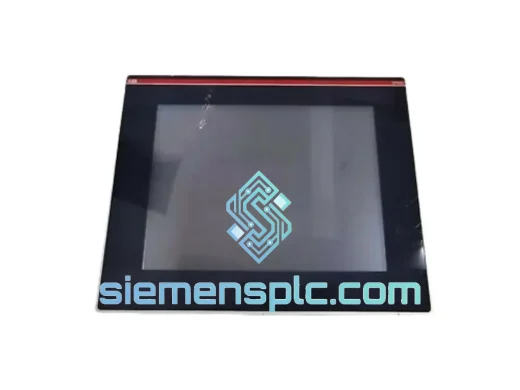
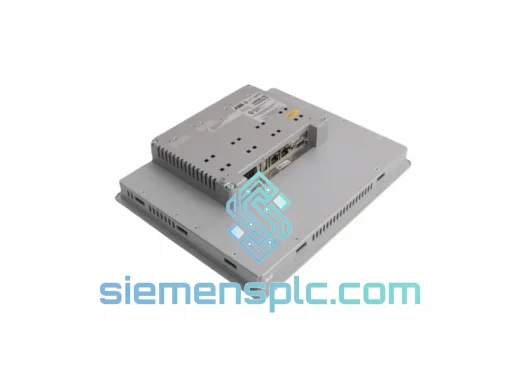
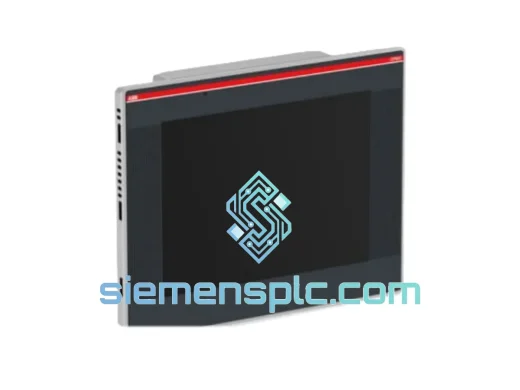
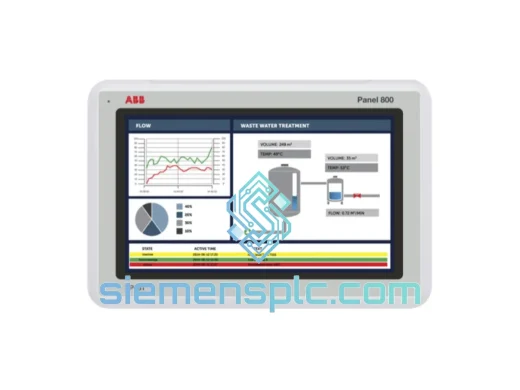
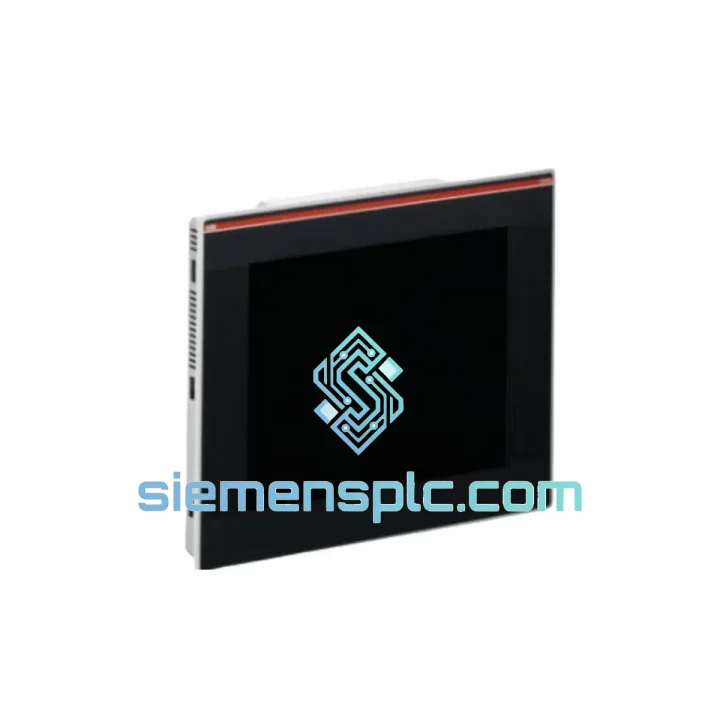
ABB 1SAP560100R0001 HMI Operator Panel – CP560 AC500
Request verified availability, condition, replacement risk review, packing options and courier lead time for 1SAP560100R0001.
BrandABB
Part Number1SAP560100R0001
ConditionAvailability Check
Lead TimeRFQ Confirmation
DocumentsDatasheet / photos by RFQ
ShippingExport packing available
Auto-filled RFQ
1SAP560100R0001
Click Request Quote and the part number is inserted into the inquiry form automatically.
- Reply by email: [email protected]
- WhatsApp / Tel: +86 18359268345
- Mon-Sat 9:00-18:00 GMT+8
Procurement Data
Key Product Information
Core fields for model confirmation and RFQ routing. Detailed product narrative remains below.
- Brand
- ABB
- Primary Part Number
- 1SAP560100R0001
- Product Type
- HMI Operator Panel
- Series / Family
- AC500
- Manufacturer
- ABB Ltd.
- Country of Origin
- SE
- Catalog Category
- HMI Panels
- Operating Temp.
- 0 °C … +55 °C (no forced cooling required)
- Warranty
- 12 months against manufacturing defects
Model confirmed for inquiry
1SAP560100R0001
Send quantity, destination and urgency. The RFQ form keeps this part number attached.
Request Quote
Product Overview
ABB 1SAP560100R0001 CP560 — 10.4″ Resistive Touch HMI Tightly Coupled to AC500 Backplane Architecture
The 1SAP560100R0001 is ABB’s CP560 operator panel, a panel-mount human-machine interface engineered as a native peripheral of the AC500 scalable PLC platform. Unlike standalone HMI devices that communicate over fieldbus or Ethernet, the CP560 connects directly to the AC500 internal communication bus, sharing a deterministic data exchange path with the host CPU. This architectural decision eliminates protocol translation overhead, removes gateway hardware from the cabinet, and reduces the round-trip latency between operator input and CPU setpoint update to sub-millisecond range under normal scan conditions.
The panel presents a 10.4-inch TFT color LCD at 640 × 480 pixel (VGA) resolution with a resistive touch overlay. Resistive technology is the deliberate engineering choice here: it responds to any stylus or gloved finger, making it operable by maintenance personnel wearing PPE in chemical, food processing, or heavy manufacturing environments where capacitive screens fail. Supply voltage is 24 V DC with an operating window of 18–30 V DC, drawing ≤15 W — a load that any standard 24 V cabinet power supply handles without a dedicated branch circuit.
The front panel carries an IP65 ingress protection rating, sealed against dust and low-pressure water jets. The rear electronics are housed in a compact enclosure designed for standard panel cut-out mounting, with overall dimensions of approximately 280 × 220 × 55 mm and a mass of 2.9 kg. Operating temperature range is 0 °C to +55 °C continuous without forced cooling, which covers the thermal envelope of most industrial control cabinets without requiring additional ventilation engineering.
Programming is performed within ABB Automation Builder alongside the PLC logic, using Panel Builder 600 as the visualization configuration tool. This unified environment means the same engineering workstation handles both PLC program development and HMI screen design, with shared tag databases eliminating the manual variable mapping that introduces version-mismatch errors in dual-tool workflows. The CP560 is compatible with AC500 V2 and V3 CPU modules including the PM554, PM564, PM572, PM581, PM582, PM591, and PM592 families.
Ethernet connectivity via RJ45 extends the panel’s integration capability beyond the AC500 backplane. Modbus TCP and OPC-UA communication paths allow the CP560 to exchange data with SCADA systems, historian servers, or third-party controllers, supporting hybrid architectures where the AC500 functions as a subsystem controller within a larger distributed control network. ABB’s web visualization option further enables remote monitoring from standard browsers without dedicated client software.
The unit carries CE, UL, and cUL certifications, confirming compliance with IEC 61131-3 and North American electrical safety standards. This certification package accelerates machine CE marking and UL listing processes for OEM builders, reducing third-party testing scope and associated project timelines.
Real-time Stock & RFQ: [email protected] | WhatsApp: +86 18359268345
Technical Parameters
| Part Number | 1SAP560100R0001 |
| Product Series | CP560 / AC500 |
| Manufacturer | ABB Ltd. |
| Display Size | 10.4 inch TFT Color LCD |
| Resolution | 640 × 480 px (VGA) |
| Touch Technology | Resistive (stylus / gloved hand operable) |
| Supply Voltage | 24 V DC nominal (18–30 V DC operating range) |
| Power Consumption | ≤ 15 W |
| Communication — Primary | AC500 Internal Backplane Bus |
| Communication — Secondary | Ethernet RJ45 (Modbus TCP, OPC-UA, Web Visualization) |
| Operating Temperature | 0 °C … +55 °C (no forced cooling required) |
| Storage Temperature | -20 °C … +70 °C |
| Front Panel Protection | IP65 (dust-tight, low-pressure water jet resistant) |
| Mounting Method | Panel cut-out, rear-mount with front-face seal |
| Dimensions (W × H × D) | approx. 280 × 220 × 55 mm |
| Weight | approx. 2.9 kg |
| Backlight Lifetime | ≥ 50,000 hours at 25 °C ambient |
| Compatible CPUs | AC500 V2/V3: PM554, PM564, PM572, PM581, PM582, PM591, PM592 |
| Engineering Software | ABB Automation Builder + Panel Builder 600 |
| Certifications | CE, UL, cUL — IEC 61131-3 compliant |
| Country of Origin | Germany |
| Warranty | 12 months against manufacturing defects |
Hardware Logical Analysis
The CP560’s core architectural advantage lies in its backplane bus integration model. Rather than operating as an independent node on a fieldbus segment — which introduces variable message arbitration delays and requires dedicated bus master configuration — the CP560 occupies a fixed slot in the AC500 communication hierarchy. The CPU writes display variables and reads operator inputs through a shared memory exchange mechanism synchronized to the PLC scan cycle. This means HMI refresh latency is bounded by the CPU scan time rather than by network traffic conditions, giving the system designer a deterministic upper bound on operator feedback delay.
The resistive touch overlay uses a four-wire analog matrix. When pressure is applied, the controller samples X and Y axis voltage dividers to calculate touch coordinates. This analog sampling approach is inherently immune to electromagnetic interference that affects capacitive sensing — a meaningful advantage in switchgear rooms and motor control centers where high-frequency switching transients from variable frequency drives (VFDs) and contactors generate conducted and radiated EMC noise across the 150 kHz–30 MHz band. The CP560’s EMC design follows IEC 61000-4 series test criteria, including 4 kV contact discharge (ESD), 2 kV/m radiated immunity, and 2 kV fast transient burst (EFT) on power lines.
The 24 V DC power input stage incorporates reverse polarity protection and transient suppression, preventing damage from wiring errors during commissioning and from inductive load switching on shared 24 V rails. The wide input window (18–30 V DC) accommodates voltage sag conditions on long cable runs from cabinet power supplies without triggering undervoltage shutdowns — a practical consideration in large machine frames where 24 V distribution losses can reach 1–2 V under full load.
The TFT LCD backlight is driven by a constant-current LED driver circuit, maintaining consistent luminance across the 18–30 V input range. LED backlighting eliminates the cold-start luminance drop and mercury disposal concerns associated with CCFL-backlit predecessors, and the ≥50,000-hour rated lifetime at 25 °C translates to over 5.7 years of continuous 24/7 operation before reaching 50% luminance degradation — a maintenance interval that aligns with typical machine overhaul schedules.
System Integration Benefits
- Zero-latency tag sharing: Process variables written by the AC500 CPU are available to the CP560 display within the same scan cycle via shared backplane memory, eliminating the polling delays inherent in Ethernet-based HMI communication.
- Single engineering environment: Automation Builder manages both PLC logic and HMI configuration under one project file, enforcing tag consistency and eliminating the manual cross-referencing required when separate PLC and HMI software packages are used.
- Reduced cabinet wiring complexity: Backplane bus connection requires no additional fieldbus cabling, termination resistors, or bus power supplies — reducing wiring labor, potential fault points, and cabinet space consumption.
- Deterministic operator response: Because HMI data exchange is scan-cycle-synchronous, the system designer can calculate worst-case operator input response time as a fixed function of CPU scan period, supporting safety-related response time analysis under IEC 62061 or ISO 13849.
- Dual-path connectivity for SCADA integration: The Ethernet port supports simultaneous OPC-UA server and Modbus TCP slave operation, allowing the CP560 to serve as a data concentrator for upstream SCADA or historian systems without loading the AC500 CPU’s communication task.
- IP65 front seal for wash-down environments: The sealed front bezel allows installation in food and beverage processing, pharmaceutical manufacturing, and outdoor enclosures without additional protective covers, reducing BOM cost and installation complexity.
- Gloved-hand touch operability: Resistive touch technology functions with latex, nitrile, and leather gloves, removing the requirement for operators to remove hand protection to interact with the HMI — a compliance consideration in chemical and pharmaceutical facilities.
- Unified certification footprint: CE and UL/cUL dual certification on a single hardware unit simplifies machine documentation for export to both European and North American markets, avoiding the cost and delay of sourcing separate HMI variants for different destination markets.
Quality Assurance & Global Logistics
Every 1SAP560100R0001 unit stocked at siemensplc.com is sourced through traceable supply channels with full documentation integrity. Incoming inspection covers label and serial number verification against ABB’s official part number database, firmware version confirmation, cosmetic inspection for transit damage, and a functional power-on test confirming display initialization and touch response. Original ABB packaging, date codes, and conformity documentation are preserved through the entire storage and fulfillment process.
Shipments originate from Xiamen, China — a major international logistics hub with direct access to DHL Express, FedEx International Priority, and UPS Worldwide Expedited services. Standard transit times are 3–5 business days to Europe, 4–6 business days to North America, and 2–4 business days to Southeast Asia. Export documentation includes commercial invoice, packing list, certificate of origin, and FORM E (ASEAN-China FTA) where applicable. HS Code 8537.10 applies to this product category. Anti-static ESD packaging with foam cushioning is standard for all shipments. A 12-month warranty against manufacturing defects is provided on all units.
Contact Information
Email: [email protected]
WhatsApp: +86 18359268345
Web: siemensplc.com
Location: Xiamen, China
© 2026 siemensplc.com. All rights reserved.
Ready to quote
[email protected]
Send This Part Number to Sales
RFQ workflow
Quality workflow ->
Confirmation Process
01Model confirmation
We check the full part number, brand, series and visible nameplate information before quotation.
02Availability reply
Sales confirms stock path, condition option, quantity and realistic lead time for export dispatch.
03Packing & courier
DHL, FedEx, UPS or buyer courier arrangements can be reviewed with packing requirements.
Continue sourcing
Browse full catalog ->
Related Automation Parts
Similar brand or category products for fast comparison and multi-item RFQ lists.