ABB
In Stock OK
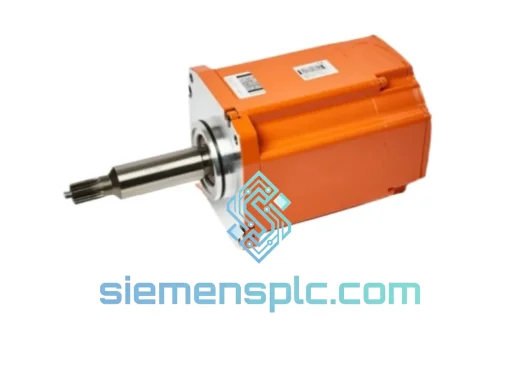
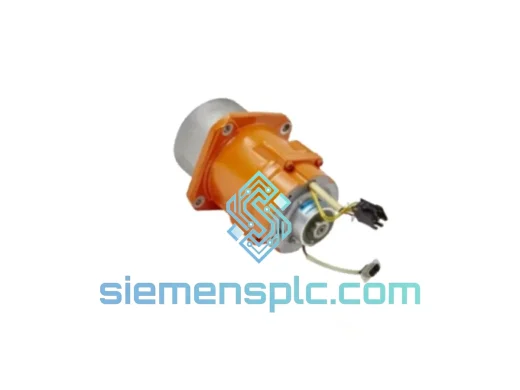
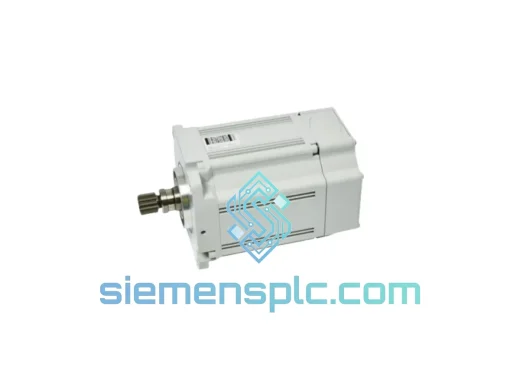
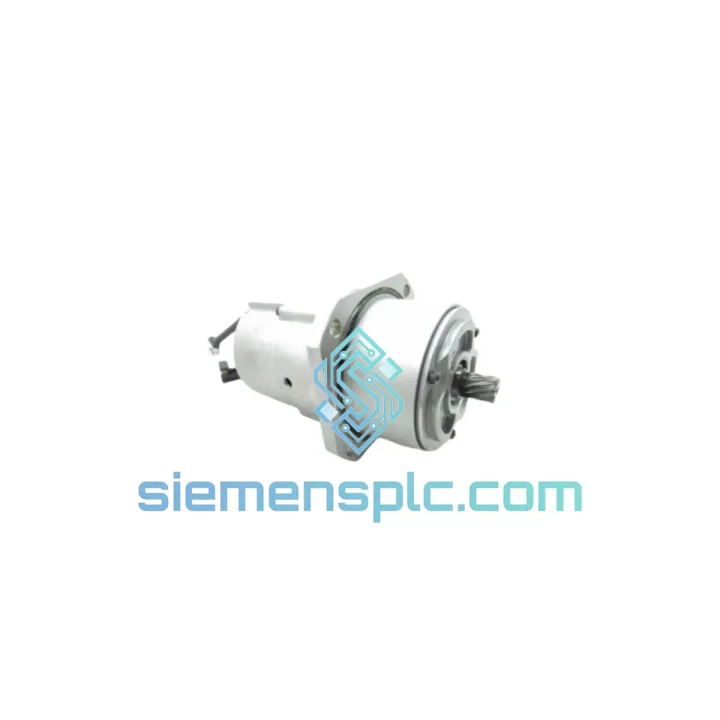
ABB 3HAC028954-003/02 Servo Motor – IRC5 Series
Request verified availability, condition, replacement risk review, packing options and courier lead time for 3HAC028954-003/02.
BrandABB
Part Number3HAC028954-003/02
ConditionAvailability Check
Lead TimeRFQ Confirmation
DocumentsDatasheet / photos by RFQ
ShippingExport packing available
Auto-filled RFQ
3HAC028954-003/02
Click Request Quote and the part number is inserted into the inquiry form automatically.
- Reply by email: [email protected]
- WhatsApp / Tel: +86 18359268345
- Mon-Sat 9:00-18:00 GMT+8
Procurement Data
Key Product Information
Core fields for model confirmation and RFQ routing. Detailed product narrative remains below.
- Brand
- ABB
- Primary Part Number
- 3HAC028954-003/02
- Product Type
- Industrial Robot Servo Motor
- Series / Family
- IRC5
- Manufacturer
- ABB Robotics (OEM)
- Country of Origin
- SE
- Catalog Category
- Motor Drives
- Warranty
- 12 months from dispatch date — manufacturing defects and functional failure under rated operating conditions
Model confirmed for inquiry
3HAC028954-003/02
Send quantity, destination and urgency. The RFQ form keeps this part number attached.
Request Quote
Product Overview
ABB 3HAC028954-003/02: Axis Joint Servo Motor for IRC5 Robot Controller Platforms
The ABB 3HAC028954-003/02 is a permanent-magnet synchronous motor (PMSM) purpose-engineered for joint-axis torque generation within ABB’s IRC5 robot controller architecture. This unit serves as the primary electromechanical actuator on articulated-arm robots including the IRB 4600, IRB 6600, IRB 6640, and IRB 6700 series, where it converts drive module current commands into precise angular displacement at each robot joint. The /02 revision suffix denotes a factory-level engineering change order (ECO) applied to winding insulation grade and connector sealing geometry — changes that directly address moisture ingress and thermal cycling fatigue documented in field returns of the /01 build.
In a six-axis articulated robot, each joint motor operates as a torque actuator within a cascaded control loop: the IRC5 motion controller issues position references at its 4 ms interpolation cycle, the servo drive closes the velocity loop at approximately 1 ms, and the current (torque) loop operates at 250 µs. The 3HAC028954-003/02 must sustain rated torque output across this entire bandwidth without introducing mechanical resonance or feedback noise that would degrade path accuracy. Its resolver-based feedback system and low-inertia rotor design are both direct consequences of these control-loop timing constraints.
Real-time Stock & RFQ: [email protected] | WhatsApp: +86 18359268345
Technical Parameters
| Parameter | Specification |
|---|---|
| Part Number | 3HAC028954-003/02 |
| Revision Level | /02 (ECO: winding insulation upgrade, connector re-seal) |
| Manufacturer | ABB Robotics (OEM) |
| Motor Topology | Brushless Permanent Magnet Synchronous Motor (PMSM) |
| Feedback Device | Resolver — transformer-based, absolute single-turn |
| Compatible Controller | ABB IRC5 (Single Cabinet, Dual Cabinet, Compact, Panel Mounted) |
| Compatible Robot Models | IRB 4600, IRB 6600, IRB 6640, IRB 6700 (axis-dependent) |
| Insulation Class | Class F — 155°C rated winding temperature |
| Ingress Protection | IP65 standard; IP67 on sealed-connector build variants |
| Ambient Operating Temperature | 0°C to +45°C continuous; storage –25°C to +70°C |
| Mounting Interface | Flange-mount; ABB IRB gearbox-compatible bolt pattern |
| Connector Configuration | ABB OEM multi-pin — combined power and resolver, single harness exit |
| Approximate Mass | 380 g |
| Regulatory Compliance | CE (Machinery Directive 2006/42/EC), RoHS 2, IEC 60034-1 |
| Warranty Coverage | 12 months from dispatch date — manufacturing defects and functional failure under rated operating conditions |
| In-Stock Lead Time | Same-day dispatch for orders confirmed before 14:00 CST |
| Sourced Lead Time | 3–8 business days via verified global supplier network |
Rated voltage, peak torque, continuous torque, rated speed, and back-EMF constant are available on request. Provide robot serial number and axis position for axis-specific parameter confirmation.
Hardware Logical Analysis
Rotor Architecture and Inertia Management: The PMSM topology places permanent magnets on the rotor surface, eliminating rotor copper losses inherent in induction motor designs. The resulting torque-to-inertia ratio is substantially higher than equivalent-frame induction motors — a critical parameter for robot joint drives where the reflected load inertia varies continuously as the arm moves through its workspace. A low rotor inertia reduces the inertia mismatch ratio seen by the IRC5 drive module, allowing the servo bandwidth to remain stable across the full range of arm configurations without gain scheduling. This is not a marginal benefit: in high-speed pick-and-place cycles where the arm transitions between fully extended and retracted positions within 0.3–0.5 seconds, inertia mismatch is the primary constraint on achievable acceleration.
Cogging Torque Architecture: The stator winding pitch and rotor magnet pole geometry of the 3HAC028954-003 series are configured to minimize cogging torque — the periodic reluctance variation that produces velocity ripple at low TCP speeds. In arc welding and adhesive dispensing applications where the TCP must traverse at 5–80 mm/s with path deviation below 0.1 mm, cogging torque is a first-order design constraint rather than a secondary specification. The /02 revision’s updated winding configuration preserves the cogging suppression characteristics of the /01 build while adding 25°C of thermal headroom through the Class F insulation upgrade.
EMC Shielding and Grounding Architecture: The motor stator housing is die-cast aluminum with continuous electrical bonding to the robot arm structure, providing a low-impedance return path for common-mode currents generated by the IRC5 drive module’s PWM output stage. Without this return path, common-mode currents would flow through the resolver cable shield and introduce position noise at the R/D converter input. The motor is designed for use with ABB’s shielded motor cable (3HAC026253-001), which terminates at both ends with 360° shield clamps — a grounding topology compliant with IEC 61800-3 Category C3 for variable-speed drive systems in industrial environments. This architecture suppresses radiated emissions that would otherwise couple into adjacent signal wiring in the robot arm harness.
Resolver Feedback Signal Integrity: The resolver is a wound-rotor transformer operating at the IRC5 drive board’s excitation frequency (~8 kHz). It produces a pair of amplitude-modulated sinusoidal outputs (sin θ, cos θ) that encode absolute rotor position within one electrical cycle. The R/D converter on the DSQC661 or DSQC662 drive board demodulates these signals to produce a 16-bit digital position word at each 250 µs servo cycle. The resolver’s all-analog signal path contains no digital ASICs in the feedback loop — a deliberate design choice that eliminates the single-point failure mode of encoder microcontrollers under the shock and vibration loads typical of press-tending and palletizing duty cycles. Resolver signal degradation manifests as axis position error alarms (error code 50xxx series in IRC5) rather than silent position drift, providing unambiguous fault indication.
Thermal Margin and Insulation Longevity: Class F insulation (155°C rated) provides a 25°C margin over Class B (130°C) at equivalent winding temperatures. In practice, this margin accommodates the thermal cycling stress of frequent start-stop duty — each thermal cycle induces differential expansion between copper conductors and insulation material, progressively degrading adhesion. The additional margin directly extends insulation service life according to the Arrhenius degradation model: a 10°C reduction in operating temperature approximately doubles insulation life expectancy. For robots operating two-shift production schedules with 18–20 hours of daily motor energization, this translates to a measurable extension of the preventive replacement interval.
System Integration Benefits
- Factory Resolver Calibration Eliminates Field Tuning: The resolver offset angle is factory-calibrated and stored in ABB’s motor data file format. After mechanical installation, updating the motor data file in RobotWare to the /02 specification restores full closed-loop performance without manual resolver offset measurement — a step that typically requires specialized test equipment and adds 2–4 hours to axis replacement time when using non-OEM alternatives.
- Servo Loop Stability Preserved Across Replacement: The motor’s torque constant and rotor inertia match the values stored in the IRC5 axis configuration. The drive module’s PI current controller and velocity loop gains remain valid without re-tuning, preserving the robot’s rated path accuracy (±0.05 mm for IRB 6640) immediately after replacement without a production trial period.
- Diagnostic Channel Accuracy: IRC5 continuously monitors motor thermal state via a winding temperature model parameterized to the OEM motor’s thermal resistance and heat capacity values. A genuine 3HAC028954-003/02 with correct parameter files ensures the thermal model tracks actual winding temperature within ±5°C — preventing both nuisance thermal trips and undetected overtemperature conditions that accelerate insulation aging.
- Reduced MTTR in Production Environments: Drop-in mechanical and electrical compatibility with the IRC5 drive harness eliminates custom cable adapters, connector re-pinning, and gearbox interface modification. Documented axis replacement time in automotive production environments is under 4 hours including functional verification and path accuracy check — a figure that assumes OEM-compatible hardware throughout.
- Predictive Maintenance Integration: OEM-matched MTBF data (30,000+ hours in two-shift automotive production) allows maintenance planners to schedule preventive motor replacement based on operating hour counters accessible via IRC5’s service information system, shifting from reactive failure response to condition-based maintenance scheduling.
- RobotStudio Simulation Fidelity: Correct motor inertia and torque constant parameters in the axis configuration ensure that ABB RobotStudio offline programming simulations accurately predict cycle times and axis load profiles. Mismatched parameters produce simulation-to-reality discrepancies that require empirical correction after physical commissioning — adding engineering time to each new program deployment.
- MRO Inventory Consolidation: The 3HAC028954-003 series covers multiple axis positions across IRB 4600, IRB 6600, and IRB 6640 platforms. Standardizing on this part number across a mixed robot fleet reduces spare parts SKU count in the MRO store, simplifying procurement, reducing carrying cost, and eliminating the risk of incorrect part substitution during emergency maintenance.
- Warranty-Backed Procurement Risk Management: The 12-month warranty covering manufacturing defects and functional failure under rated operating conditions transfers early-life failure risk from the end user to the supplier. For maintenance budget holders operating under fixed OPEX targets, this represents a quantifiable reduction in unplanned expenditure exposure during the warranty period.
Quality Assurance & Global Logistics
Each ABB 3HAC028954-003/02 unit dispatched from siemensplc.com passes a structured pre-shipment verification protocol before packaging:
- OEM Label and Revision Authentication: ABB part number, /02 revision code, date code, and connector condition verified against reference documentation and cross-checked against ABB’s published supersession records.
- Winding Insulation Resistance: Megger test at 500 VDC confirms winding-to-frame insulation resistance above 100 MΩ, ruling out moisture ingress or insulation degradation in stored inventory.
- Resolver Output Verification: Sin/cos output amplitude ratio and phase quadrature checked with ABB-compatible test instrumentation to confirm feedback signal integrity prior to dispatch.
- Mechanical Inspection: Shaft runout, bearing drag, and flange surface condition inspected to confirm dimensional compliance with ABB’s gearbox interface specification.
- Traceability Documentation: Lot number, revision code, and sourcing chain records retained for a minimum of 5 years, supporting ISO 9001 and IATF 16949 audit requirements.
Logistics operations are based in Xiamen, China — a designated national-level port city with direct sea freight connections to Rotterdam, Los Angeles, Singapore, and Dubai, and daily air cargo consolidations via Xiamen Gaoqi International Airport (XMN). Standard export documentation (commercial invoice, packing list, certificate of origin, packing declaration) is prepared in compliance with Xiamen Customs regulations. DHL Express, FedEx International Priority, and UPS Worldwide Express are available for time-critical shipments, with typical transit times of 3–5 business days to Europe and North America. LCL and FCL sea freight options are available for volume orders. Payment is accepted in USD, EUR, CNY, and HKD via T/T bank transfer and trade assurance platforms.
Contact Information
Email: [email protected]
WhatsApp: +86 18359268345
Web: siemensplc.com
Location: Xiamen, China
© 2026 siemensplc.com. All rights reserved.
Ready to quote
[email protected]
Send This Part Number to Sales
RFQ workflow
Quality workflow ->
Confirmation Process
01Model confirmation
We check the full part number, brand, series and visible nameplate information before quotation.
02Availability reply
Sales confirms stock path, condition option, quantity and realistic lead time for export dispatch.
03Packing & courier
DHL, FedEx, UPS or buyer courier arrangements can be reviewed with packing requirements.
Continue sourcing
Browse full catalog ->
Related Automation Parts
Similar brand or category products for fast comparison and multi-item RFQ lists.