
ABB
In Stock OK
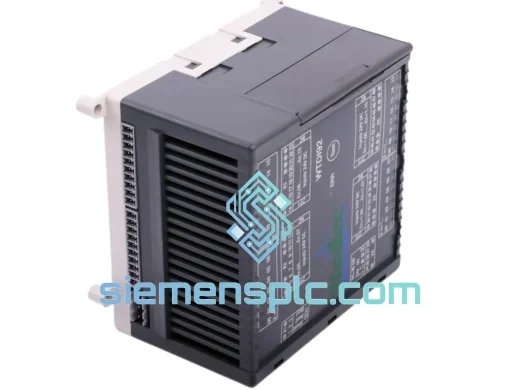
ABB AP303/21021001/STD Analog Input Module – Advant OCS MOD 300
Request verified availability, condition, replacement risk review, packing options and courier lead time for AP303/21021001/STD.
BrandABB
Part NumberAP303/21021001/STD
ConditionAvailability Check
Lead TimeRFQ Confirmation
DocumentsDatasheet / photos by RFQ
ShippingExport packing available
Auto-filled RFQ
AP303/21021001/STD
Click Request Quote and the part number is inserted into the inquiry form automatically.
- Reply by email: [email protected]
- WhatsApp / Tel: +86 18359268345
- Mon-Sat 9:00-18:00 GMT+8
Procurement Data
Key Product Information
Core fields for model confirmation and RFQ routing. Detailed product narrative remains below.
- Brand
- ABB
- Primary Part Number
- AP303/21021001/STD
- Product Type
- Analog Input Module
- Series / Family
- Advant
- Manufacturer
- ABB (ASEA Brown Boveri)
- Country of Origin
- SE
- Catalog Category
- I/O Modules
- Operating Temp.
- 0°C to +55°C
- Warranty
- 12 months from dispatch date
- Compliance
- IEC 61131-2, CE
Model confirmed for inquiry
AP303/21021001/STD
Send quantity, destination and urgency. The RFQ form keeps this part number attached.
Request Quote
Product Overview
ABB AP303/21021001/STD — Precision Analog Input Module for Advant OCS and MOD 300 Distributed Control Systems
The AP303/21021001/STD occupies a well-defined role in ABB’s S100 I/O bus architecture: it is the field-side signal conditioning and analog-to-digital conversion stage that bridges physical process transmitters to the Advant controller’s real-time data highway. Without a correctly functioning AP303, the controller CPU receives no process variable (PV) data from the field — making this module a single-point dependency in any loop where it is installed. Its design reflects ABB’s engineering philosophy for the Advant OCS and MOD 300 platforms: deterministic scan cycles, galvanic isolation at every channel boundary, and a passive backplane interface that imposes zero software overhead on the host CPU during normal operation.
Each channel on the AP303 accepts either a 4–20 mA current loop signal or a 0–10 V DC voltage signal, selectable per channel via onboard jumper configuration. The 12-bit successive-approximation ADC delivers a resolution of 1-in-4096 across the full input span — sufficient for process variables such as pressure, temperature (via transmitter), flow, and level where ±0.05% full-scale accuracy is the practical engineering requirement. The module’s scan rate is synchronized to the S100 bus cycle, ensuring that PV updates arrive at the controller within a bounded, predictable latency window rather than on an asynchronous interrupt basis.
Galvanic isolation is implemented at the channel-to-channel and channel-to-backplane boundaries using optocoupler barriers rated to withstand 500 V DC common-mode voltage. This architecture eliminates ground loop currents that would otherwise introduce 50/60 Hz noise into low-level analog signals — a persistent problem in large industrial installations where field cable runs exceed 200 m and share cable trays with power conductors. The isolation also protects the S100 backplane from transient overvoltages originating in the field, a failure mode that can propagate to the controller CPU if isolation is absent or degraded.
The AP303 draws its operating power entirely from the S100 backplane bus, with no field-side auxiliary power supply required for the module itself. Loop-powered 4–20 mA transmitters draw their supply from the field loop, which is independent of the module’s internal circuitry. This separation of field power and module power is a deliberate design choice that simplifies fault isolation: a field wiring fault cannot starve the module of operating power, and the module’s internal failure cannot back-feed voltage into the field loop.
In terms of EMC performance, the AP303 PCB layout follows ABB’s internal shielding guidelines for the Advant platform: analog signal traces are routed away from digital clock lines, the ADC reference voltage is decoupled with a dedicated low-ESR capacitor network, and the backplane connector pins are arranged to minimize crosstalk between adjacent channels. The module housing provides additional shielding continuity when seated in a grounded S100 rack. These measures collectively allow the AP303 to meet IEC 61131-2 immunity requirements for conducted and radiated disturbances without external filtering.
Real-time Stock & RFQ: [email protected] | WhatsApp: +86 18359268345
Technical Parameters
| Parameter | Specification |
|---|---|
| Part Number | AP303 / 21021001 / STD |
| Manufacturer | ABB (ASEA Brown Boveri) |
| Module Function | Multi-Channel Analog Input (AI) |
| Platform | ABB Advant OCS, MOD 300 DCS — S100 I/O Bus |
| Input Signal Types | 4–20 mA (current loop) / 0–10 V DC (voltage), per-channel configurable |
| ADC Resolution | 12-bit (1:4096) |
| Full-Scale Accuracy | ±0.05% FS (typical, at 25°C) |
| Channel Isolation | Galvanic (optocoupler), 500 V DC CMV rated |
| Operating Temperature | 0°C to +55°C |
| Storage Temperature | −25°C to +70°C |
| Relative Humidity | 5–95% RH, non-condensing |
| Module Power Supply | Via S100 backplane bus (no external aux supply) |
| Backplane Interface | ABB S100 I/O bus |
| Mounting | S100 rack slot, front-panel screw-terminal field wiring |
| Weight | Approx. 400 g |
| Compliance | IEC 61131-2, CE |
| Variant Suffix | STD = Standard (non-HART, non-redundant) |
| Warranty | 12 months from dispatch date |
Hardware Logical Analysis
The AP303’s internal signal chain follows a four-stage architecture: field terminal input conditioning → galvanic isolation barrier → successive-approximation ADC → S100 bus interface register. Each stage is independently powered and referenced, which means a fault in one stage does not propagate backward to corrupt adjacent channels or forward to corrupt the bus data register.
The input conditioning stage includes a passive RC low-pass filter on each channel with a −3 dB cutoff frequency set below the ADC’s Nyquist limit. This prevents aliasing of high-frequency noise — particularly relevant in installations near variable-frequency drives (VFDs) that generate switching transients in the 2–20 kHz range. The filter time constant is fixed in hardware, not software-configurable, which eliminates the risk of an operator inadvertently disabling noise rejection through a parameter change.
The optocoupler isolation barrier uses a linear optocoupler topology rather than a simple on/off digital isolator. This preserves the analog linearity of the signal across the isolation boundary, avoiding the quantization error that would result from digitizing the signal before isolation and re-converting it afterward. The barrier’s common-mode rejection ratio (CMRR) exceeds 80 dB at 50 Hz, which is the dominant interference frequency in European and Asian industrial installations.
The S100 bus interface register is a latched parallel output that holds the most recent ADC conversion result until the bus master (the Advant controller CPU) performs a read cycle. This latch architecture means the CPU can read the module at any point in its scan cycle without risk of reading a partially updated value — a critical property for deterministic control loop execution. The module does not generate interrupts; it operates in a purely polled mode, which simplifies the controller’s real-time operating system scheduling.
EMC hardening on the PCB includes a ground plane layer beneath the analog signal routing, a separate ground plane beneath the digital logic, and a single-point star ground connection between the two planes at the backplane connector. This topology prevents digital switching currents from returning through the analog ground reference, which would appear as noise on the ADC input. The backplane connector itself uses a low-inductance multi-pin ground arrangement to minimize the impedance of the return path at high frequencies.
System Integration Benefits
- Deterministic PV Update Latency: The S100 bus polled architecture guarantees that every controller scan cycle reads a complete, valid ADC result — no partial reads, no interrupt jitter, no missed samples under high CPU load.
- Zero-Configuration Drop-In Replacement: The AP303/21021001/STD seats directly into any S100 rack slot previously occupied by an AP303 unit. No firmware download, no address switch reconfiguration, and no controller re-parameterization is required in standard deployments.
- Per-Channel Signal Type Flexibility: Current and voltage input modes are independently selectable per channel via onboard jumpers, allowing a single module to serve mixed transmitter types within one rack slot — reducing the total module count in multi-loop installations.
- Galvanic Isolation Eliminates Ground Loop Diagnostics: By breaking the DC path between field wiring and the backplane, the AP303 removes the most common source of unexplained analog signal drift in large installations, reducing the time engineers spend on ground loop fault-finding.
- Passive Backplane Power Architecture: The module draws power from the backplane and requires no field-side auxiliary supply. This simplifies panel wiring, reduces the number of power supply circuits that must be monitored, and eliminates a failure mode where a blown field supply fuse takes the module offline.
- IEC 61131-2 Immunity Compliance: The module meets the conducted and radiated immunity requirements of IEC 61131-2 without external filtering, which simplifies panel design and reduces BOM cost for system integrators.
- Long-Term Platform Availability: ABB Advant OCS and MOD 300 systems remain in service at thousands of global process plants. The AP303 is a high-demand MRO item; stocking verified units eliminates the lead-time risk associated with ordering through standard distribution channels.
- Traceability Documentation: Each unit shipped from siemensplc.com includes an inspection record, origin documentation, and firmware revision verification — providing the audit trail required for ISO 9001-compliant maintenance records and insurance purposes.
Quality Assurance & Global Logistics
Every AP303/21021001/STD unit offered by siemensplc.com is sourced as genuine ABB OEM hardware. Pre-shipment verification includes visual PCB inspection (no cracked substrate, no corroded screw terminals, no missing or substituted components), functional power-on test confirming backplane communication, and firmware revision check against ABB’s compatibility matrix for the target platform version. Units are packaged in ESD-safe anti-static bags sealed inside foam-lined cartons to prevent mechanical shock damage during transit.
Dispatch is from Xiamen, China, a major international logistics hub with direct air freight connections to Europe, North America, Southeast Asia, the Middle East, and Oceania. Standard international shipment transit times are 3–7 business days via DHL Express or FedEx International Priority. Expedited same-day dispatch is available for orders confirmed before 14:00 CST. Full export documentation is provided with every international shipment: commercial invoice, packing list, certificate of origin, and HS code 8537.10 customs declaration. This documentation set satisfies import clearance requirements in the EU, USA, Australia, and most GCC countries without additional preparation by the buyer.
Contact Information
Email: [email protected]
WhatsApp: +86 18359268345
Web: siemensplc.com
Location: Xiamen, China
© 2026 siemensplc.com. All rights reserved.
Ready to quote
[email protected]
Send This Part Number to Sales
RFQ workflow
Quality workflow ->
Confirmation Process
01Model confirmation
We check the full part number, brand, series and visible nameplate information before quotation.
02Availability reply
Sales confirms stock path, condition option, quantity and realistic lead time for export dispatch.
03Packing & courier
DHL, FedEx, UPS or buyer courier arrangements can be reviewed with packing requirements.
Continue sourcing
Browse full catalog ->
Related Automation Parts
Similar brand or category products for fast comparison and multi-item RFQ lists.
ABB
RFQ Ready
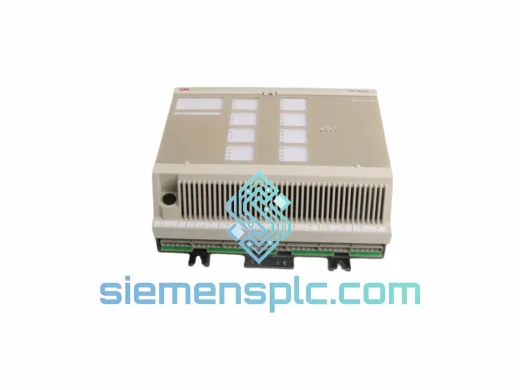
ABB DSAX452 Analog I/O Module – Advant Controller 450 Series
Advant
Origin SE
Analog I/O Module
ABB
RFQ Ready
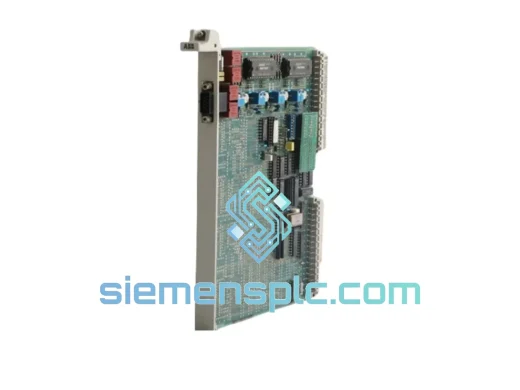
ABB GJR5143200R0001 35EK91 Analog Output Module – AC31 Advant Series
Advant
Origin SE
Analog Output Module
ABB
RFQ Ready
ABB 07DI92 GJR5252400R4101 Digital Input Module
Advant
Origin SE
PLC Digital Input Module