ABB
In Stock OK
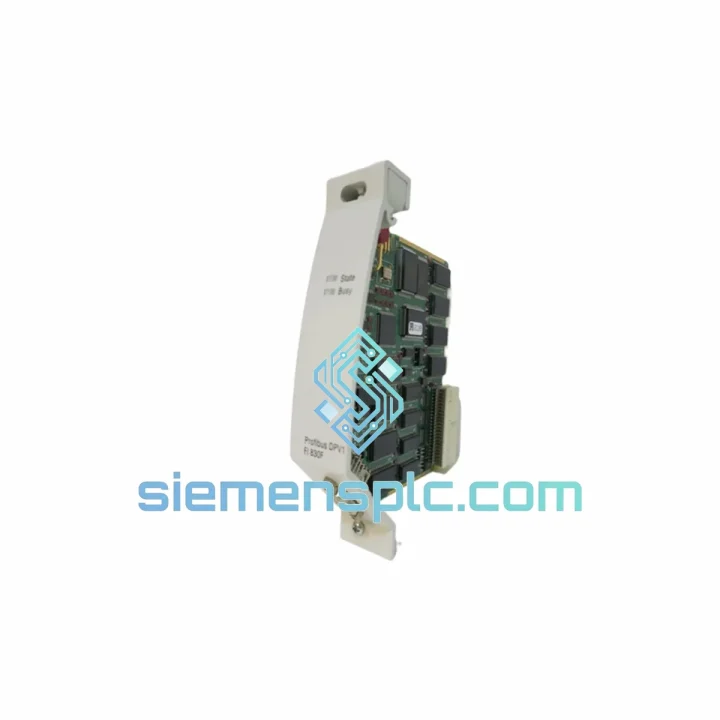
ABB DPV1 FI 830F Residual Current Circuit Breaker – DPV1 Series
Request verified availability, condition, replacement risk review, packing options and courier lead time for DPV1 FI 830F.
BrandABB
Part NumberDPV1 FI 830F
ConditionAvailability Check
Lead TimeRFQ Confirmation
DocumentsDatasheet / photos by RFQ
ShippingExport packing available
Auto-filled RFQ
DPV1 FI 830F
Click Request Quote and the part number is inserted into the inquiry form automatically.
- Reply by email: [email protected]
- WhatsApp / Tel: +86 18359268345
- Mon-Sat 9:00-18:00 GMT+8
Procurement Data
Key Product Information
Core fields for model confirmation and RFQ routing. Detailed product narrative remains below.
- Brand
- ABB
- Primary Part Number
- DPV1 FI 830F
- Product Type
- Residual Current Circuit Breaker
- Product Family
- Other series
- Manufacturer
- ABB
- Country of Origin
- SE
- Catalog Category
- Relays & Protection
- Warranty
- 12 months from date of shipment
Model confirmed for inquiry
DPV1 FI 830F
Send quantity, destination and urgency. The RFQ form keeps this part number attached.
Request Quote
Product Overview
ABB DPV1 FI 830F — 4-Pole 80 A / 30 mA Type-A RCCB in Industrial Power Distribution
The ABB DPV1 FI 830F is a four-pole residual current circuit breaker (RCCB) rated at 80 A with a 30 mA tripping sensitivity. Within a low-voltage distribution architecture, this device occupies the protective layer between the upstream main circuit breaker and downstream branch circuits, performing one specific and non-negotiable function: detecting earth-leakage current and interrupting the circuit before that current reaches a physiologically dangerous threshold. At 30 mA, the trip threshold is calibrated to the IEC 60479-1 body-current curve — the point at which ventricular fibrillation risk becomes statistically significant. The DPV1 FI 830F does not limit fault current magnitude; it responds to the differential between line and neutral (and, in 4-pole configuration, across all three phases and neutral), making it orthogonal in function to overcurrent protection devices. Engineers specifying this unit must understand that it requires a separate upstream MCCB or fuse rated for the installation’s prospective short-circuit current (Icc), as the DPV1 FI 830F itself carries a conditional rated short-circuit current (Inc) of 10 kA — meaning it survives a 10 kA fault only when backed by a current-limiting device of appropriate let-through energy.
In three-phase 400 V AC systems feeding mixed loads — variable-frequency drives, switched-mode power supplies, LED driver arrays, EV charging infrastructure — the choice of Type A over Type AC is not optional; it is a code requirement under IEC 60364-4-41 and the equivalent national annexes. The DPV1 FI 830F’s Type A classification means its toroidal summation transformer and signal-processing circuit are calibrated to respond to both sinusoidal AC residual currents and unidirectional pulsating DC residual currents up to 6 mA smooth DC superimposed. This matters because rectifier-front-end loads generate asymmetric leakage waveforms that a Type AC device will not reliably detect.
Real-time Stock & RFQ: [email protected] | WhatsApp: +86 18359268345
Technical Parameters
| Parameter | Value |
|---|---|
| Manufacturer | ABB |
| Part Number / SKU | DPV1 FI 830F |
| Series | DPV1 |
| Device Type | RCCB (Residual Current Circuit Breaker), voltage-independent |
| Number of Poles | 4P (3-phase + Neutral) |
| Rated Current (In) | 80 A |
| Residual Operating Current (IΔn) | 30 mA |
| Non-operating Residual Current (IΔno) | 15 mA (≥ 0.5 × IΔn per IEC 61008-1) |
| Tripping Class | Type A (AC sinusoidal + pulsating DC) |
| Rated Voltage (Un) | 400 V AC (3P+N), 50/60 Hz |
| Conditional Short-Circuit Current (Inc) | 10 kA (with upstream current-limiting SCPD) |
| Mounting | 35 mm DIN rail (EN 60715) |
| Width (number of module pitches) | 4 modules × 17.5 mm = 70 mm |
| Terminal Conductor Cross-Section | 1.5 – 35 mm² (solid/stranded) |
| Terminal Tightening Torque | 3.5 N·m |
| Operating Temperature Range | −25 °C to +55 °C |
| Storage Temperature | −40 °C to +70 °C |
| Degree of Protection | IP20 (terminals open); IP40 with terminal covers fitted |
| Pollution Degree | 2 |
| Overvoltage Category | III |
| Standards | IEC 61008-1, EN 61008-1, GB 16917.1 |
| Weight | approx. 1,780 g |
| Country of Origin | Germany |
| Warranty | 12 months from date of shipment |
Hardware Logical Analysis
The DPV1 FI 830F operates on the Kirchhoff current-summation principle. All current-carrying conductors — L1, L2, L3, and N in a 4-pole configuration — pass through a toroidal ferrite core. Under normal load conditions, the vector sum of currents through the core is zero; the magnetic fluxes cancel. When a ground-fault path exists, a portion of the load current returns via earth rather than the neutral conductor, producing a net residual flux in the toroid. This flux induces a voltage in the secondary winding, which drives the release coil of the electromechanical trip mechanism.
Voltage-independent operation is a critical design attribute. Unlike voltage-operated RCDs, the DPV1 FI 830F’s trip mechanism draws its energy from the fault current itself — not from the supply voltage. This means the device will trip correctly even during a simultaneous supply voltage failure, a scenario relevant in generator-backed systems where a fault and a supply interruption may be causally linked.
EMC design: The toroidal core material is selected for high permeability at low flux densities, ensuring sensitivity to 30 mA differential currents in the presence of high common-mode noise. The core geometry minimizes the effect of external magnetic fields from adjacent busbars carrying high load currents — a practical concern in dense motor control center (MCC) assemblies where 400 A+ busbars run parallel to the RCCB mounting rail. ABB’s DPV1 series incorporates a shielded core housing that attenuates external field coupling by a factor sufficient to maintain IΔno compliance under IEC 61008-1 clause 9.9 (immunity to external magnetic fields).
Mechanical contact architecture: The 4-pole contact bridge uses a common trip bar, ensuring simultaneous interruption of all four poles within the same mechanical stroke. Contact gap geometry is designed to achieve arc extinction within the rated making/breaking capacity without requiring arc chutes of the type used in MCCBs — the RCCB’s role is not fault current interruption but load-current interruption under a controlled, low-energy trip condition. The contact material is silver-nickel alloy, selected for low contact resistance and resistance to welding under the inrush currents typical of transformer and motor loads.
Test button circuit: The integrated test button inserts a calibrated resistor across one phase and earth, generating a known artificial residual current above IΔn. This verifies the complete signal chain — toroid, secondary winding, release coil, and mechanical latch — without requiring an actual ground fault. IEC 61008-1 mandates monthly functional testing; the test button provides the mechanism. The test circuit is wired to the line side, so a successful test confirms the device will operate correctly under live conditions.
System Integration Benefits
- Deterministic trip time: The DPV1 FI 830F is a general-type (non-delayed) RCCB with a maximum trip time of 300 ms at IΔn and 40 ms at 5×IΔn per IEC 61008-1 Table 1. This deterministic response characteristic allows system designers to calculate worst-case touch-voltage exposure duration with precision, supporting IEC 60364-4-41 compliance calculations.
- Selective coordination with upstream S-type RCDs: When installed downstream of an ABB F200 or DPV1 series S-type (time-delayed) RCCB, the DPV1 FI 830F’s faster trip time ensures zone-selective operation — only the faulted branch trips, leaving upstream circuits energized. This is essential in hospital, data center, and process plant applications where partial power continuity is required.
- 4-pole architecture for TN-S and TT systems: Switching the neutral pole prevents neutral-to-earth voltage from being sustained on the load side after tripping, a requirement in TT earthing systems and in installations where neutral conductors are shared across multiple circuits.
- Type A sensitivity for modern load profiles: VFDs, UPS systems, EV chargers, and LED drivers all generate asymmetric leakage current waveforms. The DPV1 FI 830F’s Type A classification ensures reliable detection of these waveforms, preventing nuisance non-tripping (failure to trip on a real fault) that would occur with a Type AC device on the same loads.
- DIN rail form factor for high-density panels: At 70 mm width (4 × 17.5 mm pitch), the DPV1 FI 830F integrates directly into standard IEC 60715 DIN rail enclosures alongside ABB S200 MCBs and S800 MCCBs without requiring adapter plates or special mounting hardware.
- Wide operating temperature range: The −25 °C to +55 °C operating range covers outdoor enclosure installations in continental climates without derating, and the +55 °C upper limit accommodates the internal temperature rise of sealed enclosures in tropical ambient conditions.
- Diagnostic transparency via test button: Monthly test-button actuation provides a documented, repeatable functional verification record. In IEC 62305 lightning protection zones and IEC 60364-6 periodic inspection regimes, this test record constitutes evidence of maintained protective function.
- Accessory ecosystem compatibility: The DPV1 FI 830F accepts ABB’s standard DPV1/F200 series accessories — auxiliary contacts (for remote trip indication to SCADA or BMS), remote handles (for panel-front operation without opening the enclosure door), and terminal covers (for IP40 finger-safe terminal protection). This accessory compatibility eliminates the need for custom wiring or mechanical adaptation when integrating into monitored distribution systems.
Quality Assurance & Global Logistics
Every ABB DPV1 FI 830F unit supplied through siemensplc.com is sourced as genuine ABB product, traceable to ABB’s manufacturing and quality management system. ABB’s production facilities for low-voltage protective devices operate under ISO 9001 certification, with each RCCB unit subject to 100% factory production testing per IEC 61008-1 clause 9.1 — including residual current trip verification at IΔn and 5×IΔn, and dielectric withstand testing at 2,000 V AC for 1 minute across open contacts.
Units are supplied in original ABB retail packaging with the manufacturer’s label, batch code, and date of manufacture. Certificate of Conformity (CoC) and factory test reports are available upon request for project tender submissions and third-party inspection requirements.
Logistics are managed from our warehouse in Xiamen, China. Standard export packaging uses anti-static foam inserts within double-wall corrugated cartons, rated for the 1.78 kg unit weight plus packing materials. Shipment options include DHL Express (3–5 business days to most destinations), FedEx International Priority, and sea freight consolidation for bulk orders. Export documentation — commercial invoice, packing list, and certificate of origin — is prepared to the destination country’s import requirements. In-stock units ship within 1–2 business days of order confirmation. Lead time for larger quantities is confirmed at the time of RFQ.
A 12-month warranty from the date of shipment covers manufacturing defects. Warranty claims are processed with return merchandise authorization (RMA); replacement units are dispatched upon receipt and inspection of the returned item.
Contact Information
Email: [email protected]
WhatsApp: +86 18359268345
Web: siemensplc.com
Location: Xiamen, China
© 2026 siemensplc.com. All rights reserved.
Ready to quote
[email protected]
Send This Part Number to Sales
RFQ workflow
Quality workflow ->
Confirmation Process
01Model confirmation
We check the full part number, brand, series and visible nameplate information before quotation.
02Availability reply
Sales confirms stock path, condition option, quantity and realistic lead time for export dispatch.
03Packing & courier
DHL, FedEx, UPS or buyer courier arrangements can be reviewed with packing requirements.
Continue sourcing
Browse full catalog ->
Related Automation Parts
Similar brand or category products for fast comparison and multi-item RFQ lists.