Siemens
RFQ Ready
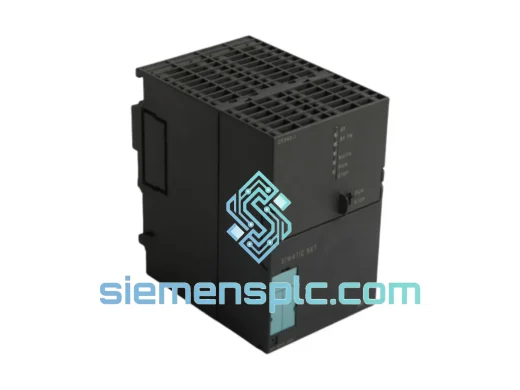
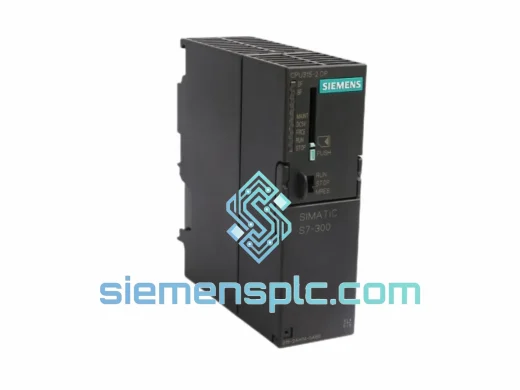
Siemens 6ES7 315-2EH14-0AB0 CPU 315-2 PN/DP PLC Module
SIMATIC S7-300
Origin DE
PLC CPU Module
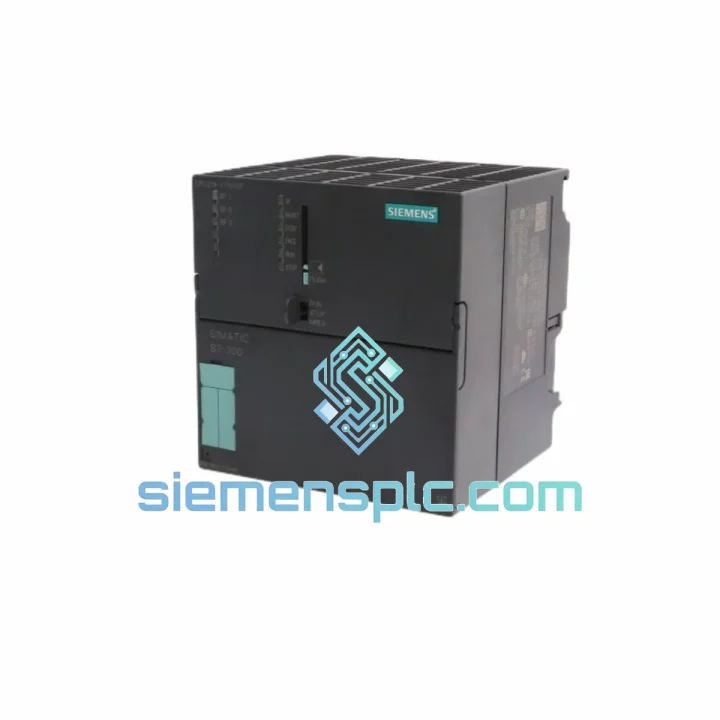
Request verified availability, condition, replacement risk review, packing options and courier lead time for 6ES7318-3EL01-0AB0.
Click Request Quote and the part number is inserted into the inquiry form automatically.
Core fields for model confirmation and RFQ routing. Detailed product narrative remains below.
The 6ES7318-3EL01-0AB0 occupies the apex of the SIMATIC S7-300 CPU hierarchy. Designated CPU 319-3 PN/DP, this module delivers 2 MB of work memory — the largest available within the S7-300 family — paired with three independent communication interfaces: one combined MPI/PROFIBUS-DP port operating at up to 12 Mbit/s, one dedicated PROFIBUS-DP master/slave port at 12 Mbit/s, and two integrated PROFINET ports capable of Isochronous Real-Time (IRT) communication with cycle times as low as 250 µs. This hardware configuration allows the CPU to simultaneously anchor a legacy PROFIBUS field network, manage a high-speed PROFINET IRT motion domain, and maintain MPI programming access — without any additional communication processor (CP) modules consuming rack slots.
At its core, the CPU 319-3 PN/DP executes binary logic instructions at 0.004 µs per operation. This throughput, combined with a 2 MB work memory partition split equally between code (1 MB) and data (1 MB), accommodates structured programs of substantial complexity: multi-product batch recipe engines, large state machines with hundreds of concurrent steps, and safety-instrumented function blocks that would exhaust the address space of lower-tier S7-300 CPUs. The integrated load memory stands at 8 MB and is further expandable via SIMATIC Micro Memory Card (MMC), providing persistent storage for program blocks, data records, and firmware without dependency on battery-backed RAM.
The backplane bus interface of the S7-300 rack operates at a fixed internal transfer rate, and the CPU 319-3 PN/DP manages I/O image refresh across up to 65,536 digital inputs and 65,536 digital outputs, plus 4,096 analog input and 4,096 analog output channels — figures that place this CPU at the boundary of what the S7-300 mechanical platform can physically accommodate across multiple expansion racks connected via IM 360/361 interface modules. This I/O density is sufficient for large-scale plant-wide installations that do not require the S7-400’s distributed rack architecture.
Real-time Stock & RFQ: [email protected] | WhatsApp: +86 18359268345
| Parameter | Specification |
|---|---|
| Order Number (MLFB) | 6ES7318-3EL01-0AB0 |
| Product Family | SIMATIC S7-300 |
| CPU Designation | CPU 319-3 PN/DP |
| Work Memory — Code | 1 MB |
| Work Memory — Data | 1 MB |
| Integrated Load Memory | 8 MB (MMC expandable) |
| Binary Processing Speed | 0.004 µs / instruction |
| Floating-Point Processing | 0.048 µs / instruction |
| Max. Digital I/O | 65,536 DI / 65,536 DO |
| Max. Analog I/O | 4,096 AI / 4,096 AO |
| Interface 1 | MPI / PROFIBUS-DP, 12 Mbit/s (combined) |
| Interface 2 | PROFIBUS-DP Master/Slave, 12 Mbit/s |
| Interface 3 & 4 | 2× PROFINET (100 Mbit/s, IRT-capable) |
| PROFINET Conformance Class | CC-B with IRT (Isochronous Real-Time) |
| Minimum IRT Cycle Time | 250 µs |
| Max. S7 Connections | 64 |
| Max. PROFIBUS-DP Slaves | 125 per DP master port |
| Max. PROFINET IO Devices | 128 (across both PN ports) |
| Supply Voltage | 24 V DC (via backplane PS) |
| Current Draw (5 V Backplane) | 1,100 mA |
| Power Dissipation | 5.5 W |
| Operating Temperature | 0 °C to +60 °C |
| Storage Temperature | −40 °C to +70 °C |
| Relative Humidity | 10 % to 95 %, non-condensing |
| Degree of Protection | IP20 |
| Mounting | DIN rail (S7-300 rack) |
| Dimensions (W × H × D) | 80 × 125 × 130 mm |
| Weight | Approx. 1,280 g |
| Firmware | V3.2 |
| Programming Software | TIA Portal V13 SP2+, STEP 7 V5.5 SP4+ |
| Warranty | 12 months from dispatch date |
| Origin | Germany |
The CPU 319-3 PN/DP integrates three physically distinct communication controllers on a single module substrate, each with its own dedicated MAC layer and protocol stack. This architecture eliminates the bus arbitration contention that would arise if multiple protocols shared a single controller — a design constraint that affects lower-cost CPUs relying on software-multiplexed interfaces. The MPI/DP port and the dedicated DP port each maintain independent DP master stacks, allowing the CPU to operate as a Class 1 DP master on both PROFIBUS segments simultaneously, with separate GSD-based configuration tables and independent polling cycles.
The dual PROFINET ports are implemented through an integrated two-port switch, enabling line topology wiring without external switches — a practical advantage in cabinet layouts where switch modules would consume additional DIN rail space and introduce additional failure points. Both ports share a single IP address by default but can be configured for media redundancy using the Media Redundancy Protocol (MRP), providing sub-200 ms network recovery in ring topologies without requiring a dedicated MRP manager device.
EMC hardening on the 6ES7318-3EL01-0AB0 follows Siemens’ standard S7-300 platform design: the backplane connector uses a low-impedance ground path directly to the DIN rail mounting foot, minimizing common-mode noise coupling from adjacent power supplies. Signal lines within the module are routed with controlled impedance and shielded at the PCB layer level. The module meets EN 61000-6-2 (industrial immunity) and EN 61000-6-4 (industrial emissions), with tested immunity to 10 V/m radiated fields per IEC 61000-4-3 and 4 kV contact discharge per IEC 61000-4-2.
Retentive data management is handled through a combination of battery-backed SRAM (for retain markers, timers, and counters) and the MMC flash storage (for program blocks and data blocks flagged as non-volatile). The CPU’s memory management unit enforces strict separation between code and data address spaces, preventing runaway pointer operations from corrupting the program image — a hardware-level protection mechanism relevant in long-running continuous process applications where soft errors from cosmic ray bit-flips are a statistical concern over multi-year operational lifetimes.
The CPU’s OB (Organization Block) interrupt structure supports up to 128 priority classes, with hardware interrupt OBs (OB40–OB47) responding to digital input edge events within one scan cycle. Time-interrupt OBs (OB30–OB38) can be configured at intervals from 1 ms to 1 hour, providing deterministic periodic task execution independent of the main scan cycle load. Watchdog monitoring operates at the hardware level: if the scan cycle exceeds the configured maximum time (configurable from 1 ms to 6,000 ms), the CPU transitions to STOP mode and logs a diagnostic event — a fail-safe behavior that prevents silent runaway execution in fault conditions.
Every 6ES7318-3EL01-0AB0 unit dispatched from siemensplc.com undergoes a structured verification sequence before shipment. Physical inspection confirms label authenticity against Siemens’ current MLFB format, housing integrity, connector pin condition, and MMC slot functionality. Firmware version is verified against Siemens’ published release history. Units are bench-powered to confirm POST (Power-On Self-Test) completion and LED status indication prior to packaging.
Packaging uses anti-static ESD bags with humidity indicator cards, placed in foam-lined cartons rated for international air freight handling. Each shipment includes a packing list, commercial invoice with HS code 8537.10 pre-filled, and a Certificate of Conformance available upon request for procurement audit purposes.
Logistics operations are based in Xiamen, China — a major export hub with direct access to DHL Express, FedEx International Priority, and UPS Worldwide Expedited services. In-stock units ship within 1–2 business days of order confirmation. Transit times to Europe average 3–5 business days via express courier; North America 4–6 business days; Southeast Asia 2–3 business days. Sea freight consolidation is available for bulk orders exceeding 50 kg. All export documentation — including CITES-exempt declarations, origin certificates, and dangerous goods exclusion letters — is prepared in-house to prevent customs clearance delays.
A 12-month warranty covers manufacturing defects and confirmed functional failures under normal operating conditions. Dead-on-arrival (DOA) claims are processed within 5 business days of receipt of the returned unit. Warranty claims are initiated by contacting [email protected] with the order reference and a description of the observed fault.
Email: [email protected]
WhatsApp: +86 18359268345
Web: siemensplc.com
Location: Xiamen, China
© 2026 siemensplc.com. All rights reserved.
We check the full part number, brand, series and visible nameplate information before quotation.
Sales confirms stock path, condition option, quantity and realistic lead time for export dispatch.
DHL, FedEx, UPS or buyer courier arrangements can be reviewed with packing requirements.
Similar brand or category products for fast comparison and multi-item RFQ lists.