ABB
In Stock OK
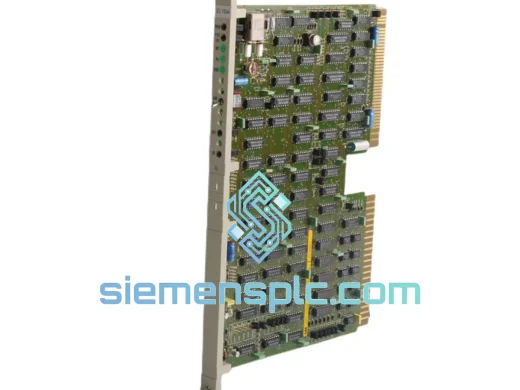
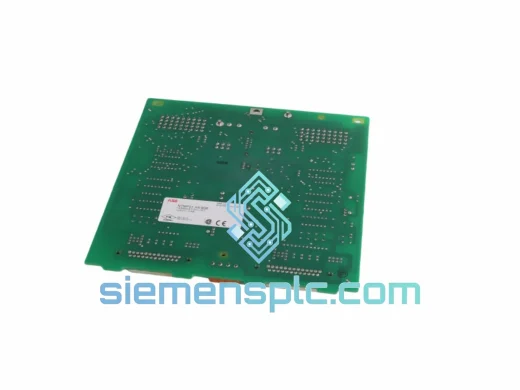
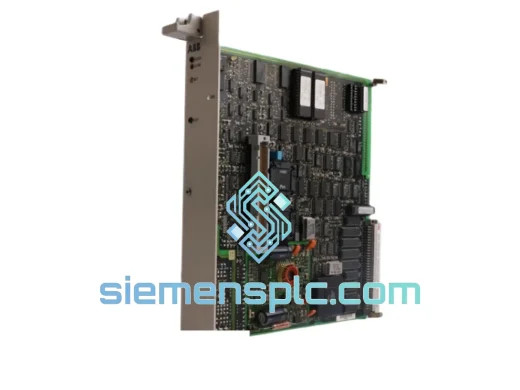
ABB DSTC170 57520001-BK DCS Connection Unit – Advant OCS
Request verified availability, condition, replacement risk review, packing options and courier lead time for 57520001-BK.
BrandABB
Part Number57520001-BK
ConditionAvailability Check
Lead TimeRFQ Confirmation
DocumentsDatasheet / photos by RFQ
ShippingExport packing available
Auto-filled RFQ
57520001-BK
Click Request Quote and the part number is inserted into the inquiry form automatically.
- Reply by email: [email protected]
- WhatsApp / Tel: +86 18359268345
- Mon-Sat 9:00-18:00 GMT+8
Procurement Data
Key Product Information
Core fields for model confirmation and RFQ routing. Detailed product narrative remains below.
- Brand
- ABB
- Primary Part Number
- 57520001-BK
- Product Type
- DCS Connection Unit
- Series / Family
- Advant
- Manufacturer
- ABB
- Country of Origin
- SE
- Catalog Category
- DCS & Safety Modules
- Operating Temp.
- 0 °C to +55 °C (storage: –25 °C to +70 °C)
- Warranty
- 12 months from date of shipment
Model confirmed for inquiry
57520001-BK
Send quantity, destination and urgency. The RFQ form keeps this part number attached.
Request Quote
Product Overview
ABB DSTC170 57520001-BK – Backplane Interface Module for Advant OCS Distributed Control Architecture
The ABB DSTC170, carrying part number 57520001-BK, is a rack-mounted connection unit engineered for the Advant OCS (Open Control System) platform. Its primary function is to establish a deterministic, low-latency electrical bridge between field-side termination assemblies and the Advant Master Series backplane bus. Unlike generic interface boards, the DSTC170 is designed around ABB’s proprietary S100 I/O bus protocol, which enforces a fixed scan cycle and guarantees signal delivery within the controller’s process image update window. This characteristic makes it a load-bearing component in any control loop where timing jitter directly affects process stability — flow control, pressure regulation, and temperature cascade loops being the most common examples.
In a typical Advant OCS cabinet, the DSTC170 occupies a dedicated slot on the S100 bus subrack. It does not perform signal conditioning or analog-to-digital conversion; instead, it manages the physical layer handshake between the termination board and the bus arbiter on the processor module. This separation of concerns — physical layer vs. application layer — is a deliberate architectural choice that allows field wiring to be modified or replaced without disturbing the bus topology, reducing maintenance downtime in live plant environments.
📩 Real-time Stock & RFQ: [email protected] | WhatsApp: +86 18359268345
Technical Parameters
| Manufacturer | ABB |
| Full Part Number | 57520001-BK |
| Model Designation | DSTC170 |
| Product Series | Advant OCS / Master Series (S100 I/O Bus) |
| Module Function | DCS Backplane Connection Unit |
| Form Factor | Single-width rack-mount module, S100 subrack compatible |
| Bus Protocol | ABB S100 I/O Bus (proprietary, deterministic) |
| Operating Voltage | 24 V DC (supplied via backplane rail) |
| Operating Temperature | 0 °C to +55 °C (storage: –25 °C to +70 °C) |
| Relative Humidity | 5% to 95%, non-condensing |
| EMC Compliance | EN 61000-4 series (ESD, EFT, surge, conducted RF) |
| Vibration Resistance | IEC 60068-2-6 (sinusoidal, 10–150 Hz) |
| Shock Resistance | IEC 60068-2-27 (15 g, 11 ms half-sine) |
| Degree of Protection | IP20 (installed in cabinet) |
| Weight | Approx. 100 g |
| Country of Origin | Germany |
| Warranty | 12 months from date of shipment |
Hardware Logical Analysis
The DSTC170’s internal architecture reflects ABB’s design philosophy for the Advant OCS platform: determinism over flexibility, and hardware-enforced fault isolation over software-managed error recovery.
S100 Bus Physical Layer Implementation: The module implements the S100 bus physical layer using differential signal pairs with controlled impedance traces. This topology suppresses common-mode noise induced by adjacent power cables and motor drives — a persistent problem in panel environments where signal and power wiring share the same cable duct. The differential architecture provides a theoretical common-mode rejection ratio (CMRR) sufficient to maintain signal integrity in environments with conducted interference levels up to the EN 61000-4-6 Class A limit (3 V rms, 0.15–80 MHz).
Galvanic Isolation Boundary: The DSTC170 positions its isolation barrier at the field-side connector interface. Optocouplers rated for a minimum 500 V rms working isolation voltage separate the field wiring potential from the backplane logic ground. This prevents ground loop currents — which can reach tens of milliamps in large plant installations — from corrupting the bus signal levels or triggering false diagnostic alarms on the processor module.
Passive Fault Containment: Unlike active bus repeaters, the DSTC170 does not regenerate or buffer bus signals. This passive architecture means a failure within the module cannot inject erroneous data onto the S100 bus. The worst-case failure mode is an open circuit, which the bus arbiter detects as a missing acknowledgment and flags as a communication fault — a safe, detectable state rather than a silent data corruption event.
Connector and Contact Design: The backplane connector uses gold-plated contacts with a specified insertion/withdrawal cycle rating consistent with ABB’s maintenance interval recommendations. Gold plating prevents the contact resistance creep caused by oxidation, which is a known failure mechanism in modules that remain installed for 10+ years in humid or mildly corrosive atmospheres.
Thermal Management: The module’s power dissipation is low by design — the passive signal routing architecture generates minimal heat. This allows the DSTC170 to operate at the upper end of its temperature range without requiring forced-air cooling, which is relevant in sealed cabinets where fan maintenance is a recurring operational cost.
System Integration Benefits
- Zero-reconfiguration replacement: The DSTC170 is a slot-compatible replacement within any S100 subrack. No firmware download, no address switch adjustment, and no controller restart is required in most replacement scenarios, reducing mean time to repair (MTTR) to the physical swap duration.
- Deterministic scan cycle preservation: Because the module operates at the physical layer without introducing buffering latency, the controller’s process image update cycle remains unaffected. Control loops with scan times below 100 ms — typical for flow and pressure PID loops — maintain their timing budget after module replacement.
- Diagnostic transparency: A communication fault on the DSTC170 is immediately visible in the Advant OCS diagnostic log as a specific bus error code, allowing maintenance personnel to isolate the fault to the module level without oscilloscope-level signal tracing.
- Isolation of field faults: The galvanic isolation boundary prevents field-side wiring faults (short to earth, insulation breakdown) from propagating into the backplane, protecting the processor module and adjacent I/O modules from secondary damage.
- Long-term platform support: The Advant OCS platform has an installed base spanning multiple decades. The DSTC170 remains a current MRO item for thousands of operating sites that have not migrated to newer ABB 800xA or AC500 architectures, ensuring continued availability of compatible spares.
- Reduced spare parts inventory complexity: A single DSTC170 part number covers multiple subrack positions within the S100 architecture, allowing maintenance planners to hold fewer unique line items in their critical spare inventory.
- Compatibility with redundant controller configurations: In Advant OCS systems configured with redundant AC450 or AC460 processors, the DSTC170 participates in the redundancy switchover without requiring manual intervention, provided the replacement module is installed in the correct subrack slot.
- Validated interoperability: The module is manufactured to ABB’s original design specifications and validated against the S100 bus electrical standard, ensuring interoperability with all Advant OCS I/O modules (DSAI, DSAO, DSDI, DSDO series) without compatibility testing at the customer site.
Quality Assurance & Global Logistics
Every ABB DSTC170 57520001-BK unit offered through siemensplc.com is sourced from verified industrial supply channels and subjected to a structured pre-shipment inspection protocol. Physical inspection covers connector contact condition, PCB surface integrity, label legibility, and revision marking cross-check against ABB’s published part number documentation. Units showing evidence of rework, counterfeit markings, or undocumented modifications are rejected at intake.
Functional verification is performed where test fixtures are available. All units are stored in anti-static bags within climate-controlled warehouse conditions in Xiamen, China, maintaining temperature and humidity within the module’s specified storage range. This prevents the moisture absorption and contact oxidation that degrade module reliability during extended storage.
Shipment from Xiamen is executed via DHL Express, FedEx International Priority, and UPS Worldwide Expedited, with typical transit times of 3–7 business days to Europe, the Middle East, Southeast Asia, and North America. Export documentation — including commercial invoice, packing list, and certificate of origin — is prepared to comply with destination country customs requirements. HS code classification is provided for all shipments to facilitate smooth customs clearance. Emergency MRO shipments can be dispatched within 24 hours of order confirmation for in-stock units.
Contact Information
📧 Email: [email protected]
📱 WhatsApp: +86 18359268345
🌐 Web: siemensplc.com
📍 Location: Xiamen, China
© 2026 siemensplc.com. All rights reserved.
Ready to quote
[email protected]
Send This Part Number to Sales
RFQ workflow
Quality workflow ->
Confirmation Process
01Model confirmation
We check the full part number, brand, series and visible nameplate information before quotation.
02Availability reply
Sales confirms stock path, condition option, quantity and realistic lead time for export dispatch.
03Packing & courier
DHL, FedEx, UPS or buyer courier arrangements can be reviewed with packing requirements.
Continue sourcing
Browse full catalog ->
Related Automation Parts
Similar brand or category products for fast comparison and multi-item RFQ lists.
ABB
RFQ Ready
ABB HESG448230R1/G 216EA61b DCS Processor Module
Advant
Origin SE
PLC / DCS Processor Module