ABB
In Stock OK
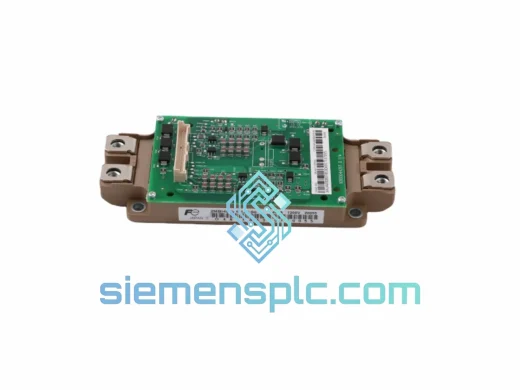
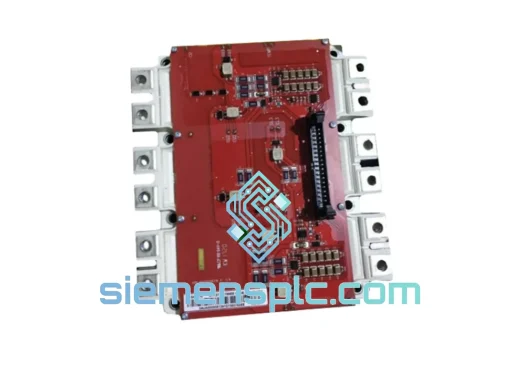
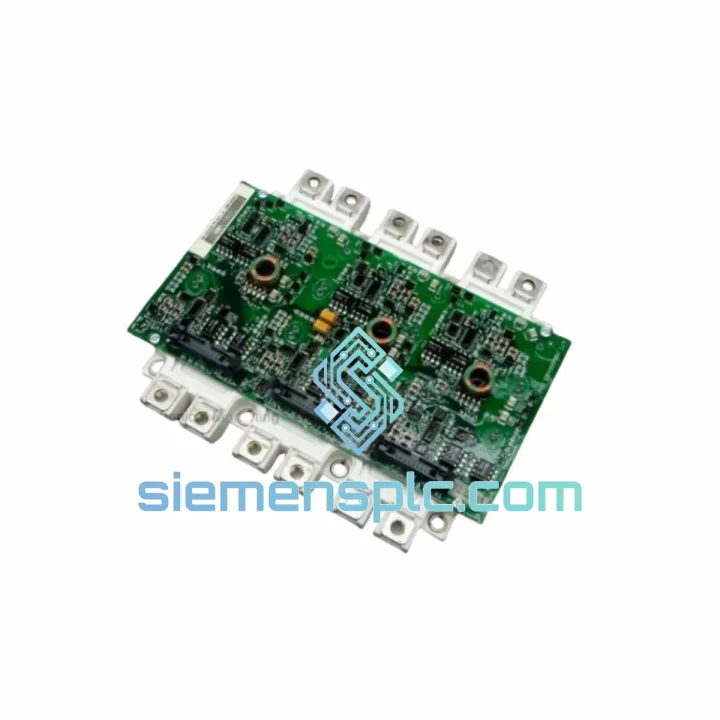
ABB FS300R12KE3/AGDR-62C IGBT Module
Request verified availability, condition, replacement risk review, packing options and courier lead time for FS300R12KE3/AGDR-62C.
BrandABB
Part NumberFS300R12KE3/AGDR-62C
ConditionAvailability Check
Lead TimeRFQ Confirmation
DocumentsDatasheet / photos by RFQ
ShippingExport packing available
Auto-filled RFQ
FS300R12KE3/AGDR-62C
Click Request Quote and the part number is inserted into the inquiry form automatically.
- Reply by email: [email protected]
- WhatsApp / Tel: +86 18359268345
- Mon-Sat 9:00-18:00 GMT+8
Procurement Data
Key Product Information
Core fields for model confirmation and RFQ routing. Detailed product narrative remains below.
- Brand
- ABB
- Primary Part Number
- FS300R12KE3/AGDR-62C
- Product Type
- IGBT Module
- Series / Family
- HiPak
- Manufacturer
- ABB (HiPak™ platform)
- Country of Origin
- SE
- Catalog Category
- Motor Drives
Model confirmed for inquiry
FS300R12KE3/AGDR-62C
Send quantity, destination and urgency. The RFQ form keeps this part number attached.
Request Quote
Product Overview
ABB FS300R12KE3/AGDR-62C — Stop the Bleeding. Get Your Line Back Online.
Every hour your drive sits dead, you’re burning money. A failed FS300R12KE3 IGBT module is one of the most common causes of catastrophic shutdown in medium-voltage AC drives, traction converters, and high-power inverter systems. We stock it. We ship it today. From Xiamen to your dock — DHL or FedEx, tracked, insured, no excuses.
This listing covers the complete replacement set: the ABB HiPak™ FS300R12KE3 3-phase IGBT bridge module paired with the dedicated AGDR-62C fiber-optic gate driver board. Both components must be replaced together when the gate driver has been exposed to a shoot-through event — and in most field failures, it has.
⚡ URGENT REQUIREMENT? Contact: [email protected] | WhatsApp: +86 18359268345
Quick Technical Datasheet
| Parameter | Value | Note |
|---|---|---|
| Part Number | FS300R12KE3 / AGDR-62C | Complete set |
| Manufacturer | ABB (HiPak™ platform) | Origin: Germany |
| Topology | 3-phase bridge (6-pack) | Integrated NTC thermistor |
| VCES (Collector-Emitter) | 1200 V | — |
| IC (Continuous Current) | 300 A | @ Tc = 80°C |
| VGES (Gate-Emitter) | ±20 V | Max gate drive swing |
| Short-Circuit Withstand | 10 µs | VCC = 800 V |
| Isolation Voltage | 6000 Vrms | Module base to terminals |
| Tj Operating Range | -40°C to +150°C | — |
| Gate Driver Interface | Fiber-optic (HFBR-compatible) | AGDR-62C |
| Switching Frequency | Up to 3 kHz | Typical drive application |
| Module Weight | ~1050 g | HiPak press-pack housing |
| RoHS | Compliant | — |
| Stock Status | ✅ Ready to Ship | Xiamen warehouse |
Troubleshooting & Replacement Tips
Common failure signatures for FS300R12KE3:
- DC bus crowbar trip / OCP fault at startup: Classic sign of a shorted IGBT leg. Measure VCE(sat) across each switch with a curve tracer or diode-mode DMM. A reading below 0.3 V on a non-conducting switch confirms internal short.
- Asymmetric phase current / torque ripple: One IGBT leg conducting poorly. Check gate threshold voltage — if VGE(th) has drifted beyond ±1 V from nominal, the gate oxide is degraded.
- AGDR-62C fault LED solid red (no fiber signal): Fiber cable first. Then check the 15 V / -8 V gate driver supply rails. If rails are good and fault persists after power cycle, the AGDR-62C itself has latched — replace the driver board before re-energizing the module.
- Thermal runaway / heatsink overtemp: Pull the module and inspect the thermal interface. Dried-out or cracked TIM (thermal interface material) is responsible for roughly 30% of premature HiPak failures in the field. Re-torque to 6 N·m and apply fresh TC-5026 or equivalent at 0.5 mm bond line.
Step-by-step replacement checklist:
- Isolate and lock out the DC bus. Verify bus voltage below 50 V with a calibrated meter before touching any terminal.
- Discharge the DC link capacitors through a bleed resistor (minimum 10 kΩ / 50 W). Do not rely on the drive’s internal bleed circuit after a fault event.
- Disconnect fiber-optic cables from AGDR-62C. Label each channel — U+, U-, V+, V-, W+, W-. Polarity reversal will destroy the new module on first gate pulse.
- Remove the six M6 bus bar bolts (torque: 10 N·m). Remove the four M6 module mounting bolts (torque: 6 N·m). Lift the module straight up — do not tilt, the press-pack housing is precision-fitted.
- Clean the heatsink surface to Ra ≤ 1.6 µm. Apply fresh TIM. Seat the new FS300R12KE3 and torque mounting bolts in a cross pattern to 6 N·m.
- Mount the new AGDR-62C. Reconnect fiber cables per your labeled sequence. Verify the 15 V / -8 V supply is within ±2% before enabling gate signals.
- Power up with the motor disconnected. Run a static gate test: command each switch individually and verify VCE(sat) drops to expected value (typically 2.0–2.5 V at IC = 300 A).
- Reconnect motor. Run at 10% speed for 5 minutes. Monitor NTC thermistor output — temperature rise should be linear and symmetric across all three phases.
Configuration notes: The FS300R12KE3 has no internal address switches or DIP settings — it is a passive power module. All drive-side configuration (PWM frequency, dead-time, current limit) is handled by the control board (e.g., ACS800/ACS880 RDCU). Ensure firmware on the control board matches the drive’s power stage rating after module swap — a mismatch in current scaling will cause nuisance OCP trips.
Reliability in Harsh Conditions
The HiPak™ platform was not designed for a clean lab. It was designed for steel mills, offshore platforms, and mine hoists — environments where ambient temperature swings 60°C between day and night, where vibration is constant, and where humidity condenses on every surface during shutdown.
The FS300R12KE3 achieves this through a pressure-contact (press-pack) internal construction that eliminates solder joints — the single most common failure point in conventional wire-bonded IGBT modules. The aluminum nitride (AlN) substrate provides thermal conductivity of 170 W/m·K, nearly double that of standard Al₂O₃, keeping junction temperatures in check even at sustained 300 A output. The integrated NTC thermistor gives the drive controller real-time junction temperature feedback, enabling proactive derating before thermal damage occurs.
Vibration immunity is validated to IEC 60068-2-6 (sinusoidal, 10–500 Hz, 2 g). Humidity endurance is tested per IEC 60068-2-78 (85% RH, 85°C, 1000 hours). These are not marketing claims — they are the qualification tests ABB runs on every HiPak generation before release. The module you receive has been manufactured to the same specification.
Units sourced through siemensplc.com are stored in a climate-controlled warehouse (18–25°C, RH ≤ 60%) with anti-static packaging and desiccant packs. Date codes are verified at intake. No shelf queens, no mystery stock.
Global Express Logistics
Our dispatch hub is in Xiamen, Fujian, China — one of the most logistics-dense export cities on the mainland, with direct DHL and FedEx gateway access. Here is exactly what happens after you place your order:
- Day 0 (Order confirmed): Stock is pulled, inspected, and packed in anti-static foam within a double-wall carton. Export documentation (commercial invoice, packing list, COO) is prepared.
- Day 1 (Dispatch): Shipment handed to DHL Express or FedEx International Priority. Tracking number sent to your email within 2 hours of pickup scan.
- Day 2–4 (Transit): DHL Express typically delivers to Europe in 2–3 business days, North America in 3–4 days, Southeast Asia in 1–2 days. FedEx IP timelines are comparable.
- Customs clearance: HS Code 8541.10 (semiconductor devices). We pre-declare the correct commodity code and provide all supporting documents to minimize customs hold risk. For EU imports, EORI number coordination is available on request.
- Bulk orders: For 5+ units, sea freight via FCL/LCL from Xiamen Port is available with 7–14 day transit to major global ports. Contact us for freight quotes.
We have shipped to 80+ countries. If your country has specific import restrictions on electronic components, contact us before ordering — we will advise on the correct documentation path.
Contact Information
📧 Email: [email protected]
💬 WhatsApp: +86 18359268345
🌐 Web: siemensplc.com
© 2026 siemensplc.com. All rights reserved.
Ready to quote
[email protected]
Send This Part Number to Sales
RFQ workflow
Quality workflow ->
Confirmation Process
01Model confirmation
We check the full part number, brand, series and visible nameplate information before quotation.
02Availability reply
Sales confirms stock path, condition option, quantity and realistic lead time for export dispatch.
03Packing & courier
DHL, FedEx, UPS or buyer courier arrangements can be reviewed with packing requirements.
Continue sourcing
Browse full catalog ->
Related Automation Parts
Similar brand or category products for fast comparison and multi-item RFQ lists.
ABB
RFQ Ready
ABB ZINT-592 Fieldbus Interface Board – ZINT Series
ACS Drive
Origin SE
Interface Board