ABB
In Stock OK
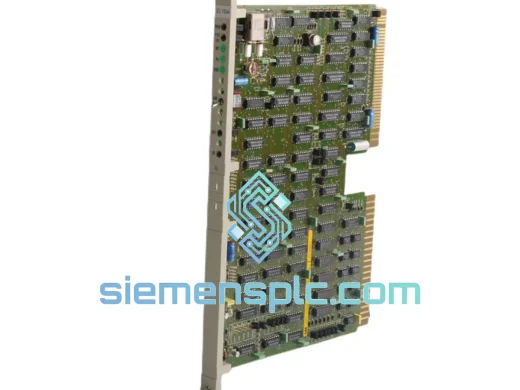
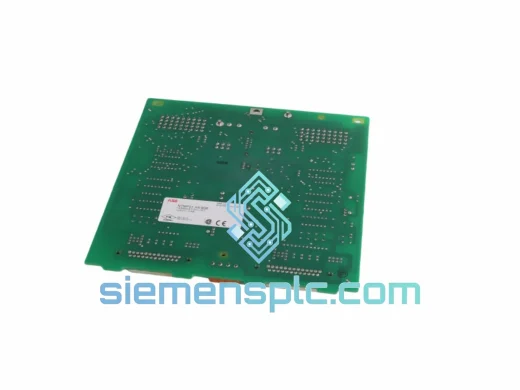
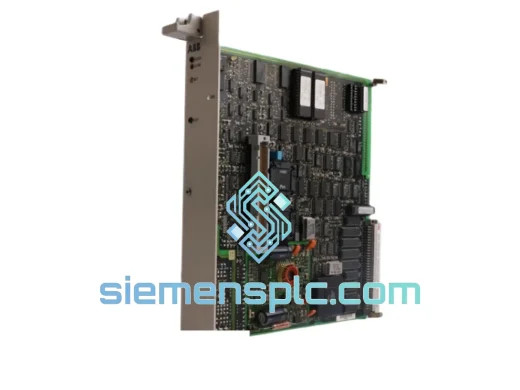
ABB HESG447271R2 70BK03B-ES Bus Coupling Module – HESG Series
Request verified availability, condition, replacement risk review, packing options and courier lead time for 70BK03B-ES.
BrandABB
Part Number70BK03B-ES
ConditionAvailability Check
Lead TimeRFQ Confirmation
DocumentsDatasheet / photos by RFQ
ShippingExport packing available
Auto-filled RFQ
70BK03B-ES
Click Request Quote and the part number is inserted into the inquiry form automatically.
- Reply by email: [email protected]
- WhatsApp / Tel: +86 18359268345
- Mon-Sat 9:00-18:00 GMT+8
Procurement Data
Key Product Information
Core fields for model confirmation and RFQ routing. Detailed product narrative remains below.
- Brand
- ABB
- Primary Part Number
- 70BK03B-ES
- Product Type
- Bus Coupling Module
- Series / Family
- Advant
- Manufacturer
- ABB (ASEA Brown Boveri)
- Country of Origin
- SE
- Catalog Category
- DCS & Safety Modules
- Operating Temp.
- 0 °C to +55 °C
- Warranty
- 12 months from date of shipment
Model confirmed for inquiry
70BK03B-ES
Send quantity, destination and urgency. The RFQ form keeps this part number attached.
Request Quote
Product Overview
ABB HESG447271R2 / 70BK03B-ES — ESBUS Backplane Coupling in ABB Advant DCS Architecture
The ABB HESG447271R2 / 70BK03B-ES is a bus coupling module engineered for deployment within ABB’s Advant and Master Series distributed control systems. Its primary function is to bridge the ESBUS (Extended Serial Bus) backplane with the process I/O subsystem, maintaining deterministic data transfer between the controller CPU and field-connected I/O stations. Unlike generic bus bridges, this module implements ABB’s proprietary ESBUS arbitration protocol, which enforces strict token-passing discipline to eliminate bus contention under high-load conditions — a critical requirement in continuous-process environments where scan-cycle jitter directly affects loop stability.
In a typical Advant AC 450 rack configuration, the HESG447271R2 occupies a dedicated coupling slot and operates as a transparent relay between the S100 I/O bus and the ESBUS segment. The module’s internal logic handles address decoding, data buffering, and error-frame detection autonomously, offloading these tasks from the CPU module and preserving CPU bandwidth for PID computation and sequence logic execution. This architectural separation is fundamental to ABB’s modular DCS philosophy: each functional layer — communication, computation, and I/O — operates independently, allowing individual module replacement without system-wide reconfiguration.
Real-time Stock & RFQ: [email protected] | WhatsApp: +86 18359268345
Technical Parameters
| Parameter | Specification |
|---|---|
| Part Number | HESG447271R2 / 70BK03B-ES |
| Manufacturer | ABB (ASEA Brown Boveri) |
| Module Function | Bus Coupling Module (ESBUS ↔ S100 I/O Bus) |
| Series | HESG / 70BK Series |
| Compatible Platforms | ABB Advant AC 450, AC 410; Master MOD 300; Symphony Plus S+ Control |
| Bus Protocol | ESBUS (ABB proprietary token-passing serial bus) |
| Backplane Interface | S100 I/O Bus (parallel, 8-bit data, multiplexed address) |
| Supply Voltage | 24 V DC (supplied via rack backplane) |
| Power Consumption | ≤ 5 W (typical operating load) |
| Operating Temperature | 0 °C to +55 °C |
| Storage Temperature | −25 °C to +70 °C |
| Relative Humidity | 5 % to 95 % RH, non-condensing |
| EMC Compliance | EN 61000-4-2 (ESD), EN 61000-4-4 (EFT/Burst), EN 61000-4-5 (Surge) |
| Mounting | ABB S100 rack, dedicated coupling slot |
| Form Factor | Single-width Eurocard module |
| Weight | 1,400 g (module + housing) |
| Country of Origin | Sweden |
| Revision | R2 (hardware revision with enhanced diagnostic register) |
| Warranty | 12 months from date of shipment |
Hardware Logical Analysis
The HESG447271R2 implements a dual-port memory architecture at its core. On the ESBUS side, a dedicated UART-class serial controller manages token acquisition, frame assembly, and CRC-16 error checking at the physical layer. On the S100 side, a parallel bus transceiver with tri-state output drivers handles address latching and data multiplexing. Between these two interfaces sits a shared RAM buffer — typically 2 KB in this module class — that decouples the asynchronous serial domain from the synchronous parallel domain, preventing bus stall propagation across the coupling boundary.
The R2 hardware revision introduced an expanded diagnostic status register accessible via the S100 address space. This register exposes per-frame error counters, token-loss event flags, and bus-idle timeout indicators — data that the Advant CPU can poll cyclically and forward to the operator station for predictive maintenance analysis. Earlier R1 units lacked this register, making fault isolation dependent on external bus analyzers.
EMC hardening on this module follows ABB’s standard industrial practice: all signal lines crossing the module boundary pass through common-mode chokes and transient voltage suppression (TVS) diodes rated at ±1,500 V peak. The PCB ground plane is segmented to isolate digital switching noise from the analog reference used by the bus transceiver, reducing radiated emissions and improving immunity to conducted interference from adjacent variable-frequency drives and contactors — a common noise source in motor-control cabinets where this module is frequently deployed.
The module does not implement active bus termination internally; termination resistors are located on the rack backplane, ensuring consistent impedance matching regardless of slot position. This design choice simplifies module replacement: a technician can extract and reinsert the HESG447271R2 without adjusting termination jumpers or recalculating stub lengths.
System Integration Benefits
- Zero-reconfiguration hot-swap: The module stores no application-layer configuration data. All addressing and routing parameters reside in the CPU module, so physical replacement requires no software download or parameter re-entry — the replacement unit is recognized and initialized within one bus scan cycle.
- Deterministic scan-cycle contribution: ESBUS token-passing guarantees a bounded worst-case bus access latency. For a 16-station segment, maximum token rotation time is under 2 ms, ensuring the coupling module never becomes the bottleneck in a 10 ms control loop.
- Diagnostic transparency via status register: The R2 revision’s diagnostic register allows the DCS historian to log bus error events with millisecond-resolution timestamps, enabling root-cause analysis of intermittent communication faults without physical bus probing.
- Electrical isolation at the coupling boundary: Optocoupler isolation between the ESBUS serial interface and the S100 parallel bus provides 500 V RMS galvanic separation, protecting the CPU rack from ground-loop currents originating in field-side wiring.
- Backward compatibility with R1 installations: The R2 module is pin-compatible and firmware-transparent with R1 racks. Upgrading from R1 to R2 requires no firmware patch on the CPU module — the additional diagnostic register is simply ignored by older firmware versions.
- Reduced mean time to repair (MTTR): Because the module is self-identifying on the ESBUS segment, the operator station displays the replacement event automatically, eliminating manual asset-register updates during emergency maintenance.
- Low power dissipation in high-density racks: At ≤ 5 W typical, the module contributes minimal thermal load to the rack power budget, allowing full 16-slot rack population without forced-air cooling upgrades in most ambient conditions.
- Compatibility with redundant CPU configurations: In dual-CPU redundant Advant systems, the HESG447271R2 supports simultaneous read access from both primary and standby CPUs, enabling bumpless switchover without bus re-arbitration delays.
Quality Assurance & Global Logistics
Every HESG447271R2 / 70BK03B-ES unit dispatched from our Xiamen, China facility undergoes a structured pre-shipment verification sequence. Electrical continuity is confirmed across all backplane connector pins using a dedicated test fixture that replicates the S100 rack interface. The ESBUS serial port is exercised with a loopback frame sequence to verify CRC generation and error-flag behavior. Power consumption is measured at nominal 24 V DC supply to confirm it falls within the ≤ 5 W specification band.
Units are packed in anti-static ESD shielding bags, placed in foam-lined inner cartons, and enclosed in double-wall corrugated outer packaging rated for international air freight handling. Each shipment includes a packing list with the module’s serial number, hardware revision marking, and test-pass timestamp for traceability documentation.
Standard dispatch from Xiamen is within 1–3 business days for in-stock units. International air freight to Europe, North America, Southeast Asia, and the Middle East typically achieves door-to-door delivery in 5–10 business days. DDP (Delivered Duty Paid) and DAP (Delivered at Place) Incoterms are supported for most destination countries. For urgent plant-shutdown scenarios, same-day dispatch with express courier is available upon request before 14:00 CST.
All units carry a 12-month warranty covering manufacturing defects and functional failure under normal operating conditions. Warranty claims are processed with a target response time of 48 hours from receipt of the defective unit at our facility.
Contact Information
Email: [email protected]
WhatsApp: +86 18359268345
Web: siemensplc.com
Location: Xiamen, China
© 2026 siemensplc.com. All rights reserved.
Ready to quote
[email protected]
Send This Part Number to Sales
RFQ workflow
Quality workflow ->
Confirmation Process
01Model confirmation
We check the full part number, brand, series and visible nameplate information before quotation.
02Availability reply
Sales confirms stock path, condition option, quantity and realistic lead time for export dispatch.
03Packing & courier
DHL, FedEx, UPS or buyer courier arrangements can be reviewed with packing requirements.
Continue sourcing
Browse full catalog ->
Related Automation Parts
Similar brand or category products for fast comparison and multi-item RFQ lists.
ABB
RFQ Ready
ABB HESG448230R1/G 216EA61b DCS Processor Module
Advant
Origin SE
PLC / DCS Processor Module