ABB
In Stock OK
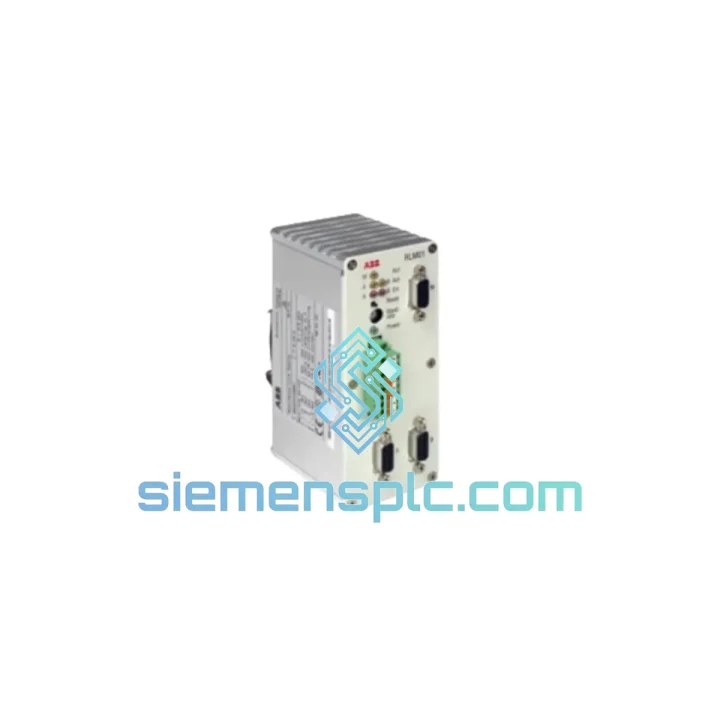
ABB RLM01 PLC Redundancy Module – AC500
Request verified availability, condition, replacement risk review, packing options and courier lead time for RLM01.
BrandABB
Part NumberRLM01
ConditionAvailability Check
Lead TimeRFQ Confirmation
DocumentsDatasheet / photos by RFQ
ShippingExport packing available
Auto-filled RFQ
RLM01
Click Request Quote and the part number is inserted into the inquiry form automatically.
- Reply by email: [email protected]
- WhatsApp / Tel: +86 18359268345
- Mon-Sat 9:00-18:00 GMT+8
Procurement Data
Key Product Information
Core fields for model confirmation and RFQ routing. Detailed product narrative remains below.
- Brand
- ABB
- Primary Part Number
- RLM01
- Product Type
- PLC Redundancy Module
- Series / Family
- AC500
- Manufacturer
- ABB
- Country of Origin
- SE
- Catalog Category
- PLCs & Controllers
- Operating Temp.
- 0 °C to +60 °C
- Warranty
- 12 months from date of shipment
Model confirmed for inquiry
RLM01
Send quantity, destination and urgency. The RFQ form keeps this part number attached.
Request Quote
Product Overview
ABB RLM01 — Redundancy Link Module: Deterministic Failover Architecture for AC500 Hot-Standby Systems
In process-critical installations — power generation, water treatment, oil & gas pipeline control — a single CPU failure cannot be permitted to interrupt the control loop. The ABB RLM01 is the hardware backbone of the AC500 hot-standby redundancy architecture. It establishes a dedicated, high-speed synchronization channel between the primary and standby CPU modules, enabling sub-scan-cycle switchover without process data loss. This is not a software feature. It is a discrete hardware link with its own communication protocol, independent of the backplane bus and the application Ethernet network.
Understanding the RLM01 requires understanding what it is not: it is not a network switch, not a passive cable adapter, and not a firmware option. It is an active module that continuously mirrors process image data, I/O states, and internal flags from the active CPU to the standby CPU at every scan cycle. When the active CPU fails — whether from a hardware fault, power interruption, or watchdog timeout — the standby CPU assumes control with a fully synchronized process image. Field actuators do not see a gap. The control loop continues.
Real-time Stock & RFQ: [email protected] | WhatsApp: +86 18359268345
Technical Parameters
| Part Number | RLM01 |
| Manufacturer | ABB |
| Product Series | AC500 |
| Module Function | Hot-standby CPU redundancy synchronization link |
| Redundancy Architecture | 1:1 Hot-Standby (Primary + Standby CPU pair) |
| Modules Required per Redundant Pair | 2 (one per CPU) |
| Compatible CPUs | PM573-ETH, PM583-ETH, PM591-ETH, PM592-ETH, PM595 (FW ≥ V3.0) |
| Mounting | Direct plug-in to AC500 CPU module redundancy port |
| Communication Link | Proprietary ABB redundancy protocol (dedicated port, not Ethernet) |
| Switchover Time | Sub-scan-cycle (no process data loss on failover) |
| Operating Temperature | 0 °C to +60 °C |
| Storage Temperature | -25 °C to +70 °C |
| Relative Humidity | 5 % to 95 %, non-condensing |
| Degree of Protection | IP20 |
| Compliance Standards | IEC 61131-2, CE, UL, cUL |
| Country of Origin | Germany |
| Condition | New — Genuine ABB OEM |
| Stock Location | Xiamen, China ✅ In Stock |
| Warranty | 12 months from date of shipment |
Hardware Logical Analysis
The RLM01 operates on a principle of continuous, synchronous state replication. At each PLC scan cycle, the active CPU writes its complete process image — input data, output data, internal markers, timer states, and counter values — across the RLM01 link to the standby CPU. The standby CPU maintains this image in its own memory but does not execute output writes to the I/O bus. It is in a perpetual ready state, one scan cycle behind the active unit at most.
EMC Design: The RLM01 link operates on a shielded, differential-signal physical layer. This design choice is deliberate: industrial control cabinets are electrically hostile environments. Variable frequency drives, contactors, and high-current switching loads generate broadband electromagnetic interference that can corrupt single-ended signal lines. The differential architecture of the RLM01 link rejects common-mode noise, maintaining signal integrity without requiring additional shielding measures beyond standard cabinet grounding practice.
Redundancy Arbitration Logic: The RLM01 implements a hardware-level arbitration mechanism to prevent split-brain conditions — the scenario where both CPUs simultaneously believe they are the active unit and both attempt to write to the I/O bus. The arbitration logic uses a token-based protocol: only the CPU holding the active token drives I/O outputs. Token transfer occurs under controlled conditions defined by the ABB redundancy firmware, not by application logic. This separation of concerns means a programming error in the user application cannot inadvertently trigger an uncontrolled switchover or create a dual-active condition.
Backplane Independence: The RLM01 link is entirely independent of the AC500 backplane bus. This is architecturally significant. A backplane communication fault — which would affect I/O module communication — does not impair the redundancy synchronization channel. The two failure domains are isolated. A system designer can therefore treat backplane faults and CPU redundancy as orthogonal failure modes, simplifying fault tree analysis for SIL assessments.
Watchdog Integration: Each CPU module monitors the RLM01 link health via a hardware watchdog. If the link is interrupted — cable fault, module failure, or connector issue — both CPUs detect the loss of synchronization within one watchdog timeout period (configurable, typically 100–500 ms). The system enters a defined degraded state: the active CPU continues to control the process, and an alarm is raised to the operator. The system does not fail silently. This behavior is deterministic and documented in ABB’s redundancy system manual.
System Integration Benefits
- Zero-interruption process continuity: Sub-scan-cycle switchover means field devices — valves, drives, motors — do not receive a gap in their control signals during CPU failover. Processes that cannot tolerate even a single missed output update (e.g., continuous casting, chemical dosing) remain stable through a primary CPU failure.
- Deterministic switchover timing: Switchover time is bounded by the scan cycle duration, not by operating system scheduling or network latency. Engineers can calculate worst-case switchover time from the configured scan cycle and include it in process hazard analyses.
- Diagnostic transparency: The RLM01 and AC500 firmware expose redundancy status via standard diagnostic function blocks in Automation Builder. SCADA systems can read active/standby role, link health, and synchronization state without custom polling logic.
- Independent maintenance window: With the redundant pair operational, the standby CPU can be taken offline for firmware updates or hardware inspection without stopping the process. This eliminates the need for planned production shutdowns for routine PLC maintenance.
- Simplified SIL assessment: The hardware separation of the redundancy link from the backplane bus creates two independent failure domains. This architectural clarity reduces the complexity of IEC 61508 fault tree analysis and supports higher SIL claims in safety cases.
- Native Automation Builder integration: Redundancy configuration requires no third-party tools. ABB Automation Builder provides a dedicated redundancy configuration workspace, status monitoring panels, and switchover simulation for commissioning validation.
- Scalable to network redundancy: The RLM01 hot-standby architecture is compatible with redundant Ethernet ring topologies (PROFINET MRP, Modbus TCP with dual-port CPUs). CPU redundancy and network redundancy can be layered without architectural conflicts.
- Long-term platform availability: The AC500 platform carries ABB’s extended lifecycle commitment. Spare parts, including the RLM01, are maintained in production for the duration of the platform lifecycle, reducing obsolescence risk for long-horizon installations (10–20 year plant lifetimes).
Quality Assurance & Global Logistics
Every RLM01 unit dispatched from our Xiamen facility is sourced through verified ABB distribution channels. Genuine ABB modules carry traceable batch codes and serial numbers that can be cross-referenced against ABB’s manufacturing records. We do not mix surplus stock with new stock without explicit disclosure. Each unit is inspected for physical integrity, label authenticity, and connector condition before packaging.
Units are stored in a climate-controlled warehouse environment: temperature maintained at 18–25 °C, relative humidity controlled below 60 %. Electronic modules are stored in anti-static packaging. Long-term storage conditions comply with IEC 60068-1 recommendations for electronic component storage.
Logistics from Xiamen to global destinations:
- DHL Express Worldwide: 1–3 business days to Europe, Southeast Asia, Middle East. 2–4 business days to the Americas and Oceania. Same-day dispatch for orders confirmed before 15:00 CST.
- FedEx International Priority: Available as an alternative carrier. Carrier selection is optimized for destination and transit time.
- Export documentation: Commercial invoice, packing list, and certificate of origin prepared to destination country import requirements. HS code 8537.10 (programmable controllers and associated modules) applied correctly.
- Full shipment tracking: Tracking number provided within 2 hours of dispatch. Proactive monitoring — customs holds or routing exceptions are communicated before the customer needs to follow up.
- Emergency freight: For critical plant shutdowns, next-flight-out air freight is available. Contact via WhatsApp for time-critical requirements outside standard express service windows.
12-month warranty covers manufacturing defects and functional failure under normal operating conditions. Warranty claims are processed with replacement dispatch within 3 business days of fault confirmation.
Contact Information
📧 Email: [email protected]
💬 WhatsApp: +86 18359268345
🌐 Web: siemensplc.com
📍 Location: Xiamen, China
© 2026 siemensplc.com. All rights reserved.
Ready to quote
[email protected]
Send This Part Number to Sales
RFQ workflow
Quality workflow ->
Confirmation Process
01Model confirmation
We check the full part number, brand, series and visible nameplate information before quotation.
02Availability reply
Sales confirms stock path, condition option, quantity and realistic lead time for export dispatch.
03Packing & courier
DHL, FedEx, UPS or buyer courier arrangements can be reviewed with packing requirements.
Continue sourcing
Browse full catalog ->
Related Automation Parts
Similar brand or category products for fast comparison and multi-item RFQ lists.
ABB
RFQ Ready
ABB 1SVR427075R0000 CP-A CM PLC CPU Module – AC500 Compact Series
AC500
Origin SE
PLC CPU Module