ABB
In Stock OK
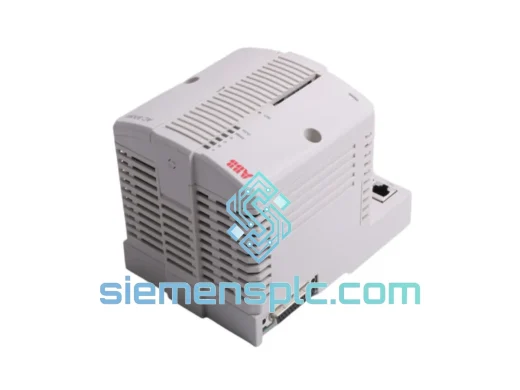
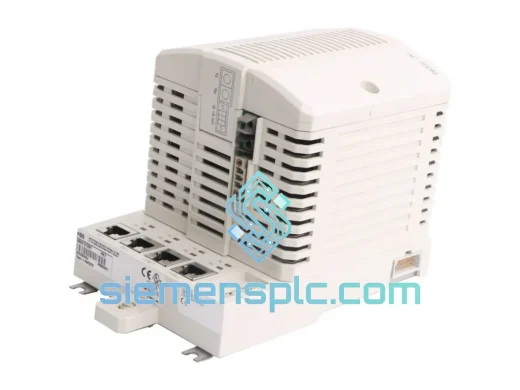
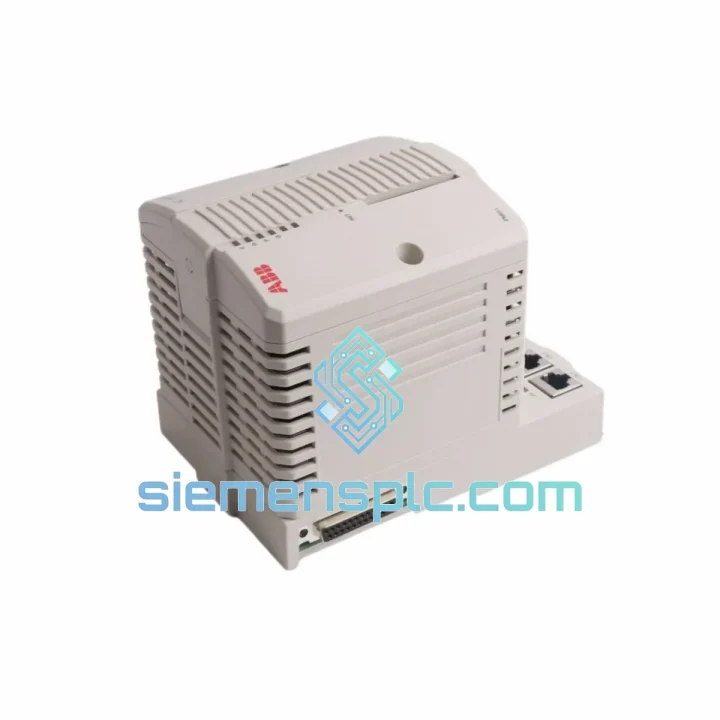
ABB SM811K01 3BSE018173R1 Safety CPU Module
Request verified availability, condition, replacement risk review, packing options and courier lead time for SM811K01 3BSE018173R1.
BrandABB
Part NumberSM811K01 3BSE018173R1
ConditionAvailability Check
Lead TimeRFQ Confirmation
DocumentsDatasheet / photos by RFQ
ShippingExport packing available
Auto-filled RFQ
SM811K01 3BSE018173R1
Click Request Quote and the part number is inserted into the inquiry form automatically.
- Reply by email: [email protected]
- WhatsApp / Tel: +86 18359268345
- Mon-Sat 9:00-18:00 GMT+8
Procurement Data
Key Product Information
Core fields for model confirmation and RFQ routing. Detailed product narrative remains below.
- Brand
- ABB
- Primary Part Number
- SM811K01 3BSE018173R1
- Product Type
- Safety CPU Module
- Series / Family
- AC800M
- Manufacturer
- ABB (Asea Brown Boveri)
- Country of Origin
- SE
- Catalog Category
- DCS & Safety Modules
- Operating Temp.
- 0 °C to +55 °C
- Humidity
- 5–95 % RH, non-condensing
Model confirmed for inquiry
SM811K01 3BSE018173R1
Send quantity, destination and urgency. The RFQ form keeps this part number attached.
Request Quote
Product Overview
ABB SM811K01 (3BSE018173R1) — Your SIS Is Down. Every Minute Costs Money. We Ship Today.
A tripped Safety CPU in an AC800M HI rack doesn’t wait for procurement cycles. Whether you’re staring at a red LED on slot 1 or your DCS console is throwing CPU FAULT / SAFE STATE ACTIVE alarms, the SM811K01 is the module you need — and we have it on the shelf in Xiamen, ready to clear customs and land on your site faster than your OEM’s lead time quote.
This is not a refurbished pull. Not a grey-market gamble. Every SM811K01 we ship is inspected, powered on, and verified against ABB’s label and revision markings before it leaves our warehouse. If your plant is running an AC800M High Integrity platform in oil & gas, petrochemical, power generation, or any SIL 3-rated SIS application, this is the exact module you need to restore your safety function and get your process back online.
⚡ URGENT REQUIREMENT? Contact: [email protected] | WhatsApp: +86 18359268345
Quick Technical Datasheet
| Part Number | SM811K01 |
| Catalog / Order No. | 3BSE018173R1 |
| Manufacturer | ABB (Asea Brown Boveri) |
| Platform | AC800M High Integrity (HI) |
| Module Function | Safety CPU / Safety Controller |
| Safety Integrity Level | SIL 3 — IEC 61508 certified |
| Architecture | 1oo2D (1-out-of-2 with Diagnostics) |
| Supply Voltage | 24 V DC via backplane |
| Operating Temperature | 0 °C to +55 °C |
| Storage Temperature | −40 °C to +70 °C |
| Humidity | 5–95 % RH, non-condensing |
| Communication Bus | ModuleBus (internal rack backplane) |
| Dimensions (H × W × D) | 233 × 35 × 230 mm |
| Weight | 2,060 g |
| Protection Rating | IP20 |
| Certifications | IEC 61508 SIL 3, TÜV Rheinland |
| Programming Tool | ABB Control Builder M (CBM) + Safety Application Builder |
| Country of Origin | Sweden |
| Stock Status | ✅ Ready to Ship — Xiamen Warehouse |
Troubleshooting & Replacement Tips
Common failure signatures that point to SM811K01:
- STATUS LED solid red or alternating red/green: Internal CPU fault detected. The 1oo2D architecture has flagged a channel mismatch — the module has voted itself into safe state. Do not attempt to reset more than twice; repeated resets without replacement risk masking a hard fault.
- CBM diagnostic: “Safety CPU communication lost”: ModuleBus link between the Safety CPU and the process CPU (PM8xx) has dropped. First rule out backplane connector contamination or rack power issues. If the PM8xx is healthy and the rack PSU is nominal, the SM811K01 is the likely culprit.
- Spurious safe-state activation (no process fault): Firmware corruption or SRAM degradation. Common in modules exposed to sustained high ambient temperatures above 50 °C or repeated power cycling during brownouts.
- “Application mismatch” alarm after power cycle: The safety application CRC stored in the module’s non-volatile memory no longer matches the project. This can follow a hard fault or a failed firmware update. A replacement module requires a full safety application download from CBM.
Step-by-step hot-swap replacement procedure (redundant rack configuration):
- Confirm the standby Safety CPU is active and holding the safety application. Check CBM online status — the standby should show “STANDBY / HEALTHY” before you touch anything.
- In CBM, force a controlled switchover to the standby CPU. Do not pull the faulty module while it is still the active master.
- Once the standby is confirmed active, the faulty SM811K01 can be extracted. Grip the module handle firmly, release the locking lever, and slide straight out — do not rock side-to-side as this can damage the ModuleBus connector pins.
- Inspect the backplane slot connector for bent pins or contamination before inserting the replacement unit.
- Slide the new SM811K01 into the slot until the locking lever clicks. The module will power up and begin its self-test sequence (STATUS LED will cycle through green/amber).
- In CBM, download the safety application to the new module. Verify the application CRC matches the project checksum documented in your SIS management system.
- Perform a proof test of all SIFs associated with this Safety CPU before returning the system to normal operation. Document the replacement in your MOC (Management of Change) record.
Configuration notes — do not skip these:
- Firmware version matching: The replacement SM811K01 must run the same firmware revision as the surviving standby unit. Mismatched firmware between redundant CPUs will prevent synchronization. Check the firmware version label on the module faceplate and compare against your CBM project’s target firmware. If the replacement ships with an older firmware, ABB’s firmware upgrade procedure via CBM must be completed before the safety application download.
- Node address: The SM811K01 does not use physical DIP switches for node addressing — the address is assigned in the CBM hardware configuration. Ensure the replacement module’s slot position in the rack matches the hardware configuration in your CBM project exactly.
- Safety application password: If your safety project is password-protected (standard practice for SIL 3 applications), you will need the project password to download to the replacement module. Confirm this with your safety system engineer before starting the replacement.
- Proof test interval reset: After replacement, reset the proof test interval timer in your SIS management system. The replacement module resets the module-level diagnostic coverage clock.
Reliability in Harsh Conditions
The AC800M HI platform was engineered for environments where failure is not an option. The SM811K01 carries an operating temperature ceiling of +55 °C — but in practice, ABB’s thermal design margins mean the module maintains full diagnostic coverage well into sustained high-ambient conditions common in tropical and desert plant locations. The conformal-coated PCB resists humidity-driven corrosion in coastal and offshore environments where salt-laden air accelerates oxidation on unprotected boards.
Vibration resistance meets IEC 60068-2-6 test profiles, covering the mechanical stress typical of compressor halls, turbine decks, and skid-mounted equipment where rack vibration is a daily reality. The module’s backplane connector is rated for a minimum of 200 insertion cycles — relevant for sites that perform frequent maintenance rotations.
EMC immunity is certified to IEC 61000-4 series, including conducted and radiated immunity levels appropriate for heavy industrial environments with large motor drives, welding equipment, and high-voltage switchgear in proximity. The 1oo2D internal architecture provides an additional layer of resilience: even if one CPU channel is temporarily affected by an EMC transient, the cross-check logic prevents a spurious trip while the diagnostic system flags the event for investigation.
Units sourced from our Xiamen warehouse are stored in climate-controlled conditions (18–25 °C, <60 % RH) with anti-static packaging. Long-term storage units are rotated and re-inspected every 12 months to ensure electrolytic capacitor health and connector integrity before dispatch.
Global Express Logistics
Our Xiamen warehouse sits 40 minutes from Xiamen Gaoqi International Airport (XMN), one of China’s primary cargo hubs with direct freight connections to Frankfurt, Amsterdam, Dubai, Singapore, Los Angeles, and Chicago. This geography is not accidental — it was chosen specifically to minimize the time between “order confirmed” and “module on a plane.”
Standard dispatch timeline:
- Order confirmed before 14:00 CST: Same-day dispatch via DHL Express or FedEx International Priority
- Order confirmed after 14:00 CST: Next business day dispatch
- Transit times (door-to-door, typical): Europe 2–3 days | Middle East 2–3 days | Southeast Asia 1–2 days | North America 3–4 days | Australia 3–4 days
All shipments include commercial invoice, packing list, and certificate of origin for customs clearance. HS code 8537.10 is pre-declared on all PLC module shipments to avoid customs classification delays. For sites requiring formal import documentation (e.g., SABER for Saudi Arabia, INMETRO for Brazil), contact us at the time of order and we will prepare the required paperwork in parallel with dispatch.
Tracking numbers are issued within 2 hours of physical handover to the carrier and sent directly to your nominated email. For emergency shipments, our logistics team monitors the shipment actively and will proactively contact you if any customs hold or routing delay is detected.
Contact Information
📧 Email: [email protected]
💬 WhatsApp: +86 18359268345
🌐 Web: siemensplc.com
© 2026 siemensplc.com. All rights reserved.
Ready to quote
[email protected]
Send This Part Number to Sales
RFQ workflow
Quality workflow ->
Confirmation Process
01Model confirmation
We check the full part number, brand, series and visible nameplate information before quotation.
02Availability reply
Sales confirms stock path, condition option, quantity and realistic lead time for export dispatch.
03Packing & courier
DHL, FedEx, UPS or buyer courier arrangements can be reviewed with packing requirements.
Continue sourcing
Browse full catalog ->
Related Automation Parts
Similar brand or category products for fast comparison and multi-item RFQ lists.
ABB
RFQ Ready
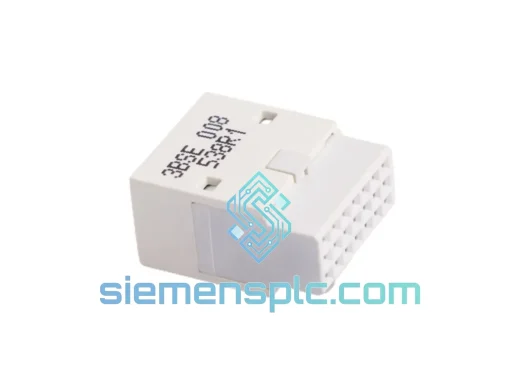
ABB TB807 3BSE008538R1 DCS Modulebus Terminator
AC800M
Origin SE
DCS Backplane Terminator