ABB
RFQ Ready
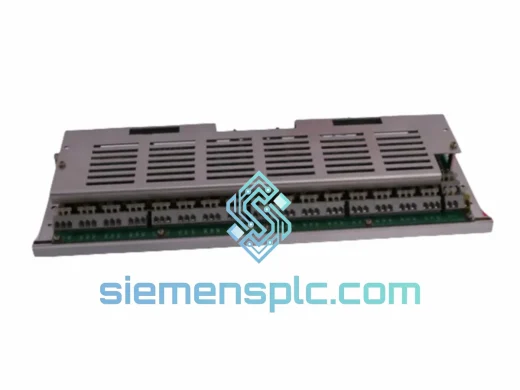
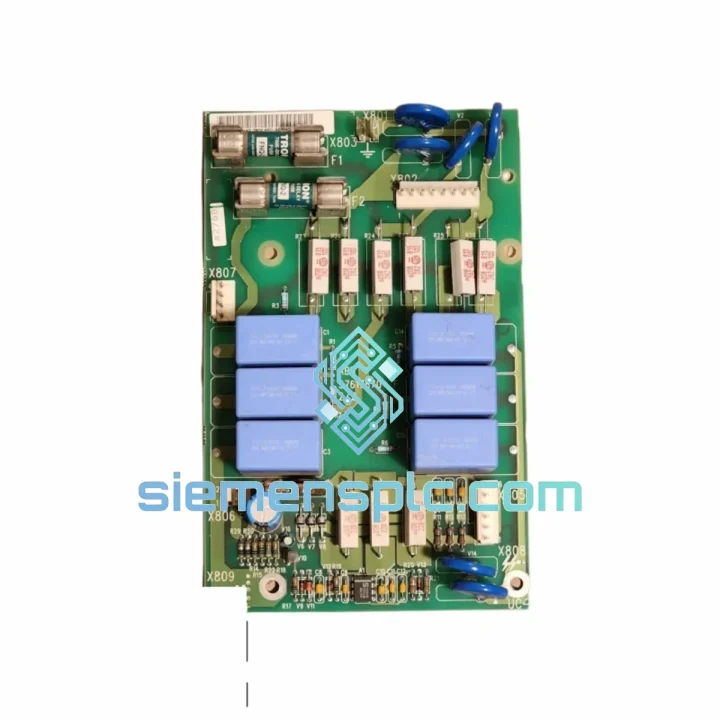
ABB SDCS-PIN-4 3ADT314100R1001 Interface Board
DCS Drive Series
Origin SE
PLC Interface Board
Request verified availability, condition, replacement risk review, packing options and courier lead time for ACS/DCS.
Click Request Quote and the part number is inserted into the inquiry form automatically.
Core fields for model confirmation and RFQ routing. Detailed product narrative remains below.
The ABB SNAT7902 EFD is a dedicated excitation fault detection circuit board designed for integration within ABB’s ACS and DCS series industrial drive platforms. Its primary function is continuous monitoring of the excitation circuit — the subsystem responsible for generating and sustaining the magnetic field in DC motors and synchronous machines. When excitation current deviates from programmed thresholds, the SNAT7902 EFD generates a fault signal that propagates to the main control unit within microseconds, enabling the drive to execute a controlled shutdown sequence rather than an uncontrolled trip. This deterministic fault response is critical in high-inertia applications such as rolling mills, paper machines, and large centrifugal compressors, where an uncontrolled motor coast-down can cause mechanical damage or process contamination.
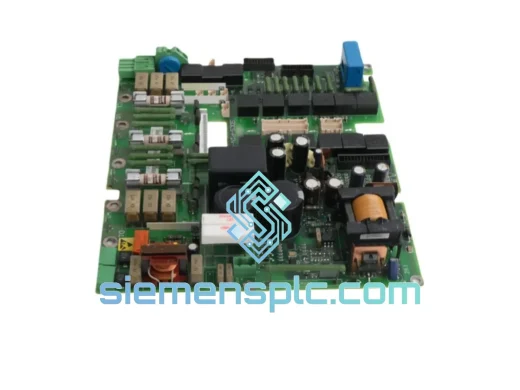
Physically, the SNAT7902 EFD is a plug-in PCB module that occupies a dedicated slot in the ABB drive’s control section. It interfaces with the main control board via a parallel backplane bus, exchanging status words and fault codes at the drive’s internal scan cycle rate. The board carries its own isolated power supply rail, ensuring that a fault on the excitation circuit does not corrupt the logic supply of the detection circuitry itself — a design choice that prevents false-negative fault masking under worst-case fault conditions.
Real-time Stock & RFQ: [email protected] | WhatsApp: +86 18359268345
| Part Number | SNAT7902 EFD |
| Manufacturer | ABB |
| Function | Excitation Fault Detection |
| Series Compatibility | ACS / DCS Industrial Drive Series |
| Form Factor | Plug-in PCB Module |
| Backplane Interface | Parallel bus, drive-internal scan cycle synchronization |
| Isolation | Galvanic isolation between excitation sensing circuit and logic supply |
| Fault Response Latency | Sub-millisecond fault signal propagation to main control board |
| Operating Temperature | 0 °C to +55 °C (ambient, forced-air cooled enclosure) |
| Storage Temperature | -40 °C to +70 °C |
| Humidity | 5–95% RH, non-condensing |
| Weight | 300 g (net) |
| Condition | Genuine ABB, new / surplus-new |
| Warranty | 12 months from date of shipment |
| Lead Time (in-stock) | Ships within 2 business days from Xiamen, China |
The SNAT7902 EFD’s hardware architecture reflects ABB’s approach to fault detection in high-power drive environments, where electromagnetic interference (EMI) levels can reach several hundred volts per meter during switching transients. The board employs optocoupler-based galvanic isolation at every analog input stage. Each excitation current sensing channel passes through a precision current transformer, whose secondary output is conditioned by a low-pass filter with a cutoff frequency tuned to reject switching noise above the drive’s PWM carrier frequency, while preserving the DC and low-frequency AC components that carry fault-relevant information.
The comparator logic on the SNAT7902 EFD uses hysteresis-configured threshold detection rather than simple level triggering. This design prevents fault chatter — a condition where a signal oscillating near the threshold boundary generates repeated fault assertions and resets, which can corrupt the drive’s fault log and trigger nuisance trips. The hysteresis band is factory-calibrated to ABB’s drive-specific excitation current tolerances and is not field-adjustable, ensuring consistent behavior across all installed units of the same revision.
EMC compliance is achieved through a combination of board-level shielding traces (guard rings around high-impedance nodes), decoupling capacitors placed within 2 mm of each IC power pin, and a dedicated ground plane layer that provides a low-impedance return path for high-frequency currents. The PCB stack-up follows a four-layer construction: signal, ground, power, and signal — a layout that minimizes loop area for both differential and common-mode noise paths.
The board’s fault output is a latched open-collector signal, which means that once a fault is detected, the output remains asserted until the main control board explicitly resets it via the backplane bus. This latch behavior ensures that transient faults — those lasting only a few milliseconds — are captured and held for the control system’s diagnostic cycle, preventing silent fault loss in fast-clearing fault scenarios.
Every ABB SNAT7902 EFD unit dispatched from our Xiamen, China facility is a genuine ABB-manufactured component sourced through verified supply channels. Before shipment, each board undergoes a structured inspection sequence: visual examination under magnification for PCB delamination, component damage, and counterfeit markings; cross-referencing of ABB date codes and revision stamps against manufacturer records; and functional bench testing against ABB-specified excitation fault detection signal parameters. An inspection certificate with a traceable batch number is enclosed with every shipment.
Logistics from Xiamen are handled via DHL Express and FedEx International Priority for time-critical orders, with sea freight available for bulk procurement. In-stock units ship within 2 business days. All export documentation — commercial invoice, packing list, and HS code classification (HS: 8537.10) — is prepared in compliance with applicable trade regulations. Customs support for CN, EU, US, and ASEAN import destinations is available on request. Minimum order quantity is one unit, with no minimum for stocked items.
Email: [email protected]
WhatsApp: +86 18359268345
Web: siemensplc.com
Location: Xiamen, China
© 2026 siemensplc.com. All rights reserved.
We check the full part number, brand, series and visible nameplate information before quotation.
Sales confirms stock path, condition option, quantity and realistic lead time for export dispatch.
DHL, FedEx, UPS or buyer courier arrangements can be reviewed with packing requirements.
Similar brand or category products for fast comparison and multi-item RFQ lists.