ABB
In Stock OK
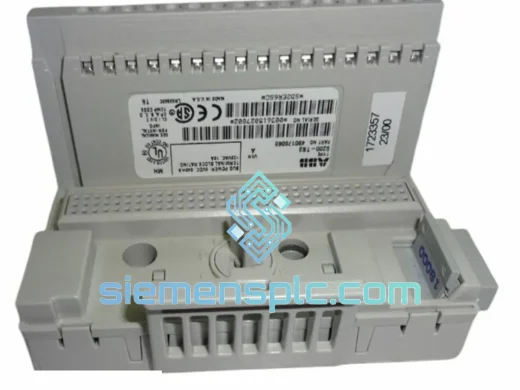
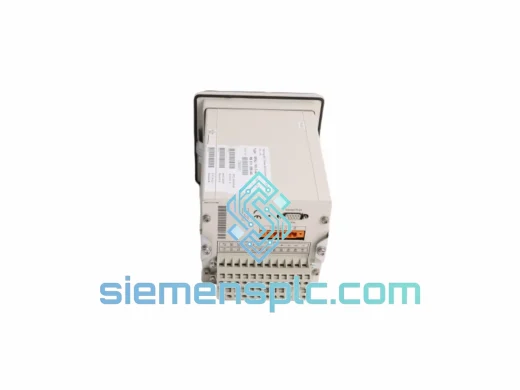
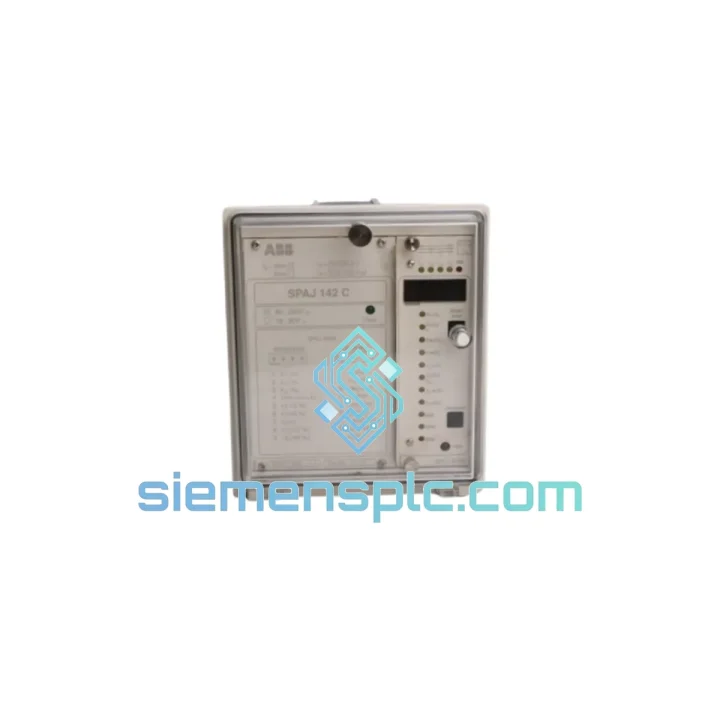
ABB SPAJ142C-AA Protection Relay
Request verified availability, condition, replacement risk review, packing options and courier lead time for SPAJ142C-AA.
BrandABB
Part NumberSPAJ142C-AA
ConditionAvailability Check
Lead TimeRFQ Confirmation
DocumentsDatasheet / photos by RFQ
ShippingExport packing available
Auto-filled RFQ
SPAJ142C-AA
Click Request Quote and the part number is inserted into the inquiry form automatically.
- Reply by email: [email protected]
- WhatsApp / Tel: +86 18359268345
- Mon-Sat 9:00-18:00 GMT+8
Procurement Data
Key Product Information
Core fields for model confirmation and RFQ routing. Detailed product narrative remains below.
- Brand
- ABB
- Primary Part Number
- SPAJ142C-AA
- Product Type
- Protection Relay
- Series / Family
- In Stock
- Manufacturer
- ABB (Asea Brown Boveri)
- Country of Origin
- SE
- Model Function
- Combined Overcurrent + Earth-Fault Protection
- Catalog Category
- Relays & Protection
Model confirmed for inquiry
SPAJ142C-AA
Send quantity, destination and urgency. The RFQ form keeps this part number attached.
Request Quote
Product Overview
ABB SPAJ142C-AA — Stop the Clock on Your MV Feeder Outage. Ship Today.
Every minute a medium-voltage feeder sits unprotected, your exposure compounds: undetected phase faults escalate into transformer failures, bus damage, and regulatory non-compliance. A failed SPAJ142C-AA is not a maintenance item — it is a production emergency. We stock this relay in Xiamen and can have it moving toward your site within hours of order confirmation. That is the only number that matters when your switchgear is offline.
URGENT REQUIREMENT? Contact: [email protected] | WhatsApp: +86 18359268345
Quick Technical Datasheet
| Parameter | Specification |
|---|---|
| Part Number | SPAJ142C-AA ✅ Ready to Ship |
| Manufacturer | ABB (Asea Brown Boveri) |
| Series | SPAJ 140 |
| Function | Combined Overcurrent + Earth-Fault Protection |
| Protection Elements | 3× I> / I>> (phase OC) + I0> / I0>> (earth-fault) |
| Tripping Characteristics | DT + IDMT (IEC Normal/Very/Extremely Inverse) |
| CT Secondary Input | 1 A / 5 A selectable |
| Auxiliary Voltage | 24–240 V AC/DC (suffix -AA, confirm nameplate) |
| Communication | SPA bus serial protocol |
| Mounting | Flush panel / draw-out case |
| Standards | IEC 60255, CE marked |
| Origin | Finland |
| Condition | New / Certified Surplus — confirmed before dispatch |
| Lead Time | Same-day dispatch on confirmed stock |
Troubleshooting & Replacement Tips
The SPAJ142C-AA fails in predictable ways. Knowing them cuts your swap time from hours to minutes.
Most Common Failure Modes:
- Auxiliary supply board failure: The internal DC/DC converter degrades over time, especially in panels with unstable battery chargers. Symptom: relay powers up but self-supervision LED stays red, no trip output. Confirm aux voltage at terminals before condemning the relay — a sagging battery bus is often the real culprit.
- SPA bus communication loss: Oxidized RS-232 connector pins or a failed SPA-ZC gateway upstream. Before replacing the relay, loop-test the SPA cable and check the gateway LED status. If the relay responds to local pushbutton test but not remote commands, the relay itself is likely fine.
- Spurious earth-fault trips (I0> element): CT polarity reversal during a previous maintenance outage is the most common cause. Verify CT secondary wiring polarity against the original scheme drawing. Also check for CT saturation on high-load feeders — the SPAJ142C-AA’s earth-fault element is sensitive and will respond to residual CT error current.
- Trip relay contact wear: After 10,000+ operations in high-fault environments, the output trip contacts develop resistance. Measure contact resistance with a micro-ohmmeter. >1 Ω on a trip contact is a replacement trigger.
Replacement Checklist — Do Not Skip These Steps:
- Record all existing settings (I>, I>>, t>, t>>, I0>, I0>>, t0>, t0>>, characteristic curve selection) before removing the old relay. The SPAJ142C-AA stores settings in non-volatile memory but physical documentation is mandatory for commissioning records.
- Confirm auxiliary voltage suffix matches your panel supply. The -AA suffix covers a wide AC/DC range but verify the nameplate — a mismatch will destroy the new relay within seconds of energization.
- Check CT secondary circuit continuity before inserting the new relay. An open CT secondary with the relay removed will generate dangerous voltages when the feeder is re-energized.
- After insertion, perform a secondary injection test at minimum: apply 2× I> setting and verify trip time against the selected IDMT curve. Do not return the feeder to service on a relay that has not been injection-tested.
- Re-enter all settings manually. There is no automated settings transfer between SPAJ 140 units — each relay ships with factory defaults.
- If integrating with SCADA via SPA bus: set the relay address (rotary switch on front panel) to match the original unit’s address before powering up. Address conflicts on the SPA bus will cause communication failures across all relays on that segment.
Reliability in Harsh Conditions
The SPAJ 140 platform was engineered for the environments where protection relays earn their keep — not climate-controlled control rooms, but outdoor switchgear kiosks in tropical humidity, underground mining substations with coal dust and vibration, and offshore platform switchboards exposed to salt-laden air and continuous mechanical shock.
The SPAJ142C-AA carries IEC 60255-21 Class 1 vibration and shock ratings, validated through sinusoidal vibration testing at 10–150 Hz and half-sine shock pulses at 15 g. The conformal-coated PCBs resist condensation and corrosive atmospheres, meeting IEC 60068-2-30 damp heat cycling requirements. Operating temperature range spans -10°C to +55°C continuous, with storage down to -40°C — relevant when units are warehoused in unheated facilities before emergency deployment.
The draw-out case design allows relay removal and insertion under live auxiliary supply without disturbing CT secondary circuits, a critical feature in substations where taking a complete outage for relay maintenance is operationally unacceptable. The self-supervision circuit monitors internal power supply, measurement circuits, and output relay coils continuously — any internal fault triggers an alarm output within 200 ms, giving operators advance warning before a protection gap develops.
In over two decades of field deployment across utilities and heavy industry in more than 80 countries, the SPAJ 140 Series has established a mean time between failures that makes it one of the most trusted legacy protection platforms still in active service. When you need a replacement, you need one that will run for another decade without attention — that is what you are getting.
Global Express Logistics
Our warehouse is located in Xiamen, Fujian Province — one of China’s primary export hubs with direct access to DHL, FedEx, and UPS international express networks. For urgent replacement orders, the process is straightforward:
- Order confirmation by 14:00 CST: Same-day dispatch to DHL/FedEx sort facility.
- DHL Express Worldwide: Xiamen to most of Europe, Middle East, and Southeast Asia in 2–4 business days. North America 3–5 business days.
- FedEx International Priority: Available as an alternative for destinations with stronger FedEx coverage — particularly useful for remote sites in Australia, South Africa, and Latin America.
- Export documentation: Commercial invoice, packing list, Certificate of Origin, and HS code declaration (HS 8536.49) prepared same day. For customers requiring FORM E (ASEAN-China FTA) or EUR.1 certificates, advise at time of order.
- Tracking: AWB number provided within 2 hours of dispatch. We monitor shipments proactively and flag any customs holds immediately.
- Emergency freight: For critical plant shutdowns requiring next-flight-out courier, contact us directly on WhatsApp for real-time coordination.
We have shipped ABB protection relays to power utilities in the Philippines, cement plants in Vietnam, petrochemical facilities in Saudi Arabia, and mining operations in South Africa — all on emergency timelines. Your downtime is our problem to solve.
Contact Information
Email: [email protected]
WhatsApp: +86 18359268345
Web: siemensplc.com
© 2026 siemensplc.com. All rights reserved.
Ready to quote
[email protected]
Send This Part Number to Sales
RFQ workflow
Quality workflow ->
Confirmation Process
01Model confirmation
We check the full part number, brand, series and visible nameplate information before quotation.
02Availability reply
Sales confirms stock path, condition option, quantity and realistic lead time for export dispatch.
03Packing & courier
DHL, FedEx, UPS or buyer courier arrangements can be reviewed with packing requirements.
Continue sourcing
Browse full catalog ->
Related Automation Parts
Similar brand or category products for fast comparison and multi-item RFQ lists.