ABB
RFQ Ready
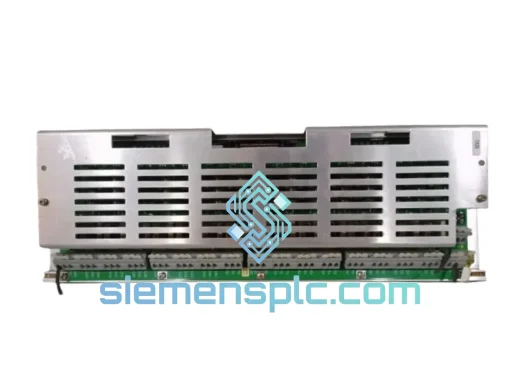
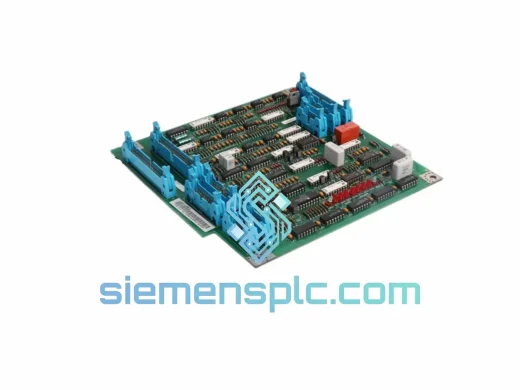
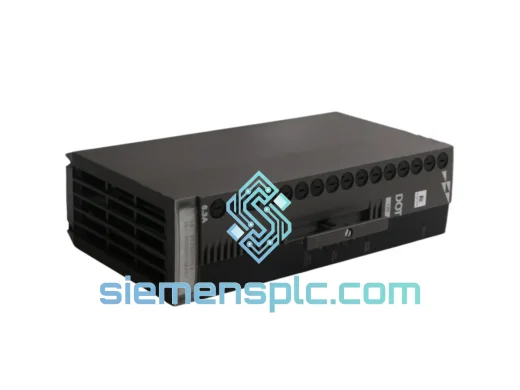
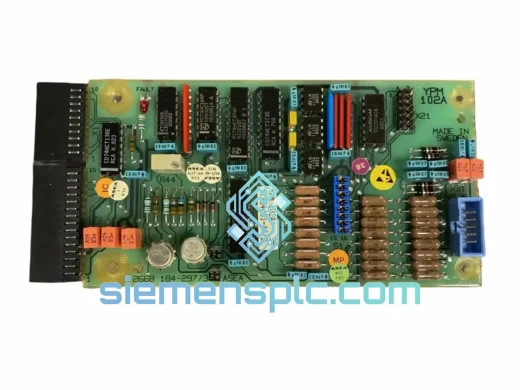
ABB YPM102A YT204001-AA Analog Output Module – AC 800M S800 I/O
S800
Origin SE
Analog Output Module
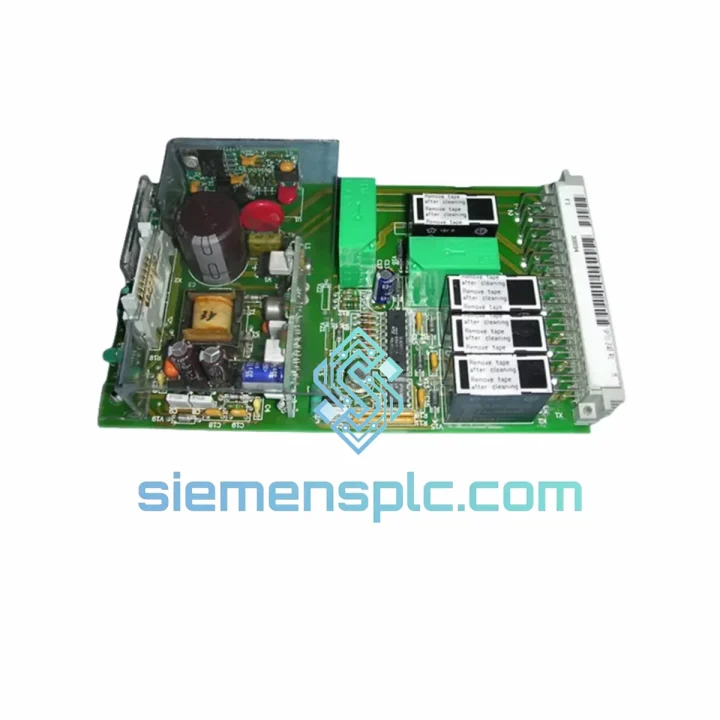
Request verified availability, condition, replacement risk review, packing options and courier lead time for SPAZ2296P.
Click Request Quote and the part number is inserted into the inquiry form automatically.
Core fields for model confirmation and RFQ routing. Detailed product narrative remains below.
The ABB SPAZ2296P is a plug-in relay output module designed for integration within ABB’s SPAM (Substation Protection and Automation Module) series relay chassis. Its functional position in the protection chain is the output execution layer: it receives discrete binary switching commands from the SPAM CPU module via the chassis backplane and converts those commands into galvanically isolated, hard-contact switching actions. These contacts directly drive circuit breaker trip coils, close coils, lockout relay coils, and SCADA alarm dry-contact inputs — the terminal actuators in any protection scheme.
The SPAZ2296P is not a general-purpose relay card adapted for protection use. Its contact ratings, isolation architecture, and mechanical specification are defined against the operational profile of medium-voltage protection relay output circuits: infrequent operation under normal conditions, mandatory correct operation under fault conditions, and sustained contact integrity across a 20–30 year substation asset life. These constraints drive design decisions that differ fundamentally from industrial control relay modules, and the SPAZ2296P’s engineering reflects that distinction throughout its hardware architecture.
Within the SPAM chassis, the SPAZ2296P occupies a defined slot position and interfaces with the backplane bus through a keyed plug-in connector. The backplane carries the coil drive signals from the CPU module to the output relay coils on the SPAZ2296P, eliminating the point-to-point wiring between discrete relay cards and the CPU that characterizes older panel designs. This integration reduces the total number of wiring terminations in the protection cubicle, each of which represents a potential failure point over the panel’s service life. The plug-in form factor also enables module replacement in a live panel without disturbing adjacent protection functions — a practical requirement in substation environments where full protection outages are operationally constrained.
The output contacts of the SPAZ2296P are rated for the inductive DC loads characteristic of station battery-fed trip coil circuits. Station battery systems operate at 110 V DC or 220 V DC, and trip coil circuits present an inductive load with an L/R time constant that sustains current flow after contact separation. Interrupting this current without excessive arcing requires contacts with defined gap geometry, appropriate contact material selection, and a spring mechanism that provides sufficient contact opening velocity. The SPAZ2296P’s contact specification addresses these parameters in accordance with IEC 60255-1 output contact classification requirements for protection relay equipment.
The SPAM series architecture provides a further operational advantage: the CPU module monitors the coil drive status of each output relay on the SPAZ2296P, enabling the protection relay to include output module health in its self-monitoring and event logging functions. A failed relay coil drive circuit or a welded contact condition can be detected and reported via the relay’s communication interface without requiring external monitoring hardware. This diagnostic transparency is a measurable contribution to substation protection system availability.
Real-time Stock & RFQ: [email protected] | WhatsApp: +86 18359268345
| Parameter | Specification |
|---|---|
| Part Number / SKU | SPAZ2296P |
| Manufacturer | ABB |
| Product Series | SPAM (Substation Protection and Automation Module) |
| Module Function | Relay output — trip, close, alarm, and interlocking hard contacts |
| Form Factor | Plug-in modular card, SPAM chassis backplane interface |
| Output Contact Type | Electromechanical relay; NO / NC configurations |
| Auxiliary Supply Voltage | 24–250 V DC / AC (verify against ABB SPAZ2296P datasheet for exact range) |
| Contact Voltage Rating | Up to 250 V AC / 220 V DC (application-dependent; confirm with datasheet) |
| DC Interruption Duty | Rated for inductive DC trip coil circuits per IEC 60255-1 output contact class |
| Isolation | Galvanic isolation between backplane logic domain and field circuit domain |
| Backplane Interface | Keyed plug-in connector, SPAM series defined pin assignment |
| EMC Immunity | IEC 61000-4-4 (fast transient), IEC 61000-4-5 (surge), IEC 61000-4-8 (power frequency magnetic field) |
| Operating Temperature | −10 °C to +55 °C |
| Storage Temperature | −40 °C to +70 °C |
| Applicable Standards | IEC 60255-1, IEC 61000 series, ABB SPAM series internal quality specifications |
| Country of Origin | Germany |
| Weight | Approx. 700 g |
| Warranty | 12 months from date of shipment |
DC Inductive Interruption Architecture. The dominant hardware constraint for protection relay output contacts is the interruption of inductive DC current in station battery circuits. When a trip contact opens under load, the collapsing magnetic field in the trip coil sustains current flow across the opening contact gap, generating an arc. The energy dissipated in this arc — proportional to ½LI² — determines contact erosion rate and the risk of contact welding. The SPAZ2296P’s contact assembly uses a contact gap geometry and contact material specification selected for this duty: the gap provides sufficient dielectric recovery distance for the DC arc voltage to exceed the system voltage, and the contact material’s arc erosion resistance is matched to the expected number of trip operations over the module’s service life. This is a quantitative engineering selection, not a generic relay contact specification.
Galvanic Isolation Between Logic and Field Domains. The backplane carries low-voltage logic signals from the SPAM CPU to the relay coil drive circuits on the SPAZ2296P. The relay coil itself provides the galvanic isolation barrier between the logic domain (backplane signal voltages, typically 5 V or 24 V DC) and the field circuit domain (trip coil circuit at 110 V DC or 220 V DC). The coil drive circuit on the SPAZ2296P is designed with a defined coil voltage and current specification that ensures reliable relay pickup across the auxiliary supply voltage range while maintaining the isolation barrier integrity. Transients on the field wiring — fast transients from circuit breaker operations, surge voltages from lightning-induced events — are blocked at the relay coil isolation boundary and do not propagate into the CPU module’s logic circuitry.
EMC Design for Substation Electromagnetic Environment. Substations generate electromagnetic disturbances that exceed the severity levels encountered in most industrial environments: fast transients at 4 kV peak from circuit breaker operations (IEC 61000-4-4 Level 4), surge voltages at 4 kV from switching and lightning events (IEC 61000-4-5), and power frequency magnetic fields from high-current bus conductors (IEC 61000-4-8). The SPAZ2296P’s PCB layout follows ABB’s SPAM series EMC design rules: signal routing is controlled to minimize loop areas that act as antennas for radiated fields; decoupling capacitors are placed at the backplane connector to suppress conducted disturbances on the supply rails; and the chassis grounding path through the plug-in connector provides a defined low-impedance return for shield currents. These measures ensure that the module maintains correct output state — neither mal-operating nor failing to operate — during and after EMC stress events.
Contact Spring Mechanism and Long-Term Contact Force Stability. Protection relay output contacts operate at very low frequency under normal conditions — a circuit breaker trip may occur only a few times per year in a healthy system. At low operation frequency, the primary contact degradation mechanism is not arc erosion but contact surface oxidation and contact spring relaxation. The SPAZ2296P’s contact spring mechanism is designed to maintain defined contact force throughout the module’s rated mechanical endurance life, preventing the contact resistance increase that can result in marginal trip coil current in aged relay contacts. Contact material selection also addresses the low-frequency operation profile: gold-flashed contacts on signal-level outputs prevent oxide film formation that would increase contact resistance in dry-circuit applications.
Each ABB SPAZ2296P unit supplied by siemensplc.com is subject to a structured pre-shipment verification process before dispatch. Physical inspection covers PCB condition, relay contact integrity, backplane connector pin geometry and plating condition, and housing completeness. Functional verification includes relay coil actuation confirmation at the specified coil voltage and contact continuity measurement across all output contacts in both energized and de-energized states. Serial number and revision label are cross-referenced against ABB manufacturing records where documentation is available. Units are packaged in anti-static ESD-safe bags with desiccant moisture protection and rigid outer packaging rated for international air freight handling.
All shipments originate from our warehouse in Xiamen, China, with direct access to DHL Express, FedEx International Priority, UPS Worldwide Express, and TNT Economy Express services. Standard transit times: Europe 3–5 business days; North America 4–6 business days; Southeast Asia and Middle East 2–4 business days; Australia and Oceania 4–7 business days. Same-day dispatch is available for orders confirmed before 14:00 CST. Complete export documentation accompanies every shipment: commercial invoice, packing list, certificate of origin, and airway bill. For projects requiring customs pre-clearance documentation, HS code certification, or specific country-of-origin declarations, our logistics team coordinates directly with the appointed freight forwarder.
All units are covered by a 12-month warranty from the date of shipment. Warranty claims are handled directly by our technical team — no third-party RMA process. Confirmed fault diagnosis triggers replacement dispatch within 48 hours.
Email: [email protected]
WhatsApp: +86 18359268345
Web: siemensplc.com
Location: Xiamen, China
© 2026 siemensplc.com. All rights reserved.
We check the full part number, brand, series and visible nameplate information before quotation.
Sales confirms stock path, condition option, quantity and realistic lead time for export dispatch.
DHL, FedEx, UPS or buyer courier arrangements can be reviewed with packing requirements.
Similar brand or category products for fast comparison and multi-item RFQ lists.