Siemens
RFQ Ready
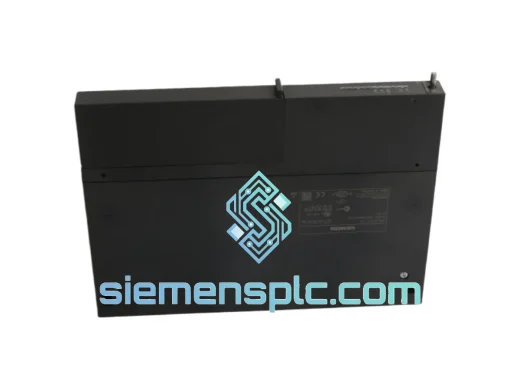
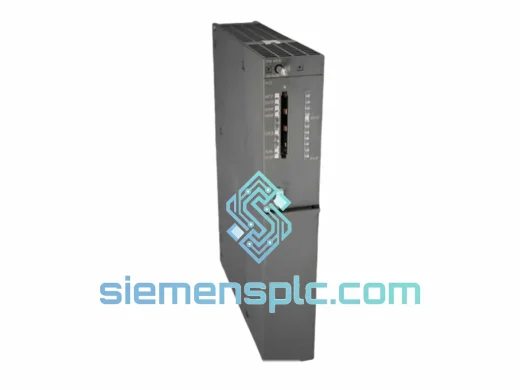
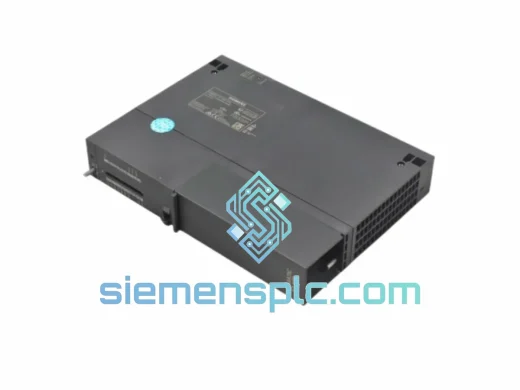
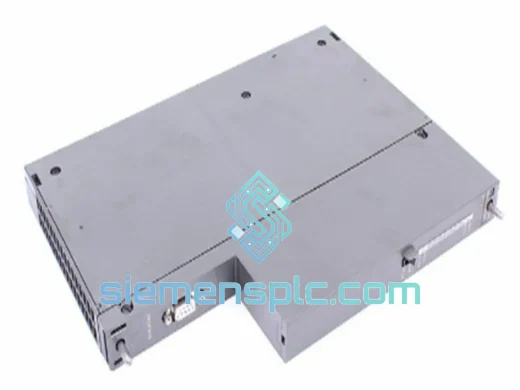
Siemens 6ES7467-5GJ02-0AB0 PLC Interface Module
SIMATIC S7-400
Origin DE
PLC Interface Module
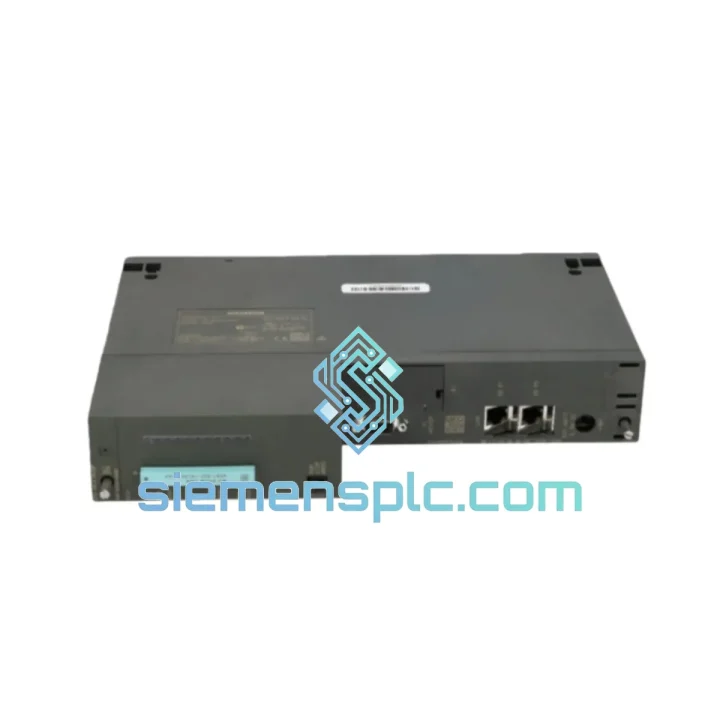
Request verified availability, condition, replacement risk review, packing options and courier lead time for 6ES7416-3ER05-0AB0.
Click Request Quote and the part number is inserted into the inquiry form automatically.
Core fields for model confirmation and RFQ routing. Detailed product narrative remains below.
The 6ES7416-3ER05-0AB0 is the CPU 416-3 DP fifth-generation firmware revision within Siemens’ SIMATIC S7-400 platform — a controller family engineered for process-critical environments where scan-cycle jitter, I/O address capacity, and multi-network concurrency are non-negotiable design constraints. This module occupies a single slot in any S7-400 rack (UR1, UR2, UR2-H, CR2, CR3) and serves as the sole instruction-execution and bus-arbitration node for the entire rack assembly.
Unlike mid-range S7-300 CPUs that rely on a passive backplane with fixed slot addressing, the S7-400 backplane bus operates as an active, high-speed parallel bus capable of transferring process image data at rates that sustain sub-millisecond cycle times even with fully populated 32-slot rack configurations. The 6ES7416-3ER05-0AB0 exploits this architecture through its 64 MB integrated work memory and 0.025 µs bit-instruction execution time — parameters that translate directly into measurable headroom for interrupt-driven OB processing without degrading the cyclic OB1 scan.
Real-time Stock & RFQ: [email protected] | WhatsApp: +86 18359268345
| Parameter | Value |
|---|---|
| Order Number (MLFB) | 6ES7416-3ER05-0AB0 |
| Platform | SIMATIC S7-400 |
| CPU Designation | CPU 416-3 DP, Firmware V5 (R05 revision) |
| Work Memory | 64 MB (code + data, expandable via Flash EPROM card) |
| Load Memory (integrated) | 64 MB Flash EPROM |
| Bit Instruction Execution | 0.025 µs |
| Word Instruction Execution | 0.05 µs |
| Floating-Point Execution | 0.1 µs |
| Interface 1 | MPI/DP — 12 Mbit/s, configurable as MPI or PROFIBUS DP master/slave |
| Interface 2 | PROFIBUS DP — 12 Mbit/s, independent DP master/slave |
| Interface 3 | MPI — 12 Mbit/s (programming and HMI access) |
| Max. I/O Address Area | 16 384 bytes input / 16 384 bytes output |
| Max. Configurable Racks | 21 (UR1/UR2) or 4 (CR2/CR3 segmented) |
| Max. Modules per System | Up to 300 signal modules across all racks |
| Timers / Counters | 2 048 / 2 048 (IEC timer/counter model) |
| Data Blocks | Up to 16 000 DBs; max. DB size 64 KB |
| Nesting Depth | 24 levels (including interrupt OBs) |
| Process Interrupt OBs | OB40–OB47 (hardware interrupt), OB10–OB17 (time-of-day) |
| Diagnostic Buffer | 3 200 entries, retentive across power cycles |
| Supply Voltage | 24 V DC via S7-400 backplane bus (PS 405/407 power supply) |
| Operating Temperature | 0 °C to +60 °C (horizontal/vertical mounting) |
| Storage Temperature | −40 °C to +70 °C |
| Relative Humidity | 10 % to 95 %, non-condensing (IEC 60068-2-30) |
| Degree of Protection | IP20 (EN 60529) |
| EMC Immunity | EN 61000-6-2 (industrial environment) |
| Vibration Resistance | 10–58 Hz: 0.075 mm; 58–150 Hz: 1 g (IEC 60068-2-6) |
| Shock Resistance | 15 g / 11 ms (IEC 60068-2-27) |
| Dimensions (W × H × D) | 50 × 290 × 219 mm |
| Weight | Approx. 900 g |
| Certifications | CE, UL, cUL, FM Class I Div 2, ATEX Zone 2, GL, DNV |
| Country of Origin | Germany |
| Warranty | 12 months against manufacturing defects |
The CPU 416-3 DP’s internal architecture separates the instruction pipeline from the communication co-processors through a dedicated internal bus matrix. This design prevents PROFIBUS DP polling cycles from consuming CPU execution bandwidth — a common bottleneck in single-bus architectures where network traffic and program scan compete for the same data path.
Backplane Bus Arbitration: The S7-400 backplane implements a time-division multiplexed (TDM) bus protocol. The CPU 416-3 DP acts as the sole bus master, issuing slot-addressed read/write cycles to each installed signal module during the process image update phase. With 16 KB of I/O address space, the CPU can map up to 16 384 discrete input bytes and 16 384 discrete output bytes into its process image table (PII/PIQ) in a single scan — sufficient for installations with several hundred ET 200M remote I/O stations connected via PROFIBUS DP.
Dual PROFIBUS DP Interface Logic: The two independent DP interfaces (Interface 1 configurable as MPI/DP, Interface 2 as DP) each contain an autonomous communication ASIC with its own frame buffer and token-passing state machine. This means the CPU can simultaneously operate as DP master on both interfaces — for example, Interface 1 managing field-level I/O slaves (ET 200S, ET 200M) while Interface 2 handles drive communication (SINAMICS S120 via PROFIBUS). The two buses operate at independent baud rates and polling intervals without cross-interference.
EMC Design: The module housing is a die-cast aluminum frame with continuous EMC gasket contact to the rack guide rails, providing a Faraday cage effect across the full operating frequency range. Internal signal traces are routed on a multilayer PCB with ground-plane shielding between the power supply section and the logic section, suppressing conducted emissions below EN 55011 Class A limits. The backplane connector uses gold-plated contacts rated for 100 insertion cycles minimum, maintaining contact resistance below 10 mΩ throughout the service life.
Retentive Memory Architecture: Work memory is implemented as battery-backed SRAM for retentive data areas (M, DB, T, C markers). The integrated Flash EPROM load memory retains the program image without battery power, enabling cold-start program reload after extended power outages without a programming device. The memory card slot accepts Siemens 6ES7952-series Flash EPROM cards for offline program archiving and firmware update via STEP 7 memory card functions.
Interrupt Latency: Hardware interrupt OBs (OB40–OB47) are triggered by rising/falling edges on designated digital input modules configured for interrupt capability. The CPU’s interrupt controller acknowledges the interrupt request within one instruction cycle (0.025 µs for bit operations), suspends the current OB1 scan, and dispatches the interrupt OB. Measured worst-case interrupt latency under full I/O load is typically under 1 ms — a figure that satisfies the response-time budgets of most closed-loop control applications without requiring dedicated motion controllers.
Every 6ES7416-3ER05-0AB0 unit supplied by siemensplc.com is sourced through verified industrial channels with full MLFB traceability. Prior to dispatch, each module undergoes a structured pre-shipment inspection protocol: visual examination of the PCB, connector pins, and housing for mechanical damage; firmware version confirmation against the Siemens MLFB database; power-on functional test verifying LED status sequence and communication interface initialization; and serial number cross-check against known counterfeit databases.
Units are packed in anti-static (ESD) shielding bags per IEC 61340-5-1, placed in foam-lined corrugated cartons with humidity indicator cards. Each shipment includes the original Siemens product label, a pre-shipment inspection report, and a 12-month replacement warranty certificate. For orders requiring third-party inspection (SGS, BV, Intertek), arrangements can be confirmed at the RFQ stage.
Logistics operations are based in Xiamen, China — a major international freight hub with direct DHL Express, FedEx International Priority, and UPS Worldwide Express connections. Standard in-stock orders ship within 1–3 business days. Export documentation (commercial invoice, packing list, certificate of origin, HS code 8537.10) is prepared to comply with EU, US, and ASEAN import requirements. Full shipment tracking and cargo insurance are included as standard.
Email: [email protected]
WhatsApp: +86 18359268345
Web: siemensplc.com
Location: Xiamen, China
© 2026 siemensplc.com. All rights reserved.
We check the full part number, brand, series and visible nameplate information before quotation.
Sales confirms stock path, condition option, quantity and realistic lead time for export dispatch.
DHL, FedEx, UPS or buyer courier arrangements can be reviewed with packing requirements.
Similar brand or category products for fast comparison and multi-item RFQ lists.