ABB
In Stock OK
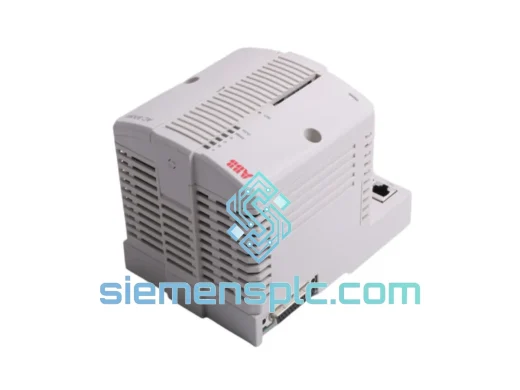
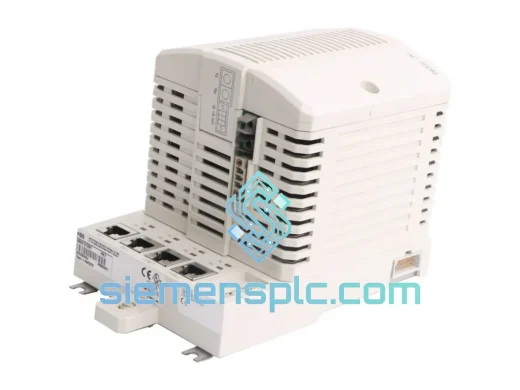
ABB YPG111A 3ASD273001B1 Power Measuring Unit
Request verified availability, condition, replacement risk review, packing options and courier lead time for YPG111A-3ASD273001B1.
BrandABB
Part NumberYPG111A-3ASD273001B1
ConditionAvailability Check
Lead TimeRFQ Confirmation
DocumentsDatasheet / photos by RFQ
ShippingExport packing available
Auto-filled RFQ
YPG111A-3ASD273001B1
Click Request Quote and the part number is inserted into the inquiry form automatically.
- Reply by email: [email protected]
- WhatsApp / Tel: +86 18359268345
- Mon-Sat 9:00-18:00 GMT+8
Procurement Data
Key Product Information
Core fields for model confirmation and RFQ routing. Detailed product narrative remains below.
- Brand
- ABB
- Primary Part Number
- YPG111A-3ASD273001B1
- Product Type
- Power Measuring Unit
- Product Family
- Other series
- Manufacturer
- ABB
- Country of Origin
- SE
- Model Function
- Power Measuring Unit (PMU)
- Catalog Category
- DCS & Safety Modules
- Operating Temp.
- 0°C to +55°C
- Humidity
- 5–95% RH, non-condensing
Model confirmed for inquiry
YPG111A-3ASD273001B1
Send quantity, destination and urgency. The RFQ form keeps this part number attached.
Request Quote
Product Overview
ABB YPG111A (3ASD273001B1) — Stop the Clock on Your DCS600 Downtime
Every minute your DCS600 rack sits idle, the losses compound. A failed Power Measuring Unit doesn’t just kill one loop — it can cascade into drive trips, process shutdowns, and safety interlocks that take hours to reset even after the hardware is back. The ABB YPG111A (3ASD273001B1) is the exact PMU your system needs, and we stock it in Xiamen ready to move the same day you call.
We’ve handled enough emergency breakdowns to know that procurement delays are the real enemy. Our warehouse carries verified original ABB YPG111A boards — not grey-market pulls, not relabeled clones. When you order before 14:00 CST, your unit ships the same business day via DHL Express or FedEx International Priority. Most destinations in Southeast Asia receive within 48 hours. Europe and North America: 72–96 hours door to door.
URGENT REQUIREMENT? Contact: [email protected] | WhatsApp: +86 18359268345
Quick Technical Datasheet
| Parameter | Value |
|---|---|
| Manufacturer | ABB |
| Model | YPG111A |
| Part Number | 3ASD273001B1 |
| Function | Power Measuring Unit (PMU) |
| Compatible Platform | ABB DCS600, AC800M, ACS600/ACS800 |
| Form Factor | Plug-in board module |
| Measurement Type | 3-phase active/reactive power, current, voltage |
| Communication Interface | ABB internal backplane bus |
| Operating Temperature | 0°C to +55°C |
| Storage Temperature | -40°C to +70°C |
| Humidity | 5–95% RH, non-condensing |
| Country of Origin | Sweden (ABB factory) |
| Condition | New Original / Tested Surplus |
| Stock Status | ✅ Ready to Ship — Xiamen Warehouse |
| Lead Time | Same-day dispatch (order before 14:00 CST) |
Troubleshooting & Replacement Tips
The YPG111A fails in predictable ways. Here’s what 10 years of field calls have taught us about this board:
Common Fault Signatures:
- Fault Code F-0021 / F-0022 (Power Measurement Fault): The DCS600 controller loses confidence in the PMU’s readings. Before condemning the board, verify the CT/VT wiring at the terminal block — loose connections on the secondary side of the current transformers will throw identical codes. If wiring checks out, the YPG111A’s analog front-end has likely drifted beyond calibration limits. Replace the board.
- Fault Code F-0031 (Communication Loss to PMU): The backplane bus between the main control board and the YPG111A has failed. Check the board seating first — vibration in motor rooms can work boards loose over months. Re-seat firmly. If the fault persists after power cycle, the YPG111A’s bus transceiver IC has failed. Board swap required.
- Intermittent power readings / oscillating displays: Classic sign of capacitor degradation on the YPG111A’s internal DC/DC converter. Boards over 8 years old in high-ambient environments are prime candidates. Don’t waste time on field repair — swap the board and send the old one for depot refurbishment.
- No fault code, but drive trips on overload at normal load: The PMU is feeding incorrect power data to the drive’s torque limiter. The drive is reacting to phantom overloads. Swap the YPG111A first before touching drive parameters.
Replacement Procedure — Key Steps:
- Step 1 — Document before you touch anything: Screenshot or photograph the current parameter set from DriveWindow or Control Builder. Specifically capture Group 1 (Actual Values) and Group 30 (Fault Functions) as a baseline.
- Step 2 — Power down correctly: The DCS600 requires a controlled shutdown sequence. Do not simply cut the main breaker. Use the software stop command, wait for the DC bus to discharge below 50V (check with a meter — do not trust the display alone), then isolate.
- Step 3 — Board extraction: The YPG111A is retained by two captive screws on the front faceplate. Loosen both, then pull straight out. Do not rock the board — the backplane connector is fragile and misalignment will bend pins.
- Step 4 — Inspect the slot: Check the backplane connector for bent pins or corrosion before inserting the new board. A bent pin on the backplane is a rack-level repair, not a board-level repair.
- Step 5 — No DIP switches on this board: Unlike some ABB I/O modules, the YPG111A does not have user-configurable DIP switches or address jumpers. The board address is assigned by slot position in the rack. Ensure you are installing into the correct slot — the DCS600 rack is slot-sensitive.
- Step 6 — Firmware: The YPG111A’s firmware is embedded and not field-upgradeable via standard tools. If your replacement board has a different firmware revision than the original (check the label on the board edge), verify compatibility with your DCS600 main controller firmware version using ABB’s compatibility matrix (document 3ADW000379). Mismatched firmware revisions between the PMU and the main controller can cause subtle measurement offsets that won’t throw a fault code but will affect energy accounting.
- Step 7 — Power-up verification: After installation, perform a live power measurement cross-check. Compare the YPG111A’s readings against a calibrated clamp meter on the same phase. Acceptable deviation is ±1.5%. If deviation exceeds this, check CT ratio settings in parameter Group 20.
Reliability in Harsh Conditions
The YPG111A was designed for the environments where ABB DCS600 drives actually live — not climate-controlled server rooms, but motor control centers in steel mills, pump stations, and paper machines where ambient temperatures push 45°C, humidity swings with the seasons, and the floor vibrates at 50 Hz from the machinery it controls.
The board’s analog measurement circuitry is conformal-coated from the factory, providing protection against condensation and airborne contaminants including metallic dust — a real concern in steel and mining applications. The backplane connector uses gold-plated contacts rated for 500 insertion cycles, which matters when you’re doing quarterly PM swaps on a rotating spare program.
Vibration tolerance is rated to IEC 60068-2-6, Test Fc — sinusoidal vibration up to 3.5 mm displacement at 5–8.4 Hz and 10 m/s² acceleration at 8.4–500 Hz. In practice, boards installed in properly torqued racks with anti-vibration mounts have service lives exceeding 15 years in continuous operation. The failure modes we see in the field are almost always thermal-cycle related (capacitor aging) or connector-related (vibration-induced fretting), not component failures from vibration itself.
For installations in particularly harsh environments — coastal facilities with salt air, chemical plants with corrosive atmospheres — we recommend requesting boards from our tested-surplus stock that have been cleaned, inspected under UV light for PCB delamination, and re-coated with a secondary conformal layer before shipment. Ask our team about this option when you contact us.
Global Express Logistics
Our dispatch hub is in Xiamen, Fujian — one of China’s primary export ports with direct DHL and FedEx gateway access. Here’s exactly how your order moves:
- Order confirmed → Same-day pick and pack: Orders confirmed before 14:00 CST are picked, ESD-bagged, bubble-wrapped, and boxed the same afternoon. Each shipment includes a packing list, commercial invoice with correct HS code (8537.10 for control boards), and a certificate of conformance.
- Export documentation: We handle all Chinese export customs clearance. For orders to the EU, we pre-file the EUR.1 movement certificate where applicable. For US-bound shipments, we include the required ECCN classification statement.
- Carrier options: DHL Express Worldwide (default) or FedEx International Priority. Both services offer real-time tracking from our warehouse door to your receiving dock. We share the tracking number via WhatsApp and email within 2 hours of dispatch.
- Typical transit times: Southeast Asia 1–2 days | East Asia (Japan, Korea) 2–3 days | Middle East 3–4 days | Europe 3–5 days | North America 4–6 days | South America / Africa 5–8 days.
- Import duties: Shipments are declared at actual transaction value. We do not under-declare. For customers in duty-sensitive markets, we can provide a pro-forma invoice in advance so your import team can pre-calculate landed cost before you commit to the order.
- Emergency freight: For genuine production-down situations, contact us on WhatsApp directly. We have access to next-flight-out courier options for critical shipments where standard express is not fast enough.
Contact Information
📧 Email: [email protected]
💬 WhatsApp: +86 18359268345
🌐 Web: siemensplc.com
© 2026 siemensplc.com. All rights reserved.
Ready to quote
[email protected]
Send This Part Number to Sales
RFQ workflow
Quality workflow ->
Confirmation Process
01Model confirmation
We check the full part number, brand, series and visible nameplate information before quotation.
02Availability reply
Sales confirms stock path, condition option, quantity and realistic lead time for export dispatch.
03Packing & courier
DHL, FedEx, UPS or buyer courier arrangements can be reviewed with packing requirements.
Continue sourcing
Browse full catalog ->
Related Automation Parts
Similar brand or category products for fast comparison and multi-item RFQ lists.
ABB
RFQ Ready
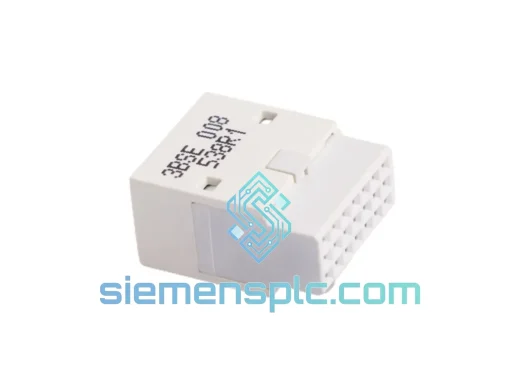
ABB TB807 3BSE008538R1 DCS Modulebus Terminator
AC800M
Origin SE
DCS Backplane Terminator