Siemens PLC sourcing desk · Multi-brand automation spares [email protected] +86 18359268345
Request Quote
Allen-Bradley In Stock OK

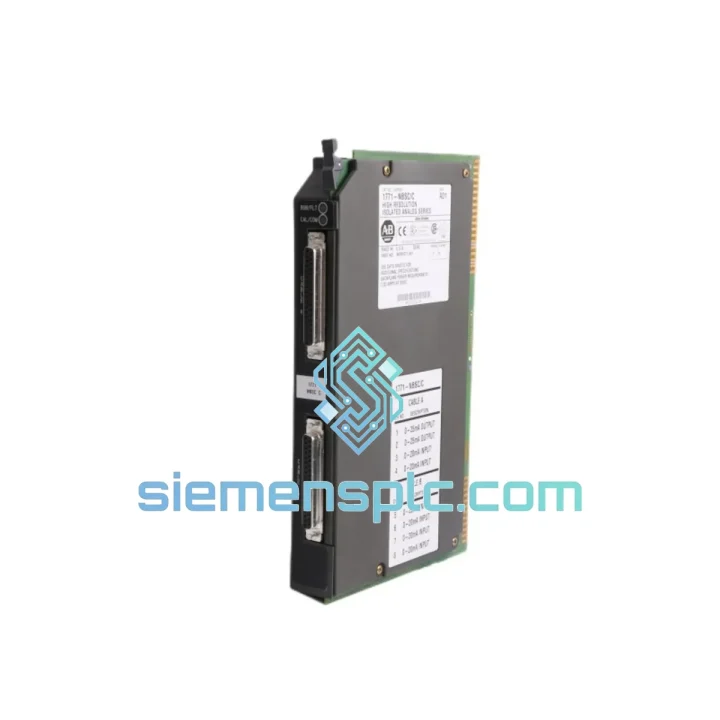
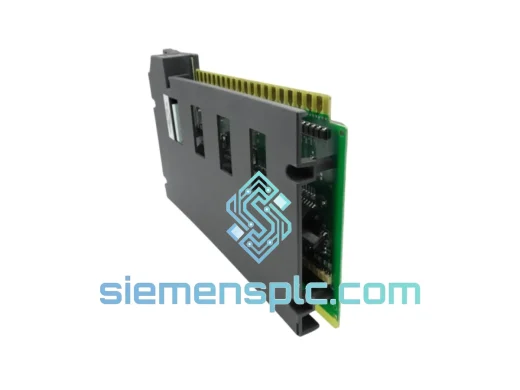
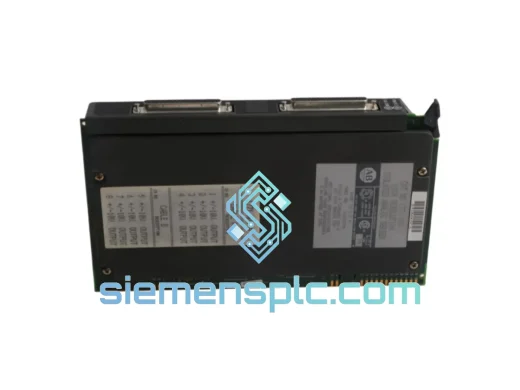
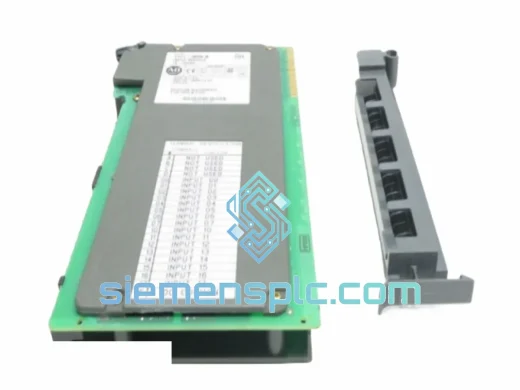
Allen-Bradley 1771-NBSC Thermocouple Analog Input Module

Request verified availability, condition, replacement risk review, packing options and courier lead time for 1771-NBSC.

Exact part1771-NBSC RFQ auto-fillPart number attached Export packingDHL / FedEx / UPS Sales replyEmail or WhatsApp
BrandAllen-Bradley Part Number1771-NBSC ConditionAvailability Check Lead TimeRFQ Confirmation DocumentsDatasheet / photos by RFQ ShippingExport packing available
Auto-filled RFQ 1771-NBSC

Click Request Quote and the part number is inserted into the inquiry form automatically.

Procurement Data

Key Product Information

Core fields for model confirmation and RFQ routing. Detailed product narrative remains below.

Brand
Allen-Bradley
Primary Part Number
1771-NBSC
Product Type
Analog Input Module
Series / Family
PLC-5
Country of Origin
US
Catalog Category
I/O Modules
Operating Temp.
0 °C to 60 °C
Model confirmed for inquiry 1771-NBSC Send quantity, destination and urgency. The RFQ form keeps this part number attached.
Request Quote
Product Overview

Allen-Bradley 1771-NBSC: Stop the Clock on Your Downtime — Ship Today from Xiamen

Every minute a thermocouple input channel goes dark, your process is flying blind. A failed 1771-NBSC doesn’t just mean a maintenance ticket — it means halted production, scrapped batches, and a plant manager breathing down your neck. We stock the Allen-Bradley 1771-NBSC specifically because we know what a 4-hour unplanned outage costs in a steel mill or a pharmaceutical cleanroom. Our unit leaves Xiamen the same day you confirm. That’s the only metric that matters right now.

URGENT REQUIREMENT? Contact: [email protected] | WhatsApp: +86 18359268345

Quick Technical Datasheet

Parameter Specification
Catalog Number 1771-NBSC
Module Type Thermocouple / Millivolt Analog Input
Platform Allen-Bradley PLC-5 — 1771 I/O Chassis
Input Channels 4 differential analog input channels
Supported TC Types J, K, T, E, R, S, B + direct mV (±100 mV)
Resolution 12-bit (1 in 4,096)
Accuracy ±0.1% of full scale (typical)
Cold Junction Compensation Automatic internal reference — no external CJC required
Open-Circuit Detection Per-channel, hardware-level
Backplane Current Draw 800 mA @ 5 VDC
Operating Temperature 0 °C to 60 °C
Storage Temperature −40 °C to 85 °C
Relative Humidity 5% to 95% non-condensing
Module Weight 660 g
Chassis Compatibility All 1771 Series I/O Chassis (4 / 8 / 12 / 16 slot)
Keying User-configurable hardware keying
Stock Status ✅ Ready to Ship — Same-Day Dispatch Available

Troubleshooting & Replacement Tips

Pulled a 1771-NBSC from a live chassis? Here’s what to check before you declare the module dead — and what to nail down before the replacement goes in.

Common Fault Codes & Root Causes

  • Block Transfer Error / BTR Fault Bit Set: Nine times out of ten this is a rack addressing conflict. Verify the module’s slot address in the I/O chassis matches the BTR instruction’s rack/group/slot parameters in your RSLogix 5 program. A single-slot offset will lock out the entire block transfer.
  • Channel Fault Bit Active (Word 0, Bit 0–3): Per-channel open-circuit detection has fired. Check thermocouple extension wire continuity at the 1771-WN wiring arm terminals. Oxidized or loose screw terminals are the #1 cause on modules that have been in service for 5+ years.
  • All Channels Reading Maximum Scale (32,767 counts): Classic symptom of an open thermocouple or a wiring arm not fully seated. Re-seat the 1771-WN and verify TC polarity — reversed polarity on a Type K will drive the channel to rail.
  • Erratic / Noisy Readings on One Channel: Ground loop. The 1771-NBSC uses differential inputs, but a compromised shield drain or a grounded TC junction in a grounded-tip thermocouple will inject common-mode noise. Float the TC shield at the field end, ground only at the panel.
  • Module Not Recognized After Slot Insertion: Check hardware keying. The 1771-NBSC uses a specific keying band configuration. If the previous module was a different type, the keying bands may be set incorrectly and the chassis backplane will reject the module.

Pre-Installation Checklist for the Replacement Unit

  • DIP Switch Configuration: The 1771-NBSC has an onboard DIP switch bank that sets thermocouple type per channel and selects millivolt vs. thermocouple mode. Before powering up, match the switch positions to your original module’s configuration sheet. If the config sheet is lost, read the settings from your RSLogix 5 program’s block transfer write (BTW) data file — the configuration word encodes TC type selection.
  • Firmware / Series Revision: The 1771-NBSC has been manufactured across multiple series revisions (Series A through D). Confirm the replacement series matches or is forward-compatible with your PLC-5 processor firmware. Series D units are generally backward-compatible, but verify against Rockwell Publication 1771-6.5.109.
  • Cold Junction Compensation Warm-Up: Allow 15–20 minutes after power-on before trusting temperature readings. The internal CJC reference requires thermal stabilization. Premature process handoff after a hot-swap is a common source of post-maintenance quality escapes.
  • Block Transfer Write Initialization: After module insertion, force a BTW cycle from the processor to push configuration data to the module before enabling the BTR scan. Skipping this step leaves the module in an undefined configuration state.
  • Wiring Arm Torque: Torque the 1771-WN terminal screws to 0.9 N·m (8 in·lb). Under-torqued connections on thermocouple-grade signals introduce millivolt-level resistance that corrupts readings — especially on Type R and S high-impedance circuits.

Reliability in Harsh Conditions

The 1771-NBSC was engineered for the plant floor, not the server room. Rockwell Automation designed this module to operate continuously in environments that would kill consumer-grade electronics within weeks.

The module’s conformal-coated PCB provides a barrier against airborne contaminants — sulfur compounds in steel plants, chlorine derivatives in chemical facilities, and humidity cycling in coastal installations. The coating prevents dendritic growth on signal traces that would otherwise cause inter-channel leakage and measurement drift over time.

Vibration tolerance is validated to IEC 68-2-6 test profiles, covering the 10–500 Hz frequency range at 1 g acceleration. In practice, this means the module maintains signal integrity when mounted in a panel adjacent to large motor drives, compressors, or hydraulic power units — the exact environments where thermocouple measurement is most critical.

Thermal cycling performance is equally robust. The module is rated for continuous operation from 0 °C to 60 °C ambient, with storage down to −40 °C. In foundry and outdoor substation applications where panel temperatures swing 40 °C between day and night shifts, the 1771-NBSC’s internal CJC tracks ambient changes and compensates automatically — no manual recalibration required between shifts.

Backplane connector integrity is maintained through gold-plated edge contacts that resist oxidation over decades of insertion cycles. When you pull a 1771-NBSC that has been in service since the mid-1990s, the backplane connector typically shows no measurable contact resistance increase — a testament to the original design margin.

Global Express Logistics

Our warehouse is located in Xiamen, Fujian Province — one of China’s primary export hubs with direct access to DHL, FedEx, and UPS international express networks. This is not a drop-ship arrangement. The module is physically in our facility, inspected, and ready to pack.

Standard Dispatch Process:

  • Order Confirmed Before 14:00 CST: Same-day dispatch. Tracking number issued by 18:00 CST.
  • Order Confirmed After 14:00 CST: Next business day dispatch. No exceptions for weekends — we operate Saturday dispatch for urgent orders confirmed by 12:00 CST Saturday.
  • Packaging: Anti-static ESD bag, foam-lined rigid carton, moisture-barrier outer wrap. Suitable for air freight without additional preparation.
  • DHL Express Worldwide: 1–3 business days to Europe, North America, Southeast Asia, Middle East. 2–4 business days to South America and Africa.
  • FedEx International Priority: Available as an alternative carrier for destinations where FedEx has superior coverage (e.g., remote US locations, Canada).
  • Customs Documentation: Commercial invoice, packing list, and HS code declaration (HS 8537.10) prepared for every shipment. For high-value orders, we provide a Certificate of Origin on request to support import duty reduction under applicable trade agreements.
  • Tracking: Real-time tracking link sent via email and WhatsApp upon dispatch. We monitor shipments proactively and flag customs holds within 2 hours of notification.

If your plant is down and you need the fastest possible delivery, contact us directly on WhatsApp before placing the order. We will confirm the exact transit time to your specific destination and select the optimal carrier for your situation.

Contact Information

📧 Email: [email protected]
📱 WhatsApp: +86 18359268345
🌐 Web: siemensplc.com
© 2026 siemensplc.com. All rights reserved.

Ready to quote

Send This Part Number to Sales

[email protected]
RFQ workflow

Confirmation Process

Quality workflow ->
01Model confirmation

We check the full part number, brand, series and visible nameplate information before quotation.

02Availability reply

Sales confirms stock path, condition option, quantity and realistic lead time for export dispatch.

03Packing & courier

DHL, FedEx, UPS or buyer courier arrangements can be reviewed with packing requirements.