Allen-Bradley
RFQ Ready
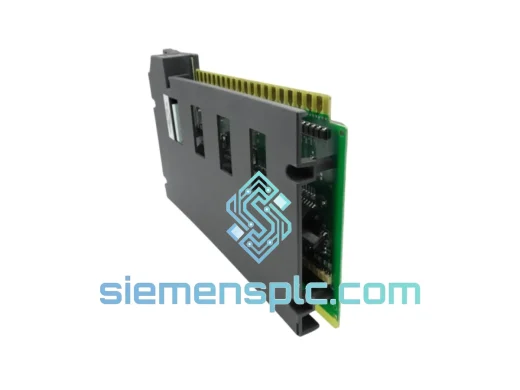
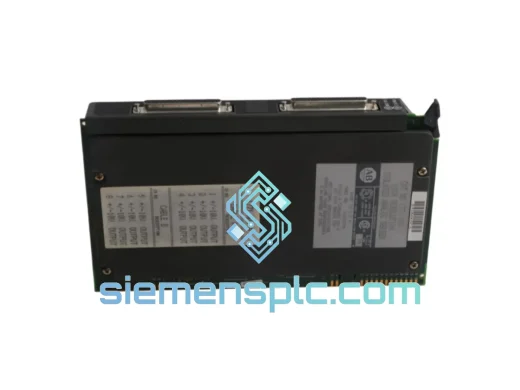
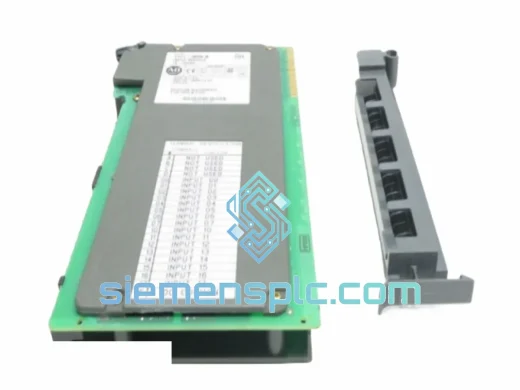
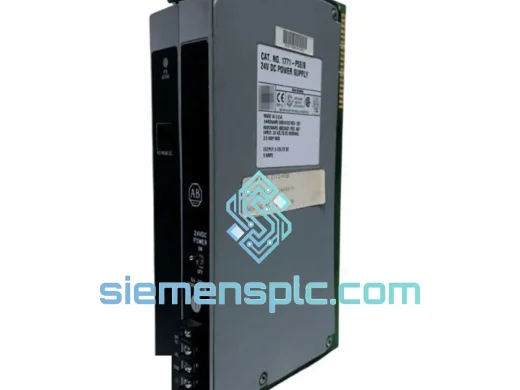
Allen-Bradley 1771-P5E Power Supply Interface Module – PLC-5
PLC-5
Origin US
Power Supply Interface Module
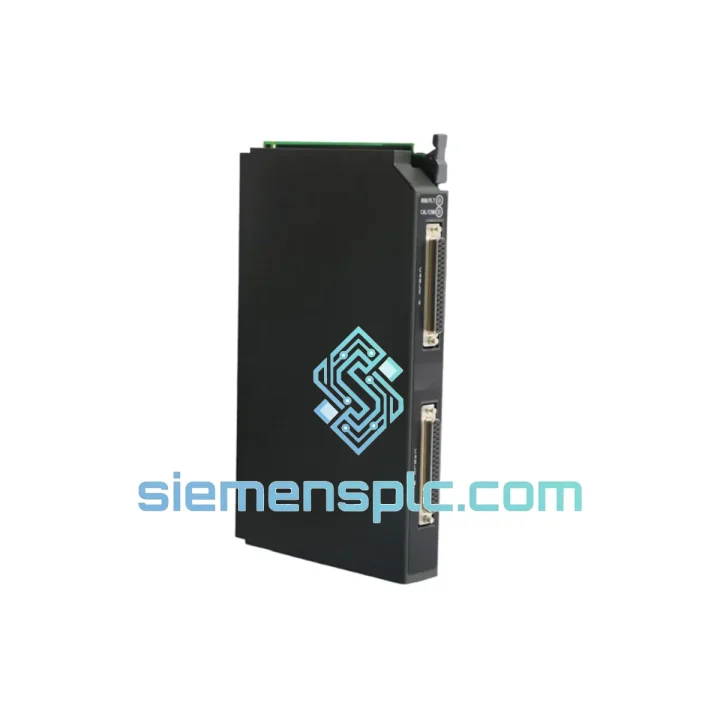
Request verified availability, condition, replacement risk review, packing options and courier lead time for 1771-NIS.
Click Request Quote and the part number is inserted into the inquiry form automatically.
Core fields for model confirmation and RFQ routing. Detailed product narrative remains below.
The Allen-Bradley 1771-NIS occupies a structurally critical position in any PLC-5 distributed control system. It functions as the sole communication master on a Remote I/O (RIO) channel, executing a deterministic token-passing scan cycle that exchanges discrete and analog data between the PLC-5 processor’s data table and up to 32 remote I/O drops distributed across the plant floor. Unlike the processor’s integral scanner port — which handles local chassis I/O — the 1771-NIS extends the control domain over distances up to 3,048 m (10,000 ft) using Belden 9463 shielded coaxial cable. This physical separation of scanner logic from processor logic allows the PLC-5 to maintain its primary ladder-scan cycle without incurring the latency penalty of polling remote racks directly. The result is a predictable, bounded scan time that process engineers can factor into loop-closure calculations for flow, pressure, and temperature control circuits.
In refinery and petrochemical installations, where the 1771 platform remains embedded in safety-critical and continuous-process loops, the 1771-NIS is not a commodity spare — it is a precision communication component whose failure mode directly affects process availability. A single failed scanner module can isolate an entire remote rack, rendering all associated field instruments invisible to the control system. For this reason, procurement teams managing PLC-5 installed bases treat the 1771-NIS as a Tier-1 critical spare, maintaining at least one verified unit per scanner channel in on-site inventory.
Real-time Stock & RFQ: [email protected] | WhatsApp: +86 18359268345
| Parameter | Specification |
|---|---|
| Catalog Number | 1771-NIS |
| Module Function | Remote I/O Scanner (RIO Master) |
| Chassis Compatibility | 1771-A1B / A2B / A3B / A4B I/O Chassis (single slot) |
| Processor Compatibility | PLC-5/10, 5/12, 5/15, 5/25, 5/40, 5/60, 5/80; 1785-L Series Enhanced |
| Backplane Current Draw | 800 mA @ 5 VDC |
| RIO Baud Rates | 57.6 Kbps / 115.2 Kbps / 230.4 Kbps (DIP switch-selectable) |
| Maximum Remote Drops | 32 (logical rack addresses 00–37 octal) |
| Maximum I/O Points | 1,024 discrete inputs / 1,024 discrete outputs per scanner |
| Communication Medium | Belden 9463 (Blue Hose) shielded twisted-pair coaxial |
| Maximum Cable Distance | 3,048 m @ 57.6 Kbps; 1,524 m @ 115.2 Kbps; 762 m @ 230.4 Kbps |
| Network Topology | Daisy-chain or trunk-and-drop |
| Connector Type | 3-pin RIO terminal block (Blue Hose termination) |
| Operating Temperature | 0 °C to +60 °C (32 °F to 140 °F) |
| Storage Temperature | −40 °C to +85 °C |
| Relative Humidity | 5 % to 95 % non-condensing |
| Vibration Resistance | 2 G @ 5–2,000 Hz per IEC 68-2-6 |
| Shock Rating | 30 G operational per IEC 68-2-27 |
| Module Width | Single slot (1771 I/O chassis) |
| Weight | 780 g |
| Certifications | UL 508, CSA C22.2 No. 142, CE (EMC Directive 2014/30/EU) |
| Country of Origin | United States |
| Warranty | 12 months from dispatch date |
The 1771-NIS implements a dedicated microprocessor-based scanner engine that operates independently of the PLC-5 host processor’s scan cycle. This architectural separation is deliberate: the scanner’s onboard CPU manages the RIO token-passing protocol state machine — issuing output data blocks, receiving input data blocks, and maintaining drop-status tables — while the PLC-5 processor reads and writes the shared backplane data table asynchronously. The two processors synchronize via a dual-port RAM interface on the 1771 backplane, which eliminates the need for the host processor to stall its ladder execution while waiting for RIO transactions to complete.
The RIO physical layer uses a differential, transformer-coupled signal scheme on the Blue Hose coaxial cable. This transformer coupling provides galvanic isolation between the scanner’s transmit/receive circuitry and the cable shield, suppressing common-mode noise induced by ground potential differences between remote panel locations — a frequent source of communication errors in large industrial facilities with multiple earthing points. The differential signaling further rejects electromagnetic interference from variable-frequency drives, high-current bus bars, and welding equipment operating in proximity to cable runs.
Baud-rate selection via DIP switch is not merely a convenience feature — it directly governs the RIO scan period. At 230.4 Kbps with 32 drops fully populated, the scanner completes one full RIO scan in approximately 5–10 ms, depending on rack size and I/O density. At 57.6 Kbps over a 3,048 m cable run, the scan period extends to 20–40 ms. Control engineers must account for this RIO scan latency when calculating the effective loop update rate for closed-loop PID controllers whose setpoint and process variable data traverse the RIO network.
The module’s onboard diagnostics maintain a per-drop fault table that the PLC-5 processor can interrogate via the Block Transfer Read (BTR) mechanism. Each drop’s communication status is mapped to a specific bit in the scanner’s status file, enabling ladder logic to implement conditional fault-handling routines — for example, forcing a safe output state on a remote rack when its adapter loses communication, rather than allowing the output to hold its last state indefinitely. This deterministic fault response is a key differentiator of the RIO architecture compared to unmanaged fieldbus topologies.
Every 1771-NIS unit dispatched from our Xiamen facility undergoes a structured, multi-stage verification process before packaging. Visual inspection covers the PCB surface for thermal stress indicators — discoloration around power regulation components, lifted solder joints at the backplane edge connector, and corrosion on the RIO terminal block contacts. The module label is cross-referenced against Rockwell Automation’s published catalog records to confirm series letter, firmware revision, and manufacturing date code. Counterfeit screening includes label font analysis, hologram verification, and part-number format validation against known-genuine reference units.
Functional bench testing installs the module in a live 1771 I/O chassis connected to a PLC-5 processor. RIO communication is established at all three baud rates (57.6K, 115.2K, 230.4K bps), and a simulated remote drop is scanned to verify input data reception and output data transmission. LED diagnostic indicators are confirmed operational. The test log, including baud-rate test results and drop-status register readings, is retained and available to the buyer upon request.
Packaging uses anti-static bags with foam-lined cartons and desiccant packs for humidity control during ocean freight. From Xiamen, China, standard international shipments reach Southeast Asia in 3–5 business days, Europe in 5–8 business days, and North America in 5–10 business days via DHL Express, FedEx International Priority, or UPS Worldwide Expedited. Emergency same-day dispatch is available for confirmed orders received before 14:00 CST. Full export documentation — commercial invoice, packing list, country-of-origin certificate, and HS code declaration — is provided with every international shipment. The 12-month warranty covers verified manufacturing defects and communication failures attributable to the module’s internal circuitry, with advance replacement available for qualified accounts.
Email: [email protected]
WhatsApp: +86 18359268345
Web: siemensplc.com
Location: Xiamen, China
© 2026 siemensplc.com. All rights reserved.
We check the full part number, brand, series and visible nameplate information before quotation.
Sales confirms stock path, condition option, quantity and realistic lead time for export dispatch.
DHL, FedEx, UPS or buyer courier arrangements can be reviewed with packing requirements.
Similar brand or category products for fast comparison and multi-item RFQ lists.