Allen-Bradley
RFQ Ready
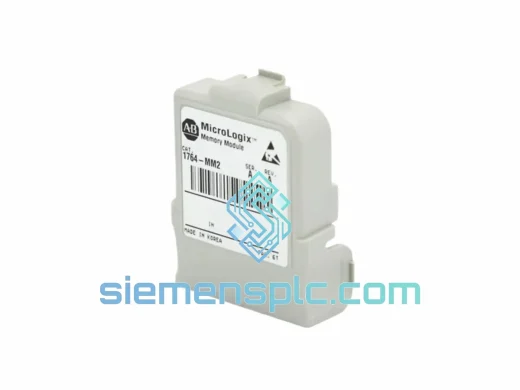
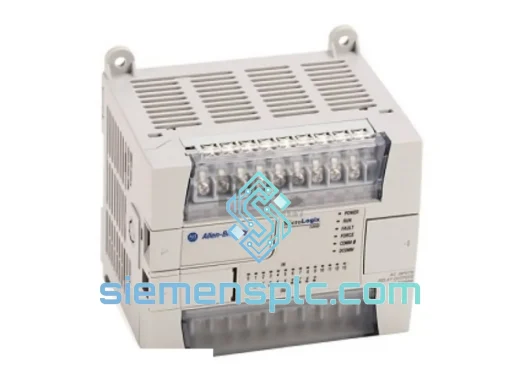
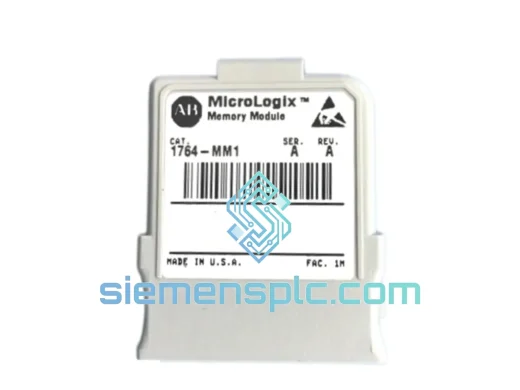
Allen-Bradley 1764-MM1 PLC Memory Module – MicroLogix 1500
MicroLogix
Origin US
PLC Memory Module
Request verified availability, condition, replacement risk review, packing options and courier lead time for 1747-CP3.
Click Request Quote and the part number is inserted into the inquiry form automatically.
Core fields for model confirmation and RFQ routing. Detailed product narrative remains below.
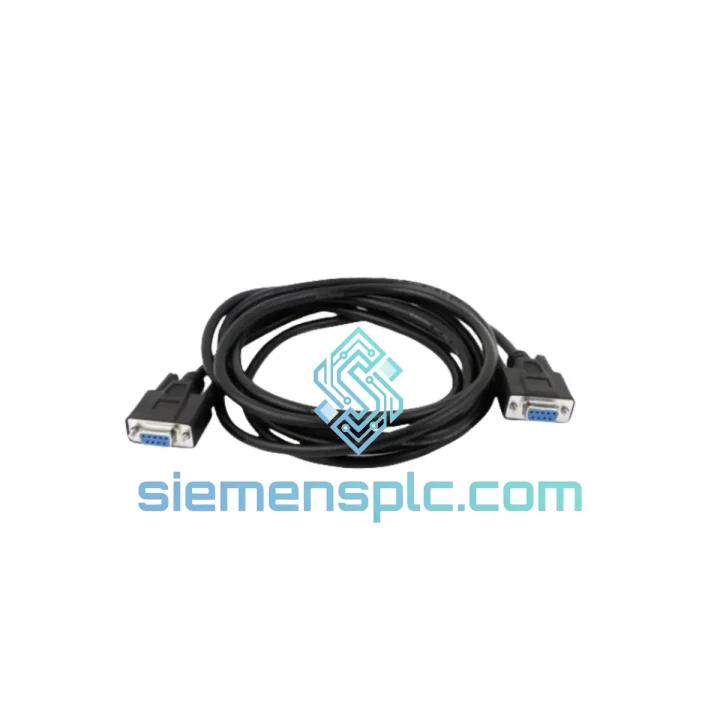
The Allen-Bradley 1747-CP3 is a factory-original, passive-active hybrid programming cable engineered by Rockwell Automation to establish a deterministic, point-to-point communication link between a PC RS-232 serial port and the DH-485 network port resident on SLC 5/03, SLC 5/04, SLC 5/05, and the full MicroLogix processor family. Unlike software-emulated adapters, the 1747-CP3 integrates a discrete RS-232-to-DH-485 level-shift circuit within the cable body itself, eliminating the need for an external communication module, a powered interface converter, or any additional hardware between the programming workstation and the target processor.
In a typical SLC 500 control architecture, the DH-485 port on the processor front panel serves as the primary programming and peer-to-peer messaging interface operating at differential signal levels compliant with EIA-485. The RS-232 port on a standard laptop or desktop PC operates at ±12 V single-ended UART logic. The 1747-CP3 bridges these two incompatible electrical domains through an embedded level-shift IC powered entirely from the RS-232 handshake lines (RTS and DTR), drawing no current from the PLC backplane or any external supply. This self-powered topology means the cable is operational the moment it is plugged in — no driver installation beyond RSLinx Classic is required, and no COM port power settings need adjustment on the host PC.
RSLinx Classic auto-negotiates baud rate with the SLC processor across the supported range of 1,200 bps to 19,200 bps. At 19,200 bps — the maximum DH-485 rate — the round-trip latency for a single RSLogix 500 online session packet is typically under 5 ms on a point-to-point link, which is sufficient for real-time data table monitoring, forced I/O operations, and program upload/download without perceptible delay. For multi-node DH-485 networks where the 1747-CP3 is used as a network node rather than a direct processor connection, the cable participates in the token-passing arbitration protocol native to DH-485, supporting up to 32 nodes on a single segment.
The cable assembly uses molded strain-relief boots at both connector ends and shielded, twisted-pair conductors for the DH-485 differential pair (A/B lines), providing measurable attenuation of common-mode noise in environments with variable-frequency drives, contactors, and high-current switching loads — the standard electromagnetic background of a discrete manufacturing or process control panel. The DB-9 male connector mates with the RS-232 port on the PC; the Mini-DIN 8-pin connector mates with the DH-485 port on the SLC processor or MicroLogix unit. Cable length is approximately 2 m (6.5 ft), which covers the typical distance between a laptop placed on a panel door and the processor mounted in the upper rack.
For plant maintenance engineers sustaining installed SLC 500 fleets, the 1747-CP3 remains the lowest-cost, lowest-complexity path to go online with a processor — no Ethernet infrastructure, no ControlNet bridge, no 1747-UIC USB adapter required when a DB-9 RS-232 port is available on the workstation. For OEM machine builders and system integrators performing factory acceptance testing (FAT) or site acceptance testing (SAT), the cable provides a self-contained, portable programming interface that requires no configuration beyond selecting the correct RSLinx driver.
Real-time Stock & RFQ: [email protected] | WhatsApp: +86 18359268345
| Parameter | Specification |
|---|---|
| Catalog Number | 1747-CP3 |
| Manufacturer | Rockwell Automation / Allen-Bradley |
| Platform Compatibility | SLC 500 (5/03, 5/04, 5/05), MicroLogix 1000 / 1100 / 1200 / 1400 / 1500 |
| PC Interface | RS-232, DB-9 Male, EIA-232 compliant |
| PLC Interface | DH-485, Mini-DIN 8-pin |
| Signal Conversion | Embedded RS-232 to EIA-485 level-shift IC (self-powered via RTS/DTR) |
| Communication Protocol | DH-485 (Data Highway 485), token-passing, multi-drop capable |
| Supported Baud Rates | 1,200 / 2,400 / 4,800 / 9,600 / 19,200 bps (auto-negotiated by RSLinx) |
| Maximum Network Nodes | 32 nodes per DH-485 segment |
| Cable Length | ~2 m (6.5 ft) |
| Conductor Type | Shielded twisted-pair for DH-485 differential pair |
| External Power Required | None — powered from RS-232 RTS/DTR lines |
| Compatible Software | RSLogix 500, RSLinx Classic, Studio 5000 (via RSLinx gateway) |
| Operating Temperature | 0 °C to +60 °C |
| Storage Temperature | -20 °C to +70 °C |
| Weight | ~350 g |
| Country of Origin | United States |
| Warranty | 12 months from date of shipment |
The 1747-CP3 internal circuit topology centers on a single-chip RS-232 to RS-485 transceiver — typically a MAX232-class or equivalent device — that performs bidirectional voltage translation between the ±12 V single-ended RS-232 domain and the ±5 V differential EIA-485 domain. The charge-pump capacitors required by the transceiver IC are integrated within the cable body, keeping the external footprint minimal.
Direction control on the half-duplex DH-485 bus is managed by monitoring the RS-232 RTS (Request to Send) line. When the host PC asserts RTS high prior to transmitting a packet, the transceiver switches the RS-485 driver to transmit mode; when RTS is de-asserted, the driver tri-states and the receiver is enabled, allowing the PLC response to propagate back to the PC RX line. This hardware-controlled direction switching eliminates the software-timed delays that plague some USB-to-RS-485 adapters, where driver latency can cause the transmitter to remain enabled long enough to corrupt the leading bytes of the PLC response.
EMC design: The shielded cable construction attenuates capacitively coupled noise from adjacent power conductors. The shield is terminated at the DB-9 connector shell, providing a low-impedance path to the PC chassis ground. On the DH-485 side, the differential signaling architecture provides inherent common-mode rejection — a 1 V common-mode noise signal on both A and B lines produces zero differential voltage at the receiver input, making the link immune to ground potential differences between the PC and the PLC panel of up to ±7 V (within EIA-485 common-mode range).
Token-passing arbitration: When the 1747-CP3 is used to connect a PC to a multi-node DH-485 network (rather than directly to a single processor), RSLinx Classic participates in the DH-485 token-passing protocol as a network node. The protocol assigns each node a station address (0–31) and passes a logical token sequentially. A node may transmit only when it holds the token, preventing bus collisions without requiring a dedicated network master. This deterministic arbitration ensures that programming traffic from the PC does not disrupt peer-to-peer messaging between SLC processors on the same segment.
Every Allen-Bradley 1747-CP3 unit stocked at siemensplc.com is sourced through verified supply channels and carries the original Rockwell Automation catalog label with date code for full authenticity traceability. Prior to dispatch, each cable undergoes a continuity check across all eight Mini-DIN conductors and a signal-integrity verification on the RS-232 DB-9 pins to confirm the internal level-shift circuit is functional. Units that do not pass electrical verification are quarantined and not listed for sale.
Shipments originate from our warehouse in Xiamen, China — a major logistics hub with direct access to DHL Express, FedEx International Priority, and UPS Worldwide Expedited services. Standard transit times to major industrial markets are 3–5 business days to Southeast Asia, 4–6 business days to Europe, and 5–7 business days to North America. All shipments include a commercial invoice, packing list, and — upon request — a certificate of conformance (CoC) and test report for OEM and system integrator procurement compliance requirements. Export documentation for cross-border customs clearance is prepared in accordance with HS Code 8544.42 (insulated electric conductors for a voltage not exceeding 1,000 V, fitted with connectors).
A 12-month warranty covers manufacturing defects in the cable assembly, connectors, and internal level-shift circuit from the date of shipment. Warranty claims are processed with a replacement-first policy — a replacement unit is dispatched upon receipt of the defective item and photographic evidence of the fault condition.
Email: [email protected]
WhatsApp: +86 18359268345
Web: siemensplc.com
Location: Xiamen, China
© 2026 siemensplc.com. All rights reserved.
We check the full part number, brand, series and visible nameplate information before quotation.
Sales confirms stock path, condition option, quantity and realistic lead time for export dispatch.
DHL, FedEx, UPS or buyer courier arrangements can be reviewed with packing requirements.
Similar brand or category products for fast comparison and multi-item RFQ lists.