Allen-Bradley
RFQ Ready
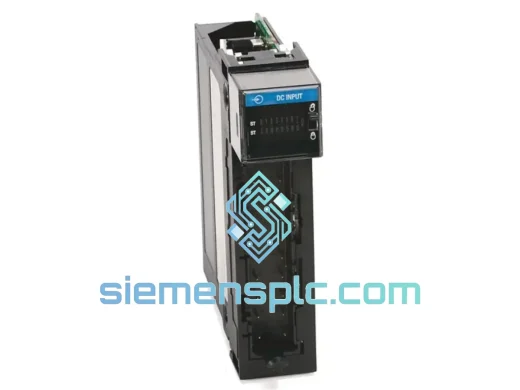
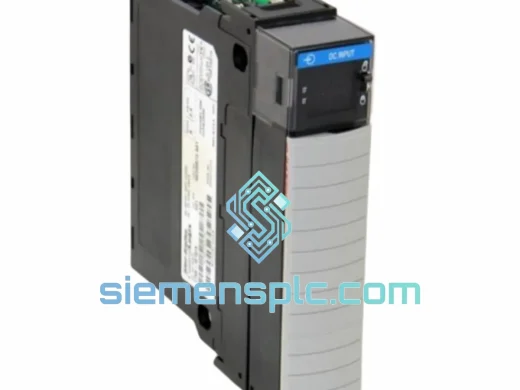
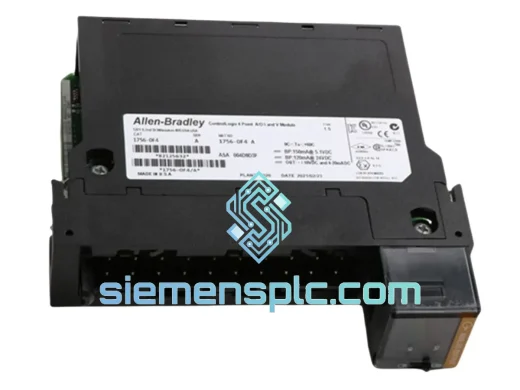
Allen-Bradley 1756-OF4 PLC Analog Output Module
ControlLogix
Origin US
PLC Analog Output Module
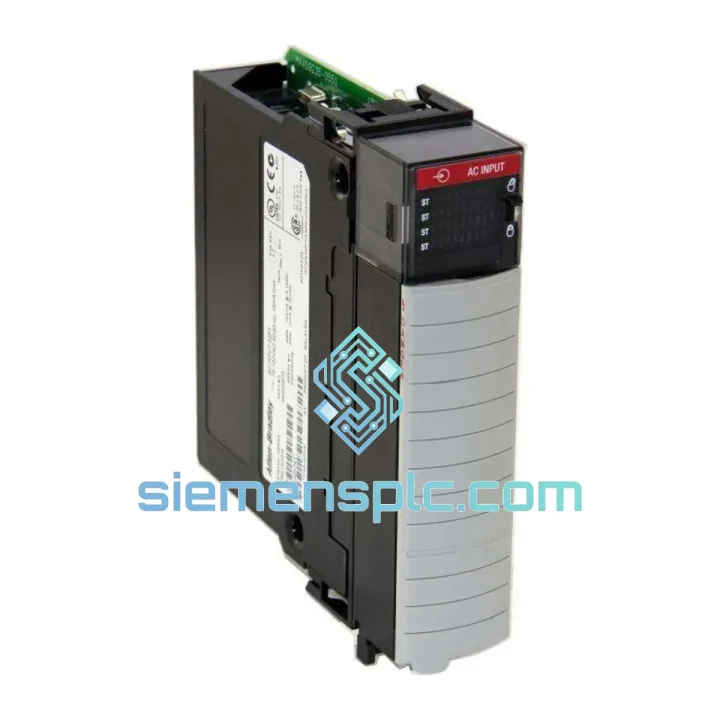
Request verified availability, condition, replacement risk review, packing options and courier lead time for 1756-IA32.
Click Request Quote and the part number is inserted into the inquiry form automatically.
Core fields for model confirmation and RFQ routing. Detailed product narrative remains below.
The 1756-IA32 occupies a well-defined functional position within the ControlLogix backplane: it serves as the primary AC field-signal acquisition layer between 120V AC field devices and the deterministic scan cycle of the Logix controller. Each of its 32 input channels samples the AC line state, applies hardware debounce filtering, and presents a discrete bit-state to the controller’s I/O image table within a single RPI (Requested Packet Interval) window. In high-density discrete applications — automotive body shops, conveyor sortation systems, municipal pump stations — the 1756-IA32 reduces slot consumption by a factor of two compared to 16-point predecessors, directly lowering chassis cost and backplane current draw per monitored field point.
Unlike DC input modules that rely on solid-state switching thresholds referenced to a DC common, the 1756-IA32 must resolve the AC half-cycle waveform into a stable logic state. Internally, each channel passes the incoming 120V AC signal through a full-wave rectifier bridge, followed by an RC filter network sized to reject transients below 47 Hz and above 63 Hz. The rectified, filtered signal drives an optocoupler whose LED side is current-limited to operate reliably across the full 74–132V AC input range. The phototransistor output is then latched by the module’s ASIC, which synchronizes channel state capture to the backplane communication cycle. This architecture ensures that contact bounce on mechanical field devices — typically 1–20 ms — is absorbed before the state is committed to the I/O image table.
Real-time Stock & RFQ: [email protected] | WhatsApp: +86 18359268345
| Part Number | 1756-IA32 |
| Brand | Allen-Bradley / Rockwell Automation |
| Series | ControlLogix 1756 |
| Module Type | 32-Point 120V AC Digital Input |
| Input Voltage Range | 74–132V AC (Nominal: 120V AC) |
| Input Frequency | 47–63 Hz |
| ON-State Voltage Min. | 74V AC |
| OFF-State Voltage Max. | 20V AC |
| ON-State Current Min. | 5 mA @ 74V AC |
| OFF-State Current Max. | 2.5 mA |
| Backplane Current (5V DC) | 250 mA |
| Channel-to-Backplane Isolation | 250V AC continuous (optical) |
| Input Filter Time (Hardware) | 10 ms nominal (AC half-cycle rejection) |
| Terminal Block Compatibility | 1756-TBCH (cage clamp), 1756-TBS6H (screw) |
| Dimensions (H × W × D) | 94.0 × 94.0 × 58.4 mm |
| Weight | 350 g |
| Operating Temperature | 0–60°C (32–140°F) |
| Storage Temperature | -40–85°C |
| Relative Humidity | 5–95% non-condensing |
| Certifications | UL 508, CE (EMC 2014/30/EU, LVD 2014/35/EU), C-Tick, FM Class I Div 2 |
| Warranty | 12 months from date of shipment |
The 1756-IA32’s internal signal chain is engineered around three constraints that define AC discrete input reliability: common-mode noise rejection, inter-channel isolation, and deterministic state capture latency.
Optical Isolation Architecture: Each of the 32 channels uses a dedicated optocoupler, providing galvanic isolation rated at 250V AC continuous between the field wiring and the backplane logic domain. This is not a shared-bus isolation scheme — each channel’s LED drive circuit is independently referenced to the field common, which means a ground fault or voltage transient on one channel cannot propagate to adjacent channels or to the backplane. In environments with variable-frequency drives (VFDs), motor starters, and solenoid coils sharing the same field panel, this per-channel isolation is the primary defense against conducted EMI coupling into the control system.
EMC Design and Transient Suppression: The module’s input circuitry incorporates metal oxide varistors (MOVs) at the terminal block interface, clamping inductive kickback transients from relay coils and solenoids to levels within the optocoupler’s absolute maximum ratings. The PCB layout routes high-voltage AC traces on the field side with defined creepage and clearance distances per IEC 60664-1 Pollution Degree 2, maintaining dielectric integrity in environments with airborne particulates and humidity cycling. The module’s steel housing provides additional shielding against radiated EMI from adjacent variable-speed drives and high-current bus bars.
Backplane Communication and State Latency: The 1756-IA32 communicates with the ControlLogix controller over the proprietary ControlBus backplane at a fixed RPI. The module’s ASIC captures all 32 channel states simultaneously at each RPI boundary, packs them into a 32-bit input data word, and transfers the word to the controller’s I/O image table via the backplane arbiter. This synchronous capture eliminates the channel-to-channel skew that would result from sequential polling, which is significant in applications where multiple limit switches must be read as a coherent snapshot — for example, verifying that all four corner clamps on a fixture are simultaneously engaged before initiating a weld cycle.
Removal and Insertion Under Power (RIUP): The module’s backplane connector and housing are designed to permit hot-swap without generating voltage spikes on the backplane 5V or 24V rails. The connector pin sequence ensures that the backplane ground connection is made before the signal pins engage, and the module’s firmware performs a controlled initialization sequence upon power-up that prevents spurious input state transitions from being reported to the controller during the settling period.
Every 1756-IA32 unit dispatched from our Xiamen, China facility is sourced through verified supply channels and passes a structured pre-shipment inspection protocol. Physical authentication covers PCB marking integrity, label format, housing mold geometry, and serial number structure against known-genuine Allen-Bradley reference specimens. Functional verification seats each module in a live ControlLogix chassis and confirms catalog number, series revision, and firmware identity via Studio 5000 electronic keying interrogation. All 32 input channels are exercised with a calibrated 120V AC test signal, and ON-state/OFF-state current measurements are logged against the published datasheet thresholds.
Shipment packaging uses anti-static foam inserts, sealed moisture-barrier bags with desiccant, and OEM-equivalent outer cartons. Each shipment includes a Certificate of Conformance (COC), functional test report, packing list with serial number, and Country of Origin declaration. Export documentation is prepared to HS code 8537.10 for smooth customs clearance. Carrier options include DHL Express (2–5 business days globally), FedEx International Priority, and sea freight consolidation for volume orders. All shipments are fully insured and tracked from dispatch to delivery. In-stock units ship within 1–3 business days. The 12-month functional warranty covers all units from the date of shipment.
Email: [email protected]
WhatsApp: +86 18359268345
Web: siemensplc.com
Location: Xiamen, China
© 2026
We check the full part number, brand, series and visible nameplate information before quotation.
Sales confirms stock path, condition option, quantity and realistic lead time for export dispatch.
DHL, FedEx, UPS or buyer courier arrangements can be reviewed with packing requirements.
Similar brand or category products for fast comparison and multi-item RFQ lists.